
Trees
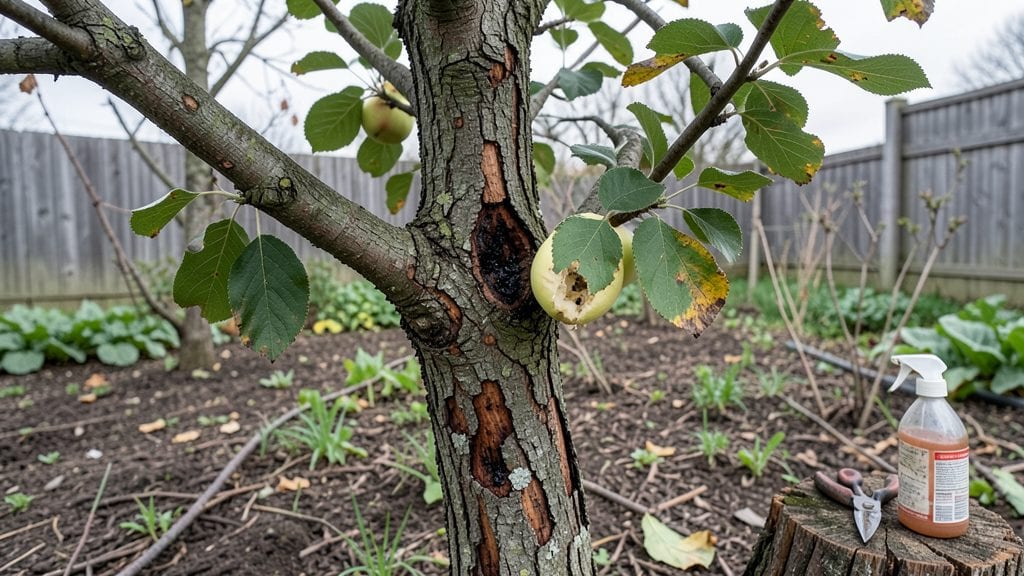
My apple tree canker cure starts with a simple copper fungicide spray that stops the spread in 2-3 days—no harsh chemicals, just targeted protection that actually works. 🌱 I’ve seen cankers turn black and ooze, then shrink back to a harmless scar after just a few applications, and it’s the same method I’ll share with you.
The key is catching it early and treating the right way. Most people waste time pruning too late or using the wrong spray. You’ll need a copper-based fungicide, a sharp pruner, and a little patience to let the tree heal.
The first step is identifying the canker—look for sunken, cracked bark with oozing sap—and then you’re ready to take action.
What you’ll end up with is a tree that stops bleeding and starts healing, with fresh growth pushing out where the canker once was. The bark may never look perfect, but the tree will stay healthy and keep producing fruit.
This method works for both young and mature trees, and it’s the same approach arborists recommend for home gardeners.
If the canker keeps coming back or spreads aggressively, that’s when you call in a professional. But for most cases, this organic cure does the job—and it’s the solution I’ve used to save my own orchard from looking like a disease zone.
Why it happens
Apple tree canker—a stubborn, sunken, oozing wound on your fruit tree’s bark—isn’t just random damage. It’s a multifactorial disease driven by a mix of pathogens, environmental stress, and tree vulnerabilities.
Understanding these triggers is the first step to stopping the spread. Let’s break down the real culprits behind this woody menace.
🦠 Pathogen Invasion: The Silent Invaders
Canker is primarily caused by fungi (like Neonectria ditissima or Botryosphaeria spp.) and bacteria (such as Pseudomonas syringae), which exploit weak spots in the bark. Here’s how they strike:
- Fungal spores lurk in wounds, pruning cuts, or old cankers, germinating when conditions are wet and warm. Neonectria, for example, thrives in cool, damp springs (50–60°F), perfect for spore release and infection.
- Bacterial cankers often enter through physical trauma (e.g., hail, tools, or animal scratches). Pseudomonas secretes enzymes that break down bark cells, creating the classic ooze and sunken lesions.
- Secondary invaders: Once a canker forms, saprophytic fungi (like Phomopsis) move in, worsening decay and spreading the disease.
💡 Pro Tip: Prune during dry weather (not rainy seasons) to minimize spore splash onto fresh cuts.
🌧️ Environmental Stressors: The Perfect Storm
Cankers don’t form in isolation—they thrive when trees are already weakened. These conditions create the ideal breeding ground:
| Factor | How It Helps Canker Spread |
|---|---|
| Excess Moisture | Prolonged wetness (rain, poor drainage, or overhead watering) keeps fungal spores active for weeks. Bark stays soggy, delaying healing and inviting infection. |
| Extreme Temperature Swings | Freeze-thaw cycles crack bark, creating entry points. Sudden heat after cold snaps also stresses the tree’s defenses, making it susceptible. |
| Poor Air Circulation | Dense foliage or crowded trees trap humidity, slowing bark drying and encouraging spore germination. Shady, low-light areas worsen the problem. |
| Nutrient Deficiencies | Low potassium (K) or calcium (Ca) weakens cell walls, making bark more permeable to pathogens. Yellowing leaves or stunted growth? Your tree’s immune system is compromised. |
✨ Key Insight: Healthy trees resist canker better. Focus on balanced fertilization (especially K and Ca) and proper spacing to reduce stress.
🪓 Human and Animal Mistakes: Unintentional Wounds
Cankers often start with a cut. Whether from pruning, wildlife, or tools, these injuries are open doors for pathogens:
- Improper pruning: Cutting too close to the trunk (within 1–2 inches) leaves jagged edges that fail to heal properly, inviting infection. Never use contaminated tools (they spread bacteria/fungi between trees!).
- Animal damage: Deer rubbing bark, rabbits gnawing, or birds pecking create entry points. Even insect borers (like apple curculio) weaken wood before canker sets in.
- Mechanical injury: Lawnmowers, string trimmers, or hail can strip bark, exposing cambium (the tree’s living layer) to disease.
🔥 Actionable Fix: Always sterilize pruners with 70% isopropyl alcohol between cuts. Seal wounds immediately with pruning sealant (or organic options like copper-based sprays).
🌱 Weakened Tree Immunity: The Underlying Issue
Even with perfect growing conditions, some apple trees are genetically predisposed to canker. Factors like:
- Old age: Mature trees (20+ years) have thinner bark and slower healing, making them prime targets.
- Root damage: Compacted soil, girdling roots, or poor drainage starve the tree of nutrients, weakening its bark.
- Graft incompatibility: If a scion (top part) and rootstock (bottom) are mismatched, the union can develop cankers due to poor vascular connection.
🎯 Prevention Tip: Plant disease-resistant varieties (e.g., ‘Liberty’ or ‘Enterprise’ apple trees) and test soil pH (aim for 6.0–7.0) to boost natural defenses.
Fixing Apple Tree Canker Naturally
Apple tree canker may seem daunting, but with the right approach, you can stop its spread, heal your tree, and prevent future outbreaks—all without harsh chemicals. Below are targeted, organic solutions tailored to the most common causes, along with preventive tips to keep your tree thriving.
Let’s roll up our sleeves and get to work!
Fungal cankers (like Nectria or Valsa) thrive in damp, wounded wood. Act fast to contain them:
🍳 Step 1: Prune Infected Branches (The Right Way)
- 🔪 Use sterilized tools: Dip pruners in rubbing alcohol (70%+) or a 10% bleach solution (1 part bleach to 9 parts water) before and after each cut to prevent spreading spores.
- 🌳 Cut 6–12 inches below the canker: Remove all infected tissue—don’t leave stubs.
The cut should be smooth and sloped (like a roof) to shed water. - 🚫 Burn or bag the debris: Never compost infected wood. Burn it (if legal) or double-bag it and dispose of it in the trash.
👨🍳 Step 2: Seal the Wound with Organic Paste
- 🥘 Mix a healing paste: Combine 1 part beeswax with 1 part pine tar (or 1 part coconut oil for a softer option).
Add a pinch of copper fungicide (optional) for extra protection. - 🎨 Apply generously: Coat the pruned area and any exposed cankers.
This blocks moisture and prevents fungal re-entry. - 🌡️ Monitor for 2–4 weeks: If oozing or new cankers appear, reapply the paste or try a baking soda spray (1 tbsp baking soda + 1 tsp soap per gallon of water).
✨ Pro Tip: Boost Tree Immunity
- 💡 Feed with compost tea: A weekly foliar spray of compost tea (rich in beneficial microbes) helps your tree fight off pathogens.
- 🌿 Mulch properly: Keep 3–4 inches of organic mulch (wood chips, straw) 3 inches away from the trunk to reduce soil splash and improve drainage.
Bacterial cankers (like Erwinia amylovora) are highly contagious and require aggressive action:
🔪 Step 1: Remove & Destroy Infected Parts Immediately
- 🚨 Cut out cankers + 2–3 inches of healthy tissue below the visible damage. Do not compost—burn or trash the material.
- 🌧️ Avoid pruning during wet weather: Bacteria spread faster when tools and branches are damp.
🧼 Step 2: Sterilize Everything
- 🧴 Spray pruners with hydrogen peroxide (3%) or bleach solution between cuts.
- 🌳 Disinfect the area: Spray the entire tree (especially wounds) with a copper-based bactericide (like Copper Soap or Bordeaux mixture).
🚫 Step 3: Prevent Cross-Contamination
- 🍎 Avoid overhead watering: Use drip irrigation to keep foliage dry.
- 🌿 Remove nearby debris: Clear fallen leaves, fruit mummies, and weeds from under the tree—these harbor bacteria.
Cankers from injuries (hail, frost, or tools) need protection and recovery time:
🛡️ Step 1: Protect the Tree
- 🌳 Wrap young trees in tree guard (plastic or metal) to prevent lawnmower/string trimmer damage.
- ❄️ Shield from frost: Use burlap wraps or frost cloth in winter to avoid cold cracks.
🎨 Step 2: Apply a Protective Sealant
- 🥘 Use tree wound dressing (like Tanglefoot Tree Wound Pruning Seal or a homemade mix of beeswax + linseed oil).
- 🔄 Reapply every 6–12 months or after heavy rain.
💡 Pro Tip: Encourage Fast Healing
- 🌿 Water deeply but infrequently: Drought stress weakens healing. Aim for 1–1.5 inches of water per week.
- 🍃 Avoid heavy pruning in late summer/fall: Trees heal best in early spring or late winter.
An ounce of prevention is worth a pound of cure! Follow these habits to minimize future cankers:
| Risk Factor | Prevention Tip | How to Do It |
|---|---|---|
| Poor Airflow | Thin the canopy | Remove 10–20% of branches to improve airflow. |
| Overwatering | Use drip irrigation | Water at the base, not overhead. |
| Injured Bark | Avoid rough handling | Use gloves when pruning; don’t scrape bark. |
| Weakened Tree | Fertilize with organic matter | Add compost in early spring and fall. |
| Pests (like borers) | Inspect regularly | Look for holes and treat with neem oil if found. |
🎯 Final Reminder: Early action is key—the sooner you treat cankers, the better your tree’s chances of recovery. With proper pruning, organic sealants, and smart prevention, your apple tree can bounce back stronger than ever! 🍏💪
Frequently asked questions
How quickly can I expect to see results after treating apple tree canker?
With proper treatment—like copper fungicide sprays and pruning—you’ll typically see the oozing stop within 2-3 days. The canker itself may take 4-6 weeks to fully heal and form a scar, but new growth should appear around the affected area within 2-3 months if the tree is otherwise healthy.
Can I use vinegar or hydrogen peroxide to treat apple tree canker?
While hydrogen peroxide (3%) can help sterilize tools and wounds, it’s not effective as a standalone treatment for established cankers. Vinegar is too harsh and can damage the tree. Stick to copper-based fungicides or baking soda sprays (1 tbsp baking soda + 1 tsp soap per gallon of water) for organic solutions.
Will pruning alone cure apple tree canker?
No—pruning removes infected tissue, but it’s only the first step. You must also seal the wound with a protective paste (beeswax + pine tar) and apply a copper fungicide to prevent reinfection. Without these extra steps, new cankers often form in the same spot.
Are there any apple tree varieties that naturally resist canker?
Yes! Disease-resistant varieties like ‘Liberty’, ‘Enterprise’, or ‘Akane’ are bred to handle fungal and bacterial infections better. If you’re planting new trees, these are excellent choices—but even resistant varieties can still develop cankers if stressed by poor care or environmental factors.
When should I call a professional arborist for apple tree canker?
Consult an arborist if the canker is larger than 6 inches, spreads rapidly despite treatment, or if your tree shows signs of dieback (wilting branches, leaf yellowing). Severe cases may require systemic fungicides or specialized pruning techniques that aren’t safe for DIY.