Watering
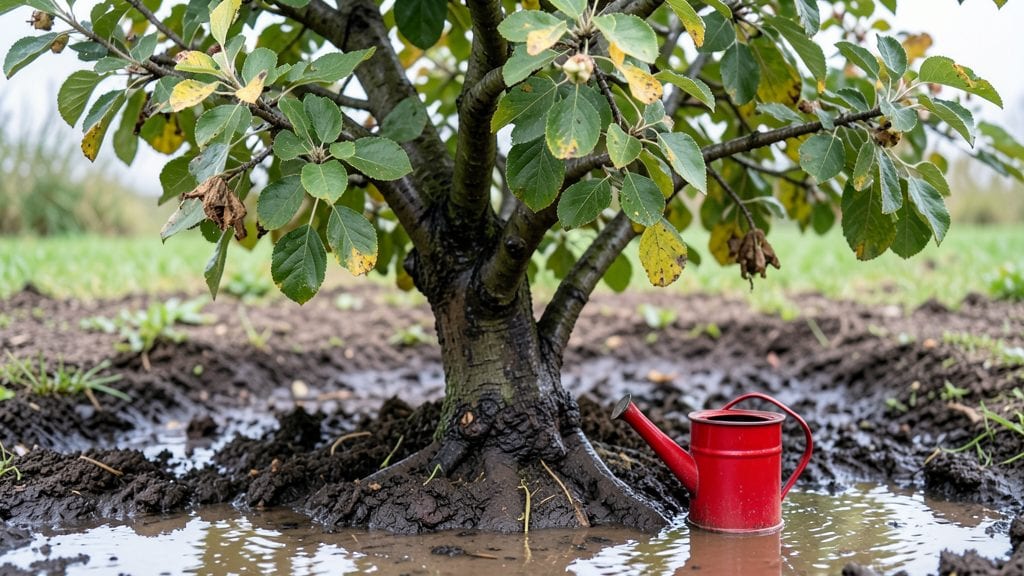
Overwatering your apple tree can turn its roots into a soggy mess faster than you think. 🌱 I’ve seen healthy trees turn into sad, drooping shadows in just a few weeks when water piles up around their roots.
The good news? You can fix it—and fast—with a few targeted steps that actually work.
First, check for the classic signs: yellowing leaves that won’t turn brown, a foul smell near the trunk, or mushrooms sprouting at the base. These are red flags that your tree’s roots are drowning.
The fix starts with cutting back on water—let the top 2-3 inches of soil dry out completely before watering again. If your tree’s in a heavy clay soil, that might mean waiting a week or more between waterings.
Once you’ve stopped the flood, improve drainage by adding coarse sand or perlite to compacted soil. A 2-inch layer of wood chips around the base helps too—it keeps moisture balanced and stops water from pooling.
Within a month, you’ll see new green growth as the roots recover. The key is consistency: apple trees hate soggy feet just like we do.
For long-term peace of mind, test your soil’s drainage next spring. If water still pools, consider raising the tree slightly with a mound of amended soil. A little prevention now means no more root rot rescues later—and that’s a harvest worth protecting.
The Hidden Triggers Behind Overwatered Apple Trees
Overwatering an apple tree isn’t just about giving it too much water—it’s a sneaky mix of environmental factors, human habits, and even the tree’s own biology. Understanding these causes helps you spot the warning signs early and adjust your care routine before root rot takes hold.
Let’s break down the most common culprits behind soggy soil and stressed roots.
Apple trees thrive in well-draining soil, but if your tree’s roots sit in waterlogged conditions for too long, oxygen can’t reach them. This creates the perfect storm for anaerobic bacteria, which thrive in oxygen-poor environments and break down root tissue.
- Compacted or clay-heavy soil: These soils repel water instead of absorbing it, leaving roots drowning in a thin film of moisture. A simple soil test can reveal if your soil is too dense.
- Low-lying planting spots: Apple trees planted in depressions or slopes collect runoff, turning the root zone into a swamp. Always plant on slightly elevated ground or use raised beds.
- Missing or clogged drainage layers: If your tree is in a container or a newly planted hole, a lack of gravel, sand, or organic matter (like compost) at the bottom traps excess water.
💡 Pro Tip: Amend heavy soil with coarse sand, perlite, or coconut coir to improve drainage. For in-ground trees, consider installing a French drain around the base to redirect excess water.
Many gardeners assume apple trees—especially young ones—need daily watering. But apple trees are surprisingly drought-tolerant once established, and frequent shallow watering encourages roots to stay near the surface, where they’re more vulnerable to rot.
- Short, frequent waterings: Light sprinkles every day or two keep the topsoil wet but don’t encourage deep root growth. Apple trees need deep, infrequent watering (1–2 inches per week) to push roots downward.
- Ignoring weather conditions: Watering on a strict schedule—like every Monday and Thursday—can lead to overwatering during rainy spells. Always check soil moisture before watering.
- Automatic irrigation gone wild: Drip systems or sprinklers left running too long (or with clogged emitters) can deliver more water than the tree can absorb.
📊 Science Check: Apple tree roots need 10–15% oxygen in the soil to function properly. Waterlogged soil drops oxygen levels to <1%, suffocating roots within days.
Mulch is a gardener’s best friend—when used correctly. But too much or the wrong type can trap moisture against the trunk, creating a damp, fungal-friendly environment. Apple trees are particularly sensitive to Phytophthora root rot, a fungus that spreads in soggy mulch.
- Piling mulch against the trunk: Mulch should form a 2–4 inch ring around the tree, not touch the bark. This creates a gap for air circulation.
- Using water-retentive mulches: Materials like cedar chips or untreated wood mulch break down slowly, compacting over time and reducing drainage. Opt for pine straw, shredded leaves, or bark chips instead.
- Over-mulching in wet climates: In rainy regions, even a thin layer of mulch can hold too much moisture. Limit mulch to 3–4 inches deep and monitor soil dampness.
✨ Quick Fix: If your mulch is already too thick, fluff it up with a rake to improve airflow. For severe cases, remove excess mulch and replace it with a dry, coarse material like wood chips.
Not all overwatering is your fault—sometimes, the weather or your tree’s location makes it impossible to avoid. Recognizing these factors helps you adapt your watering strategy.
- Heavy rainfall + poor drainage: If your area gets more than 1 inch of rain in 24 hours, skip watering for at least 3–4 days to let the soil dry out.
- Shady or low-lying planting spots: Apple trees need 6–8 hours of sunlight daily. Shady locations stay damp longer, slowing evaporation and increasing rot risk.
- High humidity + dense foliage: Trees with thick canopies (like mature apple trees) create a microclimate that traps moisture. Prune to improve airflow if humidity is consistently high.
🌡️ Climate Hack: In humid regions, water early in the morning (before 10 AM) to allow foliage to dry quickly, reducing fungal spores.
Often, overwatering is a chain reaction. For example:
- You plant an apple tree in clay soil with poor drainage.
- To compensate, you water more frequently, thinking the tree needs it.
- Excess water compacts the soil further, worsening drainage.
- Without oxygen, roots suffocate, and fungal diseases like Armillaria root rot move in.
🎯 Prevention Tip: Always test your soil’s drainage before planting. Dig a hole, fill it with water, and time how long it takes to drain. If it takes more than 6 hours, amend the soil or choose a different spot.
Fixing Overwatered Apple Trees
If your apple tree is suffering from overwatering, the good news is that with the right steps, you can nurse it back to health—even if it’s already showing signs of root rot or wilting.
The key is acting quickly, adjusting your watering habits, and giving your tree the support it needs to recover. Below, we’ll break down solutions by the most common causes of overwatering and how to reverse the damage, plus tips to keep your tree thriving long-term.
If your apple tree’s roots are drowning in soggy soil, root rot may have already set in. Here’s how to save it:
🔥 Step 1: Stop Watering Immediately
- Why? More water = more rot. Let the soil dry out before taking further action.
- How? Pause all irrigation (including rainwater if possible) for at least 3–5 days.
Check soil moisture with your finger—if the top 2–3 inches are damp, wait longer.
🍳 Step 2: Improve Drainage Around the Tree - For compacted or clay soil: Dig a shallow trench (6–8 inches deep) around the tree’s drip line (the edge of its canopy) to encourage water runoff.
Fill it with gravel or coarse sand to create a drainage path. - For container-grown trees: Ensure pots have drainage holes.
If not, repot into a larger container with well-draining potting mix (add perlite or orchid bark for aeration). - Pro tip: 💡 If your yard has poor drainage, consider raising the tree’s root zone by mounding soil higher around the trunk (but not against it).
👨🍳 Step 3: Prune Damaged Roots (Advanced)
- When? Only attempt this if the tree is severely affected (yellowing leaves, black/mushy roots when dug up).
- How? Carefully dig around the root ball (keep the tree supported) and trim black, mushy, or hollow roots with sterilized pruners.
Healthy roots are firm and white or tan. - Warning: ⚠️ This is a last-resort fix—only do it if you’re confident in your skills or consult an arborist.
🥘 Step 4: Adjust Watering for Recovery
- New routine: Water deeply but infrequently—once every 7–10 days (adjust for climate). Aim for 1–1.5 inches of water per session at the soil level, not the leaves.
- Best time: Water in the early morning to reduce fungal risks.
Use a soaker hose or drip irrigation to deliver water directly to the roots.
If your tree is overwatered but not yet rotten, it may just need a reset in hydration and nutrition.
🔪 Step 1: Check for Overhead Watering
- Problem: Wet foliage encourages fungal diseases like apple scab or powdery mildew.
- Fix: Switch to drip irrigation or deep watering at the base. Avoid sprinklers entirely if possible.
🌡️ Step 2: Flush Out Excess Salts
- Why? Overwatering can leave behind harmful salts that block nutrient uptake.
- How? Give the tree a slow, deep soak with rainwater or distilled water (if possible) to leach out excess salts. Repeat monthly if your tap water is hard.
🎯 Step 3: Boost Nutrients with Care
- Avoid fertilizing until the tree shows signs of recovery (new growth, firmer leaves).
- Instead: Mix compost or worm castings into the top 6 inches of soil to improve microbial activity.
For a quick fix, use a balanced, slow-release fertilizer (like 10-10-10) only after the soil is dry.
Once your apple tree is back on track, these habits will prevent future overwatering disasters:
- 📊 Test your soil: Use a moisture meter or the "squeeze test"—if soil stays clumped in your hand, it’s too wet. - ⏰ Water smarter: Young trees need 1–2 gallons per week (adjust for age/climate).
Mature trees? 10–15 gallons weekly in dry spells. - 🍎 Mulch correctly: Apply 2–4 inches of organic mulch (wood chips, straw) around the base—but keep it 6 inches away from the trunk to prevent rot. - 🌡️ Monitor weather: Skip watering if rain is forecasted.
Use a rain gauge to track natural water input. - 🔍 Watch the leaves: Drooping leaves = overwatering. Crispy edges = underwatering. Adjust accordingly!
With these fixes, your apple tree should bounce back stronger—just give it time and patience. And remember: less water is often more when it comes to keeping roots happy and healthy! 🍏💧
Frequently asked questions about apple tree watering
How often should I water my apple tree to avoid overdoing it?
Young apple trees need 1–2 gallons per week, while mature trees thrive on 10–15 gallons weekly during dry spells. The key is deep watering—soak the soil 12–18 inches down every 7–10 days rather than light daily sprinkles. Always check soil moisture first: if the top 2–3 inches are dry, it’s time to water.
What do yellow leaves on my apple tree really mean?
Yellow leaves can signal overwatering, but also nutrient deficiencies or pests. For overwatering, leaves often stay yellow (not brown) and feel spongy. Check soil drainage first—if it’s soggy, reduce watering immediately. If leaves also show brown edges or spots, it could be a fungal issue from excess moisture.
Can I save my apple tree if mushrooms are growing at its base?
Mushrooms at the base are a red flag for root rot or fungal decay. Act fast: stop watering, improve drainage with gravel trenches, and consider pruning affected roots (if severe). For containers, repot into fresh, well-draining mix. In worst cases, consult an arborist—the tree may need replanting in amended soil.
Is it better to water apple trees in the morning or evening?
Morning watering (before 10 AM) is ideal—it gives foliage time to dry, reducing fungal risks like apple scab. Avoid evening watering in humid climates, as wet leaves overnight create perfect conditions for disease. Use drip irrigation or soaker hoses to deliver water directly to roots without wetting leaves.
How do I know if my apple tree is getting enough water vs. too much?
Test soil moisture by sticking your finger 2–3 inches deep. If it’s damp but not soggy, watering is balanced. Overwatered trees show yellowing leaves, wilting, or a foul smell at the base. Underwatered trees have crispy leaf edges and dry soil pulling away from roots. Adjust based on these signs!