
Trees
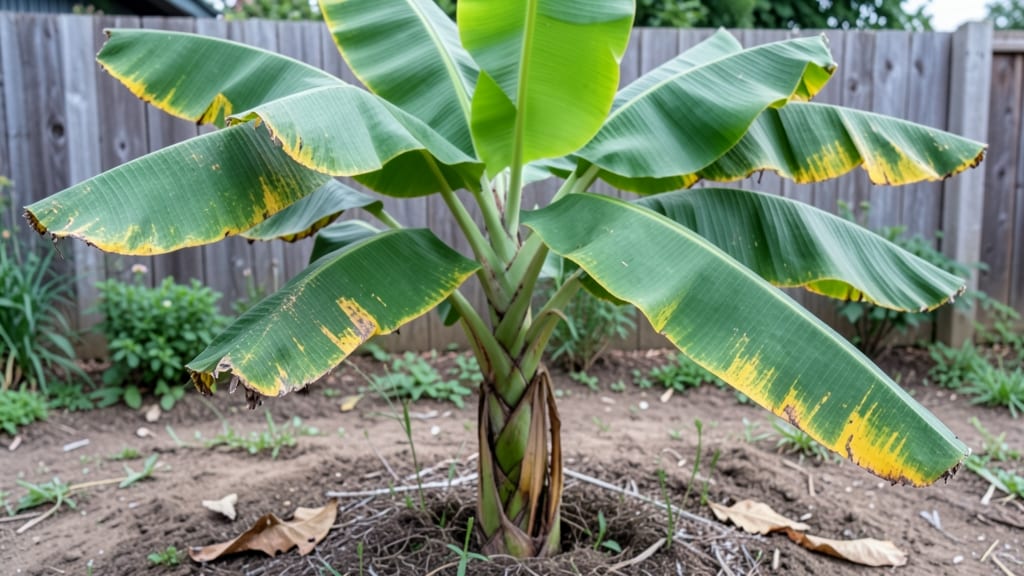
Banana trees turning yellow isn’t just an eyesore—it’s a sign your fast-growing privacy screen needs attention. 🌿 I’ve seen these tropical giants go from lush green walls to sad, yellowing messes in just weeks, and the fixes aren’t as complicated as they seem.
The key is spotting the problem early, whether it’s too much water, a hidden pest, or a nutrient missing from the soil.
Most yellowing starts with overwatering or poor drainage, which suffocates roots and invites fungal diseases like Fusarium wilt. My banana trees perk up within days once I adjust watering—just let the top 2-3 inches dry out between soakings.
Nutrient deficiencies (especially potassium or magnesium) show up as yellowing between leaf veins, and a simple soil test reveals what’s missing before you overcorrect.
You’ll see new growth within weeks after pruning dead fronds and treating fungal spots with neem oil or copper fungicide. The real win? Preventing future yellowing by mulching to retain moisture, testing soil annually, and keeping pests at bay with regular inspections.
Your banana tree’s golden foliage will stay vibrant—and your privacy screen will grow faster than ever.
For stubborn cases, a local arborist can diagnose deeper issues, but 90% of yellowing fixes start with these basics. Think of it as a quick tune-up for your tropical hedge—no heavy equipment or years of waiting required.
Root Causes Behind Yellow Banana Leaves
When your banana tree’s leaves start turning yellow, it’s usually a cry for help—your plant is trying to tell you something’s off. Understanding the why behind the discoloration is the first step to saving your golden foliage.
Below, we break down the most common culprits, backed by science, so you can diagnose and fix the issue fast.
Banana trees thrive in well-draining soil—they’re tropical plants, not swamp dwellers! When roots sit in soggy conditions, they suffocate, leading to anaerobic stress (lack of oxygen). This triggers yellowing leaves, often starting at the older, lower leaves and spreading upward.
🔬 Why it happens:
- Root rot (caused by fungi like Pythium or Phytophthora) thrives in waterlogged soil, blocking nutrient uptake.
- Excess moisture leaches away magnesium and potassium, essential for chlorophyll production.
- Banana trees are sensitive to salt buildup—overwatering with tap water (high in chlorine/sodium) can further stress roots.
💡 Actionable fix:
- Check soil moisture: Stick your finger 2–3 inches deep—if it’s damp, wait to water.
- Amend soil with perlite or coarse sand to improve drainage.
- Use rainwater or filtered water to reduce salt buildup.
- If root rot is suspected, trim affected roots with sterilized pruners and repot in fresh, dry soil.
Yellowing leaves can signal a lack of key nutrients, especially if the yellowing is interveinal (between veins) or affects younger leaves. Banana trees are heavy feeders and need a balanced diet to maintain their vibrant green.
📊 Common deficiencies and symptoms:
Nutrient
Yellowing Pattern
Other Clues
Nitrogen (N)
Older leaves turn pale yellow first, then brown.
Stunted growth, weak stems.
Potassium (K)
Yellowing on leaf edges (scorching effect).
Weak fruit production, poor disease resistance.
Magnesium (Mg)
Yellow interveinal patches (like a net) on older leaves.
Crinkled or cupped leaves.
Iron (Fe)
Young leaves stay yellowish-white (chlorosis).
Common in alkaline soil (pH >7).
💡 Actionable fix:
- Test your soil’s pH (ideal: 5.5–7.0). Use sulfur to lower pH if needed.
- Fertilize with a balanced tropical plant fertilizer (e.g., 6-6-6 or 8-3-9) every 4–6 weeks during growing season.
- For magnesium deficiency, apply Epsom salt (magnesium sulfate)—mix 1 tbsp per gallon of water and spray leaves.
- Use chelated iron supplements if chlorosis persists.
Sap-sucking pests like spider mites, aphids, or banana aphids can drain your tree’s vitality, causing yellowing leaves, stunted growth, and even curling. These tiny invaders inject toxins while feeding, disrupting photosynthesis.
🔬 Why it happens:
- Spider mites thrive in dry, hot conditions and create fine webbing on undersides of leaves.
- Aphids cluster on new growth, excreting honeydew (a sticky residue that attracts sooty mold).
- Banana aphids (Pentalonia nigronervosa) specifically target banana plants, weakening them over time.
💡 Actionable fix:
- Inspect leaves daily—look for tiny webs, sticky residue, or tiny black/brown bugs.
- Blast pests off with a strong stream of water (early morning is best).
- Use neem oil (1 tsp per quart of water) or insecticidal soap as a natural pesticide.
- Introduce beneficial predators like ladybugs or lacewings if infestations are mild.
- For severe cases, apply systemic insecticides (e.g., imidacloprid) as a last resort.
Yellowing leaves with dark spots, lesions, or oily sheen may indicate a fungal or bacterial infection. These pathogens thrive in humid, poorly ventilated conditions, common in dense banana plantings.
🔬 Common culprits:
- Leaf spot diseases (e.g., Mycosphaerella fijiensis, cause of Black Sigatoka): Brown/yellow spots with dark borders.
- Bacterial leaf streak (Xanthomonas campestris): Water-soaked yellow streaks that turn brown.
- Powdery mildew: White, powdery coating on leaves (reduces photosynthesis).
💡 Actionable fix:
- Prune infected leaves immediately with sterilized tools (dip in rubbing alcohol between cuts).
- Improve air circulation by spacing plants 6–10 feet apart.
- Apply copper-based fungicides (e.g., copper hydroxide) or baking soda spray (1 tbsp baking soda + 1 tsp soap per gallon of water).
- Avoid overhead watering—use drip irrigation to keep leaves dry.
- For bacterial infections, use streptomycin or copper fungicides (follow label instructions).
Banana trees are tropical—they hate extremes! Sudden changes in temperature, wind, or sunlight can shock your plant, causing yellowing as it struggles to adapt.
🔥 Common stress triggers:
- Cold drafts or frost: Banana trees cannot tolerate temps below 50°F (10°C). Yellowing may appear after a cold snap
How to solve it
If your banana tree’s leaves are turning yellow instead of staying lush and green, don’t panic—there’s almost always a fix! The key is identifying the root cause (literally and figuratively) and taking targeted action.
Below, we’ve mapped out practical solutions for the most common triggers, along with prevention tips to keep your tree thriving. Let’s get those leaves back to vibrant life! 🌿✨
Yellowing leaves often signal root stress from soggy soil. Banana trees hate "wet feet"—excess moisture cuts off oxygen, leading to yellowing, wilting, or even fungal infections.
How to Fix It:
- 🔥 Stop watering immediately if the soil is soggy or muddy to the touch. Let the top 2–3 inches dry out before watering again.
- 👨🍳 Improve drainage: Mix in perlite, coarse sand, or orchid bark (20–30%) into the soil to aerate it. If potted, ensure pots have drainage holes.
- 🥘 Repot if needed: If the roots are circling or the soil is compacted, transfer your tree to a larger pot with fresh, well-draining potting mix.
- ⏰ Water deeply but less often: Aim for 1–2 times per week (adjust for climate—drier areas may need more; humid areas, less). Water at the base, not the leaves.
💡 Prevention Tips:
- Use a moisture meter to track soil dampness.
- Add a 1-inch layer of mulch (like pine bark) to retain moisture without suffocating roots.
- Avoid saucers under pots unless they’re elevated and drained.
Banana trees love light but can scorch in harsh afternoon sun or stretch weakly in shade, both causing yellowing. The trick? Balanced brightness.
How to Fix It:
- 🔥 Gradually acclimate if moving from shade to sun: Start with 2–3 hours of morning sun and increase over 2 weeks.
- 🍳 Provide afternoon shade in hot climates: Use lightweight shade cloth (30–50%) or dappled shade from nearby trees.
- 👨🍳 Rotate the pot weekly to ensure even light exposure (prevents lopsided yellowing).
- 🌡️ Check for heat stress: If leaves feel crispy or bleached, move the tree to a cooler spot immediately.
💡 Prevention Tips:
- Place banana trees where they get bright, indirect light (e.g., near a window with a sheer curtain).
- In containers, use light-colored pots to reflect heat.
- Monitor for pests like spider mites (common in dry, sunny conditions)—treat with neem oil if spotted.
Yellow leaves can scream for nitrogen, magnesium, or iron. Banana trees are heavy feeders, but over-fertilizing burns roots—so precision matters.
How to Fix It:
| Symptom | Likely Deficiency | Solution |
|---|---|---|
| Yellowing older leaves (brown edges) | Potassium or nitrogen | Apply a balanced fertilizer (10-10-10) or compost tea. Use half-strength to avoid burning. |
| Yellowing new leaves (pale green/yellow) | Nitrogen | Feed with fish emulsion or blood meal (high in nitrogen). |
| Yellow veins with green patches | Magnesium (chlorosis) | Spray leaves with Epsom salt solution (1 tbsp per gallon of water) or add magnesium sulfate to soil. |
| Yellowing between veins (iron deficiency) | Iron | Use an iron chelate fertilizer or acidify soil with sulfur (banana trees prefer pH 6.0–7.5). |
💡 Prevention Tips:
- Fertilize every 4–6 weeks in growing season (spring–fall), but skip winter.
- Test soil annually with a home pH kit—banana trees thrive in slightly acidic to neutral soil.
- Avoid synthetic fertilizers high in salt (like urea)—they harm roots over time.
Sap-sucking pests (like spider mites or aphids) and fungal diseases (e.g., Fusarium wilt) can turn leaves yellow. Act fast—these spread quickly!
How to Fix It:
- 🔪 Inspect leaves: Look for sticky residue (aphids), webbing (mites), or black spots (fungus).
- 🍳 Blast pests off: Spray leaves with water or insecticidal soap (1 tsp soap + 1 quart water). Repeat every 3–4 days.
- 👨🍳 Use neem oil (1 tsp per liter of water) for fungus or mites. Apply at dusk to avoid harming bees.
- 🥘 Prune infected areas: Cut off yellow/brown leaves with sterilized shears and dispose of them.
- ⏰ Prevent fungal spread: Avoid overhead watering; water at the base of the plant.
💡 Prevention Tips:
- Introduce beneficial nematodes or ladybugs to control pests naturally.
- Space plants 3–5 feet apart for airflow (reduces humidity-related diseases).
- Rotate crops if growing banana trees in the ground—don’t replant in the same spot yearly.
Banana trees are tropical—they hate cold drafts or freezing temps, which cause yellowing and leaf drop. Even heatwaves can scorch them.
How to Fix It:
- 🔥 Move indoors or to a garage if temperatures drop below 50°F (10°C).
- 🍳 Use row covers or frost cloth for outdoor trees in fall/winter.
- 👨🍳 Mulch
Frequently asked questions
Why do banana tree leaves turn yellow first on the older ones?
Older leaves yellow first because they’re the plant’s nutrient storage units. When roots struggle (from overwatering or poor drainage), the tree redirects nutrients to new growth, leaving older leaves yellow and crispy. This is normal aging—but if it spreads to younger leaves, check for root rot or nutrient deficiencies.
Can I save a banana tree with completely yellow leaves?
Maybe! If only a few leaves are yellow, prune them and adjust care (watering, light, or fertilizer). For widespread yellowing, assess root health first—healthy roots mean recovery is possible. If roots are mushy or black (root rot), you may need to repot with fresh soil or replace the tree.
How often should I fertilize a banana tree to prevent yellowing?
Feed every 4–6 weeks during spring and summer with a balanced tropical fertilizer (like 6-6-6). Skip winter fertilizing—banana trees rest then. Yellowing from over-fertilizing often shows as brown leaf tips, while deficiencies cause pale yellow patches.
Is yellowing always a sign of disease in banana trees?
No! Yellowing often stems from environmental factors like overwatering, poor light, or nutrient deficiencies. Only if you see spots, lesions, or webbing should you suspect disease. Always check roots and leaves first—90% of yellowing has simple fixes before needing fungicides.
Can I use Epsom salt to fix yellow leaves?
Yes! If yellowing appears between leaf veins (magnesium deficiency), mix 1 tablespoon of Epsom salt per gallon of water and spray leaves every 2 weeks. For soil application, work 2 tablespoons per square foot into the top inch of soil. Test soil pH first—banana trees need slightly acidic soil (5.5–7.0).