
Orchid Care
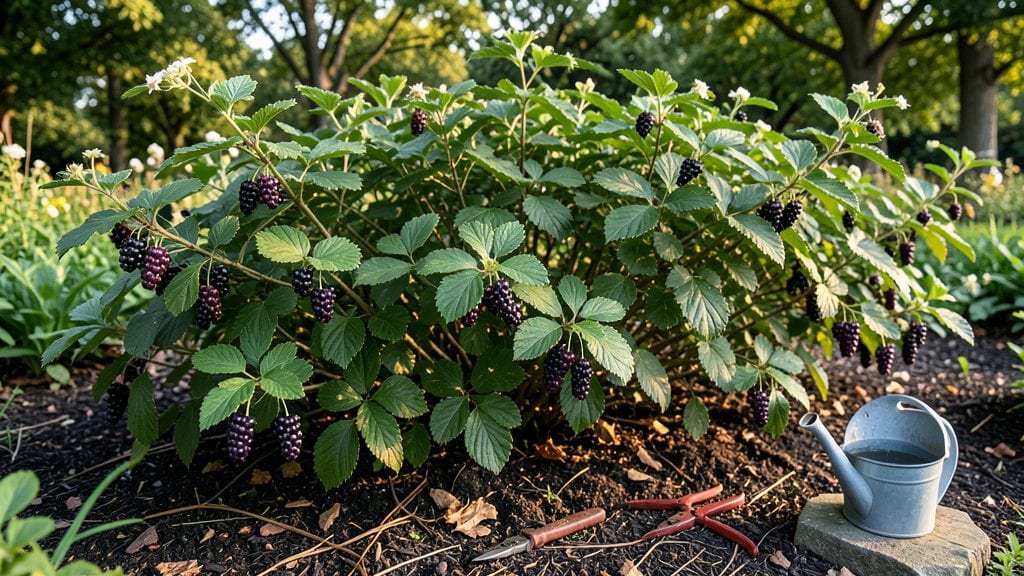
Boysenberries grow as sprawling brambles, not trees, creating dense bushes that spread 6-10 feet tall with arching canes needing sturdy trellises. These hardy plants flourish in cool climates, bearing juicy berries in late summer when planted in full sun with rich, draining soil.
Boysenberries belong to the bramble family (like blackberries and raspberries), meaning they grow as vigorous, thorny vines rather than upright trees.
Their rapid growth—up to 3 feet per season—makes them perfect for large gardens or trellis systems. 🌿 The key to their success lies in their deep root systems, which anchor them while accessing moisture efficiently.
Unlike true fruit trees, boysenberries produce berries along the current year's canes, so pruning in late winter is crucial to encourage new growth and maximize yields.
When choosing varieties, consider your climate: 'Thornton' thrives in cooler regions with its disease resistance, while 'Loch Ness' offers larger berries but needs slightly warmer conditions. Both varieties reward gardeners with sweet-tart berries perfect for jams, pies, or fresh eating—just be prepared for their aggressive spreading habit if unchecked!
💡 In This Article
- Boysenberry Plant Growth Mechanics and Climate Needs
- Best Boysenberry Varieties for Home Gardens
Boysenberry plant growth mechanics and climate needs
Boysenberries are part of the Rubus genus, specifically hybrid brambles created by crossing blackberries, raspberries, and loganberries. Unlike true fruit trees, which develop woody trunks and permanent branches, boysenberries grow as perennial vines that produce new canes annually.
These canes grow 3-5 feet per season and bear fruit only in their first year before dying back.
The plant's rapid expansion comes from its fibrous root system, which spreads horizontally up to 6 feet wide while sending deep vertical roots 3-4 feet underground for stability and moisture access. 🌱
Their growth habit creates a multi-layered bush structure where older canes form the base while newer growth arches outward. This architecture maximizes sunlight exposure for berry development—each cluster needs 6-8 hours of direct sunlight daily to develop full sugar content (typically 10-15% Brix).
The berries' signature sweet-tart flavor comes from this balance: sunlight triggers photosynthesis that converts sugars, while cooler nights preserve acidity. In regions with hot summers above 90°F, berries may develop less vibrant color and lower acidity, resulting in a flatter taste profile.
Climate preferences reveal why boysenberries thrive in USDA Zones 5-8. They enter dormancy when temperatures drop below 20°F, making them vulnerable to winter dieback in colder zones without protection.
The ideal temperature range for active growth is 60-75°F, with frost-sensitive flowers blooming in spring when nighttime temps stay above 45°F. Here's what happens when conditions stray: Below 50°F during flowering causes poor pollination, while above 85°F during fruit set accelerates ripening and reduces shelf life.
The plant's ability to handle moderate drought comes from its deep roots, but prolonged dry spells (30+ days without rain) will reduce yields by 30-50%. 💧
Soil composition plays a surprising role in berry flavor development. Boysenberries prefer slightly acidic soil (pH 5.5-6.5), where nutrients like phosphorus become more available. The ideal mix is 60% sandy loam for drainage combined with 30% organic matter (compost or well-rotted manure) to retain moisture.
Heavy clay soils cause root rot, while pure sand leads to nutrient deficiencies—both scenarios reduce sugar accumulation in the berries.
The plant's aggressive growth habit means it competes fiercely with weeds, so maintaining a 3-inch mulch layer around the base conserves moisture and prevents soil-borne diseases that can reduce yields by up to 40%.
What most gardeners don't realize is how sunlight quality affects flavor. While quantity matters, morning sun (with its cooler temperatures) produces berries with higher anthocyanin levels (the compounds that give them their deep red-purple hue and antioxidant properties). Afternoon sun, though intense, can cause sunburn spots on exposed berries.
The optimal scenario is eastern or southeastern exposure, where canes receive gentle morning light followed by partial afternoon shade. This balance creates berries with 20% more vitamin C compared to those grown in full western sun. 🌞
For those in humid climates (like the Southeast), disease pressure becomes the limiting factor. The Botrytis cinerea fungus thrives in warm, moist conditions, causing gray mold that can destroy 70% of a crop if unchecked.
Here, selecting varieties like 'Loch Ness' (with its moderate disease resistance) and using drip irrigation (to keep foliage dry) becomes essential.
In contrast, arid regions require regular watering during fruit set to prevent berry splitting—a condition where rapid growth causes the skin to crack when soil moisture fluctuates dramatically.