
Diseases
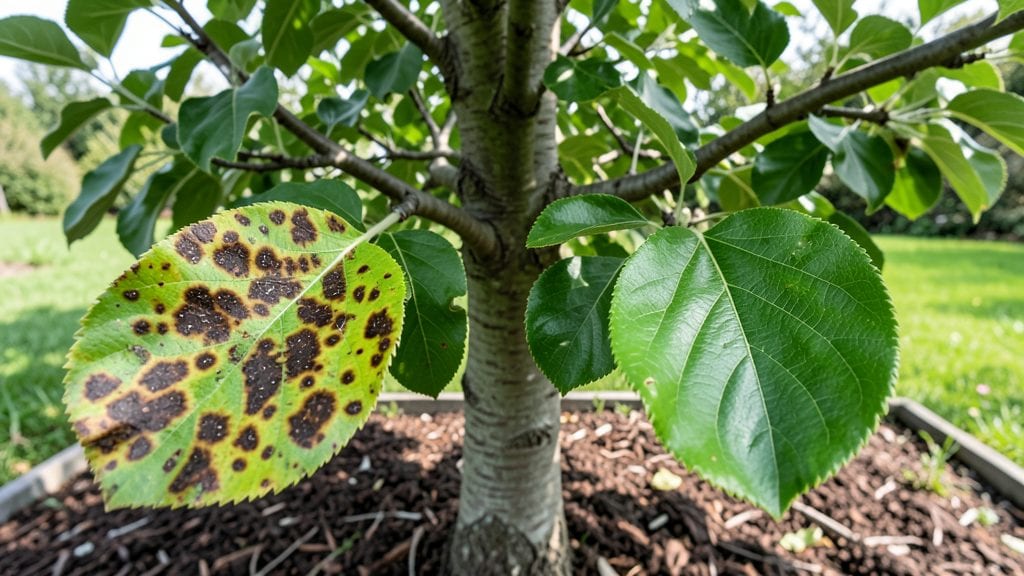
Brown spots on apple tree leaves can turn your harvest from golden to gloomy faster than you'd expect. 🍏 I’ve watched entire branches blacken when ignored, but the right moves—like pruning infected leaves early or spraying copper fungicide—can save your tree before the season’s over.
The culprits are usually fungal diseases like apple scab or cedar apple rust, but stress from drought or pests can mimic the damage. Start by removing fallen leaves (they’re fungus incubators) and watering at the base—not overhead—to keep leaves dry.
Organic options like neem oil or baking soda spray work well for mild cases, but severe infections might need stronger fungicides.
You’ll see new growth within weeks if you act fast, with leaves staying glossy green instead of spotted brown. The key is consistency—check your tree every 10 days during wet seasons and prune aggressively in late winter to improve airflow.
Most home gardeners fix this without calling an arborist, but if spots spread despite treatment, it’s time to ask for help.
This works for backyard orchards, container-grown trees, and even urban fruit gardens. The same rules apply whether you’ve got one tree or a dozen—just scale the cleanup and sprays. Let’s get your apple tree back to healthy and productive.
Understanding The Root Causes
Brown spots on apple tree leaves aren’t just a cosmetic issue—they’re a red flag signaling trouble beneath the surface. Whether it’s a sudden outbreak or a slowly spreading problem, these spots are rarely random.
Below, we break down the most common culprits, backed by science, so you can diagnose the issue with confidence.
Fungi are the #1 cause of brown spots on apple leaves, thriving in warm, damp conditions. These microscopic organisms release spores that latch onto leaves, disrupting photosynthesis and weakening the tree over time. Here’s how they strike:
🍎 Apple Scab (Venturia inaequalis)
The most notorious fungal villain, apple scab causes dark, olive-brown spots with fuzzy edges that eventually turn grayish. It spreads via water splashes during rainy seasons or overhead irrigation. Left unchecked, infected leaves curl, drop prematurely, and reduce fruit quality.
- Key clue: Spots appear purplish-black and velvety when damp.
- Peak risk: Spring and early summer (50–70°F with high humidity).
- Science note: The fungus overwinters in fallen leaves, so cleanup is critical.
🌬️ Powdery Mildew (Podosphaera leucotricha)
This fungus creates white, powdery patches that later turn brown and crispy, especially on the upper leaf surface. Unlike scab, powdery mildew thrives in dry heat (75–85°F) and spreads via windborne spores. Severe cases stunt growth and lower fruit yield.
- Key clue: Leaves may appear bleached with a mealy texture.
- Peak risk: Late spring to summer (poor air circulation worsens it).
- Science note: It’s obligate biotrophic, meaning it only infects living tissue.
🌧️ Anthracnose (Gloeosporium spp.)
A less common but aggressive fungus, anthracnose creates sunken, brown lesions with red or pink margins. It attacks during prolonged wet periods, often after hail or heavy rain, and can infect both leaves and fruit.
- Key clue: Spots may oozes pink spores in damp conditions.
- Peak risk: Early spring (when buds swell) and after storms.
- Science note: It survives in infected plant debris for years.
Not all brown spots are fungal—sometimes, your apple tree is begging for better care. Environmental factors can mimic disease symptoms, often starting as small, dry patches that expand.
☀️ Sunburn or Heat Stress
Young, thin leaves are vulnerable to UV damage when exposed to intense afternoon sun, especially after frost or transplant shock. Sunburned leaves develop brown, papery spots with ragged edges, often on the upper surface.
- Key clue: Spots appear on exposed leaves (e.g., outer canopy).
- Peak risk: Late spring/early summer (85°F+ with low humidity).
- Science note: Photosynthesis proteins denature under extreme heat.
💧 Water Stress (Over/Under-Irrigated)
Brown spots can also signal root issues. Overwatering suffocates roots, leading to yellowing edges with brown necrosis, while underwatering causes crispy, curled leaves with dull brown patches.
- Key clue: Check soil moisture—soggy soil = fungal risk; dry soil = stress spots.
- Peak risk: Drought periods or poorly drained soil.
- Science note: Oxygen deprivation in waterlogged soil triggers anaerobic stress.
🌬️ Wind or Hail Damage
Physical trauma from strong winds or hail tears leaves, creating irregular brown patches with torn edges. Unlike fungal spots, these injuries are mechanical—no spores or fuzzy textures.
- Key clue: Look for physical tears or bruised areas.
- Peak risk: Storm season (spring/fall).
- Science note: Cell rupture disrupts leaf tissue integrity.
Insects and mites chew, suck, or inject toxins into leaves, leaving behind brown marks that mimic disease. These pests weaken the tree, making it more susceptible to fungi.
🐜 Apple Leaf Curling Midge (Dasineura mali)
Larvae of this tiny fly feed between leaf layers, causing brown, curled, and stunted growth. Heavy infestations turn entire leaves brown and brittle.
- Key clue: Look for rolled leaves with sawdust-like frass.
- Peak risk: Late spring (larvae emerge in May).
- Science note: Larvae inject saliva that disrupts leaf development.
🕷️ Spider Mites (Tetranychus urticae)
These microscopic pests suck sap, causing stippled brown patches (especially on the lower leaf surface). Severe cases lead to webbed leaves and premature leaf drop.
- Key clue: Use a magnifying glass—look for tiny yellow dots.
- Peak risk: Hot, dry weather (mites thrive at 80°F+).
- Science note: They produce silk to protect egg sacs.
🐛 Apple Sawfly (Hoplocampa testudinea)
Larvae skeletonize leaves, leaving behind brown, lace-like patterns. While not always fatal, repeated attacks stress the tree, reducing vigor.
- Key clue: Leaves have chewed holes with brown edges.
- Peak risk: Early spring (larvae emerge in April).
- Science note: Larvae prefer new growth for feeding.
Next up: How to diagnose your tree’s specific issue—and what to do about it.
Quick Fixes for Apple Tree Leaf Spots
Brown spots on apple tree leaves can be frustrating, but the good news is that most issues are treatable—especially if you catch them early! Below, we’ve mapped out practical solutions for the most common causes, along with prevention tips to keep your tree healthy long-term.
No fancy tools or chemistry degrees required—just a little know-how and elbow grease.
Fungi love damp conditions, and apple trees are prime targets. Here’s how to fight back and prevent recurrence:
🔥 Remove Infected Leaves & Debris
- Why? Fungal spores hibernate in fallen leaves and twigs, ready to reinfect next season.
- How?
- Rake up all leaves, especially under the tree, and dispose of them in the trash (🚫 not the compost pile).
- Prune out dead or heavily spotted branches—sterilize your pruners with rubbing alcohol between cuts.
- Bag and remove any mummified fruit (small, shriveled apples) from the ground.
🍳 Apply Fungicide (Organic or Chemical)
- Best options:
- Neem oil (natural, prevents spore germination) – Mix 1 tsp neem oil + 1 tsp mild soap per quart of water.
Spray every 7–10 days during wet seasons. - Baking soda spray (cheap and effective) – Combine 1 tbsp baking soda + 1 tsp oil + 1 gallon water. Add a drop of dish soap as a sticker.
Spray weekly when leaves are dry. - Copper fungicide (for severe cases) – Follow label instructions for preventative sprays in early spring.
🌡️ Improve Airflow & Reduce Moisture
- Why? Fungi thrive in humid, stagnant conditions.
- How?
- Thin out dense branches to let sunlight and air circulate.
- Water at the base (not overhead) to avoid wetting leaves.
- Mulch properly (3–4 inches of organic mulch) to regulate soil moisture without smothering roots.
🎯 Prevention for Next Season
- Plant resistant varieties (e.g., ‘Liberty’ or ‘Enterprise’ apple trees tolerate scab better).
- Apply fungicide preventatively in early spring (before buds swell) and again after petal fall.
- Avoid overhead irrigation—drip systems or soaker hoses work best.
Tiny critters can chew or inject toxins, causing brown spots. Starve them out with these steps:
👨🍳 Blast Off Pests with Water
- Why? Many pests hate high-pressure water blasts.
- How?
- Use a hose with a nozzle to spray leaves forcefully (especially undersides).
- Do this early morning so leaves dry quickly.
🕷️ Introduce Beneficial Insects
- Ladybugs, lacewings, and parasitic wasps eat aphids and mites.
- Buy them online or attract them naturally with dill, fennel, or marigolds planted nearby.
🥘 Use Insecticidal Soap or Horticultural Oil
- DIY recipe: Mix 2.5 tbsp castile soap + 1 quart water (or buy pre-made).
- Spray directly on pests (avoid hot sun—it can burn leaves).
- Reapply every 5–7 days until pests vanish.
⏰ Monitor & Act Fast
- Check leaves weekly for new infestations.
- Yellow sticky traps can catch flying pests like leafhoppers.
Sometimes brown spots aren’t a disease—they’re your tree’s way of saying, “I’m struggling!”
💡 Adjust Watering Habits
- Overwatering? Leaves may turn brown and crispy at the edges.
- Fix: Water deeply but less frequently (1–2 inches per week, including rain).
- Underwatering? Leaves may curl and develop brown patches.
- Fix: Water slowly at the base until soil is moist 6 inches down.
🌱 Boost Soil Health
- Test your soil (kits are cheap at garden centers).
- Add compost or organic matter (e.g., aged manure, worm castings).
- Fertilize in early spring with a balanced 10-10-10 or apple-tree-specific formula.
🔥 Protect from Harsh Sun
- Newly planted trees? Use shade cloth (30–50%) for the first year.
- Mature trees? Ensure they’re not suddenly exposed to full sun after shade (e.g., from nearby tree removal).
- Prune in late winter/early spring to improve airflow and sunlight.
- Avoid injury—damaged bark is an open door for fungi and pests.
- Keep grass trimmed under the tree (short grass = less fungal habitat).
- Rotate fungicides/pesticides if using chemicals to prevent resistance.
Pro Tip: 🌿 The best cure is prevention! Healthy trees resist diseases and pests better. Spend 10 minutes weekly inspecting leaves, and you’ll catch issues before they spread. Your apple tree will thank you with juicy, blemish-free fruit come harvest season!
Frequently asked questions
Why do brown spots appear on apple tree leaves in dry weather?
Dry weather often signals powdery mildew or heat stress. Powdery mildew creates white, powdery patches that turn brown, especially in hot, dry conditions (75–85°F). Heat stress causes papery brown spots on exposed leaves when temperatures exceed 85°F. Check for fuzzy textures (mildew) or crispy edges (sunburn) to diagnose.
Can I use household items like vinegar to treat brown spots?
Vinegar is too harsh for apple trees—it can burn leaves. Instead, try a baking soda spray (1 tbsp baking soda + 1 tsp oil + 1 gallon water) or neem oil (1 tsp neem + 1 tsp soap per quart of water). Both are safe, organic, and effective for fungal spots. Always spray in the early morning to avoid leaf damage.
How do I know if my apple tree has a fungal disease vs. pest damage?
Fungal spots (like apple scab) often have fuzzy edges or oozing spores, while pest damage (e.g., spider mites) shows stippled yellow dots or chewed holes. Use a magnifying glass to check for tiny pests or inspect the undersides of leaves—pests hide there. Fungal spots spread slowly; pest damage appears suddenly.
Will pruning help stop brown spots from spreading?
Yes! Prune infected branches in late winter or early spring to improve airflow and sunlight penetration. Remove all fallen leaves (they harbor fungal spores) and sterilize pruners with rubbing alcohol between cuts. Thin dense branches by 20–30% to reduce humidity, which fungi love. Prune on a dry day to avoid spreading spores.
When should I call an arborist for brown spots?
If 50%+ of leaves are severely spotted, fruit is infected, or spots reappear despite treatment, consult an arborist. They can identify aggressive pathogens (like anthracnose) or recommend systemic fungicides if organic methods fail. For young trees (3 years old), act fast—delayed treatment can stunt growth or kill the tree.