
Pruning
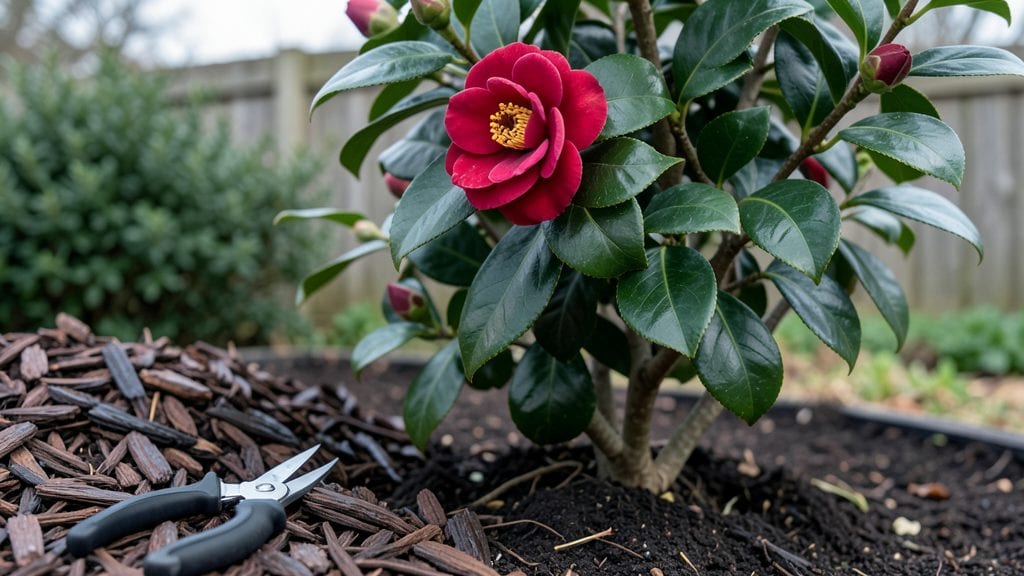
Pruning camellia trees should happen after their blooms fade, ideally between late spring and early summer, to preserve next year’s flower buds. Always use sterilized pruners and remove only dead, crossing, or congested branches while keeping the tree’s natural form.
Timing matters because camellias set their flower buds on old wood—meaning last year’s growth. 🌸 Cutting too early risks removing next season’s blooms entirely, while waiting too long can stress the tree.
I’ve seen spring-blooming varieties (like Camellia japonica) thrive when pruned right after their flowers drop, while fall-bloomers need a slightly adjusted approach. The key is observing your specific variety’s bloom cycle and acting within the ideal window.
Beyond timing, your tools and technique make all the difference. A sterilized bypass pruner prevents disease spread, while proper cuts just above a bud or branch collar encourage faster healing. Thinning cuts (removing entire branches) improve airflow better than heading cuts (shortening branches), which can stimulate dense, less attractive growth.
Always clean pruners with rubbing alcohol between cuts to avoid bacterial contamination.
💡 In This Article
- Optimal Pruning Seasons for Camellia Blooms
- Essential Pruning Tools and Techniques for Camellias
Optimal pruning seasons for camellia blooms
Here's what's actually happening biologically: Camellia flower buds form on old wood—meaning last year's growth—typically between late summer and early fall. These buds require 6-8 months of dormancy to mature properly, which explains why pruning too early can remove next season's blooms entirely.
The tree's growth cycle is tightly linked to climate zones: In warmer regions (USDA zones 7-10), buds form earlier, while colder zones (6-7) have a delayed formation period due to shorter growing seasons.
The key factor is understanding your specific camellia variety. Spring-blooming types like Camellia japonica set buds in late summer (August-September) and bloom in February-April, making late spring (May-June) the ideal pruning window.
Fall-bloomers like Camellia sasanqua form buds in early summer (June-July) and bloom in October-November, so prune immediately after blooming (December-January) to avoid cutting off next year's flowers. 🌿
What most people don't realize is how temperature affects bud formation. Camellias need consistent 60-75°F temperatures during bud development—too hot or too cold can cause buds to abort.
In regions with hot summers, prune in early spring (March-April) to avoid heat stress, while in cooler climates, wait until late spring (June) when temperatures stabilize. The goal is to prune when new growth has just begun but before buds have fully formed.
Climate also dictates pruning intensity. In humid southern climates, prune more aggressively to improve airflow and prevent fungal diseases like anthracnose. In drier northern climates, be more conservative to avoid stressing the tree during water-scarce periods.
The rule of thumb is to remove no more than 25-30% of the tree's foliage in any single pruning session to maintain its natural vigor.
Consider these seasonal adjustments based on your location:
- Southern climates (zones 8-10): Prune May-July after spring blooms fade, when temperatures are 75-85°F
- Coastal regions (zones 7-9): Prune April-June to avoid summer humidity that promotes fungal growth
- Northern climates (zones 6-7): Prune June-July when soil temperatures reach 60°F+ consistently
The science behind this timing involves hormonal changes in the tree. Pruning stimulates the production of auxin (a growth hormone) that promotes new shoot growth, but if done too early, it can disrupt the florigen hormone responsible for flower bud formation.
This is why precise timing—right after blooming—gives the tree time to complete its hormonal reset before winter dormancy. 🌸