
Container Gardens
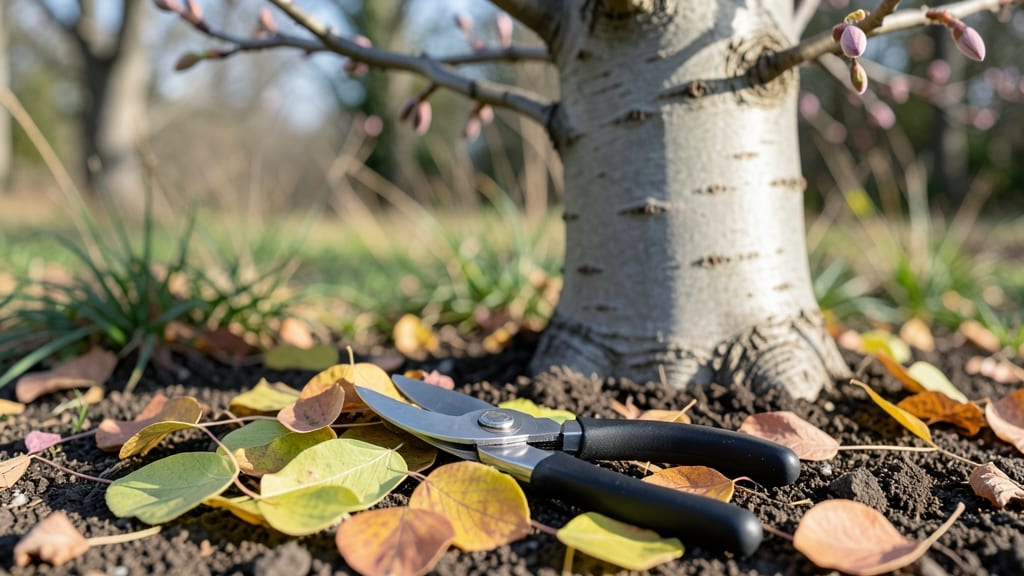
You can prune a redbud tree in the fall, but only lightly after leaf drop and before hard frost—late cuts risk stimulating tender growth that winter cold can damage. Heavy pruning should always wait for late winter or early spring to ensure proper healing and vibrant blooms.
Fall pruning becomes tricky because redbud trees enter dormancy to conserve energy for spring blooms.
When you trim too late in the season, you disrupt this natural process, forcing the tree to grow new, delicate shoots that won't survive freezing temperatures. 🌳 This is why even experienced gardeners recommend minimal shaping in fall—just enough to remove dead branches or lightly shape the canopy.
The real secret to success? Pruning at the right moment: after leaves fall but before the first frost hits your region.
Think of it like giving your tree a light haircut instead of a full makeover. A sharp bypass pruner and sterilized cuts (about ¼-inch above a bud) make all the difference. The goal is to avoid stressing the tree when it's already preparing for winter.
For heavy shaping, patience pays off—wait until late winter when the tree is still dormant but the threat of frost has passed.
💡 In This Article
- Redbud Tree Pruning Risks in Fall: Science and Seasonal Impact
- Safe Fall Redbud Tree Pruning: When and How to Trim Lightly
Redbud tree pruning risks in fall: science and seasonal impact
The key problem with fall pruning stems from redbud trees' natural growth cycle. When you trim branches after mid-October, you disrupt the tree's transition into dormancy. The tree perceives cuts as damage and responds by producing new, tender shoots to replace lost foliage.
These new growths lack the hardened, woody structure needed to survive winter freezes, often dying back to 10-15°F temperatures. 🌬️ This is particularly risky in regions with unpredictable frost patterns, where late-season warmth can fool the tree into growing when cold snaps are still possible.
Scientifically, this growth response happens because pruning stimulates the release of auxin hormones, which promote cell elongation. In fall, redbud trees are already reducing sap flow to 10-20% of summer levels as they prepare for winter.
Cutting branches forces the tree to divert precious energy and nutrients to new growth instead of storing them in roots and trunk tissues. The result? Weaker root systems and reduced energy reserves for next year's spring blooms, which are already determined by buds formed the previous summer.
Disease susceptibility becomes another major concern. Fresh cuts in fall provide entry points for fungal pathogens like Nectria canker, which thrives in the 50-60°F temperatures common during late fall. These pathogens can overwinter in the tree's wounds, leading to dieback and reduced vigor.
The tree's natural defenses are also weakened as it conserves resources for survival. In contrast, late-winter pruning (when temperatures average 30-40°F) minimizes disease risk because fungal spores are less active and the tree's wound closure mechanisms are more efficient.
Here's what's actually happening at the cellular level: Redbud trees form flower buds on one-year-old wood during the previous summer. These buds remain dormant until spring when hormones trigger their development.
When you prune in fall, you remove potential flowering sites and force the tree to allocate energy to non-flowering growth. Studies show that heavy fall pruning can delay bloom time by 7-14 days or even reduce bloom quantity by 20-30% in subsequent seasons.
The tree simply hasn't had time to prepare properly for its spring display.
Consider this comparison: A redbud tree pruned lightly in fall (removing only 10% of canopy volume) shows minimal stress responses, while one subjected to heavy pruning (30%+ canopy removal) exhibits visible dieback and reduced flowering.
The difference comes down to how much the tree can compensate for the loss.
In fall, compensation growth is weak and vulnerable, whereas late-winter pruning allows the tree to heal wounds before the growing season begins. 🌱 This timing difference explains why professional arborists recommend waiting until late February to early March for optimal results.