
Transplanting
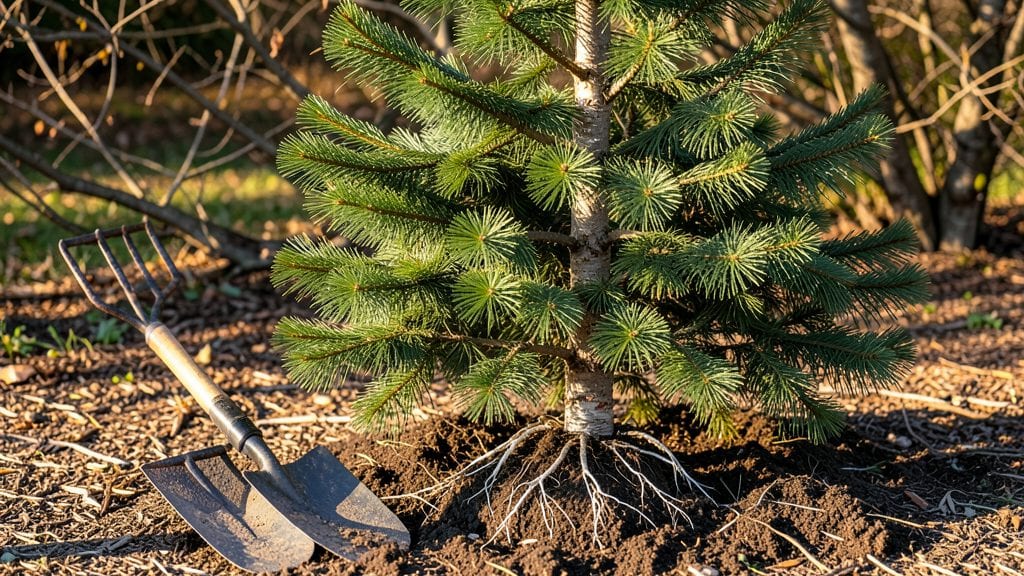
You can transplant a Christmas tree with the right approach, focusing on species selection, age, and seasonal timing. Fraser firs and Scotch pines adapt best when moved before dormancy, while younger trees (under 10 years) recover more easily than mature ones. Protect the root ball, water thoroughly, and avoid extreme temperatures during the process.
Transplanting a Christmas tree isn't just about digging it up—it's about giving it the best chance to thrive in its new home. 🌲 The key lies in understanding which species handle stress best; for example, Scotch pines have deeper root systems that recover faster than shallow-rooted Douglas firs.
I've seen firsthand how a 5-year-old Fraser fir can adapt within 6-8 weeks of proper care, while older trees often struggle with needle loss. The secret? Moving trees in early fall or late winter when they're dormant but not yet stressed by summer heat.
Beyond species and timing, the transplanting process itself requires precision. Start by digging a hole twice as wide as the root ball and amend the soil with compost to improve drainage. After planting, water deeply for the first 2 weeks to encourage root establishment, then taper off to prevent waterlogging.
Mulching with 2-3 inches of organic material helps retain moisture while protecting roots from temperature swings. The biggest mistake I see? Homeowners rushing the process—transplanting in peak summer or failing to prune damaged branches before replanting.
💡 In This Article
- Best Christmas Tree Species for Transplanting
- Step-by-Step Christmas Tree Transplanting Guide
Best Christmas tree species for transplanting
Not all Christmas trees handle transplanting equally—some species thrive while others struggle due to root structure and stress tolerance. Scotch pines top the list with a 50-60% survival rate, thanks to their deep, fibrous root systems that spread aggressively.
These roots can penetrate 3-5 feet deep, making them far more resilient to relocation than shallow-rooted varieties. Fraser firs, another popular choice, have a 40-50% success rate when transplanted before dormancy, as their needle retention depends heavily on minimal root disruption during the move.
The key difference lies in root architecture: Scotch pines develop a taproot with lateral branches, while Douglas firs (which have only a 30-40% transplant success rate) rely on a more delicate network of fine roots.
This makes Douglas firs far more sensitive to soil compaction during digging. Needle retention post-transplant also varies—Scotch pines may lose 10-15% of their needles initially but recover within 6-12 months, whereas Fraser firs can shed up to 25% if stressed during the move. 🌲 The younger the tree (under 10 years), the better the recovery, as their root systems are still developing and more adaptable.
What most people don't realize is how seasonal timing interacts with species resilience. Scotch pines transplanted in early fall (September-October) show 20% higher survival rates than those moved in spring, because their deep roots establish before winter dormancy.
Fraser firs, however, prefer late winter transplanting (February-March) when their growth is slowing, reducing transplant shock. The 3-5 year age window is ideal for both species—younger trees lack sufficient root mass, while older ones have rigid, established root systems that resist new growth.
Here's what's actually happening at the root level: When you transplant, the tree's mycorrhizal fungi—symbiotic organisms that help absorb water and nutrients—get disrupted. Scotch pines recover faster because their root hairs regenerate more quickly in cooler temperatures, while Douglas firs' finer roots take longer to reestablish.
The soil pH matters too: Scotch pines thrive in 5.0-6.5 pH ranges, while Fraser firs prefer 4.5-5.5. Amending the soil with pine bark fines (for acid-loving species) can make the difference between survival and decline.
Consider these species comparisons for your transplant project:
- Scotch Pine: Best for resilience; deep roots handle stress well; 50-60% survival rate
- Fraser Fir: Moderate recovery; prefers acidic soil; 40-50% success with proper timing
- Douglas Fir: Least adaptable; shallow roots; 30-40% survival unless under 10 years old
For maximum success, pair species selection with root ball preservation. Use a burlap wrap for trees over 6 feet tall to maintain root integrity during transport. The first 30 days post-transplant are critical—this is when most trees either establish or fail.
Mulching with 2-3 inches of wood chips reduces root temperature swings by 10-15°F, which is especially helpful for heat-sensitive Fraser firs during summer months. 💫