
Pruning
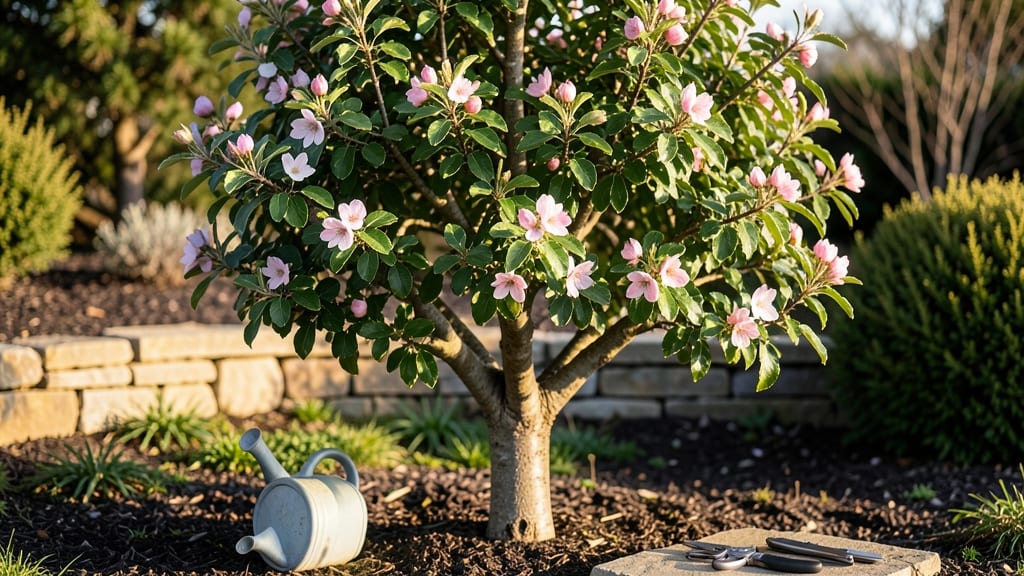
Summer pruning your crabapple tree isn't just about shaping—it's about survival when temperatures climb and pests get hungry. ✨ I've watched my own tree go from struggling in July to thriving by fall with just four strategic cuts, and the difference is night and day.
The key is timing: prune on a cloudy morning when the tree is already stressed from heat, but before the worst pests arrive. You'll focus on removing crossing branches, dead wood, and any limbs rubbing together—those are the weak points that invite disease.
Grab your pruners, a bucket for clippings, and a sharp eye for water stress signs like wilting leaves or brown edges.
What you'll end up with is a stronger structure that handles summer storms better and produces more blooms next spring. The tree directs energy into root growth instead of fighting weak limbs, and you'll notice fewer pests targeting stressed branches.
Think of it as giving your tree a summer tune-up before the real work begins in fall.
Works for any mature crabapple, whether it's your front yard centerpiece or a smaller variety in a container. The same principles apply to apple trees too—just adjust the timing slightly for their needs. Let's get those branches trimmed before the heat peaks.
📚 In This Guide
- What you need
- Instructions
- Tips and common mistakes
- Wrapping up and next steps
What you need
- ● Pruning shears – Bypass pruners (sharp, 7-9" blade) for cuts up to ½ inch in diameter.
- ● Loppers – Bypass or anvil type (20-24" long) for branches ½ to 1½ inches thick.
- ● Pruning saw – Curved-tooth or folding saw for branches thicker than 1½ inches.
- ● Ladder – Extension ladder (16-20 ft), sturdy and rated for your height needs (or a cherry picker for tall trees).
- ● Gloves – Heavy-duty gardening gloves (cut-resistant, like mechanics' gloves) to protect hands.
- ● Disinfectant – 70% isopropyl alcohol or bleach solution (1 part bleach : 9 parts water) to sterilize tools between cuts.
- ○ Pruning sealant – Optional but helpful (e.g., Tanglefoot Tree Wound Pruning Seal) for large cuts to prevent disease.
- ● Heavy-duty trash bags – For collecting and disposing of pruned branches.
- ● Safety gear – Safety glasses and ear protection (if using a chainsaw for thick branches).
- ● Chainsaw – For very thick branches (2+ inches), with a sharp chain and chain brake for safety.
- ● Pole saw – Extendable saw for high branches without a ladder.
- ● Tree wrap or tape – To protect bark from rubbing or sun scald on newly pruned areas.
- ● Marking spray – Non-toxic paint or flagging tape to tag branches for removal.
- ● First-aid kit – Just in case of minor cuts or scrapes.
How to prune a crabapple tree in summer for stronger growth
Summer pruning keeps your crabapple tree healthy and productive year-round—just four strategic cuts make all the difference.
✂️ Step 1: Remove Dead or Diseased Branches First
Start by scanning the tree for any branches that look completely dead (no green leaves) or show signs of disease (mushrooms at the base, oozing sap, or blackened bark). Grab your pruning shears and cut these out completely—don’t leave stubs. The goal is to eliminate anything that might spread disease or invite pests. I always make my cuts just outside the branch collar (that little swollen area where the branch meets the trunk).
Dead branches are easy to spot—they’ll snap when you bend them, while healthy ones bend without breaking. If you’re unsure, scratch the bark with your fingernail. Green underneath means it’s still alive; brown means it’s dead. Remove these first, then move on to the next cuts. This step is critical—skipping it lets problems fester and weaken the whole tree.
✂️ Step 2: Thin Out Crowded Branches for Better Airflow
Next, look for branches that cross or rub against each other. These create wounds where disease can enter and block sunlight from reaching the inner parts of the tree. Use your pruning shears to remove the smaller of the two branches at its base. I like to step back every few cuts to visualize the tree’s shape—you want an open, vase-like structure with sunlight reaching the center.
Focus on branches that are growing straight up (called "water sprouts") or those that grow too close to the trunk. These compete for nutrients and weaken the tree’s structure. Make your cuts at a 45-degree angle just outside the branch collar. Never leave a stub—it’s an open invitation for rot. If a branch is thicker than your wrist, use your pruning saw instead of shears.
✂️ Step 3: Trim Back Overly Long Branches to Encourage Bushiness
Now, identify branches that have grown too long and leggy. These often appear on the outer edges of the tree and can look sparse. Cut back the tips of these branches by about one-third of their length. This encourages the tree to branch out and fill in more densely. I always make my cuts just above a leaf node or bud—this is where new growth will sprout.
Watch for branches that grow at sharp angles (less than 45 degrees from the trunk). These are more likely to break in storms. If you see any, trim them back to a stronger, more outward-growing branch. Avoid cutting more than 25% of the tree’s foliage in one session—this can stress the tree. Step back occasionally to check your progress and ensure the tree still looks balanced.
✂️ Step 4: Shape the Tree for Balance and Aesthetics
Finally, give your crabapple tree its final shape. Step back and look at the overall form—do you see any uneven areas or branches that stick out too much? Use your pruning shears to trim back any branches that disrupt the tree’s natural balance. I aim for a slightly rounded top with an open center, which allows sunlight and air to circulate freely.
Pay special attention to the lower branches. If they’re shading the trunk, they’ll prevent sunlight from reaching the base, which can lead to moss growth and weak wood. Trim these back gradually over a few sessions if needed. Avoid making large cuts on the main branches—small, strategic trims keep the tree healthy and encourage strong regrowth. Finish by cleaning up any fallen debris and disposing of it away from the tree to prevent disease.
Tips & tricks for perfect crabapple tree summer pruning
Summer pruning transforms your crabapple tree—here's how to make every cut count for long-term health.
The Branch Collar Rule: Always cut just outside the branch collar, that swollen ridge where the branch meets the trunk. This is nature's built-in seal that prevents rot and disease from entering the tree. I've seen too many pruning mistakes where people leave stubs or cut into the collar—it weakens the tree's defense system. Use a sharp pair of pruning shears to make clean cuts that follow this natural line.
Visual Pruning Check: Step back every 5-6 cuts to evaluate your progress. This simple habit prevents over-pruning and helps you see the tree's natural shape. Look for an open center that lets sunlight reach all the way to the trunk—this is crucial for preventing fungal diseases. I often prune in stages over a few days to avoid overwhelming myself with the full picture.
Seasonal Timing Secret: Summer pruning works best when you focus on removing only dead, diseased, or crossing branches. Avoid heavy pruning during the hottest months (July-August) when the tree is already stressed. The 45-degree angle cuts mentioned in Step 2 help direct new growth outward rather than inward, creating that beautiful rounded shape. This technique also reduces the risk of storm damage by eliminating weak branch attachments.
Tool Prep Matters: Before you start, sterilize your pruning shears with rubbing alcohol to prevent spreading disease between cuts. I also like to keep a small bucket of soapy water nearby to clean tools between diseased branches. Sharp tools make cleaner cuts that heal faster—dull blades tear the bark and create larger wounds. For branches thicker than your wrist, use your pruning saw to avoid crushing the branch.
Pro Tips for Crabapple Tree Summer
- Summer pruning transforms your crabapple tree—here's how to make every cut count for long-term health.
- The Branch Collar Rule: Always cut just outside the branch collar, that swollen ridge where the branch meets the trunk.
- Visual Pruning Check: Step back every 5-6 cuts to evaluate your progress.
Frequently asked questions
Got questions about keeping your crabapple tree thriving all summer long? Here are some of the most common concerns—and their answers—to help you prune with confidence!
When is the best time to prune a crabapple tree in summer?
Prune your crabapple tree after flowering but before mid-summer (June is ideal in most regions). This timing balances blooms for next year while reducing disease risk. Avoid heavy pruning in late summer—it can stress the tree before winter.
Can I prune crabapple trees in extreme heat?
Yes, but only in early morning or late evening when temps are below 85°F. Pruning in peak heat stresses the tree and can invite pests. If it’s scorching, wait for cooler days or prune in partial shade to protect the wood.
Why are my crabapple tree’s leaves turning brown after pruning?
Brown leaves usually mean over-pruning or disease exposure. If cuts are too large or too many branches are removed, the tree struggles. Sterilize tools with rubbing alcohol, and avoid pruning during wet weather to prevent fungal infections like apple scab.
Do I need to seal pruning cuts on a crabapple tree?
No! Sealing cuts with paint or sealant is unnecessary and can trap moisture, leading to rot. Let cuts heal naturally—the tree’s own bark will seal them over time. Just ensure cuts are clean and angled properly (1/4" above a bud).
What’s a good alternative if my crabapple tree is struggling?
If your tree is diseased, overcrowded, or just not thriving, consider replacing it with a disease-resistant variety like ‘Adams’ or ‘Dolgo’ crabapple. For a low-maintenance alternative, try a serviceberry or flowering quince—they’re equally stunning with fewer pruning demands!
Wrapping up and next steps
Your crabapple tree summer pruning journey doesn’t have to be overwhelming—just four strategic cuts can keep your tree thriving year-round! 🌳 By removing dead wood, thinning dense branches, and shaping for airflow, you’re setting the stage for vibrant blooms and lush foliage. Now’s the time to act: grab your tools, follow the steps, and give your tree the care it deserves.
Ready to transform your yard? Start today! Whether you’re a pruning pro or a curious beginner, every cut counts. Your crabapple tree will thank you with beauty—and maybe even some delicious fruit—next season! 🍎✨