
Trees
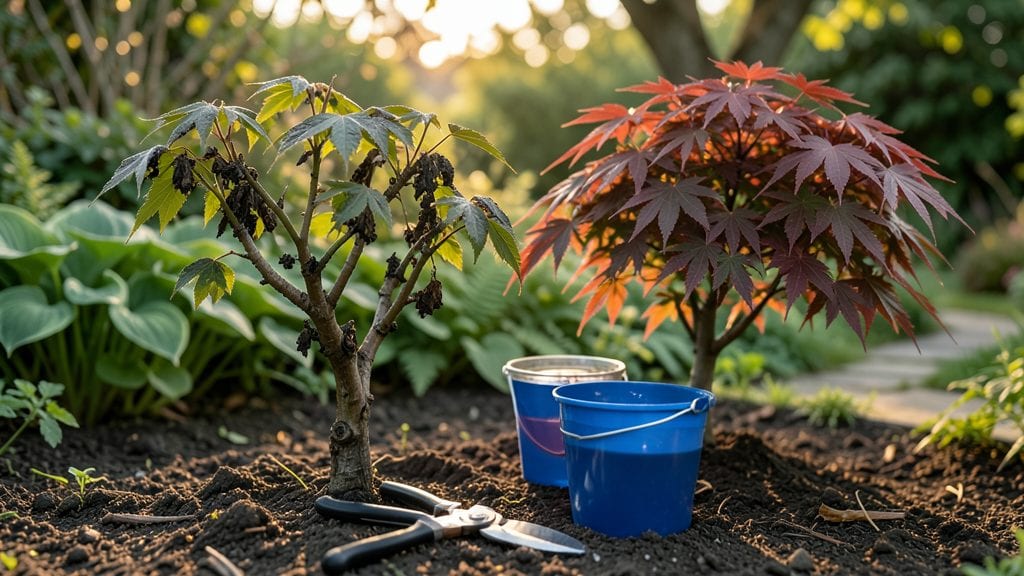
Japanese maple trees are the crown jewels of shady gardens—until disease strikes. 🌿 I’ve watched my own vibrant red foliage turn splotchy and sad from anthracnose and tar spot, and I’ll never ignore those first warning signs again.
These diseases don’t just mar the leaves; they weaken the tree’s structure, leaving it vulnerable to wind and pests.
The culprits are usually fungal spores lurking in damp conditions or poor air circulation. Anthracnose thrives in wet springs, while tar spot spreads like wildfire in humid summers.
The good news? Catching these early means you can often save your tree with targeted treatments—copper fungicides for anthracnose, neem oil for tar spot—before the damage becomes permanent.
You’ll spot the trouble first on the undersides of leaves: black spots, yellow halos, or that unmistakable tarry sheen. Prune infected branches in dry weather, apply fungicides preventatively in spring, and improve airflow with strategic thinning.
With the right care, your maple’s delicate leaves can bounce back to their showstopping glory.
When in doubt, consult an arborist—some diseases like verticillium wilt require professional intervention. But for most gardeners, a little vigilance and quick action can mean the difference between a sad, struggling tree and one that thrives for decades to come.
Root Causes Of Maple Tree Decline
Japanese maple trees (Acer palmatum) are prized for their delicate foliage and graceful form, but when they fall ill, the causes often trace back to environmental stress, pathogens, or poor cultural practices.
Understanding these root issues is the first step toward revival. Below, we break down the most common culprits—why your Japanese maple is struggling—and what triggers their decline.
Japanese maples thrive in specific conditions, and pushing them outside their comfort zone invites disease. Here’s how environmental extremes weaken their defenses:
- Extreme Heat or Drought Japanese maples prefer partial shade and consistent moisture, especially in their first few years.
When summer temperatures soar (above 85°F/30°C) or rainfall drops below 1 inch per week, the tree’s leaves wilt, curl, or develop brown edges—a sign of physiological stress.
This weakened state makes them vulnerable to fungal infections like anthracnose or powdery mildew. - Actionable fix: Mulch heavily (3–4 inches of organic mulch) to retain soil moisture and water deeply 2–3 times per week during droughts.
Drip irrigation or soaker hoses work best to avoid wetting foliage (which spreads disease).
- Cold or Frost Damage While some varieties (like Acer palmatum ‘Bloodgood’) tolerate Zone 5, sudden freezes (below 20°F/-7°C) can blacken leaves or kill branches. Winter desiccation—where dry winds sap moisture from the tree—is another silent killer, especially in windy, sunny winters. - Actionable fix: Apply anti-desiccant spray (like Wilt-Pruf) in late fall.
Wrap young trees with burlap or use tree guards to block harsh winds. Avoid pruning in late summer/fall, as new growth is more frost-sensitive.
- Poor Soil Drainage or pH Imbalance Japanese maples hate soggy roots—waterlogged soil cuts off oxygen, leading to root rot (often caused by Phytophthora fungi).
Conversely, alkaline soil (pH > 7.0) locks out essential nutrients like iron and manganese, causing yellowing leaves (chlorosis). - Actionable fix: Test your soil’s pH (aim for 5.0–6.5).
Amend with sulfur or peat moss to lower pH. If drainage is poor, raise the tree on a mound of gravel or plant in a well-draining mix (60% topsoil, 30% compost, 10% perlite).
Diseases exploit stressed trees, but some pathogens specifically target Japanese maples. Here’s how they strike:
- Anthracnose (Colletotrichum and Elsinoë Fungi) This leaf-spotting disease thrives in wet, humid conditions (like spring rains). Symptoms include dark, sunken lesions on leaves, premature leaf drop, and blackened twigs.
Severe cases can defoliate the tree by summer. - Why it spreads: Fungal spores splash onto leaves from infected mulch or soil. Overhead watering accelerates transmission. - Actionable fix: Prune and destroy infected leaves in early spring.
Apply copper fungicide (like Bonide Copper Fungicide) at bud swell and again after rain. Space waterings to early morning to allow foliage to dry.
- Powdery Mildew (Erysiphe spp.) A white, powdery coating on leaves signals this fungal infection, which thrives in warm (70–80°F/21–27°C), dry conditions.
Infected leaves yellow and drop, weakening the tree. - Why it spreads: Poor air circulation (e.g., overcrowded plantings) and high nitrogen fertilizer encourage mildew. - Actionable fix: Thin out nearby plants to improve airflow.
Spray with neem oil or baking soda solution (1 tbsp baking soda + 1 tsp soap per gallon of water) every 7–10 days until symptoms fade.
- Bacterial Leaf Scorch (Xylella fastidiosa) This vascular disease clogs the tree’s water-conducting tissues, causing leaf edges to brown and crisp (starting at the tips).
It’s often fatal if untreated. - Why it spreads: Bacteria spread via leafhoppers or contaminated pruning tools. Stressed trees (from drought or poor soil) are prime targets. - Actionable fix: Remove and destroy infected branches (sterilize tools with 70% rubbing alcohol).
Avoid overhead irrigation. Mulch and water consistently to reduce stress.
Insects don’t just nibble—they inject toxins or create entry points for disease. Watch for these culprits:
- Japanese Beetles (Popillia japonica) These metallic green/blue beetles skeletonize leaves, leaving a lacy, webbed pattern.
Their feeding weakens the tree, making it susceptible to secondary infections. - Why they attack: Beetles are drawn to stressed, nutrient-deficient trees and rose or linden trees nearby (which attract them first). - Actionable fix: Handpick beetles into soapy water in the morning.
Apply neem oil or pyrethrin-based sprays (follow label rates). Traps can help, but place them far from your maple (they may lure more beetles).
- Scale Insects (Aspidiotus spp.) These sap-sucking pests appear as bumpy, waxy bumps on branches.
Heavy infestations cause sticky honeydew, which fosters sooty mold (a black fungal growth). - Why they thrive: Scale insects multiply rapidly on weak, drought-stressed trees. - Actionable fix: Blast off scales with a strong water spray (repeat weekly).
Apply horticultural oil (like Saf-T-Side) in early spring or fall (avoid summer heat, which can burn leaves).
- Japanese Maple Leaf Miner (Lithocolletis aceriella) Tiny white larvae tunnel between leaf layers, causing brown, blistered patches.
Infested leaves curl and drop prematurely. - Why it’s worse: Larvae overwinter in leaf litter, reinfecting the tree each spring. - Actionable fix: Rake and destroy fallen leaves in late fall. In spring, spray with Bt (Bacillus thuringiensis) or spinosad (organic options) for larvae.
Even the hardiest maples suffer from poor maintenance. These oversights invite disease:
- Over-Fertilizing (Especially Nitrogen) Japanese maples are not heavy feeders. Excess nitrogen promotes soft, disease-prone growth and attracts pests like aphids.
- Fix: Use a balanced, slow-release fertilizer (10-10-10) once in early spring. Avoid high-nitrogen lawn fertilizers.
- Improper Pruning - Pruning too late: Cutting in late summer/fall encourages tender growth that’s vulnerable to frost damage. - Over-pruning: Removing >25% of foliage at once stresses the tree. - Using dirty tools: Bacteria/fungi can hitchhike from infected branches. - Fix: Prune in early spring (before bud break) or late fall.
Sterilize tools with rubbing alcohol. Make cuts just outside the branch collar.
- Planting in the Wrong Spot Japanese maples hate competition—planting them too close to large trees, buildings, or sidewalks restricts roots and causes root girdling. - Fix: Dig a hole twice as wide as the root ball and amend with compost.
Space them 10–15 feet from structures and 20+ feet from mature trees.
Pro Tip 💡: Diagnose early—catching symptoms (like leaf spots or wilting) in spring or early summer gives you time to treat before the tree’s energy is drained. Keep a plant health journal to track patterns (e
Reviving Your Japanese Maple
When your Japanese maple shows signs of distress, acting quickly can make all the difference—whether it’s a fungal infection, pest invasion, or environmental stress. Below, we’ve mapped out practical, step-by-step solutions tailored to the most common causes, along with prevention tips to keep your tree thriving for years to come.
Fungal diseases thrive in damp, shady conditions, turning vibrant leaves into unsightly spots or powdery coatings. Here’s how to treat and prevent them:
🔥 Treat Existing Fungal Issues
- Prune Infected Branches - Use sterilized pruners (wipe with rubbing alcohol between cuts) to remove all diseased leaves, stems, or branches.
Dispose of them in a sealed bag—do not compost. - Focus on inner branches where airflow is poor, as fungi love stagnant moisture.
- Apply Fungicide - Copper-based fungicides (like copper sulfate) are effective for anthracnose and leaf spot.
Follow label instructions for concentration and reapplication (usually every 2–4 weeks during wet seasons). - For powdery mildew, try a baking soda spray (1 tsp baking soda + 1 quart water + a drop of dish soap) or a neem oil solution (1 tbsp neem oil + 1 quart water + a few drops of soap).
Spray both sides of leaves thoroughly.
- Improve Air Circulation
- Thin out dense foliage to reduce humidity near the tree. Aim for 12–18 inches of space between branches.
- Avoid overhead watering—use drip irrigation or soaker hoses to keep leaves dry.
🌡️ Prevent Future Outbreaks
- Water in the morning so leaves dry quickly.
- Space trees properly (at least 15–20 feet apart) to avoid overcrowding.
- Clean up fallen leaves regularly—fungi overwinter in debris.
- Avoid wounding the bark (like from lawnmowers) to prevent entry points.
Pests weaken Japanese maples by sucking sap or munching on leaves. Here’s how to kick them out for good:
🔪 Eliminate Pests Naturally
- Blast Off Scale & Mealybugs - Scale insects (which look like tiny bumps) and mealybugs (fluffy white clusters) hate water pressure.
Use a hose with a nozzle to dislodge them from branches. - Follow up with insecticidal soap (1.5 tbsp per gallon of water) or horticultural oil (apply when temps are above 50°F).
- Trap & Remove Japanese Beetles
- Set up beer traps (bury a container filled with beer—beetles drown in it) or handpick them into soapy water.
- Neem oil or kaolin clay (like Surround WP) creates a barrier they avoid.
- Combat Spider Mites
- These tiny pests cause yellow stippling on leaves. Treat with a strong spray of water (they hate humidity) or miticide (like pyrethrin-based sprays).
🛡️ Long-Term Pest Prevention
- Encourage natural predators: Ladybugs and lacewings eat aphids and mites—plant companion flowers like marigolds or yarrow nearby.
- Remove infested branches immediately to stop spread.
- Avoid broad-spectrum pesticides, which kill beneficial insects.
Japanese maples are finicky about their conditions—too much sun, wrong soil, or soggy roots can stunt growth or cause leaf drop.
🌿 Fix Soil & Watering Issues
- Test & Amend Soil
- Japanese maples prefer acidic, well-draining soil (pH 5.0–6.5). If your soil is alkaline, add sulfur or peat moss.
- Mix in compost or leaf mold for organic matter to improve drainage.
- Adjust Watering
- Overwatering? Let the top 2 inches of soil dry out between waterings. Improve drainage with gravel or sand in the planting hole.
- Underwatering? Water deeply 2–3 times per week (more in extreme heat). Use mulch (2–3 inches) to retain moisture.
- Protect from Sun Scorch
- If leaves are crispy or brown on edges, your tree is getting too much afternoon sun.
- Solution: Provide dappled shade with a lightweight shade cloth (30–50%) or plant near other trees for natural filtering.
🌳 Ongoing Care for Resilience
- Fertilize lightly in early spring with an acid-loving plant fertilizer (like 10-10-10).
- Avoid heavy pruning in late summer—it stresses the tree before winter.
- Monitor for dehydration (wilting, dry soil) and root rot (mushy stems, foul smell).
If your Japanese maple shows severe dieback, oozing cankers, or sudden leaf drop, it may need deep soil treatment, structural pruning, or disease testing. An arborist can diagnose issues like verticillium wilt or root rot and recommend targeted solutions.
Pro Tip: 💡 Keep a tree care journal—note when you prune, water, and treat pests. Patterns (like recurring mildew in rainy seasons) help you stay one step ahead!
Frequently asked questions about sick Japanese maple trees
What are the first signs my Japanese maple is diseased?
Watch for leaf discoloration (yellowing, browning, or black spots), premature leaf drop, or sticky residue on branches (honeydew from pests). Fungal diseases like anthracnose show as dark sunken spots, while bacterial issues cause crispy brown edges on leaves. Check undersides of leaves first—they often reveal early symptoms.
Can I save a Japanese maple with severe disease?
It depends on the disease! Fungal infections (like tar spot or powdery mildew) often respond well to copper fungicides and pruning if caught early. For vascular diseases (like verticillium wilt), treatment is limited—consult an arborist for soil injections or removal options. Act fast for pest-related damage (scale, beetles), as these can be reversed with targeted sprays.
How do I prevent diseases in my Japanese maple?
Start with proper spacing (15–20 feet between trees) and improved airflow by thinning dense foliage. Water at soil level (never overhead), and keep mulch 3–4 inches away from the trunk. Apply preventative fungicide (like neem oil) in early spring before spores activate. Clean up fallen leaves regularly—they harbor fungal overwintering spores.
Why does my Japanese maple get diseases more than other trees?
Japanese maples are sensitive to environmental stress—they thrive in partial shade and acidic soil, but struggle with poor drainage, alkaline soil, or sudden temperature swings. Their delicate leaves also make them prime targets for fungal spores. Unlike oak or maple trees, they can’t tolerate drought or compacted soil, making them more vulnerable to pests and diseases.
When should I call an arborist for my diseased Japanese maple?
Contact a professional if you see oozing cankers, sudden wilting, or large areas of dead bark. These could signal advanced verticillium wilt, root rot, or borer infestations, which require specialized treatment. Also seek help if 50%+ of the canopy is affected—your tree may need structural pruning or soil injections to recover.