
Pests
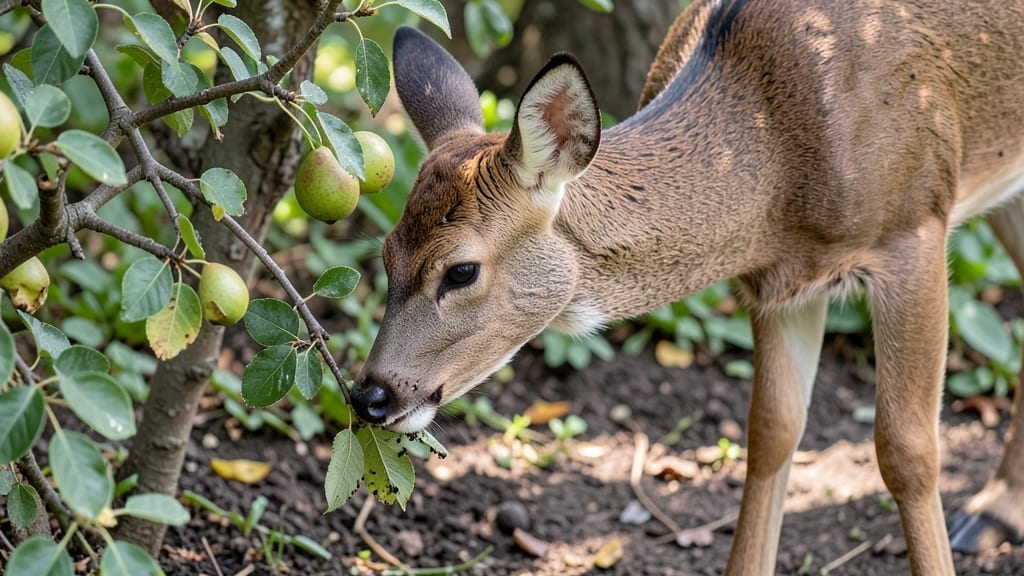
Deer have a particular fondness for pear trees because of their soft, nutrient-rich parts. 🌳 The damage often starts with nibbled leaves and buds in spring, then escalates to stripped bark in winter when other food sources are scarce.
I've seen entire orchards decimated when deer populations aren't controlled—it's not just cosmetic damage, but can actually kill trees over time.
What makes this worse is how quickly deer can devastate a young tree. A single deer might not seem like much, but herds moving through an area will systematically target the most vulnerable parts.
The bark stripping is especially dangerous because it creates wounds that invite disease and pests. Without intervention, you could lose trees that took years to establish.
💡 In This Article
- How Deer Damage Pear Trees and Recognize Their Feeding Patterns
- Effective Deer-Protection Methods for Pear Trees
How deer damage pear trees and recognize their feeding patterns
Deer primarily target pear trees because of their high-water content and tender growth, which is especially attractive during spring when new shoots emerge. The bark contains nutrients like cellulose and sap that deer find irresistible, particularly in winter when other food sources dwindle.
Young trees are most vulnerable because their bark is thinner—just 1/8-inch thick on saplings compared to 1/4-inch on mature trees—making it easier for deer to strip away protective layers.
This creates what's called "girdling," where the entire circumference of the trunk is damaged, cutting off vital nutrients from the roots. 🌳
Recognizing deer damage starts with examining the leaves and branches. Deer typically leave behind jagged, irregular edges on leaves, unlike the clean cuts made by insects or mechanical damage. They also have a preference for buds and blossoms, often leaving behind chewed stems with no leaves attached.
In winter, look for horizontal striations on bark—these are telltale signs of deer rubbing their antlers or teeth against the trunk. Saplings may show ring-like scars where bark has been completely removed in strips, exposing the green cambium layer underneath.
The timing of damage reveals deer behavior patterns. Spring and early summer are peak periods for leaf and bud consumption, while late fall and winter see increased bark stripping as deer seek carbohydrates and moisture.
Deer are crepuscular, meaning they're most active at dawn and dusk—this is when you'll find the freshest damage. 🦌 What's surprising is how selective they can be; they often leave some branches untouched while systematically targeting others, possibly due to variations in bark thickness or foliage density.
One of the most destructive patterns is what arborists call "bark peeling." Deer will start at the base of the trunk and work their way up, removing strips of bark that can be 3-6 inches wide and 1-2 feet long.
This exposes the vascular system, which transports water and nutrients. Without this protective layer, trees become susceptible to fungal infections like hypoxylon canker or bacterial diseases that thrive in exposed wounds.
The damage often goes unnoticed until it's too late because the initial wounds may appear minor, but they can girdle the entire trunk over time.
Seasonal variations in deer behavior create distinct damage signatures. In spring, you'll notice topped branches where deer have browsed the highest, most tender growth.
Summer damage often appears as skeletonized leaves—where only the veins remain—while winter damage is characterized by scraped bark and broken twigs from deer rubbing against trees.
These patterns help distinguish deer damage from other wildlife or environmental factors. 🌲 Understanding these seasonal cues allows you to implement targeted protection strategies at the right times.
What most people don't realize is how deer's dental structure contributes to the damage. Their upper and lower incisors don't align like human teeth—they have a flat, grinding surface on the bottom that works against a hard pad on the top.
This creates a shearing motion perfect for stripping bark cleanly. When they target young shoots, they use their lips to hold the plant steady while their teeth work like pruning shears. This precision explains why deer can cause such systematic damage to orchards.