
Trees
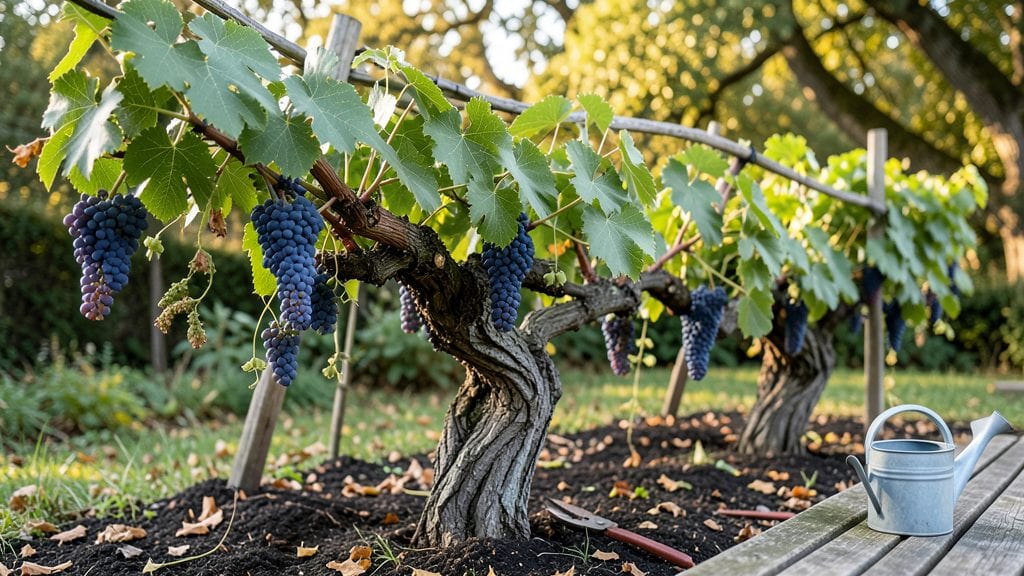
Growing giant grape trees transformed my backyard from a noisy street view into a lush, fragrant privacy screen. 🌿 These towering vines aren't just for wine—they're architectural stars with glossy leaves, delicate spring blooms, and enough shade to cool a patio.
The key? Choosing the right variety for your climate and giving it space to climb or sprawl.
Start with well-draining soil and full sun—these vines thrive where others struggle. My Vitis vinifera (the classic wine grape) needs at least 6 hours of sunlight daily, while Vitis rotundifolia (Muscadine) handles humidity better.
Plant in early spring, spacing vines 15-20 feet apart if training on a trellis or letting them sprawl for natural privacy. Mulch heavily to retain moisture and suppress weeds.
Pruning is where the magic happens—cut back in late winter to shape the vine and encourage strong growth. Fertilize lightly in spring with compost or a balanced 10-10-10 mix, and watch for pests like Japanese beetles (they love the leaves).
With proper care, you'll enjoy fragrant blossoms in spring, dense foliage all summer, and—if you're lucky—sweet grapes in fall.
Bonus: These trees adapt to trellises, fences, or even arbors, making them perfect for small yards or urban spaces. Whether you grow them for fruit, shade, or sheer beauty, they deliver year-round interest with minimal fuss. Ready to plant your living privacy screen?
📚 In This Guide
- What you need
- Instructions
- Tips and common mistakes
- Wrapping up and next steps
What you need
- ● Grapevine plants: 2–4 mature grapevine cuttings or bare-root plants (choose Vitis vinifera or Vitis labrusca for large varieties like Concord or Thompson Seedless)
- ○ Optional: Grafted vines for disease resistance (e.g., Cabernet Sauvignon or Chardonnay rootstock)
- ● Soil amendments: 5–10 lbs of compost or well-rotted manure
- ● 2–3 lbs of balanced fertilizer (10-10-10 or 5-10-10, organic preferred)
- ● Lime (if soil pH is below 6.0; test kit recommended)
- ● Support structures: T-posts or sturdy wooden stakes (4–6 per vine, 6–8 ft tall)
- ● Garden twine or grapevine trellis wire (12–16 gauge, 100+ ft)
- ○ Optional: Pre-built trellis kit (for large-scale privacy screens)
- ● Digging tools: Shovel or spade
- ● Hoe or garden fork (for soil prep)
- ● Pruning tools: Bypass pruners (for clean cuts)
- ○ Optional: Loppers (for thicker branches)
- ● Miscellaneous: Watering hose or drip irrigation system
- ● Mulch (straw or wood chips, 2–3 inches)
- ● Soil pH test kit (for accuracy)
- ● Full-sun location (6+ hours of direct sunlight daily)
- ● Well-draining soil (grapevines hate soggy roots!)
- ● Space! Giant grapevines need 10–15 ft of horizontal spread and 15–20 ft of vertical support for full privacy.
- ○ Optional but helpful: Permit check (if planting near property lines or in HOAs)
Step-by-Step guide to planting and caring for giant grape trees
Here's how to establish these stunning, multi-season plants for lasting beauty and fragrance.
🌱 Step 1: Select and Prepare the Planting Site
Giant grape trees thrive in full sun—choose a location with at least 6-8 hours of direct sunlight daily. These trees grow 20-30 feet tall, so ensure your site has 15-20 feet of clearance from structures, power lines, and sidewalks. The soil should drain well; if yours is heavy clay, amend with 3-4 inches of compost mixed into the top 12 inches of soil.
Dig a hole twice as wide as the root ball but only as deep. This prevents burying the graft union (visible as a swollen area near the base), which can cause disease. Loosen the sides of the hole with a shovel to encourage root spread. I always water the hole deeply 24 hours before planting to help settle the soil and create a moisture-friendly environment.
🪴 Step 2: Plant the Tree Properly for Long-Term Health
Remove the tree from its container and gently loosen any circling roots with your fingers. Place it in the hole so the graft union sits 2-3 inches above soil level—this protects against rot and ensures strong growth. Backfill with native soil, tamping it down lightly every 6 inches to remove air pockets. Water deeply to settle the soil around the roots.
Create a 4-inch deep watering basin around the tree, forming a slight mound of soil in the center to direct water to the roots. Mulch with 3 inches of wood chips, keeping it 6 inches away from the trunk to prevent moisture buildup that causes rot. I always avoid heavy mulch piles—too much can smother the roots and attract pests.
☀️ Step 3: Water and Fertilize for Strong Establishment
Water the tree deeply 2-3 times per week for the first month, then taper to once a week once established. Giant grape trees have deep roots, so aim for 1-2 gallons per watering during dry spells. You’ll know it’s time to water when the top 2 inches of soil feel dry—stick your finger in to check. Overwatering is a common mistake; soggy soil leads to root rot.
Apply a balanced, slow-release fertilizer (10-10-10) in early spring and again in mid-summer. Follow package instructions for amounts—typically 1/2 pound per inch of trunk diameter. Avoid high-nitrogen fertilizers; they promote leafy growth at the expense of flowers and fruit. I always fertilize after a rain to help nutrients absorb into the soil.
✂️ Step 4: Prune for Shape and Health
Prune in late winter or early spring before new growth begins. Remove dead, diseased, or crossing branches first, then thin out 10-20% of the canopy to improve airflow. Cut just outside the branch collar (the swollen area where the branch meets the trunk) to encourage proper healing. Avoid heavy pruning—giant grape trees respond best to light, strategic cuts each year.
Shape the tree by selectively removing branches that grow inward or upward. This prevents a dense, shaded center and reduces the risk of fungal diseases. After pruning, apply wound dressing to larger cuts (over 1/2 inch in diameter) to seal them and prevent infection. I always sterilize my pruners with rubbing alcohol between cuts to avoid spreading disease.
🌿 Step 5: Monitor for Pests and Diseases
Inspect the tree monthly for signs of pests like aphids, spider mites, or scale insects, which thrive in the dense foliage. Treat infestations early with neem oil or insecticidal soap, applying in the early morning or evening to avoid harming beneficial insects. Avoid chemical pesticides—they can damage the tree’s delicate blossoms and fruit.
Watch for powdery mildew on leaves, especially in humid climates. Improve airflow by pruning and water at the base of the tree (not overhead) to keep foliage dry. If mildew appears, spray with a baking soda solution (1 tablespoon baking soda + 1 quart water + a drop of dish soap) every 7-10 days until it clears. I’ve found that prevention—like proper spacing and watering habits—saves a lot of headaches later.
Tips & tricks for planting and caring for giant grape trees
Planting these majestic trees isn't rocket science, but a few key tricks will help you avoid common pitfalls and ensure your grape tree thrives for decades.
Site Selection Secret: While 6-8 hours of sun is ideal, these trees can tolerate partial shade—just expect fewer blossoms. I've planted mine where they get morning sun and afternoon shade, and they still produce beautifully. The real secret is checking your site's drainage first—if water pools after heavy rain, amend the soil with more compost before planting. Even the most beautiful tree will struggle if its roots sit in soggy soil.
Root Care That Makes All the Difference: When loosening circling roots in Step 2, don't just pull them apart—gently tease them outward with your fingers. This encourages outward root growth rather than a tangled mess. Also, that 24-hour pre-planting watering isn't just about settling the soil—it helps wake up dormant roots so they're ready to establish immediately after planting. Think of it as giving your tree a warm bath before the big day!
Watering Wisdom: The 2-3 times per week watering schedule in the first month might seem frequent, but giant grape trees have surprisingly thirsty roots. Here's my trick: water deeply in the morning so the soil has all day to dry out between waterings. This prevents that dreaded root rot while ensuring your tree gets the moisture it needs. And always water at the base—never overhead—to keep those beautiful blossoms dry and pest-free.
Pruning Pro Tip: When thinning 10-20% of the canopy in Step 4, aim to remove branches that are growing toward the center of the tree. These create dense pockets where moisture lingers and diseases thrive. I like to make my cuts just outside the branch collar—it might seem fussy, but this little detail makes all the difference in how well the tree heals. And always sterilize your pruners between cuts—it's the best way to prevent spreading any hidden diseases.
Pro Tips for Giant Grape Trees
- Planting these majestic trees isn't rocket science, but a few key tricks will help you avoid common pitfalls and ensure your grape tree thrives for decades.
- Site Selection Secret: While 6-8 hours of sun is ideal, these trees can tolerate partial shade—just expect fewer blossoms.
- Root Care That Makes All the Difference: When loosening circling roots in Step 2, don't just pull them apart—gently tease them outward with your fingers.
Frequently asked questions
Got questions about growing giant grape trees for privacy and beauty? You’re not alone! Here are answers to the most common queries to help you get started with confidence.
How big can giant grape trees grow, and how fast?
Giant grape trees (like Vitis coignetiae) can reach 30–50 feet tall with a spread of 20–30 feet. Growth is moderate—expect 2–3 feet per year in ideal conditions. Prune annually in late winter to control size and encourage bushier growth for faster privacy.
Do giant grape trees lose leaves in winter?
Yes! These deciduous trees drop leaves in fall and enter dormancy, but they’re not completely bare. Their exfoliating bark and skeletal branches add winter interest. Plant near evergreens for year-round coverage.
Will giant grape trees produce edible grapes?
Nope—they’re ornamental only, prized for their fragrant spring blossoms and lush foliage. If you want grapes and privacy, pair them with a separate grapevine or berry-producing shrub nearby.
What’s the best way to prune giant grape trees for privacy?
Prune in late winter (before buds swell) to shape the tree. Remove dead, crossing, or overcrowded branches first, then thin out to let light reach the center. Use clean, sharp tools to avoid disease, and aim for a rounded canopy for dense privacy.
Are giant grape trees messy? Do they attract pests?
They’re low-mess compared to oaks or maples, but spring blossoms drop petals—mulch below to reduce cleanup. As for pests, they’re generally pest-resistant, but watch for Japanese beetles or aphids. Spray with neem oil if needed.
Wrapping up and next steps
Giant grape trees offer the perfect blend of privacy, beauty, and practicality—their lush vines and fragrant blossoms transform any space into a serene retreat. Whether you're drawn to their year-round screening or their low-maintenance charm, these trees are a win-win for both aesthetics and functionality. 🌿
Ready to plant your own? Start by gathering your supplies, choosing the right location, and following the steps outlined above. With a little patience and care, you’ll soon be enjoying the shade, scent, and seclusion these giants provide—nature’s way of saying, “Welcome to your private oasis!”
Next steps:
- 📅 Mark your calendar for planting season (early spring or fall).
- 🌱 Check local nurseries for young grape trees or cuttings.
- 👨🌾 Share your progress—we’d love to see your grape tree journey!