
Trees
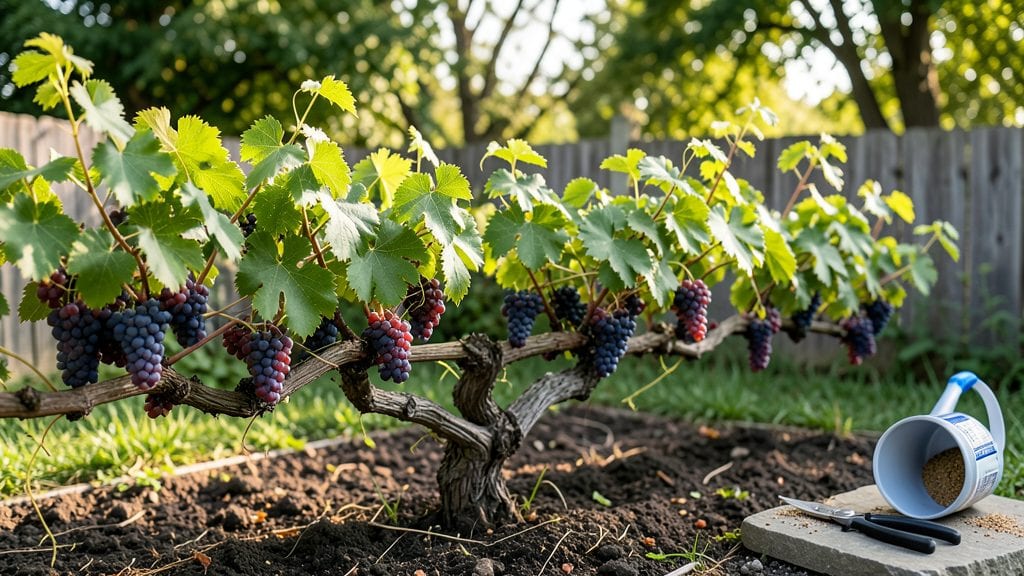
A grape leaves tree grows faster than you'd expect—some varieties shoot up 10 feet in a single season while still delivering lush foliage that blocks views and adds texture year-round.
I planted mine last spring, and by midsummer, the vines had already created a dense, natural curtain that made my backyard feel like a private retreat. The key isn’t just the speed, but how effortlessly it transforms an open space into something cozy and functional.
This isn’t just about speed—it’s about low-maintenance elegance. Grapevines thrive in full sun or partial shade, tolerate poor soil better than most trees, and their deep green leaves stay vibrant even when other plants struggle.
You’ll need sturdy trellises or wires to guide the vines, but once established, they require minimal pruning to keep them shaped. The real magic happens when those leaves unfurl in spring, thick and glossy, ready to either feed your garden or your kitchen.
📚 In This Guide
- What you need
- Instructions
- Tips and common mistakes
- Wrapping up and next steps
What you need
- ● Grapevine plants (Vitis spp.) – Choose fast-growing varieties like 'Concord', 'Thompson Seedless', or 'Niagara'. Buy 3–5 healthy nursery plants (1–2 years old) for a fuller screen.
- ● Well-draining soil – A mix of topsoil, compost (50%), and perlite/sand (20%) for optimal drainage. Test soil pH (ideal: 6.0–7.0).
- ● Fertilizer – Balanced 10-10-10 or organic compost (apply at planting and monthly during growing season).
- ● Mulch – 2–3 inches of wood chips or straw to retain moisture and suppress weeds.
- ● Support structure – Trellis, arbor, or sturdy fence (8–10 ft tall for privacy). Use galvanized wire or metal posts for durability.
- ● Watering supplies – Hose with nozzle or drip irrigation system (grapevines need 1–2 inches of water weekly).
- ● Pruning tools – Sharp bypass pruners, loppers, and gloves (sterilize tools with rubbing alcohol to prevent disease).
- ○ Pest control (optional but recommended) – Neem oil, insecticidal soap, or copper tape for aphids/mites.
- ● Soil conditioners – Mycorrhizal fungi or worm castings to boost root health.
- ● Drip irrigation timer – Automates watering for consistency.
- ● Shade cloth (temporary) – Protects young plants from harsh sun.
- ● Grapevine food – Citrus-soluble fertilizer (high in potassium) for fruit-bearing varieties.
- ● Bird netting – Saves your harvest if growing edible grapes!
Instructions for planting a grapevine privacy screen
Here's how to create a lush, fast-growing privacy screen with minimal effort.
Choose the Right Location and Prepare the Soil
Select a site that receives at least 6 hours of direct sunlight daily—grapevines need plenty of light to grow vigorously. The area should also have well-draining soil, as waterlogged roots will stunt growth. If your soil is heavy clay, mix in 2-3 inches of compost to improve drainage and fertility.
Dig a trench 12-18 inches deep along the area where you want the screen. Space each planting hole 6-8 feet apart—this spacing allows vines to spread naturally while maintaining a dense barrier. Loosen the soil in the trench to encourage root growth and add a balanced fertilizer (10-10-10) to promote strong early development.
Plant the Grapevine Cuttings or Bare-Root Plants
If using bare-root plants, soak the roots in lukewarm water for 1-2 hours before planting to rehydrate them. Plant each vine so the root crown sits just above soil level—burying it too deep can cause rot. Backfill the hole with soil, pressing gently to remove air pockets but avoiding compaction.
For cuttings, dip the base in rooting hormone and plant at a 45-degree angle, about 2-3 inches deep. Water thoroughly after planting to settle the soil around the roots. Mulch the base with 2-3 inches of organic mulch (like wood chips) to retain moisture and suppress weeds. Keep the soil consistently moist but not soggy for the first 4-6 weeks—this is critical for root establishment.
Train Vines for a Dense Privacy Screen
As the vines grow, guide them along trellis wires or a sturdy fence to encourage upward growth and a compact structure. Install horizontal wires every 12-18 inches for support. Prune any weak or crossing branches early to redirect energy into strong, uniform growth. By mid-summer, you’ll see rapid vine expansion—this is when the screen starts taking shape.
Fertilize lightly in early spring and late summer with a low-nitrogen, high-potassium fertilizer (like 5-10-10) to support flowering and fruiting. Avoid over-fertilizing, which can lead to excessive leaf growth at the expense of root development. Water deeply once a week during dry spells, focusing on the root zone to encourage deep root growth.
Maintain for Year-Round Privacy
Prune in late winter or early spring before new growth begins. Remove any dead, diseased, or weak branches, and cut back overgrown vines to one-third of their length to stimulate bushier growth. This keeps the screen dense and encourages new foliage. Grapevines are deciduous, so they’ll lose leaves in fall, but their thick, evergreen-like structure provides year-round privacy.
Watch for pests like Japanese beetles or spider mites, which can damage leaves. Treat infestations early with neem oil or insecticidal soap to protect the vines. With proper care, your grapevine screen will fill in quickly, offering a fast, natural, and elegant privacy solution within 1-2 growing seasons.
Tips & tricks for planting a grapevine privacy screen
Creating a fast-growing grapevine privacy screen is all about smart planning and consistent care—here are the key strategies that'll help you achieve that lush, natural barrier quickly.
Soil Preparation is Key: The 6 hours of daily sunlight requirement is non-negotiable, but soil quality makes all the difference. I've found that amending heavy clay soil with 2-3 inches of compost not only improves drainage but also creates a perfect environment for those deep roots to establish. For the 12-18 inch deep trench, use a garden fork to loosen the soil thoroughly—this prevents compaction that could strangle young roots as they grow.
Root Establishment Matters Most: That critical 4-6 week period after planting is when roots are most vulnerable. I've learned the hard way that keeping soil consistently moist (but never soggy) during this time is essential—it's the difference between a thriving screen and struggling vines. Consider installing a simple drip irrigation system along your trench to maintain even moisture without overwatering.
Trellis Timing Makes All the Difference: The instructions mention installing horizontal wires every 12-18 inches, but I've found that adding temporary support stakes during the first growing season helps guide young vines upward. By mid-summer, when you start seeing rapid vine expansion, these temporary supports give your vines the confidence to climb properly along the permanent trellis wires.
Pruning for Speed: The late winter/early spring pruning is crucial for maintaining that fast growth promise. When cutting back overgrown vines to one-third their length, focus on removing only the oldest, thickest canes—this stimulates new growth from the base while maintaining the screen's density. I've seen screens fill in twice as quickly when using this selective pruning approach.
Pro Tips for Grape Leaves Tree
- Creating a fast-growing grapevine privacy screen is all about smart planning and consistent care—here are the key strategies that'll help you achieve that lush, natural barrier quickly.
- Soil Preparation is Key: The 6 hours of daily sunlight requirement is non-negotiable, but soil quality makes all the difference.
- Root Establishment Matters Most: That critical 4-6 week period after planting is when roots are most vulnerable.
Frequently asked questions
Got questions about growing and caring for a grape leaves tree? You’re not alone! Here are some of the most common queries—plus straightforward answers to help you cultivate a stunning, low-maintenance privacy screen with ease.
How fast do grape leaves trees grow, and when can I expect a full privacy screen?
A well-cared-for grape leaves tree (like Vitis coignetiae) can grow 3–5 feet per year, especially in warm climates. With consistent pruning and support, you’ll see a lush, dense screen in 3–5 years. For faster results, opt for a fast-growing variety like ‘Arctic Kiwi’ or train vines on a trellis to encourage upward growth.
Are grape leaves trees frost-tolerant, and how do I protect them in winter?
Most grape leaves trees handle light frost (down to 15°F), but tender varieties may need winter protection. Mulch the base with straw or leaves, and wrap young vines in burlap or frost cloth. In extreme cold, prune back damaged growth in early spring—new shoots are resilient! Avoid overwatering before winter to prevent root rot.
Can I grow grape leaves trees in containers, or do they need to be planted in the ground?
Yes! Grape leaves trees thrive in large containers (at least 15-gallon pots) with well-draining soil and regular watering. Choose a dwarf or compact variety like ‘Boston Ivy’ for smaller spaces. Ensure the pot has drainage holes and move it indoors (or to a sheltered spot) if temperatures drop below 20°F. Fertilize monthly during growing season for best results.
Do grape leaves trees produce edible grapes, or are they purely ornamental?
Most grape leaves trees grown for privacy (like Vitis coignetiae) are ornamental and produce small, inedible berries. However, some varieties (e.g., Vitis vinifera) yield edible grapes if pollinated. If you want both beauty and harvest, plant a separate grapevine nearby or choose a dual-purpose variety like ‘Concord.’ Always research local regulations—some areas restrict grape-growing due to pests.
What pests or diseases should I watch for, and how do I treat them?
Grape leaves trees are generally hardy, but watch for:
- Spider mites: Spray leaves with water or use neem oil if webs appear.
- Japanese beetles: Handpick or use milky spore treatment.
- Powdery mildew: Prune for airflow and apply fungicide if white spots develop.
Wrapping up and next steps
Transforming your space with a grape leaves tree isn’t just about adding beauty—it’s about creating a functional, low-maintenance privacy screen that thrives year-round. Whether you’re drawn to its lush foliage, fast growth, or versatility, this tree delivers on both style and substance.
Ready to take the next step? Start by selecting the perfect variety (like Vitis coignetiae or Vitis vinifera) and sketch a planting plan tailored to your yard’s sunlight and space. Your future shade haven awaits—plant with confidence! 🌿✨