Blooming
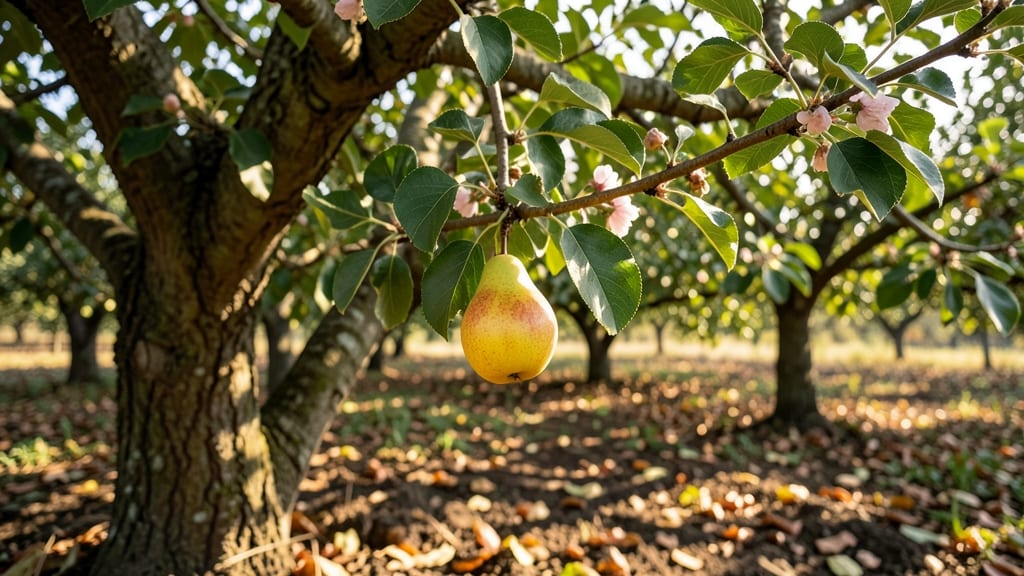
Pear trees usually take 3 to 5 years to bear fruit after planting, with dwarf varieties sometimes producing fruit in as little as 2 years. Consistent care with sunlight, water, and pruning helps speed up fruiting and ensures better harvests.
Understanding this timeline helps you set realistic expectations for your orchard. 🌳 The variety you choose plays a huge role—Bartlett pears, for example, often fruit earlier than Asian pears, which may take up to 7 years in some climates.
Cold winter temperatures also matter: most pear trees need 400-800 chill hours (below 45°F) to trigger blooming, so your location affects when you'll see those first fruits. Proper soil drainage and regular pruning in early spring can cut 1-2 years off the waiting period.
For impatient gardeners, I recommend selecting dwarf or semi-dwarf varieties like 'Moonglow' or 'Seckel,' which fruit faster while still producing high-quality pears. These smaller trees also make harvesting easier for home growers.
The key is patience combined with smart care—think of it like training for a marathon rather than a sprint.
💡 In This Article
- Factors Influencing Pear Tree Fruiting Timeline
- Speeding Up Fruit Production in Young Pear Trees
Factors influencing pear tree fruiting timeline
The fruiting timeline for pear trees begins with their genetic makeup, particularly the variety you choose. Bartlett pears, for instance, typically bear fruit within 3-4 years due to their vigorous growth habit and early flowering, while Asian pears like 'Kieffer' may take 5-7 years because they require more time to establish a strong root system before producing blooms.
This difference stems from their native climates—Bartletts originated in European regions with shorter growing seasons, while Asian pears evolved in milder, more consistent climates where slower maturation is advantageous.
Climate plays a critical role through chill hours, the cumulative hours below 45°F that trees need to break dormancy. Most pear varieties require 400-800 chill hours, but some, like 'Sugar Pearl', thrive with as few as 300 hours, making them ideal for warmer regions.
Without sufficient chill, buds fail to develop properly, delaying or preventing fruiting entirely. For example, a Bartlett tree in Zone 7 might fruit reliably in 4 years, while the same tree in Zone 9 could take 6 years or never produce without supplemental cold treatment.
Soil conditions and rootstock types further complicate the timeline. Pear trees grafted onto Quince rootstock (common for dwarf varieties) fruit faster—sometimes in just 2 yearsseedling rootstock may take 5-6 years to mature.
Well-drained, slightly acidic soil (pH 6.0-7.0) with organic matter accelerates growth, while compacted or waterlogged soil can stunt development by 1-2 years. Think of the rootstock as the foundation of a house—if it's weak, the whole structure (your tree) struggles to stand tall and bear fruit.
Pruning strategies also impact fruiting time by shaping the tree's energy allocation. Young trees benefit from open-center pruning in late winter, which encourages a strong scaffold of branches where fruit can develop. Removing water sprouts (vertical shoots) redirects energy toward horizontal branches, where most fruit forms.
Improper pruning—like over-thinning—can delay fruiting by 1-3 years as the tree focuses on regrowing lost structure. For instance, a poorly pruned 'Anjou' pear might take 6 years to fruit instead of the expected 4-5 years.
Finally, environmental stressors like drought or pest infestations can push back fruiting timelines. A tree struggling with codling moths (a common pear pest) may divert energy to defense mechanisms, delaying fruit production by 1-2 years. Similarly, inconsistent watering—either too much or too little—can cause root stress, slowing maturation.
For example, a 'Seckel' pear in a drought-prone area might need 3 years of consistent care before fruiting, compared to 2 years in a well-watered garden. The key is creating an environment where the tree feels secure enough to invest in reproduction.
Here’s what this means for you: If you’re in a warmer climate with low chill hours, choose varieties like 'Moonglow' or 'Hood', which adapt better. If your soil is heavy clay, amend it with compost to improve drainage.
And always prune in late winter when the tree is dormant but about to wake up—this timing maximizes energy for spring growth and future fruiting. 🌱