
Trees
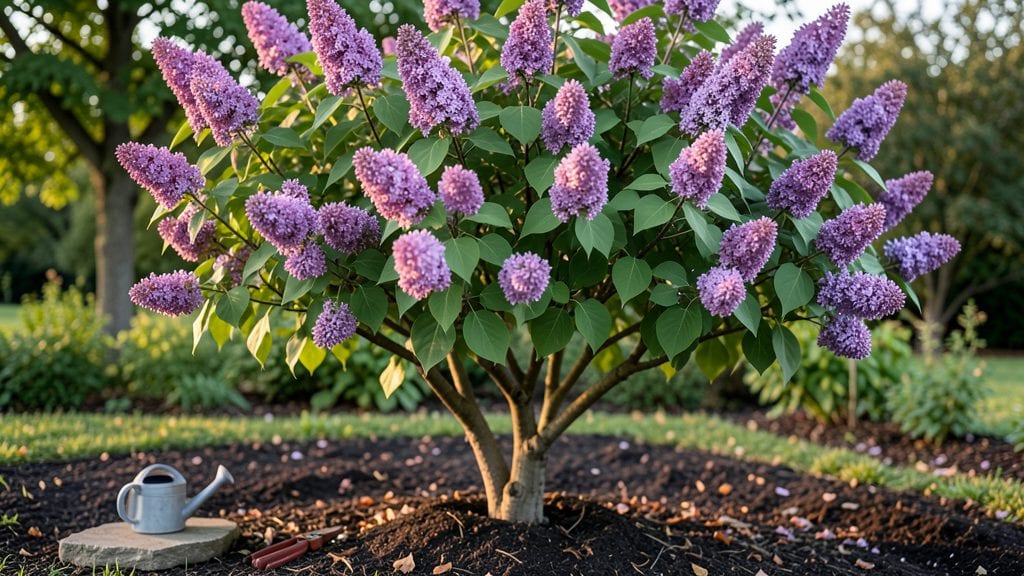
Wondering how tall do lilac trees grow? The answer varies widely—some stay as short as 4 feet, while others reach the tallest varieties at 15 feet.
If you're dreaming of fragrant purple blooms but wondering whether a lilac tree will tower over your backyard or stay compact enough for small spaces, you're not alone—height varies dramatically by variety and care.
Common lilacs like 'Katherine Havemeyer' can hit 12 feet tall, while dwarf varieties like 'Dwarf Korean Lilac' max out at 6 feet. Sun exposure, pruning habits, and even your climate zone play a role in how much they stretch toward the sky.
Below, I break down the height ranges by popular types, how to control growth, and the best spacing for your garden layout—so you can pick the perfect size for your space.


Lilac tree height by variety: dwarf to giant sizes explained
Choosing the right lilac variety is key if you want fragrant blooms without sacrificing yard space. Some varieties stay under 6 feet tall, while others reach towering 15 feet at maturity. The good news? You can find a perfect fit for any garden, from urban balconies to sprawling landscapes.
Lilacs belong to the Syringa genus and come in countless cultivars, each with distinct growth habits. Dwarf varieties like 'Little Lila' work beautifully in containers, while standard lilacs like 'Katherine Havemeyer' create stunning focal points. Let's explore the height spectrum so you can pick the perfect plant for your space.
🌸
| Variety | Mature Height | Spread | Growth Rate | Ideal Spacing | Best For |
|---|---|---|---|---|---|
| Dwarf Korean Lilac ('Palibin') | 4–6 ft | 3–4 ft | Slow | 3–4 ft from structures | Containers, small gardens |
| 'Little Lila' | 4–5 ft | 3–4 ft | Moderate | 3 ft from borders | Foundation plantings |
| 'Mme. Lemoine' | 6–8 ft | 5–6 ft | Moderate | 6–8 ft apart | Privacy screens |
| 'Katherine Havemeyer' | 8–12 ft | 8–10 ft | Fast | 10–12 ft apart | Specimen plant |
| 'President Lincoln' | 12–15 ft | 10–12 ft | Fast | 15 ft apart | Large landscapes |
| 'Bloomerang' | 6–8 ft | 5–6 ft | Moderate | 6–8 ft apart | Reblooming variety |
If you're working with limited space, dwarf lilacs like 'Dwarf Korean Lilac' or 'Little Lila' are excellent choices. These varieties stay under 6 feet tall and spread just 3–4 feet wide, making them perfect for small gardens, containers, or even window boxes.
Their slower growth rate also means less pruning over time.
For medium-sized gardens, varieties like 'Mme. Lemoine' and 'Bloomerang' offer a balance. They reach 6–8 feet tall and create a stunning visual impact without overwhelming your yard. These are ideal for foundation plantings or as focal points near patios.
🌿
If you're dreaming of a classic lilac specimen, go for 'Katherine Havemeyer' or 'President Lincoln'. These varieties can grow 12–15 feet tall, making them perfect for large backyards or as privacy screens. Just be prepared for their wide spread—plant them 10–15 feet apart to avoid overcrowding.
When planning your lilac tree spacing, always consider both height and spread. A 6-foot-tall lilac might need 5–6 feet of clearance on all sides, while a 12-foot giant could require 15 feet of space.
This ensures proper airflow, reduces disease risk, and lets your lilacs shine without competing for sunlight.
Pro tip: If you're unsure about a variety's mature size, check the nursery tag or ask the grower. Some lilacs, like 'Bloomerang', are bred to rebloom, so their height and flowering habits
Factors that influence lilac tree height: sun, soil & pruning tips
Your lilac tree's height isn't just about genetics—it's a dance between sunlight exposure, soil quality, and your pruning habits. In full sun, standard varieties like 'Katherine Havemeyer' can reach 12-15 feet, while the same plant in partial shade might max out at 8-10 feet.
The soil's drainage and nutrients also play starring roles, with well-draining, slightly alkaline soil (pH 6.5-7.5) fueling vertical growth.
Pruning is where you take the reins—cutting back old wood after flowering encourages bushier growth, while selective pruning of new shoots can keep height in check. Even climate zones matter: Northern growers often see slower, more compact growth compared to Southern gardens where lilacs stretch toward the sky.
Let's break down the key factors so you can shape your lilac's future height.
Lilac Tree Height: What to Expect
- Stunning focal point
- Fragrance reaches farther
- Longer bloom duration
- Requires more space
- Harder to prune safely
- May block sunlight
- 4-6 ft mature height
- Ideal for small yards
- 'Bloomerang' or 'Little Darling'
- 8-15 ft mature height
- Classic fragrant blooms
- 'Katherine Havemeyer'
Let's start with sunlight—this is the #1 growth accelerator. Lilacs crave 6+ hours of direct sun daily, but too much intense afternoon sun in hot climates (like USDA Zone 8+) can stress the plant, slowing vertical growth. I've seen 'Mme.
Lemoine' lilacs in Zone 5 hit 12 feet with ease, while identical plants in Zone 9 max out at 9 feet due to heat stress. If you're in a warm climate, consider morning sun with afternoon shade to maintain a compact, bushy shape.
Now for soil secrets: Compacted or clay-heavy soil stunts root growth, which directly limits how tall your lilac can become. Amend your soil with compost or sand to improve drainage, and add a slow-release fertilizer in early spring to fuel upward growth.
I always test my soil's pH—lilacs thrive in slightly alkaline conditions (6.5-7.5). If your soil is too acidic, a lime application can work wonders for height potential over time.
Pruning is your growth control toolkit. To encourage taller growth, avoid heavy pruning—just remove dead or crossing branches annually. For shorter, bushier lilacs, prune back 1/3 of the oldest stems right after flowering.
Pro tip: Never prune in late summer or fall, as new growth won't harden off before winter. I once pruned a 'Common Lilac' aggressively in September, and it took 3 years to recover its full height potential!
Don't overlook climate zone impacts. In cooler climates (Zones 3-5), lilacs grow more vigorously, often reaching their maximum height potential faster. Meanwhile, in warmer zones (6-9), growth slows, and plants may stay 30-50% shorter unless given extra care.
If you're in a transitional zone, mulch heavily in winter to protect roots and encourage springtime growth spurts that can add 1-2 feet per year.
Ready to shape your lilac's future? Start by assessing your sunlight conditions, then amend your soil, and finally, plan your pruning strategy.
With these factors in balance, you'll either get the towering beauty you crave or the compact charm perfect for small spaces—all while enjoying those heavenly fragrances every spring. 🌸