
How To
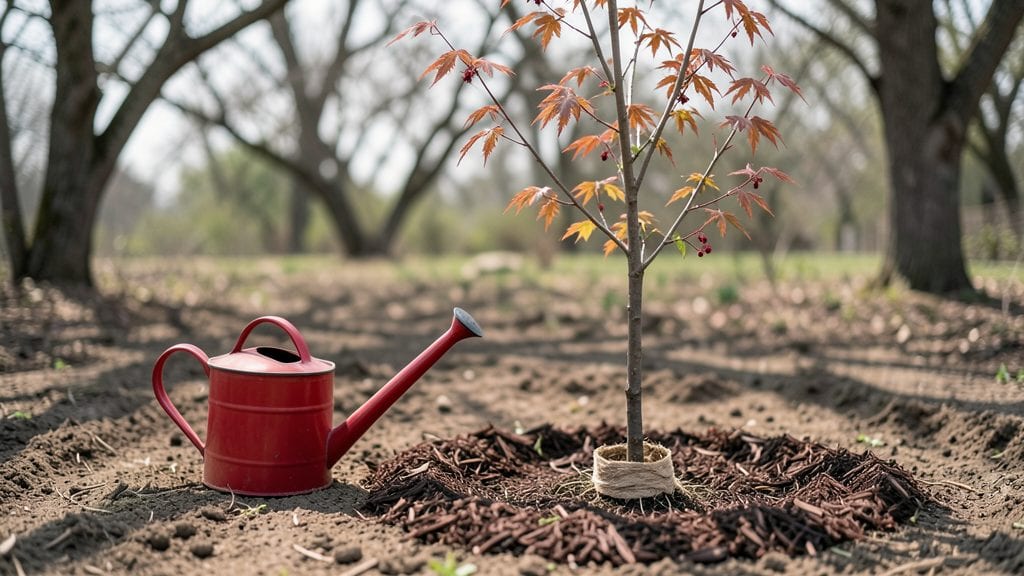
Learn how to fix transplant shock in trees when your newly planted one wilts despite proper watering—a temporary but critical stress response that can be reversed with the right care.
I’ve nursed back more struggling trees than I’d like to admit, and the secret lies in mimicking the conditions the tree already knows: consistent moisture, reduced stress, and a root zone that feels like home again.
The first 48 hours after planting are critical—overwatering or underwatering throws the tree into deeper shock. Instead, aim for deep, infrequent watering (1-2 inches per week) to encourage roots to seek moisture, and keep the soil evenly damp like a well-wrung sponge.
Mulch heavily around the base to retain moisture and cool roots, but avoid piling it against the trunk.
Within 2-3 weeks, you’ll see signs of recovery: new leaf buds, firmer branches, and a return of vibrant green. Prune any dead or damaged limbs immediately to redirect energy, and consider a root stimulator for stubborn cases.
The key is patience—trees heal faster when you let them focus on roots, not foliage.
This method works for shade trees, fruit trees, and even delicate ornamentals, though larger species may need 6-8 weeks of consistent care. The payoff? A tree that not only survives but thrives, with stronger growth and resilience for years to come.
Understanding the root causes
Transplant shock in trees isn’t just a random setback—it’s a complex biological response triggered by stress. When you move a tree, you’re essentially asking it to adapt to a completely new environment, and its survival instincts kick in.
Below, we break down the primary culprits behind transplant shock, explained in clear, actionable terms so you can address them head-on.
The most immediate cause of transplant shock is root damage during the transplanting process. Trees rely on their roots for water, nutrients, and stability—but when roots are severed, crushed, or improperly handled, the tree loses its lifeline.
- Physical trauma: Even careful digging can harm fine root hairs (critical for water absorption) and larger roots. If more than 20-30% of the root ball is damaged, the tree struggles to recover. - Root desiccation: Exposed roots dry out quickly, especially in wind or sun.
A root ball left unprotected for just a few hours can suffer irreversible moisture loss. - Girdling roots: If roots wrap tightly around the trunk (a common issue with container-grown trees), they restrict sap flow, weakening the tree before it even hits the ground.
💡 Pro Tip: Always dig a wide, shallow trench around the tree to preserve as many roots as possible. Use a root saw for clean cuts on larger roots, and never pull the tree by the trunk—lift from the base of the root ball.
A tree’s new home might look perfect, but sudden changes in light, temperature, wind, or soil conditions can send it into shock.
- Temperature extremes: Moving a tree from a shaded, humid climate to a hot, dry, or freezing spot without acclimation causes rapid stress.
For example, a tropical species planted in a cold-zone garden will shut down its metabolic processes to survive. - Wind exposure: High winds dry out leaves and roots faster than the tree can compensate. Defoliation (leaf loss) follows, reducing the tree’s ability to photosynthesize and recover. - Soil mismatch: If the new soil has poor drainage, wrong pH, or lacks nutrients, the roots can’t function properly.
For instance, a tree adapted to acidic soil (like azaleas) will suffer in alkaline clay.
✨ Key Insight: Always harden off container-grown trees by gradually exposing them to outdoor conditions (sun, wind, temperature shifts) 1-2 weeks before transplanting.
Water stress—either too much or too little—is a leading cause of transplant shock. Trees have a delicate balance, and disrupting it can be fatal.
- Overwatering: Soggy soil cuts off oxygen to roots, leading to anaerobic conditions (where roots suffocate). This is especially deadly in heavy clay soils that don’t drain well. - Underwatering: Newly transplanted trees can’t access deep water sources yet.
If the root ball dries out, the tree wilts, drops leaves, and may never recover. - Transpiration mismatch: If the tree loses more water through leaves than it can absorb through damaged roots, it enters a hydraulic failure state—think of it as a broken plumbing system.
🎯 Actionable Fix: Use deep, infrequent watering (every 7-10 days) to encourage roots to grow downward. Mulch heavily (3-4 inches) to retain moisture and regulate soil temperature.
A tree’s recovery depends on immediate access to key nutrients, but transplanting often depletes or disrupts these resources.
- Nitrogen shock: Nitrogen is crucial for leaf growth, but if the tree can’t uptake it due to root damage, it yellows (chlorosis) and weakens. - Phosphorus & potassium shortages: These nutrients help with root growth and stress resistance, but they’re often low in new soil.
A deficiency here means the tree struggles to establish new roots. - Micronutrient imbalances: Zinc, iron, and manganese deficiencies (common in alkaline soils) can cause stunted growth or leaf spots, slowing recovery.
💪 Quick Solution: Apply a balanced, slow-release fertilizer (like 10-10-10) 2-3 weeks after transplanting, but avoid high-nitrogen fertilizers immediately—they can burn damaged roots.
Pests and pathogens exploit stressed trees, turning transplant shock into a full-blown crisis.
- Root rot fungi: Organisms like Phytophthora thrive in waterlogged soil, attacking compromised roots and cutting off nutrient flow.
- Boring insects: Bark beetles and borers target weakened trees, laying eggs under the bark and killing the tree from the inside out.
- Fungal leaf spots: Pathogens like Anthracnose take hold when a tree’s defenses are down, causing premature leaf drop and reduced energy for recovery.
🔥 Prevention Tip: Treat the root ball and surrounding soil with a beneficial fungus (like Trichoderma) or neem oil spray before planting to build natural resistance.
Trees don’t have brains, but they do have stress hormones that trigger defensive responses—like closing stomata (leaf pores) to conserve water.
When a tree is uprooted, it releases ethylene gas, a plant stress hormone that can: - Stunt root growth - Inhibit cell division in new roots - Accelerate leaf drop to conserve energy
🌡️ Science Note: Ethylene levels spike within hours of transplanting, which is why anti-transpirants (waxy sprays that reduce water loss) can be a game-changer.
Transplant shock isn’t caused by one single factor—it’s a domino effect of root damage, environmental strain, nutrient gaps, and biological threats. But here’s the good news: Understanding these causes means you can fix them systematically.
In the next section, we’ll show you exactly how to intervene at each stage of recovery.
Revive Your Tree Step by Step
Transplant shock can feel like a death sentence for your trees, but with the right care, they can bounce back stronger than ever! 🌳💪 The key is addressing the root causes while giving your tree the support it needs to recover.
Below, we break down practical, actionable solutions tailored to common causes of transplant shock, along with preventive tips to keep your trees thriving long-term.
If your tree’s roots were disturbed during transplanting, they need time—and the right conditions—to heal.
How to Fix It:
- Prune damaged roots gently 🔪: Use sterilized pruners to trim any blackened, mushy, or excessively broken roots. Focus on removing only the worst-affected sections to avoid over-stressing the tree.
- Apply a root stimulator 🌱: Products like mycorrhizal fungi or rooting hormones (e.g., Dip ‘N Grow) can jumpstart recovery by promoting microbial activity around the roots.
- Mulch heavily (but correctly) 🌿: Spread 2–4 inches of organic mulch (wood chips, shredded bark) over the root zone, keeping it 6 inches away from the trunk to prevent rot. This insulates roots, retains moisture, and encourages regrowth.
- Water deeply and slowly 💦: Use a soaker hose or drip irrigation to deliver water directly to the root zone over 20–30 minutes, 2–3 times per week. Avoid overhead watering, which can compact soil and stress roots further.
💡 Pro Tip: If the tree was in a container before transplanting, soak the root ball in water for 1–2 hours before planting to rehydrate compacted roots.
Extreme heat, cold, or wind can exacerbate transplant shock by drying out roots or causing rapid moisture loss.
How to Fix It:
- Provide shade cloth ☀️: Install 30–50% shade cloth over the tree for the first 4–6 weeks to reduce stress from direct sunlight. This is especially critical in hot climates or during summer transplants.
- Windbreaks for young trees 🌬️: Use burlap screens, temporary fencing, or even cardboard to block harsh winds. Wind desiccates leaves faster than roots can replenish water.
- Adjust watering for weather ❄️☀️: In hot weather, water daily (early morning or late evening). In cold snaps, reduce watering slightly but keep the soil slightly moist—never soggy.
- Avoid fertilizing immediately 🚫🌱: Fertilizer burns can worsen stress. Wait 6–8 weeks before applying a balanced, slow-release fertilizer (e.g., 10-10-10).
💡 Pro Tip: Group trees together when possible—their combined shade and root zones create a microclimate that reduces stress for each plant.
Compacted or nutrient-poor soil strangles roots, making recovery nearly impossible.
How to Fix It:
- Aerate the soil 🕳️: Use a garden fork or aerator to poke holes 6–12 inches deep around the root zone. This breaks up compacted layers and allows roots to expand.
- Amend the soil 🌱: Mix in compost, peat moss, or coconut coir to improve drainage and nutrient retention. For heavy clay soil, add perlite or sand to loosen it.
- Top-dress with organic matter 🍂: Spread a 1-inch layer of compost over the mulch annually to gradually enrich the soil without overwhelming the tree.
- Consider a soil test 📊: If your tree isn’t improving after 2–3 months, test the soil’s pH and nutrient levels. Adjust with lime (for acidity) or sulfur (for alkalinity) as needed.
💡 Pro Tip: Plant trees in the right season—spring or early fall—when soil is naturally warm and moist, making recovery easier.
Dropping leaves is a classic sign of transplant shock, but you can help the tree hold onto its foliage.
How to Fix It:
- Mist leaves in dry conditions 💦: Use a gentle spray bottle to mist leaves daily if humidity is low (common in indoor-to-outdoor transplants). This mimics natural dew and reduces water loss.
- Avoid pruning further ❌✂️: Resist the urge to trim dead leaves—they help the tree conserve energy. Only remove large, dying branches that could weigh down the tree.
- Apply anti-transpirants (if severe) 🛡️: Products like Wilt-Pruf create a temporary film on leaves to slow moisture loss. Use sparingly and only in extreme heat.
- Boost humidity around the tree 🌧️: Place a shallow tray of water near the base (but not touching the trunk) or use a hose to mist the surrounding soil to increase ambient moisture.
💡 Pro Tip: Yellow leaves? That’s normal for the first few weeks. Brown, crispy leaves? That’s a sign of severe stress—act fast with shade and water.
Transplant shock recovery isn’t instant—give your tree 1–2 growing seasons to fully stabilize.
How to Fix It (Ongoing):
- Monitor for pests 🐜: Stressed trees attract aphids, mites, or borers. Treat with neem oil or insecticidal soap if you spot infestations.
- Check for fungal issues 🍄: If leaves develop black spots or mold, apply a copper fungicide or baking soda spray (1 tsp baking soda + 1 quart water + a drop of dish soap).
- Gradually reduce care 📉: After 6–12 months, taper off daily watering and shade. By year two, your tree should be self-sufficient!
- Celebrate small wins 🎉: New growth? That’s a great sign! Keep up the care, and your tree will thank you for years to come.
The best cure is avoiding shock in the first place.
Follow these golden rules next time you move a tree: ✅ Dig a wide, deep hole (2–3x wider than the root ball) to encourage root spread. ✅ Use a root stimulator at planting to jumpstart growth. ✅ Stake only if necessary (e.g., for young or top-heavy trees) and remove stakes after 1 year. ✅ Plant on a cloudy day to reduce sun stress during the first critical hours. ✅ Avoid transplanting during extreme weather (heatwaves, frost, or drought).
With these targeted solutions, your tree will have the best chance to recover—and thrive—after transplant shock. Stay patient, stay consistent, and watch your green friend bounce back! 🌿🌟
Frequently asked questions
How long does it take for a tree to recover from transplant shock?
Most trees show signs of recovery within 2-3 weeks with proper care, but full stabilization can take 6-12 months. Young trees or delicate species may need up to 2 growing seasons. Look for new leaf buds and firmer branches as positive indicators.
Can I use fertilizer to help my tree recover faster?
Not immediately! Avoid fertilizers for the first 6-8 weeks as they can burn damaged roots. After that, use a balanced, slow-release fertilizer (like 10-10-10) to support recovery without overloading the tree.
What’s the best mulch to use for a tree recovering from transplant shock?
Use organic mulch like wood chips or shredded bark, applied 2-4 inches thick but kept 6 inches away from the trunk. This helps retain moisture, regulate soil temperature, and prevent weeds while allowing roots to breathe.
Why are my tree’s leaves turning yellow after transplanting?
Yellow leaves are normal for the first few weeks as the tree adjusts. However, if they’re accompanied by wilting or browning, it may indicate root damage, nutrient deficiency, or overwatering. Focus on deep watering and avoid fertilizing until roots establish.
Should I prune my tree if it’s showing signs of transplant shock?
Only remove dead, damaged, or diseased branches—never prune healthy foliage. Pruning stimulates new growth, which can drain energy from recovering roots. Wait until the tree shows signs of recovery before considering light pruning.