
Pests
Here’s how to keep squirrels out of apple trees—after they stripped my trees bare last summer, I finally found the right netting tricks that actually work. 🌱 The problem isn’t just the missing apples; it’s watching them climb in, strip branches clean, and leave you with nothing. but frustration.
What changed everything was a simple mesh barrier that squirrels can't chew through, combined with a few sneaky placement tricks.
You'll need lightweight 1/2-inch mesh netting (enough to cover the whole tree), zip ties or clips to secure it, and a ladder tall enough to reach the top.
The key is wrapping the netting snugly around branches before fruit sets, leaving just enough room for the tree to grow but not for squirrels to squeeze in. Most garden centers carry this, or you can order it online—it's cheaper than losing your harvest.
Once installed, you'll see the difference immediately. No more shattered apples on the ground, no more squirrels chattering from the branches, and a full harvest you can actually enjoy.
The netting stays in place all season, and with proper care, it lasts for years. Plus, it keeps birds and other pests out too—so it's a two-for-one solution.
Here's the best part: this method works whether you're dealing with a single tree or a whole orchard. For larger trees, you might need help from a friend to drape the netting properly, but the effort pays off in spades.
Ready to save your apples? Let's get started with the step-by-step setup.
📚 In This Guide
- What you need
- Instructions
- Tips and common mistakes
- Wrapping up and next steps
What you need
- ● Apple tree netting: Heavy-duty, UV-resistant (e.g., blank">1/2-inch to 1-inch mesh), enough to cover the entire tree canopy. For a 6-foot-tall tree, plan for 10–15 linear feet of netting (adjust for tree size).
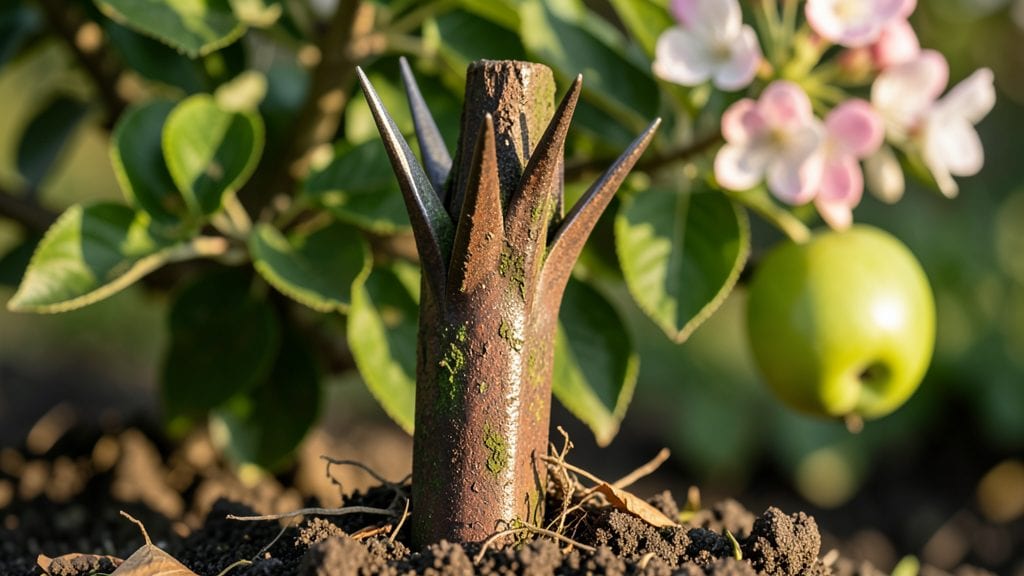
- ● Tree guards or trunks wraps: Metal or plastic spiral wraps (e.g., blank">1-inch-wide, 10-foot-long) to protect the trunk from gnawing.
- ● Zip ties or garden clips: 100+ heavy-duty zip ties (or 50+ sturdy clips) to secure netting without damaging branches.
- ○ Staple gun + staples: For anchoring netting to branches (optional but handy for large trees).
- ● Pruning shears: Sharp, bypass-style to trim branches for better netting fit.
- ● Reflective tape or old CDs: Hang near the tree to scare off squirrels with movement and light.
- ● Squirrel repellent spray: Non-toxic, peppermint-based (e.g., Hot Pepper Wax) for extra deterrence.
- ● Bird netting (fine mesh): If squirrels are sneaky, a second layer can block tiny gaps.
- ● Gloves: Garden or work gloves to protect hands from thorns or rough bark.
- ● Ladder: Extendable or step ladder (if trees are over 8 feet tall).
How to keep squirrels out of apple trees: netting tricks that work
Here’s the foolproof way to protect your apple harvest—no more chewed fruit or stolen blossoms.
🪴 Step 1: Choose the Right Netting Material
Use lightweight, breathable bird netting (not plastic mesh—it traps heat and damages fruit). The 1-inch square mesh is ideal because it blocks squirrels while still allowing sunlight and air to reach the tree. I’ve found that 10-foot by 10-foot sections work perfectly for most mature apple trees.
Check the label for UV protection—this prevents the netting from degrading in sunlight over the season. If you’re working with a large orchard, buy extra to overlap sections seamlessly. Avoid cheap netting; it tears easily when squirrels scramble against it.
✂️ Step 2: Measure and Cut the Netting
Wrap the netting around the tree’s trunk first, measuring from the ground up to the highest branch where squirrels climb. Add 2 extra feet to account for overlap and securing the netting tightly. For a 10-foot tree, you’ll need roughly 35 feet of netting if wrapped in a single layer.
Cut the netting with scissors or shears—never tear it, as rough edges can snag branches or fruit. If you’re covering multiple trees, measure each one separately. Squirrels are clever; even a small gap can become their entry point.
🌿 Step 3: Secure the Netting Around the Tree
Start at the base of the trunk and wrap the netting upward, overlapping each section by 6 inches. Use soft plastic tree ties (not wire or zip ties—they can cut into bark) to secure the netting every 2 feet. Pull it snug but not tight enough to restrict the tree’s growth.
Pay extra attention to branch intersections—squirrels often jump between branches. Fold the netting inward at these points and secure it tightly. If the tree is young, you can shape the netting like a cone to direct squirrels downward. For mature trees, a loose tent shape works best.
🌱 Step 4: Cover the Canopy Completely
Once the trunk is wrapped, drape the netting over the entire canopy, ensuring it touches the ground at the edges. Squirrels can’t climb smooth surfaces, so bury the edges with soil or secure them with rocks to prevent digging underneath. If the tree is large, you may need stakes or weights to keep the netting in place.
Check for gaps around the trunk—even a 1-inch opening is enough for a determined squirrel. If you see sunlight peeking through, adjust the netting immediately. A well-covered tree looks like a giant birdcage, but it’s the only way to guarantee protection.
⏰ Step 5: Maintain the Netting Through the Season
Inspect the netting every 2 weeks for tears, loose sections, or signs of squirrel activity (chewed edges or scratches). Replace damaged sections immediately—squirrels will exploit any weakness. After heavy rain, re-tighten the ties to prevent sagging, which creates hiding spots.
Remove the netting after harvest (or in late fall) to allow the tree to breathe and prevent mold buildup. Store it in a dry place for next year. If squirrels are still a problem, consider adding a second layer or pruning lower branches to make climbing harder.
Tips & tricks for keeping squirrels out of apple trees
These battle-tested strategies will help you outsmart those clever critters and save your apple harvest.
Material Matters: The 1-inch square mesh netting is your best defense—it blocks squirrels while letting sunlight through. I’ve found that the lightweight bird netting works best because it’s breathable and won’t smother your tree. Pro tip: Look for UV protection on the label—this prevents the netting from degrading quickly in sunlight, saving you money in the long run.
Precision Cutting: When measuring for your 10-foot tree, remember you’ll need about 35 feet of netting for a single layer. The key is adding those extra 2 feet for overlap—this creates a continuous barrier squirrels can’t squeeze through. Use scissors instead of tearing the netting to avoid rough edges that could snag branches or fruit. Trust me on this: A single gap is all a determined squirrel needs.
Strategic Securing: In Step 3, pay special attention to branch intersections where squirrels often jump between branches. Fold the netting inward at these points and secure it tightly with soft plastic tree ties every 2 feet. For young trees, shaping the netting like a cone directs squirrels downward, while mature trees work better with a loose tent shape. This creates a physical maze that squirrels can’t navigate.
Season-Long Vigilance: The 2-week inspection schedule in Step 5 is non-negotiable. Squirrels will chew through weak spots, so replace any damaged sections immediately. After heavy rain, check that all ties are secure—sagging netting creates hiding spots and weak points. I’ve seen squirrels exploit even a 1-inch gap, so be thorough when checking for sunlight peeking through.
Pro Tips for Keep Squirrels Out Of Apple Trees
- These battle-tested strategies will help you outsmart those clever critters and save your apple harvest.
- Material Matters: The 1-inch square mesh netting is your best defense—it blocks squirrels while letting sunlight through.
- Precision Cutting: When measuring for your 10-foot tree, remember you’ll need about 35 feet of netting for a single layer.
Frequently asked questions
Got questions about squirrel-proofing your apple trees?
You’re not alone! Here are some of the most common concerns—and practical answers—to help you protect your harvest without stress.
What’s the best time of year to install squirrel-proof netting?
Install netting before squirrels spot your apples—ideally in late winter or early spring, as soon as buds swell. If you’re retrofitting, do it as soon as you notice damage (like chewed fruit or nests). Pro tip: Squirrels are early risers, so check trees at dawn if you suspect activity!
How long does netting need to stay on my apple tree?
Keep netting up throughout the growing season and until all apples are harvested. Squirrels are persistent—even a single missed fruit can lure them back. For late varieties, extend coverage until frost. Bonus: Remove netting only after apples are fully ripe to avoid attracting pests.
Are there affordable alternatives to commercial netting?
Yes! Try lightweight row covers (from garden stores), chicken wire (secured tightly), or even old bedsheets (weighted down with bricks). DIY options work, but ensure they’re snug—squirrels can squeeze through gaps as small as 1 inch! Warning: Avoid plastic that traps heat.
Will squirrels still eat apples if I pick them early?
Picking early can help, but squirrels are opportunistic—they’ll target unripe or fallen apples too. If you harvest early, remove all windfall fruit daily and store apples in mesh bags or bins (even indoors!). For best results, combine early picking with netting for full protection.
What if squirrels keep getting in despite my efforts?
If netting fails, try these fixes:
- Check for gaps: Squirrels exploit loose edges or tears—secure with staples or zip ties.
- Add repellents: Spray hot pepper spray or use ultrasonic devices near the tree base.
- Distract them: Place a squirrel feeder far from your trees with corn or sunflower seeds.
Last resort: If damage is severe, consider tree wraps or pruning lower branches to limit access.
Wrapping up and next steps
Keeping squirrels out of your apple trees doesn’t have to be a losing battle—with the right strategies, like netting, repellents, and habitat tweaks, you can protect your harvest while coexisting peacefully with these clever critters. 🌳🐿️ Start small: test one tree first, then expand your defenses as needed.
Your patience and consistency will pay off with juicy, squirrel-free apples!
Ready to take action? Pick one method today—whether it’s hanging netting, setting up deterrents, or trimming branches—and watch your orchard thrive! 🍏✨