How To
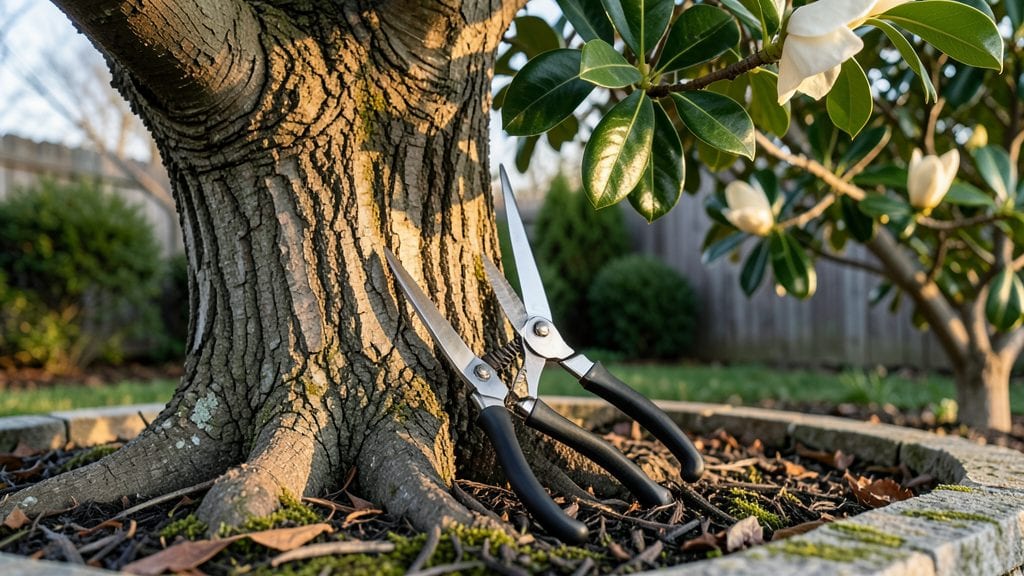
Pruning magnolia trees isn't just about shaping—it's about preserving those stunning blooms and keeping the tree healthy for decades. ✨ I've learned the hard way that cutting at the wrong time or in the wrong way can rob you of next year's flowers, so I'm sharing the exact method that works every time.
The best time to prune is right after the tree finishes blooming in late spring, but light shaping can happen year-round if needed. You'll need sharp pruners, rubbing alcohol for sterilizing cuts, and a clear day to avoid spreading disease.
The key is making clean cuts just above outward-facing buds to encourage new growth—and never removing more than a third of the branches at once.
📚 In This Guide
- What you need
- Instructions
- Tips and common mistakes
- Wrapping up and next steps
What you need
- ● Pruning shears – Bypass pruners (for small branches, 5–8 inches long) or anvil pruners (for thicker branches, 6–8 inches long). Must be sharp!
- ● Loppers – 18–24 inches long, for branches ½ to 2 inches thick.
- ● Pruning saw – Curved or folding saw, for branches 2+ inches thick.
- ● Gloves – Heavy-duty, cut-resistant (magnolia branches can be thorny!).
- ● Disinfectant – 70% isopropyl alcohol or a pruning sealant (to prevent disease spread).
- ● Ladder – Sturdy, extendable (if your tree is over 6–8 feet tall). Never stand on wobbly ladders!
- ● Trash bags – For collecting pruned debris.
- ○ Pruning paint/sealant – Optional but recommended for cuts larger than ½ inch (helps prevent disease).
- ● Pole pruner – For high branches (saves ladder use!).
- ● Safety glasses – Protects eyes from sawdust or falling debris.
- ● Work boots – With ankle support for stability.
- ● Tree wound dressing – Controversial but some swear by it for large cuts.
- ● Notebook & pen – To sketch a pruning plan before you start.
Instructions for pruning magnolia trees safely
Pruning magnolias keeps them healthy and blooming beautifully—just follow these simple steps.
✂️ Step 1: Choose the Right Time for Pruning
Prune immediately after the tree finishes blooming in late spring—this ensures you don’t cut off next year’s flower buds, which form after blooms fade. Never prune in fall or winter, as this can damage the tree’s ability to set buds for spring. If you must shape lightly, do it in early spring before buds swell, but avoid heavy cuts.
Magnolias bloom on old wood, so timing matters. Wait until all flowers have dropped and new leaves appear before making any cuts. This usually falls between May and June in most climates. If you prune too early, you risk removing flower buds that haven’t opened yet.
✂️ Step 2: Gather the Right Tools and Sanitize
Use clean, sharp pruning shears for small branches and loppers for thicker stems. A pruning saw may be needed for larger branches over 1 inch in diameter. Disinfect your tools with rubbing alcohol before and after pruning to prevent spreading disease between cuts.
Dull tools tear bark, leaving wounds that invite pests and rot. Test your shears by making a clean cut through a small branch—if the cut is jagged, sharpen or replace the blade. Avoid pruning when the tree is wet, as moisture spreads bacteria faster.
✂️ Step 3: Remove Dead, Damaged, or Crossing Branches First
Start by cutting out dead, diseased, or broken branches—these are easy to spot as they lack leaves, have hollow centers, or show signs of fungus. Next, remove crossing or rubbing branches that create wounds. Make cuts just outside the branch collar (the swollen area where the branch meets the trunk) to promote faster healing.
Never leave stubs—cutting flush with the trunk can trap moisture and cause rot. Aim for a 45-degree angle when pruning larger branches to help water run off. If a branch is too large to cut cleanly, make a top cut first, then a bottom cut to avoid tearing the bark.
✂️ Step 4: Thin Out the Canopy for Better Airflow
Magnolias benefit from selective thinning to improve light penetration and airflow. Focus on removing up to 25% of the canopy in one session—never take more than that in a single year. Start at the outer edges and work inward, removing branches that grow inward or downward.
Look for branches that block sunlight from reaching the center of the tree. These shaded areas can lead to weak growth and fewer blooms. Step back frequently to assess balance—your goal is an open, rounded shape that lets light filter through evenly.
✂️ Step 5: Clean Up and Monitor the Tree
Rake up and dispose of all pruned branches—never leave them on the ground, as they can harbor pests. Apply a wound dressing (like pruning sealant) only if the cut is large—small cuts heal better on their own. Water the tree deeply after pruning to help it recover.
Watch the tree for new growth in the following weeks. Healthy magnolias will show fresh leaves and buds within 4-6 weeks. If you notice yellowing leaves or oozing sap at the cut sites, the pruning was too aggressive—scale back next time and focus on lighter maintenance.
Tips & tricks for pruning magnolia trees
Here's what I've learned after pruning magnolias for years—these tricks make all the difference between a healthy tree and one that struggles to bloom.
Timing Secret: In Step 1, when you're waiting for all flowers to drop, here's the thing: don't rush! Check for new leaves appearing on the branches—this is your confirmation that flower buds for next year have already formed. I've seen people prune too early and completely miss next spring's blooms because they didn't wait for those telltale leaves.
Tool Technique: For Step 2, when you're gathering tools, remember this: your pruning shears should cut like butter through a small branch. If you're struggling, your blades are dull. Test them on a small branch first—if it looks like you're shredding paper instead of making a clean cut, sharpen or replace them immediately. Dull tools cause more damage than they prevent.
Branch Collar Matters: In Step 3, when you're removing crossing branches, focus on that swollen area where the branch meets the trunk—the branch collar. This is where the tree's healing tissues are located. Make your cut just outside this collar, never flush with the trunk. I've seen too many people leave stubs that trap moisture and invite rot—always aim for that clean cut just beyond the collar.
Canopy Thinning Strategy: For Step 4, when you're thinning the canopy, think of your tree like a sunroof—you want light to filter through evenly. Step back every few cuts and visualize sunlight coming from above. Remove branches that grow inward or downward first, working from the outer edges toward the center. This creates that beautiful open shape while maintaining the tree's natural form.
Pro Tips for Prune Magnolia Tree
- Here's what I've learned after pruning magnolias for years—these tricks make all the difference between a healthy tre...
- Timing Secret: In Step 1, when you're waiting for all flowers to drop, here's the thing: don't rush! Check for new le...
- Tool Technique: For Step 2, when you're gathering tools, remember this: your pruning shears should cut like butter th...
Frequently asked questions
Got questions about pruning your magnolia tree? You’re not alone! Here are answers to the most common concerns—so you can prune with confidence and keep your tree thriving.
When is the best time to prune a magnolia tree?
The ideal time is right after it finishes blooming in late spring or early summer. Avoid pruning in fall or winter, as this can stimulate new growth that may be damaged by cold. Evergreen magnolias can be lightly pruned in late winter only if needed—but never during bloom season!
Can I prune magnolia trees in winter?
Pruning in winter is generally not recommended for magnolias. Cold weather stresses the tree, and late-winter pruning can encourage tender new growth that may die back in spring. If you must prune in winter, limit it to removing dead or diseased branches—keep it minimal and avoid heavy cuts.
Will pruning my magnolia tree reduce next year’s flowers?
Yes! Magnolia flowers form on old wood, so excessive pruning—especially cutting back into last year’s growth—can reduce blooms. Stick to light shaping and removing only dead/diseased branches to preserve next season’s stunning blossoms.
What if I accidentally prune too much?
Don’t panic! If you’ve over-pruned, focus on recovery care: water deeply, avoid fertilizing (stress can worsen damage), and monitor for new growth. Over time, magnolias are resilient, but severe cuts may take 1-2 years to bounce back. Next time, prune slowly and selectively!
Can I shape my magnolia like a topiary?
Magnolias can be shaped into topiary, but it requires patience and precision. Use sharp shears for clean cuts, and prune gradually over multiple seasons. Avoid heavy annual cuts—magnolias respond better to light, frequent trims than drastic reshaping. A well-trained topiary magnolia is stunning but takes years!
Wrapping up and next steps
Pruning your magnolia tree doesn’t have to be intimidating—just follow the right timing, tools, and techniques to keep it healthy and blooming beautifully.
Whether you’re shaping young branches, removing dead wood, or encouraging vibrant flowers, patience and precision are your best friends. 🌸 Now that you’re equipped with the know-how, grab those shears and give your magnolia the care it deserves!
Ready to take it a step further? Monitor your tree’s growth after pruning and adjust as needed—soon, you’ll have a stunning, well-maintained magnolia that’s the envy of the neighborhood!