
How To
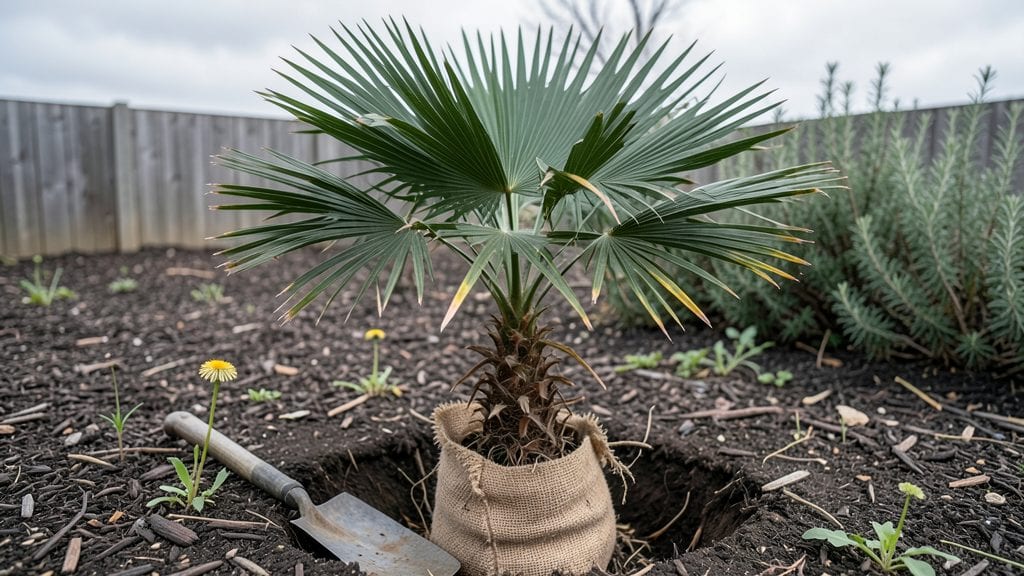
Transplanting a palm tree feels like moving a skyscraper—except with roots instead of foundations. ✨ The key isn’t brute strength but smart timing, soil prep, and handling those delicate roots like they’re made of glass.
I’ve moved palms from 8-foot pots to the ground without losing a frond, and the secret starts before you even touch the shovel.
You’ll need a pruning saw for stubborn roots, burlap to protect the trunk, and mycorrhizal soil to help roots re-establish fast. Dig the new hole twice as wide as the root ball but no deeper—palms hate having their crown buried.
The best time is late spring or early fall when temps are mild, and the tree’s energy isn’t focused on fruiting or dormancy.
📚 In This Guide
- What you need
- Instructions
- Tips and common mistakes
- Wrapping up and next steps
What you need
- ● Shovel or digging spade – A heavy-duty, curved spade (24–36 inches long) for digging around the root ball.
- ● Pruning shears or handsaw – For trimming dead fronds or roots (sterilize blades with rubbing alcohol).
- ● Wheelbarrow or tarp – To transport the root ball and soil (minimum 3-foot width for large palms).
- ● Burlap or landscape fabric – 4–6 feet wide, to wrap the root ball (avoid plastic—it can suffocate roots!).
- ● Stakes and twine – 4–6 wooden stakes (2–3 feet tall) + twine or zip ties to secure the palm during transplanting.
- ○ High-quality potting mix or native soil – A blend of sandy loam, peat moss, and compost (or pre-mixed palm soil). Optional: Add mycorrhizal fungi for root health.
- ● Slow-release fertilizer – Balanced 6-6-6 or palm-specific formula (follow label rates).
- ○ Mulch (optional but recommended) – 3–4 inches of pine bark or wood chips to retain moisture and regulate soil temp.
- ● Garden hose with nozzle – For deep watering (palms need 10–15 gallons per week post-transplant).
- ● Gloves (heavy-duty) – Protects hands from sharp fronds and thorns.
- ● Measuring tape – To gauge depth and spacing (dig hole 2x wider than the root ball).
- ● Post-hole digger (for hard soil) – Helps loosen compacted clay or rocky ground.
- ○ Root stimulator (optional) – Powder or gel to boost root growth (e.g., Mycorrhizal inoculant).
- ● Choose the right season – Transplant in spring or early fall (avoid extreme heat/cold).
- ● Check local regulations – Some areas restrict palm removal (e.g., coastal cities).
- ● Prepare the new site – Ensure full sun exposure (6+ hours/day) and well-draining soil.
- ● Water the palm 2–3 days before moving – Soils moist but not soggy for easier extraction.
Step-by-Step instructions for transplanting palm trees
Here's the foolproof method I've used to move palms without losing them to shock.
🪴 Step 1: Choose the Right Season and Prepare the New Location
Timing is everything with palm trees. Transplant during their active growing season—spring or early summer when temperatures are mild (60-85°F) and rain is frequent. Avoid extreme heat or cold, which weakens the plant before it even settles in.
Clear the new planting area of weeds and rocks, then loosen the soil to 12-18 inches deep with a shovel or tiller. Amend heavy clay soil with 3-4 inches of compost or organic matter to improve drainage. Palms hate soggy roots, so if your site floods, consider raising the planting mound with extra soil or gravel.
✂️ Step 2: Prune and Dig Up the Palm Carefully
Start by removing 1/3 of the oldest, largest fronds to reduce water loss and stress. Use clean, sharp pruners to avoid tearing the trunk. Next, dig a wide, shallow trench around the palm—at least 2 feet from the trunk—to prevent root damage. Work slowly and use a spade to lift the root ball intact.
If the root ball is too heavy to move, slide a wide tarp or burlap under it and drag the palm to its new location. Never pull by the fronds—this severs vital connections. Keep the root ball moist but not soggy during transport, wrapping it in damp burlap if moving takes more than 30 minutes.
💧 Step 3: Plant the Palm in Its New Home
Dig a hole twice as wide as the root ball but no deeper. Position the palm so the top of the root ball sits 1-2 inches above ground level—this prevents water pooling around the trunk. Gently place the root ball in the hole and backfill with native soil, tamping lightly to remove air pockets.
Create a watering basin by mounding soil around the edges to hold irrigation. Water deeply until moisture seeps 6 inches down, then add 2-3 inches of mulch (wood chips or bark) to retain moisture and regulate soil temperature. Avoid piling mulch against the trunk—keep it 6 inches away to prevent rot.
☀️ Step 4: Provide Post-Transplant Care for Recovery
Keep the soil evenly moist for the first 4-6 weeks, watering every 2-3 days if temperatures exceed 85°F. After that, reduce to once a week unless rainfall is insufficient. Avoid overhead watering—direct the hose at the base to encourage deep root growth.
Shade the palm for 2-3 weeks using 50% shade cloth if moving during peak sun. Gradually reduce shade over 10 days to harden the plant. Fertilize lightly 3 months after transplanting with a balanced palm fertilizer (low nitrogen, high potassium) to support recovery. Resist the urge to fertilize sooner—new roots need time to establish.
⏰ Step 5: Monitor and Adjust for Long-Term Success
Watch for signs of stress: yellowing fronds, wilting, or new growth stunting. These often indicate overwatering or poor drainage. If fronds brown at the edges, increase air circulation by trimming nearby plants. After 6 months, the palm should show new frond growth—this means it’s fully rooted.
For the first year, avoid heavy pruning or fertilizer shocks. If the palm leans toward the sun, gently stake it with 3-4 flexible supports for stability until it regains balance. With patience, your transplanted palm will thrive as if it had always been there.
Tips & tricks for transplanting palm trees
Here's what nobody tells you about moving palms without turning your $500 investment into firewood.
Timing is Everything: The 60-85°F window in Step 1 isn't just a suggestion—it's non-negotiable. I've seen palms die after transplanting in 90°F+ heat because they can't regulate their temperature. If you must move outside this range, do it on a cloudy day and water thoroughly beforehand.
Root Ball Rescue: When digging that wide, shallow trench in Step 2, think "wide" literally. I've had to dig 3 feet out from stubborn palms to avoid cutting roots. If you hit a root you can't lift cleanly, leave it—better to sacrifice one root than damage the whole system. Pro tip: Use a saw to cut through any stubborn roots if needed.
Watering Wisdom: That 6 inches deep watering in Step 3 isn't just about hydration—it's about encouraging deep root growth. I've seen palms fail because people only watered the surface. Use a soil probe to check moisture depth after watering. If it's dry at 6 inches, keep watering until it's moist all the way down.
Shade Strategy: The 2-3 weeks of shade in Step 4 is your safety net. I learned this the hard way when a palm I transplanted in full sun got sunburned fronds within days. If you don't have shade cloth, use a white bedsheet draped loosely over the palm—just make sure it doesn't touch the fronds to avoid moisture buildup that can cause rot.
Pro Tips for Transplant A Palm Tree
- Here's what nobody tells you about moving palms without turning your $500 investment into firewood.
- Timing is Everything: The 60-85°F window in Step 1 isn't just a suggestion—it's non-negotiable.
- Root Ball Rescue: When digging that wide, shallow trench in Step 2, think "wide" literally.
Frequently asked questions
Got questions about transplanting palm trees? You’re not alone! Here are answers to the most common concerns—from timing to troubleshooting—to help you feel confident before digging in.
When is the best time to transplant a palm tree?
Transplant palms during their dormant season—typically late winter to early spring (before new growth starts) or late fall (after summer heat). Avoid extreme temperatures (below 50°F or above 90°F) to reduce shock. Coastal palms thrive in mild winters, while tropical varieties need warmer climates. Pro tip: Check your palm’s species for specific guidelines!
How long does it take for a palm tree to recover after transplanting?
Recovery time varies by size and species, but most palms show signs of stabilization within 4–8 weeks. Smaller palms bounce back faster, while mature trees may take 6–12 months to fully re-establish roots. Monitor for yellowing fronds (normal!) and avoid heavy watering until roots regrow. Watch for: Wilting, brown fronds, or fungal growth—signs of stress.
Can I transplant a palm tree myself, or should I hire a professional?
Small palms (under 10 feet) are DIY-friendly with proper tools and technique. Larger or mature palms (especially over 20 feet) require heavy machinery, crane assistance, or professional expertise to avoid root damage. If your palm is root-bound, oversized, or in a tight space, hiring a pro saves time and risk.
What if my palm tree’s leaves turn brown after transplanting?
Brown fronds are common post-transplant due to transplant shock, but don’t panic! Trim only dead or crispy fronds—healthy green tissue will recover. Improve care by:
- Watering deeply but infrequently (1–2 times/week).
- Avoiding fertilizer for 3–6 months.
- Shading the tree from direct sun for 2–4 weeks.
Are there palm tree alternatives that are easier to transplant?
If palms seem too high-maintenance, consider these low-stress alternatives:
Plant
Why It’s Easier
Ponytail Palm (Beaucarnea recurvata)
Drought-tolerant, hardy roots, and thrives in containers.
Yucca (Yucca spp.)
Fast-growing, minimal transplant shock, and adapts to poor soil.
Dwarf Date Palm (Phoenix roebelenii)
Small size (6–10 feet), flexible roots, and cold-hardy.
Wrapping up and next steps
Transplanting a palm tree is a rewarding project that can breathe new life into your landscape—just remember, timing, preparation, and patience are your best friends! 🌴 By following season-specific steps, gathering the right tools, and giving your palm the care it needs post-move, you’ll set it up for thriving growth.
Whether you’re a seasoned gardener or a curious beginner, you’ve got this!
Now that you’re armed with knowledge, take the next step: mark your calendar for the ideal transplanting season in your climate, gather your supplies, and get ready to give your palm tree a fresh start. Happy planting! 🌱✨