
Pruning
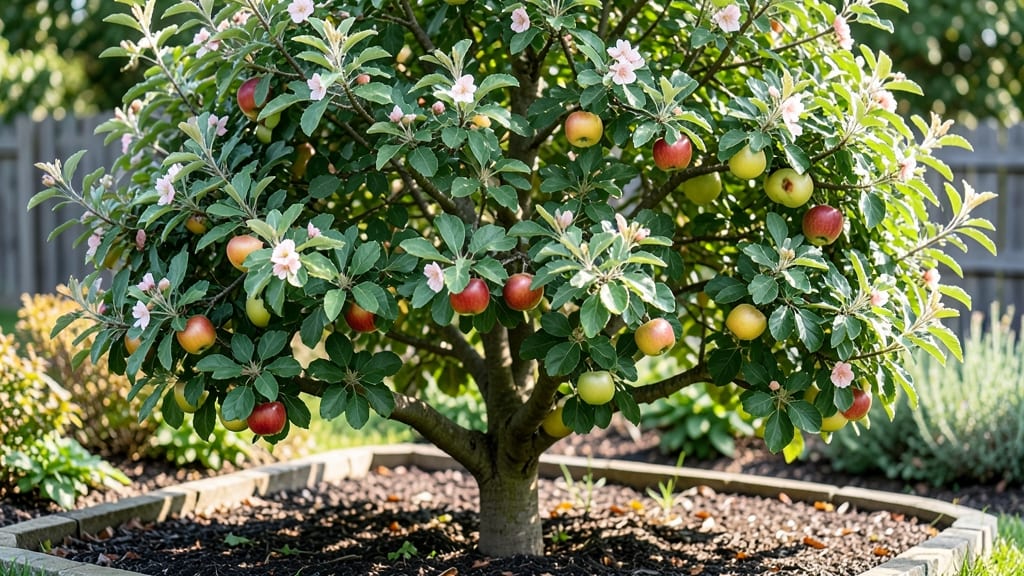
Identifying apple trees by their leaves and stems can save you from years of guessing what’s in your backyard. 🌳 I’ve spent years mislabeling trees—until I learned to focus on just three traits: leaf shape, stem color, and bark texture.
A single glance at the right details tells you whether you’ve got a tart Granny Smith or a sweet Honeycrisp growing wild.
The key is timing—spring is ideal, when leaves are fully unfurled but before pests chew them up. Look for serrated edges on leaves (most varieties have them), then check the stem color: red-brown usually means crabapple, while greenish stems often signal dessert apples.
My neighbor swore his tree was a Fuji until we spotted the jagged leaf edges—turns out, it was a McIntosh all along.
Once you master these visual clues, you’ll spot the differences instantly. A mature tree’s bark tells another story: smooth and silver-gray for young trees, rough and furrowed for older ones. Even in winter, the branching pattern (upright for standard trees, sprawling for dwarf varieties) gives major hints.
This method works whether you’re identifying a backyard mystery or planning a new orchard.
For tricky cases, snap a photo and compare it to your county’s plant database—or ask a local nursery for a second opinion. Most experts love helping beginners spot the details they missed. Start with these traits, and you’ll be naming trees like a pro in no time.
Root Causes of Misidentification
Understanding why apple trees can be tricky to identify starts with recognizing the biological and environmental factors that influence their appearance. Apple trees (Malus domestica) exhibit subtle yet critical variations in leaf shape, stem color, and growth patterns—often due to genetics, disease, or environmental stress.
Below, we break down the key reasons why even experienced gardeners might struggle to pinpoint a specific variety.
Apple trees are notoriously genetically diverse, with over 7,500 known cultivars worldwide. Many varieties are cross-pollinated, leading to hybrid offspring that inherit a mix of traits from parent trees.
For example: - A tree might have narrower leaves than its parent due to a dominant genetic trait from a different cultivar. - Stem color (red, green, or brown) can shift slightly in hybrids, making visual identification unreliable. - Grafting (a common propagation method) can also cause confusion—scions (buds) from one variety may grow on rootstock from another, resulting in inconsistent foliage or bark.
Actionable Tip: 💡 If you suspect hybridization, compare your tree’s traits to known parent varieties in your region. Local agricultural extensions or orchard databases (like the National Clean Plant Network) can help cross-reference genetic markers.
Apple trees don’t grow in a vacuum—their leaves, stems, and bark can change dramatically due to:
- Nutrient deficiencies (e.g., iron chlorosis turns leaves yellow, while zinc deficiency causes stunted growth).
- Fungal infections like apple scab (Venturia inaequalis), which distorts leaf shape and causes dark spots.
- Bacterial diseases such as fire blight (Erwinia amylovora), which blackens stems and leaves, mimicking poor grafting.
- Pest damage (e.g., apple aphids or leafrollers) can alter leaf margins, making them appear jagged or curled.
Pro Tip: ✨ Before assuming a tree is a rare variety, inspect for pests or disease symptoms. Healthy trees of the same cultivar should have consistent traits—if one branch looks different, it’s likely an environmental issue.
Apple trees change appearance as they mature:
- Young trees (under 5 years) often have smaller, rounder leaves compared to their adult form.
- Spring flush (new growth) may produce lighter green or red-tinged leaves, while mature foliage darkens.
- Dormant buds in winter can look drastically different from summer stems—some varieties have hairy buds, while others are smooth.
Key Comparison: 📊 Use a side-by-side chart of your tree’s traits across seasons. For example:
| Trait | Spring | Summer (Mature) | Winter (Dormant) |
|---|---|---|---|
| Leaf Shape | Rounded, lighter green | Lobed, dark green | Absent (buds present) |
| Stem Color | Reddish-green | Green/brown | Brown with lenticels |
Even well-intentioned gardeners can alter a tree’s true identity through:
- Improper grafting, where the scion (desired variety) fails to dominate, leading to a mix of traits.
- Severe pruning that removes identifying branches, forcing regrowth with less predictable characteristics.
- Rootstock influence—some dwarfing rootstocks (like M.9) can cause smaller leaves or stunted growth, masking the scion’s true form.
Fix It: 🔪 If you suspect pruning errors, examine the tree’s structure. Look for graft unions (visible bumps or ridges where two varieties were joined) and compare the upper scion to known reference images.
Apple trees adapt to their environment, leading to localized variations:
- Cooler climates (e.g., Pacific Northwest) may produce darker, thicker leaves due to slower growth.
- Alkaline soils (common in the Midwest) can cause iron deficiency, turning leaves yellow between veins.
- High humidity increases susceptibility to powdery mildew, which can distort leaf surfaces.
Data Point: 📊 Studies show that ‘Granny Smith’ apples grown in California have shinier, darker leaves than those in Washington state, where they may appear lighter and more pubescent.
Apple tree identification isn’t just about leaf shape or stem color—it’s about layering clues from genetics, environment, and human intervention. By understanding these root causes, you can narrow down possibilities and avoid mislabeling your tree as a rare variety when it’s simply reacting to its surroundings.
Next Step: 🚀 Once you’ve ruled out stress, disease, and human factors, use our Leaf Shape and Stem Color Key to match your tree’s traits to known cultivars.
Fixing Mistaken Apple Tree ID
If you’ve ever stared at a leaf or fruit, scratched your head, and thought, "Is this a Granny Smith or a Honeycrisp?"—you’re not alone. Misidentifying apple trees happens more often than you’d think, especially when varieties share similar traits like leaf shape, stem color, or fruit size.
But don’t worry—this section breaks down the most common causes of confusion and offers practical, step-by-step solutions to nail down your tree’s true identity. Plus, we’ll share pro tips to prevent future mix-ups so you can confidently prune, harvest, and care for your tree like a seasoned orchardist.
Misidentifying apple trees often starts with leaves—because, let’s face it, they’re the first thing you see. If two varieties have almost identical foliage, here’s how to dig deeper:
🌿 Step 1: Compare Leaf Shape & Texture Not all oval leaves are created equal.
Use these microscopic clues to distinguish between close matches: - Tooth serration depth: Count the "teeth" along the leaf edge. __PROTECT_0 apples have fine, closely spaced serrations, while PROTECT_1 leaves have broader, more jagged edges. - Underside pubescence: Some varieties (like PROTECT_2__) have a faint downy fuzz on the underside of leaves.
Others, like __PROTECT_3, are smooth. - Leaf thickness: Hold a leaf between your fingers. Thin leaves (e.g., PROTECT_4) feel almost papery, while thick leaves (e.g., PROTECT_5__) are sturdy.
> 💡 Pro Tip: Snap a photo of the leaf underside and compare it to high-res variety guides online. Many nurseries (like Midwest Fruit) offer side-by-side leaf comparisons.
🍎 Step 2: Examine the Stem & Buds
Stems and buds are underrated powerhouses for ID-ing apple trees.
Here’s what to check: - Stem hairiness: Young stems of __PROTECT_6 apples are densely hairy, while PROTECT_7 stems are smooth. - Bud arrangement: PROTECT_8 buds grow in a spiral pattern, while PROTECT_9 buds cluster more tightly. - Bud color: Some buds (like those on PROTECT_10) have a pinkish tint, while others (e.g., PROTECT_11__) are greenish-brown.
🍏 Step 3: Taste the Fruit (If Available)
If your tree is bearing fruit, tasting is the fastest way to ID—but only if you’re familiar with the flavor profiles:
- Tart vs. sweet: __PROTECT_12 is tart and crisp; PROTECT_13__ is sweet with a honey-like aftertaste.
- Texture: __PROTECT_14 has a juicy crunch; PROTECT_15__ is softer and mealier.
- Skin thickness: __PROTECT_16 has a thick, almost waxy skin, while PROTECT_17__ is thinner and more delicate.
> ⚠️ Warning: Avoid biting into unknown fruits if you’re unsure—some wild apples (like Crabapple) can be bitter or even slightly toxic.
Stem color is another game-changer for ID-ing apple trees, but it’s often overlooked. Here’s how to use it correctly:
🔴 Step 1: Observe Stem Color at Different Growth Stages
- New growth: __PROTECT_19 stems start red and fade to greenish-brown; PROTECT_20__ stems stay greenish with faint red streaks.
- Mature wood: __PROTECT_21 branches turn a deep, almost purple-brown as they age, while PROTECT_22__ remains lighter.
🔵 Step 2: Check for Color Changes with Age
Some varieties change color as the season progresses:
Jonagoldstems start green and develop reddish streaks by summer.Cortlandstems stay uniformly green but develop a glossy sheen when wet.
> 🌡️ Pro Tip: Take photos of the stem at three stages: spring (new growth), summer (full leaf), and fall (before leaf drop). Compare them to variety databases like USDA’s apple variety descriptions.
Sometimes, the tree itself holds the key. Pay attention to these overall characteristics:
🌿 Step 1: Assess Tree Size & Growth Habit
- Dwarf varieties (e.g.,
Columnar Honeycrisp) stay under 8 feet tall. - Standard trees (e.g.,
Liberty) can reach 20+ feet. - Spreading habit: __PROTECT_27 trees grow wide and bushy; PROTECT_28__ trees are upright and conical.
🍎 Step 2: Note Flower & Fruit Cluster Patterns
- Flower color: __PROTECT_29 blooms are deep pink; PROTECT_30__ fruits grow in loose clusters;
Rome Beauty fruits are tightly packed.
📝 Step 3: Keep a Field Journal
Track these details in a simple table:
| Variety Suspected | Leaf Shape | Stem Color (New/Mature) | Fruit Taste/Text | Tree Size/Habit |
|---|---|---|---|---|
| Granny Smith | Thin, serrated | Green → purple-brown | Tart, crisp | Medium, upright |
| Honeycrisp | Thick, wavy edges | Green with red streaks | Sweet, juicy | Large, spreading |
> ✨ Pro Tip: Use a phone app like PlantNet to upload photos of leaves, stems, and flowers for AI-assisted ID.
Once you’ve cracked the code, keep your tree’s ID foolproof with these habits:
- 📸 Take seasonal photos: Snap pictures of leaves, stems, flowers, and fruit at every growth stage and save them in a labeled folder.
- 🏷️ Label your tree: Use a waterproof tag with the variety name and planting date tied to a branch.
- 🌱 Cross-reference with neighbors: If your tree is in a community orchard, ask nearby growers what they’ve planted—sometimes trees are mislabeled!
- 🔬 Get a DNA test: For ultimate certainty, send a leaf sample to a lab like DNA Endowment for a <$5
Frequently asked questions
What’s the easiest way to tell if a tree is an apple tree?
Look for serrated leaves with 5-7 lobes and a distinct apple scent when crushed. Most apple varieties also have alternate branching (leaves grow in a spiral pattern). If it’s spring/summer, check for white or pink blossoms—a dead giveaway!
Can I identify an apple tree in winter when there are no leaves?
Yes! Focus on bud shape (round and plump for apples) and bark texture. Young apple trees have smooth, gray bark, while mature ones develop furrows and ridges. Look for lenticels (tiny raised dots) along the branches—common in apple trees.
How do I know if my tree is a crabapple vs. a dessert apple?
Crabapples have smaller, tart fruit (under 2 inches) and reddish stems. Dessert apples usually have larger fruit, green/brown stems, and smoother bark. Pro tip: Crabapples often grow in wild, multi-trunk clusters, while cultivated apples are single-trunked.
What if my apple tree’s leaves look different from what I’ve seen online?
That could mean disease, pests, or environmental stress. Check for yellowing (iron deficiency), spots (apple scab), or chewed edges (pests). Compare your tree’s traits to healthy reference images—if it’s a consistent variation, it might just be a different variety!
Are there apps or tools to help identify apple trees?
Try PlantNet or PictureThis—upload photos of leaves, stems, and fruit for AI analysis. For local experts, check your county extension office or orchard groups on Facebook. Many nurseries also offer free ID services if you bring samples!