
Fertilization
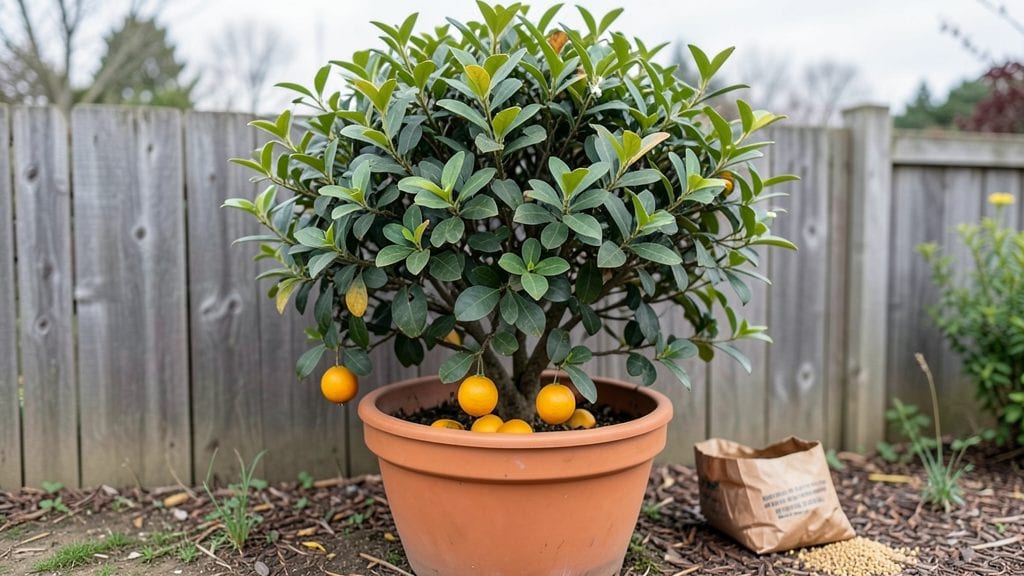
The right kumquat tree fertilizer can transform your bitter harvests into sweet, juicy rewards with just a few seasonal boosts.
Your kumquat tree is a citrus powerhouse, but without the right fertilizer, its fruit production can dwindle—or worse, the tree itself may struggle to thrive.
Unlike generic citrus fertilizers, kumquats demand precise nutrients to fuel their year-round fruiting cycle, and one wrong move can mean bitter harvests instead of sweet rewards.
Kumquats thrive in well-balanced soil rich in nitrogen, phosphorus, and potassium, but they also need micronutrients like zinc and magnesium to keep their leaves vibrant and fruit flavorful.
The wrong mix can lead to stunted growth or poor-tasting fruit, which is why choosing the right fertilizer—and applying it at the right time—isn’t just helpful, it’s essential.
In this guide, I’ll walk you through the exact nutrient ratios your kumquat tree needs, the best organic and synthetic options, and a seasonal fertilization schedule that keeps your tree producing year-round. No guesswork, just science-backed tips to maximize your harvest.

Kumquat tree fertilizer requirements: citrus-specific nutrients for optimal growth
Kumquat trees thrive on a precise nutrient balance that supports their year-round fruiting and vigorous growth. Unlike other citrus varieties, they require higher zinc and magnesium levels to prevent bitter fruit and leaf yellowing. The right fertilizer ensures sweet, plump kumquats instead of sour, underdeveloped ones.
A balanced NPK ratio of 6-6-6 or 8-3-9 works best, but micronutrients like iron, manganese, and boron are equally critical. These elements prevent nutrient deficiencies that manifest as stunted growth or poor fruit set.
Organic options like composted citrus leaves or fish emulsion provide slow-release nutrients, while synthetic blends offer precise control.
Kumquats also need seasonal adjustments—heavier feeding during spring blooming and summer fruiting, with lighter applications in fall and winter. Over-fertilizing can burn roots, while under-fertilizing stunts production. Let’s break down the exact nutrients your kumquat craves for a bountiful harvest.
For organic fertilization, I recommend composted citrus leaves or worm castings, which release nutrients gradually. These options improve soil structure while providing essential micronutrients. My go-to is a mix of fish emulsion (for nitrogen) and kelp
Best fertilizers for kumquat trees: organic vs. synthetic options compared
Choosing the right kumquat tree fertilizer can transform your tree from a struggling underperformer to a fruit-bearing powerhouse. Kumquats thrive on citrus-specific nutrients, but not all fertilizers deliver the same results.
Organic options build soil health over time, while synthetic blends offer precise nutrient control. Let's break down the top choices to help you decide what works best for your tree's unique needs.
For organic fertilizers, I recommend fish emulsion or citrus-specific compost—both packed with micronutrients like zinc and magnesium, which kumquats crave. Synthetic options, such as balanced citrus blends or slow-release granules, provide immediate nutrient spikes but may require more frequent applications.
Each has its place in your fertilization strategy, depending on your tree's current health and your gardening goals.
🌱
Organic vs. Synthetic Fertilizers for Kumquat Trees
Organic Options
- Improves soil structure over time
- Rich in micronutrients (zinc, magnesium)
- Slow-release, reducing burn risk
- Eco-friendly and sustainable
- Slower results (takes weeks to months)
- May require more frequent applications
- Higher upfront cost per application
Synthetic Options
- Precise NPK ratios (e.g., 8-3-9)
- Fast-acting for immediate growth
- Long-lasting with slow-release formulas
- Lower cost per application in bulk
- Risk of over-fertilization if misapplied
- Can deplete soil health over time
- Less micronutrient variety
If your kumquat tree is young or recovering from stress, I always start with organic fertilizers like fish emulsion. This approach mimics natural nutrient cycles and strengthens root development.
For established trees with consistent fruiting, a synthetic citrus blend can provide the quick nutrient boost needed during peak seasons. The key is balancing both—organic for long-term health and synthetic for targeted growth spurts.
For best results, I rotate between organic and synthetic fertilizers. For example, use fish emulsion in early spring to kickstart growth, then switch to a slow-release synthetic like Osmocote during summer fruiting.
This combo ensures your tree gets the immediate and sustained nutrients it needs without overwhelming its system. Always follow the label instructions and monitor your tree's response to adjust as needed.
One mistake I see often is over-fertilizing, which can lead to leaf burn or bitter fruit. Kumquats are sensitive to excess salts, so always water thoroughly after applying fertilizer to help nutrients penetrate the soil.
If you notice yellowing leaves or stunted growth, flush the soil with water to reduce salt buildup and switch to a lighter fertilizer for a few weeks.
🌿