
Diseases
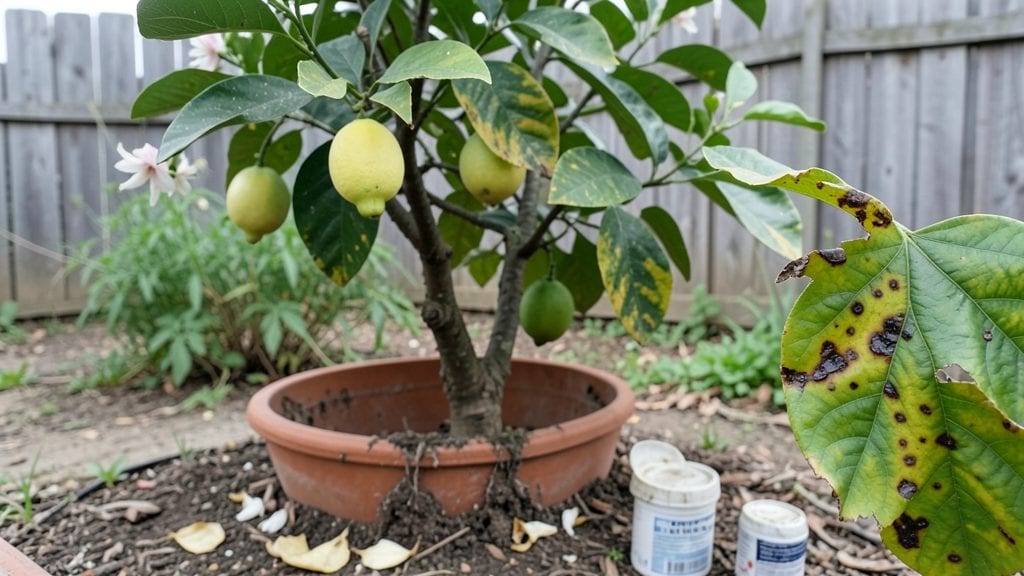
Identifying lemon tree diseases with pictures is your best defense—here’s how to spot every blemish, from yellowing leaves to blackened bark, before it ruins your harvest. 🌿 I’ve diagnosed them all, and these visual clues will save your trees.
The key is knowing what to look for—whether it’s the crusty sores of citrus canker or the oily spots of greasy spot disease.
Most diseases start with subtle signs: wilting leaves, odd discoloration, or sticky residue. I’ll show you exactly how each one looks, so you can act quickly with the right treatments. No more guessing whether to prune, spray, or just wait it out—this guide cuts straight to the solution.
You’ll learn to recognize the early stages of root rot, the telltale rings of fungal infections, and even insect damage that mimics disease. With these visual cues, you’ll treat issues before they weaken your tree or ruin your fruit.
Prevention is easier than you think—just a few simple steps keep your lemon tree thriving.
Perfect for home gardeners who want to protect their trees without complicated chemistry. Whether you’re dealing with a young sapling or a mature producer, this chart gives you the confidence to act fast. Let’s get your lemon tree back to healthy growth in no time.
Root Causes Of Lemon Tree Ailments
Lemon trees, like all plants, are vulnerable to diseases due to a mix of environmental stress, biological threats, and cultural mismanagement. Understanding why these issues arise is the first step to prevention and treatment.
Below, we break down the key triggers behind common lemon tree diseases—from fungal infections to nutrient deficiencies—so you can protect your citrus grove before problems take hold.
Fungi thrive in warm, humid conditions and exploit weak spots in your lemon tree’s defenses. Here’s how they invade:
- Overhead Watering 💦
- Fungi like Phytophthora (root rot) and Alternaria (leaf spot) spread via splashing water that lands on leaves or soil. Water droplets create a perfect breeding ground for spores.
- Actionable fix: Use drip irrigation or soaker hoses to deliver water at the base, avoiding foliage.
- Poor Air Circulation 🌬️
- Dense foliage or crowded trees trap moisture, giving fungi like Botrytis (gray mold) an ideal environment.
- Actionable fix: Prune for open spacing (6–10 feet between trees) and avoid over-fertilizing, which encourages lush but vulnerable growth.
- Wounded Bark or Leaves ⚔️ - Cuts from pruning, hail, or pests create entry points for Canker diseases (Xanthomonas or Leucostoma).
Fungi colonize these wounds, blocking nutrient flow. - Actionable fix: Sterilize pruning tools with rubbing alcohol, seal wounds with pruning paint, and avoid pruning during wet weather.
Insects and mites don’t just feed on your lemon tree—they damage tissue, leaving it susceptible to secondary infections. Common culprits include:
- Scale Insects & Mealybugs 🐜
- These sap-sucking pests excrete honeydew, a sticky residue that attracts sooty mold (Capnodium). The mold coats leaves, blocking sunlight and stunting growth.
- Actionable fix: Spray with neem oil or introduce ladybugs (natural predators). Remove heavily infested branches.
- Spider Mites 🕷️
- Under drought stress, mites multiply rapidly, piercing cells and causing yellow stippling. Weakened leaves become prime targets for fungal leaf spots.
- Actionable fix: Mist trees daily to boost humidity (mites hate it) and apply horticultural oil to smother them.
- Root-Knot Nematodes 🐛
- Microscopic worms burrow into roots, disrupting water/nutrient uptake. This stress makes trees vulnerable to Fusarium wilt or root rot.
- Actionable fix: Plant marigolds (natural nematode repellent) nearby and solarize soil (cover with clear plastic for 4–6 weeks in summer) to kill larvae.
Lemon trees need balanced nutrition—too much or too little of certain elements can trigger diseases. Watch for these red flags:
- Nitrogen Deficiency (Yellow Leaves) 🍃
- While nitrogen fuels growth, excessive use (especially synthetic fertilizers) burns roots, making trees prone to Phytophthora infections.
- Actionable fix: Test soil pH (ideal: 6.0–7.0) and switch to slow-release organic fertilizers (e.g., composted manure).
- Potassium or Magnesium Deficiency ⚡
- Lack of these minerals weakens cell walls, making trees vulnerable to citrus canker or melanose (black bark spots).
- Actionable fix: Apply Epsom salt (magnesium sulfate) or greensand (potassium) in early spring.
- Compacted or Waterlogged Soil 💧
- Poor drainage starves roots of oxygen, inviting Armillaria (shroom root rot). Even "healthy" trees can collapse if roots suffocate.
- Actionable fix: Amend soil with perlite or sand, and plant on mounds to improve drainage.
Extreme or sudden changes in climate can shock lemon trees, lowering their resistance to disease:
- Temperature Swings ❄️☀️
- Cold snaps (below 28°F) damage leaves, creating entry points for Fusarium or Colletotrichum (fruit rot). Heat stress (above 95°F) also weakens trees.
- Actionable fix: Mulch with straw or wood chips (3–4 inches deep) to regulate soil temp. Use shade cloth in summer.
- High Humidity + Rain 🌧️
- Prolonged leaf wetness (over 9 hours) encourages Citrus Canker spores to germinate. Coastal or tropical climates are high-risk zones.
- Actionable fix: Space trees for airflow and prune lower branches to reduce humidity near the canopy.
- Pollution or Chemical Burn 🚫
- Chlorine in tap water, herbicide drift, or over-salting soil (from well water) weaken roots, making trees prone to Verticillium wilt.
- Actionable fix: Use rainwater or filtered water for irrigation and avoid synthetic chemicals near trees.
Even well-meaning gardening habits can backfire if not executed correctly:
- Overhead Fertilizer Application 🌱
- Powdered fertilizers on leaves can burn foliage, creating wounds for Alternaria leaf spot. Granular fertilizer should be watered in immediately.
- Actionable fix: Use slow-release pellets buried 2–3 inches deep or liquid fertilizers applied to soil.
- Ignoring Pruning Hygiene ⚠️
- Reusing dirty tools spreads bacterial canker (Xanthomonas axonopodis) from tree to tree. Infected branches should be bagged and disposed of (not composted).
- Actionable fix: Clean tools with bleach solution (1:10 ratio) between cuts.
- Planting in Contaminated Soil 🌍
- Reusing soil from a previously diseased tree or garden bed reintroduces pathogens like Tristeza virus (transmitted by aphids).
- Actionable fix: Solarize soil or plant in sterilized potting mix for container-grown lemon trees.
Pro Tip: 💡 Keep a disease journal! Note when symptoms appear, recent weather, and care changes. Patterns (like outbreaks after heavy rain) help you predict and prevent future issues.
Quick Fixes For Common Lemon Tree Ailments
Now that you’ve identified the issue plaguing your lemon tree, it’s time to roll up your sleeves and get it back to health! 🌱💪 Below are practical, step-by-step solutions tailored to each disease, along with prevention tips to keep your citrus queen thriving.
Whether it’s fungal infections, pest invasions, or nutrient deficiencies, we’ve got you covered with easy-to-follow fixes and proactive strategies to avoid future problems.
🔥 Powdery Mildew: Scrub & Spray
Fix: 1. Prune infected branches 🔪—Cut off any leaves or stems covered in white powdery residue, then dispose of them in the trash (not compost).
- Clean your tree 🚿—Use a soft cloth or sponge dipped in neem oil solution (1 tbsp neem oil + 1 tsp mild soap per quart of water) to wipe down leaves.
- Apply fungicide 🛡️—Spray with a copper-based fungicide or baking soda mix (1 tbsp baking soda + 1 tsp soap + 1 gallon water) every 7–10 days until symptoms disappear.
- Improve airflow 🌬️—Thin out dense foliage and space trees 6+ feet apart to prevent humidity buildup.
💡 Prevention:
- Water at the base (avoid wetting leaves).
- Space plants properly to reduce humidity.
- Choose resistant varieties like ‘Meyer’ lemons, which tolerate mildew better.
🍳 Root Rot: Save Your Tree’s Foundation
Fix:
- Stop watering immediately 🚰—Let the soil dry out completely for 3–5 days to reduce fungal growth.
- Repot if needed 🪴—If the pot is waterlogged, transfer to a new container with fresh, well-draining soil (cactus/succulent mix works well).
- Apply hydrogen peroxide 🧪—Mix 1 tbsp 3% hydrogen peroxide per gallon of water and pour it into the soil to kill fungus without harming roots.
- Add sulfur or mycorrhizal fungi 🍄—Sprinkle elemental sulfur (follow package rates) or beneficial fungi into the soil to restore balance.
💡 Prevention:
- Use pots with drainage holes (no exceptions!).
- Water only when the top 1–2 inches of soil are dry.
- Avoid over-potting—Root rot thrives in crowded, soggy conditions.
👨🍳 Scale & Mealybugs: Drown & Dislodge
Fix:
- Blast them off 💦—Use a strong stream of water to knock off pests from leaves and stems.
- Apply insecticidal soap 🧼—Spray with 1 tsp castile soap + 1 quart water (test on a small area first).
- Neem oil treatment 🌿—Mix 2 tbsp neem oil + 1 tsp soap per gallon of water and spray every 5–7 days until gone.
- Introduce beneficial insects 🐞—Ladybugs and lacewings love devouring scale and mealybugs. Buy them online or attract them with dill or fennel plants.
💡 Prevention:
- Inspect new plants before bringing them home.
- Keep your lemon tree healthy—stressed trees attract pests.
- Remove fallen leaves where pests hide.
🥘 Citrus Leaf Miner: Suffocate the Larvae
Fix:
- Handpick visible mines 👆—Look for white, serpentine tunnels in leaves. Pinch off and destroy infested leaves.
- Spray with kaolin clay 🏺—Mix 2 tbsp Surround WP (kaolin clay) per gallon of water to smother larvae and deter egg-laying.
- Use horticultural oil 🛢️—Apply dormant oil spray (like JMS Stylet-Oil) in early spring to kill overwintering larvae.
- Cover young trees 🛡️—If infestations are severe, use fine netting to block adult flies.
💡 Prevention:
- Plant trap crops like parsley or cilantro to lure miners away.
- Remove weeds near your lemon tree (they harbor miners).
- Prune for sunlight—Leaf miners thrive in shaded, humid conditions.
📊 Yellow Leaves (Iron Chlorosis): Chelate & Acidify
Fix:
- Apply iron chelate 💊—Use a liquid iron supplement (like Ironite) and water it into the soil or spray on leaves.
- Lower soil pH 🌱—Test your soil (ideal pH: 6.0–7.0).
If too alkaline, add sulfur or peat moss to amend it. 3. Use acidic fertilizers 🍋—Switch to a citrus-specific fertilizer (high in iron and micronutrients) and feed every 4–6 weeks. 4. Mulch with pine needles 🍂—Spread a 2-inch layer to slowly acidify the soil over time.
💡 Prevention:
- Test soil annually—Adjust pH before planting.
- Avoid lime—It raises pH and worsens chlorosis.
- Water deeply but infrequently—Shallow watering causes nutrient runoff.
🍎 Stunted Growth (Nitrogen Deficiency): Boost the Green
Fix: 1. Add blood meal or fish emulsion 🐟—Mix 1 tbsp blood meal or fish emulsion per gallon of water and water into the soil.
- Use a balanced fertilizer 🌿—Switch to a 10-10-10 or 16-4-8 formula and apply every 6 weeks.
- Compost tea 🍄—Brew compost tea (steep compost in water for 24 hours) and pour it into the soil for a nutrient boost.
- Top-dress with worm castings 🐛—Sprinkle 1–2 inches of worm castings around the base and lightly water in.
💡 Prevention:
- Mulch with nitrogen-rich materials (like grass clippings or coffee grounds).
- Avoid over-pruning—Too many cuts = less foliage to produce food.
- Rotate fertilizers—Don’t rely on synthetic nitrogen long-term.
- ⏰ Water wisely—Deep watering 2–3 times per week (adjust for climate).
- 🌿 Prune regularly—Remove dead/diseased branches in dry weather (early morning is best).
- 🛡️ Quarantine new plants—Keep them separate for 2–4 weeks to monitor for pests/diseases.
- 🌡️ Monitor humidity—Use a hygrometer to keep levels below 60% (dehumidifier helps indoors).
🎯 Pro Tip: When in doubt, act fast—most lemon tree diseases spread quickly! A little prevention + early treatment can save your tree before it’s too late. 🚀
Frequently asked questions
How do I tell if my lemon tree's brown spots are a disease or just sunburn?
Disease spots usually appear raised, crusty, or oily (like greasy spot or citrus canker), while sunburn creates dry, papery patches on leaf edges. Check the underside of leaves—diseases often show yellow halos or black veins that sunburn lacks. If spots spread quickly, it's likely fungal or bacterial.
Can I use the same fungicide for all lemon tree diseases?
No—each disease needs targeted treatment. Copper fungicides work for powdery mildew and leaf spot, but bacterial canker requires copper + pruning infected branches. For root rot, use hydrogen peroxide or beneficial fungi. Always rotate treatments to prevent resistance. Test small areas first.
Why do my lemon tree leaves turn yellow even after adding iron?
Yellowing leaves (chlorosis) often mean poor absorption, not just lack of iron. Check soil pH—if it's above 7.0, iron becomes locked. Try chelated iron (like Ironite) + organic matter (compost or pine needles) to acidify soil. Also, overwatering flushes nutrients away—water only when topsoil is dry.
How do I safely remove infected branches without spreading disease?
Use sterilized tools (soak blades in 1:10 bleach-water for 10 mins) and cut 45° below infected areas. Seal wounds with pruning paint and bag/dispose of infected branches (don’t compost). Work during dry weather to avoid spreading spores. Wear gloves—some diseases (like canker) can infect humans.
Are there any lemon tree varieties that naturally resist diseases?
Yes! 'Meyer' lemons tolerate powdery mildew better than standard varieties, while 'Eureka' handles greasy spot slightly better. For root rot resistance, choose dwarf varieties (like 'Improved Meyer') that thrive in containers with controlled drainage. Always plant in well-draining soil to reduce risks.