
Picking
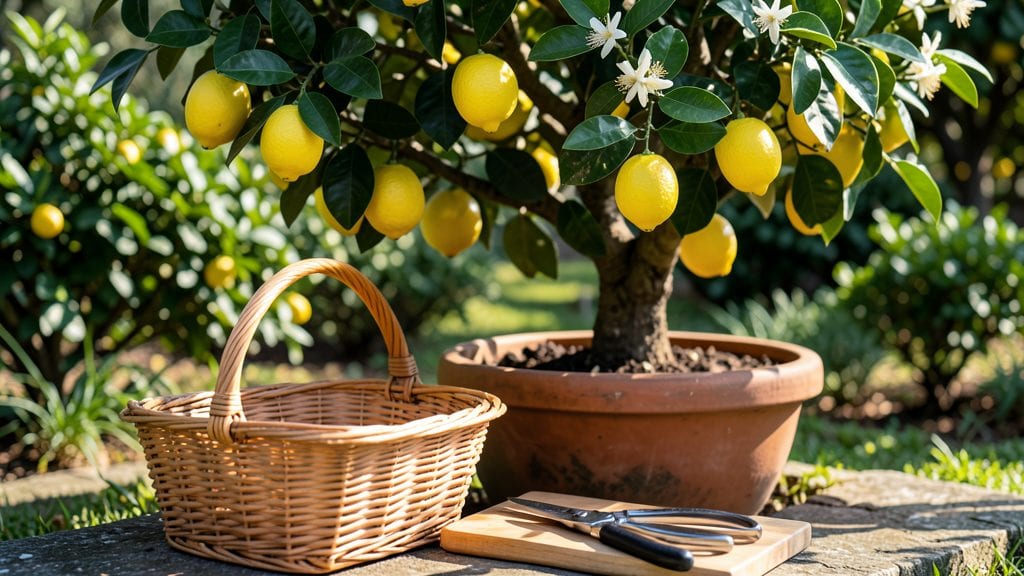
To pick lemon tree fruit at the best time, harvest when the lemons turn fully yellow and feel slightly soft to the touch, usually between 6 and 9 months after flowering, depending on the variety and climate. Always pick before the first frost to maintain peak flavor and texture, since lemons ripen off the tree but degrade if left too long.
Knowing when to harvest lemons is all about timing and observation. 🌞 The color shift from green to vibrant yellow is your first clue, but don't rely on it alone—gentle pressure should reveal a slight give, indicating full ripeness.
Different varieties mature at different rates, so I always check my Eureka lemons around 7 months while Meyer lemons might need an extra month or two. Climate plays a huge role too: warmer regions speed up ripening, while cooler areas may delay it.
If you miss the window, the fruit can become mealy or lose its bright citrus flavor.
Once you've picked your lemons, handle them with care to avoid bruising. 💛 Store them in a cool, dry place away from direct sunlight, and use them within a few weeks for the best taste.
I like to twist them gently at the stem to harvest—this keeps the fruit intact and prevents damage to the tree. If you're planning to store them longer, consider freezing or making lemon curd to preserve their freshness.
💡 In This Article
- Identifying Lemon Ripeness: Color, Texture, and Size Clues
- Best Lemon Tree Harvesting Practices for Optimal Fruit Quality
Identifying lemon ripeness: color, texture, and size clues
The vibrant yellow hue of ripe lemons isn't just about aesthetics—it's a biochemical process. As lemons mature, chlorophyll (the green pigment) breaks down while carotenoids (yellow-orange pigments) become dominant.
This color shift occurs because the fruit's cells reduce chlorophyll production while increasing carotenoid synthesis, triggered by sunlight exposure and temperature fluctuations. In cooler climates, this transition can take 8-10 months, while warmer regions may see full yellowing in just 6 months. 🌿
Texture changes reveal the fruit's internal chemistry too. A ripe lemon will yield slightly when pressed—this softening happens as the fruit's pectin structure breaks down into simpler sugars through enzymatic activity. Meyer lemons, for instance, develop a 15-20% softer texture at ripeness compared to their Eureka counterparts, which remain firmer.
The size stabilizes because cell division stops once the fruit reaches its genetic maximum, typically around 2.5-3.5 inches in diameter for most varieties. This is why overripe lemons don't grow larger—they just become mealy.
Climate creates dramatic variations in ripening timelines. In Southern California's Mediterranean climate, lemons may ripen 2-3 months earlier than those in Florida's humid subtropical zones.
The key factor is temperature: lemons need consistent warmth (above 60°F) for proper sugar development but can't tolerate extreme heat (above 95°F), which causes sunburn and premature ripening. This is why coastal areas often produce sweeter lemons—the ocean breeze provides ideal temperature regulation. 🌊
Don't overlook the stem's condition—it should separate cleanly from the fruit when twisted gently. This indicates the fruit's natural abscission layer has formed, a biological mechanism that prepares the fruit for detachment.
The stem's color also matters: a pale green or brown stem suggests maturity, while a bright green stem means the fruit needs more time.
What most people miss is that lemons continue ripening off the tree, but their quality declines after 2-3 weeks of storage due to moisture loss and flavor degradation.
For visual confirmation, compare your lemons to these benchmarks: a fully ripe lemon should have no green tint when viewed from any angle, its rind should feel slightly waxy to the touch, and the base should show a slight dimpling where it attached to the tree.
The aroma test works too—give it a gentle sniff: ripe lemons emit a sweet, floral citrus scent, while unripe ones smell sharp and acidic. This chemical difference comes from the increased limonene content in ripe fruit, which enhances both aroma and flavor. 🍋
Regional growing conditions create distinct ripening patterns. In Arizona's desert climate, lemons may develop a lighter yellow with a slightly orange tint due to higher sunlight intensity, while Pacific Northwest lemons stay paler yellow because of cooler temperatures.
The key is to observe your specific tree's patterns—after just 2-3 harvest seasons, you'll recognize the subtle differences between varieties growing side by side. This local knowledge becomes your most valuable tool in perfecting your harvest timing. ✨