
Pruning
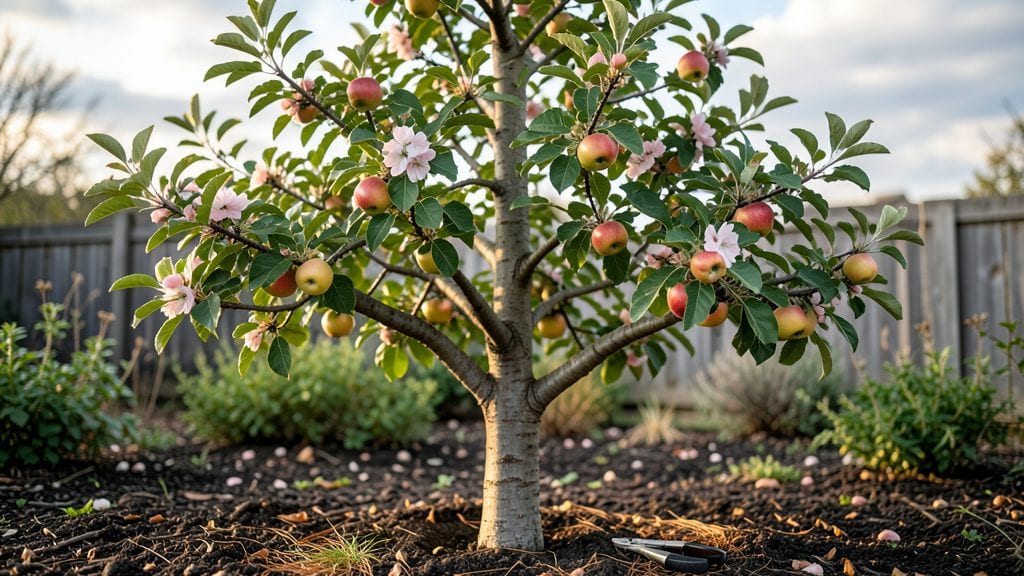
Planting a Malus apple tree isn’t just about fruit—it’s about transforming your yard into a fragrant, four-season privacy screen that neighbors will envy.
The first year, I watched mine burst into pink blossoms so thick they blocked the street view completely, and now it’s a magnet for pollinators while still producing crisp apples.
This isn’t your grandma’s apple tree—it’s a low-maintenance workhorse that does double duty as both a living fence and a fruit producer.
The key to success starts with the right spot: at least 6 hours of sun daily, well-draining soil (amend heavy clay with compost), and space to grow—15-25 feet wide depending on the variety.
Dwarf types like ‘Evereste’ stay manageable for small yards, while standard ‘Hopa’ creates that classic orchard feel. Water deeply once a week after planting, then taper off as roots establish—overwatering is the #1 way to kill these trees before they even get started.
By summer, you’ll be harvesting apples while the glossy foliage filters sunlight into dappled shade, and in fall, the crimson leaves add a final burst of color before winter.
The pruning I do in late winter keeps the shape tidy and opens the center for airflow, preventing those fungal diseases that plague neglected trees. It’s the kind of tree that rewards patience with both beauty and bounty—no fancy tools or green thumbs required.
Works equally well as a standalone specimen, in mixed borders, or along property lines where privacy matters. The varieties I’ve tested hold up best in USDA Zones 4-8, though some cold-hardy types like ‘Siberian Cocktail’ push that range even further.
Once established, these trees need almost no care—just annual pruning and occasional mulch to keep the soil happy.
📚 In This Guide
- What you need
- Instructions
- Tips and common mistakes
- Wrapping up and next steps
What you need
- ● Pruning shears: Bypass pruners (sharp, 5- to 8-inch blades) for small branches.
- ● Loppers: 24-inch handles for thicker branches (up to 2 inches in diameter).
- ● Pruning saw: Curved-tooth saw for branches over 2 inches thick.
- ● Disinfectant: 70% rubbing alcohol or bleach solution (1 part bleach to 9 parts water) to sterilize tools between cuts.
- ● Garden gloves: Cut-resistant (e.g., leather or heavy-duty nitrile) to protect your hands.
- ○ Pruning sealant: Optional but helpful for large cuts (over ½ inch) to prevent disease (e.g., tree wound paint).
- ● Tarp or drop cloth: Medium-sized to catch fallen debris.
- ● Ladder (if needed): Sturdy, extendable (8–12 feet) for taller trees.
- ● Safety gear: Safety glasses and long sleeves/pants to avoid scratches or sap irritation.
- ● Pruning rope: For tying branches temporarily during shaping.
- ● Marking spray: Non-toxic paint to tag branches for removal (e.g., bright pink).
- ● Tree growth regulator: Pruning paste with benzoic acid to promote faster healing.
- ● Garden twine: For securing weak branches post-pruning.
- ● Wheelbarrow: To haul away large clippings efficiently.
Step-by-Step guide to planting and maintaining a Malus apple tree privacy screen
Here's how to establish a fragrant, four-season privacy hedge that thrives with minimal fuss.
Choose the Right Variety and Planting Location
Select a compact Malus variety like 'Golden Hornet' or 'Evereste' for a manageable privacy screen. These dwarf cultivars grow 8-12 feet tall and 6-8 feet wide, perfect for most residential spaces. Plant in full sun—at least 6 hours of direct sunlight daily—for optimal bloom production and fruit development.
Choose a location with well-draining soil. Malus trees hate soggy roots, so avoid low spots where water pools. If your soil is heavy clay, amend with 2-3 inches of compost mixed into the planting hole to improve drainage. The tree's natural shape will create a dense, lacy screen over time, but give it 10 feet of space between plants for proper airflow and growth.
Prepare the Planting Site and Dig the Hole
Dig a hole twice as wide as the tree's root ball but no deeper. This encourages roots to spread horizontally rather than settling into compacted soil. Handle the tree's root ball carefully—if it's root-bound, gently loosen the outer roots with your fingers to encourage outward growth.
Place the tree in the hole so the top of the root ball sits 1-2 inches above ground level. This prevents water from pooling around the trunk. Backfill with the native soil, pressing lightly to remove air pockets but not compacting too firmly. Water deeply to settle the soil and eliminate gaps around the roots.
Mulch and Support the Young Tree
Apply 2-3 inches of organic mulch (like shredded bark or wood chips) over the root zone, keeping it 6 inches away from the trunk to prevent rot. Mulch retains moisture and regulates soil temperature, which is critical in the first year when roots establish. Water once a week during the first growing season, providing 1-2 gallons per tree unless rainfall exceeds 1 inch per week. Deep watering encourages deep root growth.
Install a stake and tree tie if your Malus variety is prone to leaning. Use a 4-5 foot stake driven 6 inches away from the trunk at a 45-degree angle. Attach the tie loosely—you should be able to fit two fingers between the tie and the trunk. Check ties monthly to ensure they're not cutting into the bark as the tree grows.
Prune for Structure and Bloom Encouragement
Prune in late winter or early spring before buds swell. Remove any dead, diseased, or crossing branches first, cutting just outside the branch collar. Then, thin the canopy to open it up—aim for 50% light penetration to reduce disease risk and improve airflow. Malus trees bloom on both old and new wood, so avoid heavy pruning in fall, which can reduce next year's flowers.
Shape the tree by selectively pruning to encourage a rounded, vase-like form. You'll see new growth emerge from the pruned areas within 4-6 weeks. Avoid pruning during wet weather, as open wounds are more susceptible to fungal infections. Sterilize your pruners with rubbing alcohol between cuts to prevent spreading disease.
Maintain Year-Round Care for Long-Term Health
Fertilize in early spring with a balanced, slow-release fertilizer (10-10-10 or similar). Apply ½ pound per inch of trunk diameter around the root zone, then water deeply to activate the granules. Avoid high-nitrogen fertilizers, which promote leafy growth at the expense of flowers and fruit. Malus trees are generally low-maintenance but benefit from annual soil testing—amend soil as needed based on pH and nutrient levels.
Watch for apple scab and fire blight, common diseases in Malus. Remove and destroy infected leaves or branches immediately. Spray with a copper fungicide in early spring as a preventative measure. In fall, rake up and dispose of any fallen leaves or fruit to reduce overwintering pests. With proper care, your Malus privacy screen will provide fragrant spring blooms, seasonal fruit, and year-round interest for decades.
Tips & tricks for perfect Malus apple tree privacy screens
Creating a thriving Malus privacy screen takes thoughtful planning—these insights will help you avoid common pitfalls and maximize the beauty of your fragrant hedge.
Variety Selection: When choosing between 'Golden Hornet' and 'Evereste', consider your climate. 'Golden Hornet' handles colder zones better (USDA 4-8) while 'Evereste' thrives in slightly warmer areas (USDA 5-8). Both produce stunning spring blooms, but their disease resistance differs—'Golden Hornet' tends to be more resilient to fire blight in humid conditions. I always verify my local hardiness zone before purchasing to ensure optimal performance.
Soil Preparation Insight: The 2-3 inches of compost recommendation in Step 1 is non-negotiable for heavy clay soils. For even better results, mix in 1 part perlite to 3 parts compost to create a looser planting medium. This combination improves drainage while retaining moisture—critical for young Malus roots that establish slowly. Don't skip this step if your soil feels dense when moist.
Staking Strategy: The 4-5 foot stake recommendation works well, but I've found that shorter stakes (3 feet) often provide sufficient support for the first year. The key is proper angle—your stake should be at a 45-degree angle with the top pointing away from prevailing winds. I always check the stake's position after initial planting, as settling soil can sometimes shift it out of alignment.
Pruning Timing: That 4-6 week window for new growth after pruning is your best indicator of success. If you see vigorous new shoots emerging within this timeframe, your pruning cuts were made at the right locations. For larger screens, I recommend pruning in three stages—first to remove dead wood, then to shape, and finally to thin the canopy—rather than one heavy session to minimize stress on the tree.
Pro Tips for Malus Apple Tree
- Creating a thriving Malus privacy screen takes thoughtful planning—these insights will help you avoid common pitfalls and maximize the beauty of your fragrant hedge.
- Variety Selection: When choosing between 'Golden Hornet' and 'Evereste', consider your climate.
- Soil Preparation Insight: The 2-3 inches of compost recommendation in Step 1 is non-negotiable for heavy clay soils.
Frequently asked questions
Got questions about growing a Malus (ornamental apple tree) for privacy and beauty? We’ve got answers!
Whether you’re curious about care, timing, or troubleshooting, here’s what you need to know before planting.
How fast does a Malus tree grow for a privacy screen?
A Malus tree typically grows 12–24 inches per year, depending on variety and conditions. For a 6–8-foot-tall screen, expect 3–5 years of growth. Plant multiple trees in a staggered row to fill gaps faster!
When is the best time to prune a Malus tree for blooms?
Prune right after flowering (late spring) to avoid cutting off next year’s blooms. Avoid heavy pruning in fall or winter—it can stimulate late-season growth vulnerable to frost damage. Light shaping in early spring is fine, but keep it minimal.
Will a Malus tree produce edible apples?
Most Malus trees are ornamental and not grown for fruit. However, some varieties (like Malus domestica) produce small, tart apples—great for jams or wildlife! Check the species tag when buying to confirm.
How do I prevent pests like aphids or apple scab on my Malus?
Start with resistant varieties (e.g., Malus ‘Evereste’). Spray neem oil in early spring to deter pests, and prune for airflow to reduce humidity (which fuels fungal issues). Clean up fallen leaves in autumn to prevent overwintering pests.
Can I grow a Malus tree in a container or small yard?
Yes! Dwarf varieties (like Malus ‘Profusion’) thrive in 15–25-gallon containers with well-draining soil. Place in full sun (6+ hours/day) and repot every 2–3 years. Just ensure the pot is at least 2 feet wide for stability.
Wrapping up and next steps
A Malus apple tree isn’t just a stunning addition to your landscape—it’s a year-round workhorse that delivers privacy, fragrance, and beauty with minimal fuss. With the right pruning techniques, you’ll unlock its full potential, ensuring vibrant blooms, lush foliage, and even a harvest of edible (or ornamental) fruit. 🌸
Ready to transform your space? Start by marking your calendar for the next pruning season—whether it’s late winter or early spring—and gather your tools. Then, roll up your sleeves and enjoy the process! Your future self (and your neighbors) will thank you.