
Blooming
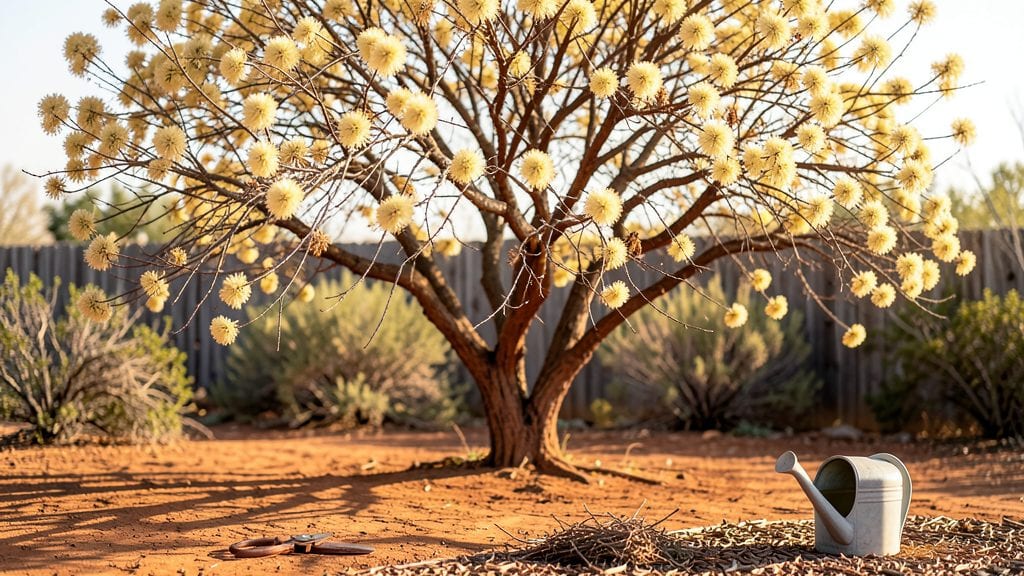
Your mesquite tree blossoms will transform your landscape into a golden cloud when you master these dormancy-breaking secrets. 🌿 I’ve watched mesquite trees go from stubborn bare branches to dramatic spring displays by tweaking just a few key factors—timing, water, and a little winter prep work.
The trick starts with soil that drains like a desert but holds moisture like a sponge—sandy loam with a touch of compost works best. Mesquite trees hate soggy roots, so raised beds or well-drained slopes are ideal.
Once planted, they need full sun and zero fuss for the first year, but spring blooms demand a little extra attention after that.
By late winter, you’ll see those signature powder-puff blooms erupting along the branches, drawing bees and hummingbirds in waves. The flowers may look delicate, but they’re tough as nails—drought-resistant once established, and their sweet pods feed wildlife all summer. This is the payoff: a tree that thrives where others fail.
Works in zones 7-11, from arid backyards to rocky hillsides. The same principles apply whether you’re planting a single specimen or restoring a native grove. Here’s how to coax those blooms into action every spring.
📚 In This Guide
- What you need
- Instructions
- Tips and common mistakes
- Wrapping up and next steps
What you need
- ● Mesquite tree (Prosopis spp.) – Choose a healthy, mature specimen (5+ years old for best results). Note: Dwarf varieties like Prosopis glandulosa work well for containers.
- ● Pruning shears or loppers – Sharp, sterilized tools (disinfect with 10% bleach solution or rubbing alcohol). Size: 8–12" blades for branches up to 2" thick.
- ● Dormant oil spray – Look for horticultural oil-based products (e.g., Safer® Brand Dormant Spray Oil). Quantity: 1 gallon per 100 sq ft of tree canopy.
- ● Watering can or hose with adjustable nozzle – For deep hydration (aim for 1–2 gallons per tree during dormancy-breaking phases).
- ● Slow-release fertilizer – 10-10-10 or 8-3-9 NPK ratio (e.g., Espoma Tree Tone). Amount: ½ cup per inch of trunk diameter.
- ● Thermometer (soil & air) – To monitor temperature triggers (ideal range for dormancy break: 40–60°F).
- ○ Reflective mulch or black plastic sheeting – Optional for cold climates (warms roots by 5–10°F). Size: 3’x5’ sheets.
- ○ Tree wound dressing (e.g., Tanglefoot) – Optional for sealing pruning cuts (prevents disease).
- ● Gloves & safety goggles – For handling thorny branches (mesquite can be spiky!).
- ● Journal/notebook – To track pruning dates, weather, and bloom progress (because data = success!).
Step-by-Step instructions for encouraging mesquite tree blossoms
Here’s how to coax those fragrant spring blooms from your mesquite tree—no guesswork, just proven techniques.
🌱 Step 1: Prune for Airflow and Light in Late Winter
Start your mesquite tree’s blooming journey by pruning in late February or early March, just as new growth begins to stir. Remove any dead, crossing, or crowded branches with clean, sharp pruners—this opens the canopy so sunlight reaches the inner branches where blooms form. Focus on thinning rather than topping; aim for an open, vase-like shape.
Watch for sap bleeding—a sign of active growth. If you see sticky sap, that’s your cue the tree is waking up. Prune on a dry, sunny day to avoid fungal risks, and sterilize your tools with rubbing alcohol between cuts. This step ensures the tree’s energy goes toward blooming, not struggling with overgrowth.
☀️ Step 2: Apply Controlled Dormancy-Breaking Chill
Mesquite trees need a winter chill period of 300-500 hours below 45°F to trigger blooming. If your climate skips this (like in mild winters), mimic it by placing a fan near the tree for 8-12 hours daily in late winter. Set the fan to a low, steady breeze—this simulates wind chill without damaging the tree.
Monitor your tree’s response: buds will swell slightly after 2-3 weeks of chill exposure. If buds remain tight, extend the treatment by another week. Avoid high heat or direct sunlight during this phase—keep the tree in partial shade until buds begin to open. This trick works best for younger trees or those in warmer climates.
💧 Step 3: Water Deeply at Bud Break
Once you see buds plump up (usually late March to early April), switch to deep, infrequent watering. Water the tree once every 10-14 days with 5-10 gallons of water, applied slowly at the base. Avoid wetting the foliage to prevent fungal diseases like powdery mildew, which can smother blooms.
Check soil moisture by digging 2 inches deep—if it’s dry, water again. Overwatering now can drown buds, while underwatering stresses the tree. Mulch the base with 2-3 inches of organic mulch (like wood chips) to retain moisture and regulate soil temperature. This step ensures blooms develop strong stems and vibrant color.
✂️ Step 4: Protect Blooms from Pests and Wind
As flowers appear (typically April to May), cover the tree with lightweight netting if your area has strong winds or pest issues. Wind can strip petals, and pests like aphids will suck sap from buds. Inspect the tree weekly for signs of infestation—look for sticky residue on leaves or chewed petals. Treat with neem oil spray if needed.
Prune any suckers or water sprouts that emerge at the base—these drain energy from blooming. Thin out 10-15% of the lightest blooms to encourage larger, showier flowers on the remaining branches. This step maximizes your tree’s flowering potential while keeping it healthy.
🌿 Step 5: Feed for Next Season’s Blooms
After blooming ends, feed the tree with a balanced 10-10-10 fertilizer in early June. Apply ½ cup per inch of trunk diameter, spread evenly under the canopy. Water deeply after feeding to help nutrients absorb. This prepares the tree for next year’s blooms by replenishing nutrients lost during flowering.
Take notes on this year’s blooming cycle—track when buds swell, when flowers open, and any pests you encountered. Adjust your approach for next season based on what worked (or didn’t). With these steps, your mesquite tree will reward you with reliable, fragrant spring blooms year after year.
Tips & tricks for encouraging mesquite tree blossoms
These dormancy-breaking secrets will help you transform a sparse mesquite tree into a fragrant spring bloomer—without the guesswork.
Pruning Precision: In Step 1, aim to remove branches that are thinner than a pencil—these rarely produce blooms. Focus on creating an open center by cutting branches back to their point of origin rather than making flush cuts. I learned this the hard way after seeing blooms only on the outer edges of my tree. Also, sterilize your pruners between cuts with rubbing alcohol to prevent spreading fungal spores that can weaken buds.
Chill Tracking: For the critical 300-500 hours below 45°F in Step 2, use a weather tracking app to log hours automatically. I set up a free app on my phone that alerts me when we hit the target temperature range. If you're using a fan to simulate chill, place it 3-4 feet from the tree and run it continuously—intermittent use won't trigger the same response. Watch for buds to swell slightly after 2-3 weeks of consistent chill exposure.
Watering Wisdom: When you see buds plump up in Step 3, switch to your largest watering can or hose attachment for those 5-10 gallons. I use a 5-gallon bucket with a slow-release spout to avoid runoff. Water at the base during early morning hours to prevent evaporation and fungal growth. The 2-inch soil check is crucial—if it's dry at that depth, your tree needs water, even if the surface looks moist.
Pest Prevention: In Step 4, I've found that applying neem oil spray every 10 days during bloom season creates a protective barrier against aphids. Mix 1 tablespoon of neem oil with 1 quart of water and a few drops of dish soap as an emulsifier. Spray in the early morning when bees aren't active. The lightweight netting should be secured loosely—tight netting can restrict airflow and actually encourage fungal growth.
Pro Tips for Mesquite Tree Blossoms
- These dormancy-breaking secrets will help you transform a sparse mesquite tree into a fragrant spring bloomer—without the guesswork.
- Pruning Precision: In Step 1, aim to remove branches that are thinner than a pencil—these rarely produce blooms.
- Chill Tracking: For the critical 300-500 hours below 45°F in Step 2, use a weather tracking app to log hours automatically.
Frequently asked questions
Got questions about mesquite tree blossoms?
Here are some of the most common ones—and their answers—to help you grow a thriving, blooming mesquite tree!
When do mesquite trees typically bloom?
Mesquite trees usually bloom in late winter to early spring (February–April in most U.S. regions), but timing depends on climate. In colder zones, blooms may wait until after the last frost. Drought-stressed trees may delay blooming—ensure proper watering to encourage flowers!
How do I break dormancy for better blooms?
Cold stratification (mimicking winter) helps! For potted mesquite seeds, soak them in water for 24 hours, then refrigerate in a damp paper towel for 4–6 weeks. For established trees, prune in late winter to remove dead wood and stimulate new growth—just avoid heavy pruning if blooms are already forming!
Can I grow mesquite trees from blossoms?
No—mesquite blossoms are not seeds! To propagate, you’ll need mesquite pods (harvested in fall) or cuttings from mature branches. Blossoms are pollinator magnets (bees and hummingbirds love them!), but they won’t grow into new trees. Save those pods for planting instead!
Why aren’t my mesquite trees blooming?
Common culprits:
- Insufficient sunlight: Mesquite needs full sun (6+ hours/day).
- Overwatering: Drought-tolerant trees bloom better with moderate water.
- Young age: Trees under 3–5 years may not bloom yet.
- Poor soil: Amend with sandy, well-draining soil (they hate soggy roots!).
Are there mesquite alternatives with similar blooms?
If mesquite is too high-maintenance, try these drought-tolerant bloomers:
- Texas Mountain Laurel (fragrant purple blooms, thrives in poor soil).
- Desert Willow (showy trumpet flowers, fast-growing).
- Acacia (golden puffs, great for pollinators).
- Paloverde (yellow blooms, evergreen in warm climates).
Wrapping up and next steps
Mesquite tree blossoms are a stunning reward for patience and care—whether you’re nurturing a young sapling or coaxing life back into a dormant plant. By mastering dormancy-breaking tricks like strategic pruning, proper watering, and temperature management, you’ll unlock vibrant spring blooms that attract pollinators and enrich your landscape. 🌸
Ready to transform your mesquite into a blooming beauty? Start small: monitor your tree’s response to the techniques shared here, adjust as needed, and celebrate every bud that breaks through. Happy growing—your future blossoms are waiting! 🌱