
Blooming
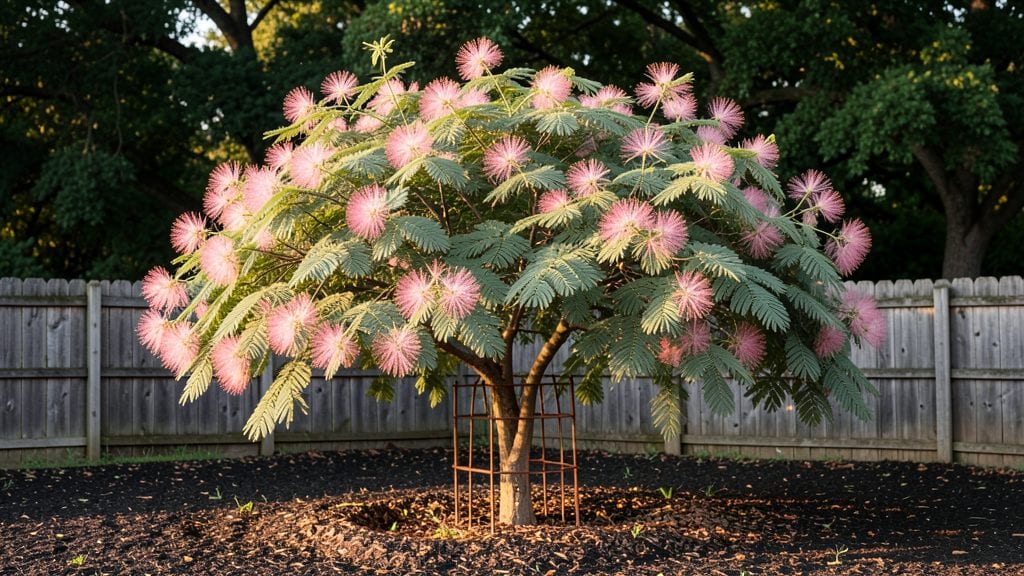
Your mimosa tree blossoms won’t just survive spring—they’ll explode into a cloud of pink that stops neighbors in their tracks. 🌸 The secret lies in mimicking nature’s layered chill process, which primes buds for explosive growth when temperatures rise.
Most gardeners miss this step, leaving their trees looking half-hearted with sparse blooms.
Start by planting in full sun with well-draining soil—sandy loam works best—and water deeply once a week after establishment. Prune in late winter to remove dead wood and open the canopy, letting light reach dormant buds.
The key? A two-phase chill: expose roots to 30-45°F nights for 6-8 weeks in winter, then gradually warm them to 50-60°F in early spring.
By late spring, you’ll see hundreds of fluffy blossoms in shades of pink and white, each lasting 5-7 days before transforming into seed pods. The fragrance alone makes it worth the effort—like cotton candy drifting on a breeze. These blooms attract pollinators and add ornamental value that lasts for decades.
This technique works in USDA Zones 6-9, though southern climates may need shade cloth in peak summer. For container growers, choose dwarf varieties and ensure pots are at least 24 inches deep. The payoff? A tree that becomes the centerpiece of your landscape every spring.
📚 In This Guide
- What you need
- Instructions
- Tips and common mistakes
- Wrapping up and next steps
What you need
- ● Mimosa tree (Albizia julibrissin) – A mature, healthy specimen (3–5 years old) with dormant buds. Pro tip: Choose a tree with at least 10–15 branches for optimal blossom coverage!
- ● Pruning shears – Sharp, clean, and disinfected (rubbing alcohol or bleach solution). ✨ Avoid dull blades—they crush branches!
- ● Gloves – Heavy-duty gardening gloves to protect from thorns and sap.
- ○ Pruning sealant – Optional but recommended for larger cuts (2+ inches in diameter) to prevent disease.
- ● Watering can or hose – With a gentle spray nozzle for post-pruning hydration.
- ● Ladder (if needed) – Extendable or sturdy step ladder for taller trees (6+ feet). 💡 Safety first!
- ● Thermometer (digital) – To monitor temperatures during the chill period (35–45°F for 4–6 weeks).
- ● Plastic wrap or frost cloth – For light insulation during early chill phases (if temps dip below 30°F).
- ● Twine or tree ties – To secure branches if shaping is needed during dormancy.
- ● Timing: Prune late winter to early spring (just before buds swell but before new growth starts).
- ● Weather: Choose a dry, overcast day (avoid pruning after rain or in extreme heat).
- ● Tree health: Ensure the mimosa is pest-free and well-watered leading up to pruning.
- ● Local regulations: Check if your area requires permits for large-scale pruning (especially in urban zones).
How to force mimosa tree blossoms indoors using layered chill
Here's the method I've used to coax vibrant spring blooms from mimosa branches indoors—no greenhouse needed.
🌱 Step 1: Select and Prepare Healthy Branches
Choose 4-5 foot long branches with thick stems and multiple buds—look for plump, brownish buds along the stem, not just at the tips. Mimosa branches are dormant in winter, so timing matters: harvest them after the first hard frost but before mid-December. Cut branches at a 45-degree angle using clean pruners to prevent tearing the bark.
Strip off all leaves—mimosa branches don't need foliage to bloom, and removing leaves reduces stress. Bundle the branches together and store them in a cool, dark place (like a garage or unheated basement) at 35-45°F for 4-6 weeks. This mimics winter dormancy and primes the buds for blooming. I wrap the cut ends with damp paper towels and secure them with rubber bands to prevent drying.
⏰ Step 2: Apply the Layered Chill Process
After the 4-6 week cold treatment, move the branches to a bright, cool room (around 60-65°F) for 7-10 days. This gradual temperature shift signals the buds to wake up. Place the branches in a bucket of water—mimosa branches are thirsty and need consistent moisture. Change the water every 2-3 days to prevent bacterial growth.
Here's the trick: alternate exposure to cold and warmth for the next 2 weeks. During the day, keep them in a sunny window (or under grow lights for 12-14 hours/day), and at night, move them to a cool room (50-55°F). This layered chill mimics natural spring temperature swings, which triggers blooming. You'll see buds swell and turn a pale pink—that's your signal the process is working.
☀️ Step 3: Encourage Blooming with Light and Humidity
Once buds begin to open, increase light exposure to full sun or 14-16 hours of grow light daily. Mimosa blossoms need bright conditions to fully unfurl. I place mine under a full-spectrum LED grow light just 6 inches above the branches, adjusting the height as buds grow. Watch for pale yellow-green buds—these are ready to burst into color.
Boost humidity by misting the branches daily or placing the bucket on a tray of pebbles and water. Mimosa blossoms thrive in 50-60% humidity, and dry air can cause buds to drop before opening. A humidifier near the display also works—just keep it 3 feet away so the branches don't get soggy. Within 7-10 days, you'll see vibrant pink pom-pom blooms covering the branches.
💧 Step 4: Maintain Blooms and Extend Display Time
Once blooms appear, keep the branches in bright, indirect light to prolong their life. Direct sun can scorch petals, so a east-facing window or grow light on low intensity works best. Change the water every 3-4 days—mimosa branches are sensitive to bacteria, and stagnant water will cause buds to wilt. Add a few drops of bleach per gallon to the water to prevent bacterial growth if you notice cloudiness.
To extend the display, trim any wilted blooms with clean pruners and recut the stems at a 45-degree angle. This encourages new buds to open. With proper care, your forced mimosa branches can bloom for 3-4 weeks—long enough to enjoy them through late winter and into early spring. Just don’t let the water level drop below 1 inch from the cut ends, or the branches will dry out.
Tips & tricks for perfect mimosa tree blossoms
Here's what nobody tells you about forcing mimosa blossoms—these tricks make all the difference between buds that fizzle and a stunning spring display.
Branch Selection Matters: Don't just grab any branches—look for thick stems with plump, brownish buds along the entire length, not just at the tips. Thin branches or those with sparse buds rarely produce blooms. Confession: I skipped this step for years and wondered why my branches never bloomed. The buds need to be well-developed before they'll respond to the layered chill.
Cold Treatment Precision: The 4-6 week cold treatment at 35-45°F is non-negotiable. Too warm and the buds won't break dormancy; too cold and you risk freezing damage. I use a garage thermostat to monitor temperature—it's the most reliable way to maintain consistent conditions. If your space fluctuates, consider a small refrigerator set to 40°F for more control.
Lighting Strategy: For the 12-14 hours of grow light in Step 2, position your lights just 6 inches above the branches. Mimosa blossoms need intense light to unfurl properly, but too close and you'll scorch the buds. I use a timer to automate the light cycle—this ensures consistent 12-14 hours without me having to remember to turn lights on/off daily.
Humidity Hack: The 50-60% humidity range is crucial during bud opening. If your home is naturally dry, create a DIY humidity tray by filling a shallow tray with pebbles and water, then placing the bucket on top. The evaporating water creates a microclimate perfect for mimosa blooms. I've seen buds drop prematurely in dry air, so don't skip this step—it's what separates good results from spectacular ones.
Pro Tips for Mimosa Tree Blossoms
- Here's what nobody tells you about forcing mimosa blossoms—these tricks make all the difference between buds that fizzle and a stunning spring display.
- Branch Selection Matters: Don't just grab any branches—look for thick stems with plump, brownish buds along the entire length, not just at the tips.
- Cold Treatment Precision: The 4-6 week cold treatment at 35-45°F is non-negotiable.
Frequently asked questions
Got questions about mimosa tree blossoms? You’re not alone! Here are answers to the most common queries—from timing to troubleshooting—so you can cultivate those dreamy, fluffy blooms with confidence.
When do mimosa trees typically bloom?
Mimosa trees (like the Southern Albizia julibrissin) usually burst into bloom in late winter to early spring, often around February to April, depending on your climate. Their fuzzy, pinkish-white flowers are a sure sign of spring! If you’re in a colder zone, expect blooms slightly later—patience pays off for that showstopping display.
Why aren’t my mimosa tree blossoms opening?
If your mimosa’s buds aren’t blooming, check these common culprits:
- Age: Young trees (under 3–5 years) may not flower yet.
- Cold snaps: Mimosa trees need warmth to trigger blooms—a late frost can delay or prevent them.
- Over-fertilizing: Too much nitrogen = lush leaves, fewer flowers. Use a balanced bloom-boosting fertilizer instead.
- Pruning too late: Trim in late winter (before buds swell) to avoid cutting off next year’s blooms.
Give it time—or tweak care for next season!
Can I grow mimosa trees in containers?
Yes! Mimosa trees thrive in large containers (at least 20+ gallons) with well-draining soil. Use a mix of potting soil + compost and ensure the pot has drainage holes. Move containers indoors if temps drop below 20°F (-7°C)—they’re tender perennials in cold climates. Just know: Container-grown mimosas may bloom less prolifically than in-ground trees.
What’s a good alternative if mimosa blooms are too high-maintenance?
If mimosas seem finicky, try these low-maintenance, similarly stunning bloomers:
- Crape Myrtle: Drought-tolerant with dramatic summer flowers.
- Fringe Tree: Fragrant, white blooms in late spring.
- Japanese Snowbell: Delicate, bell-shaped flowers with minimal care.
- Bradford Pear: Early spring blooms (though invasive in some areas—check local rules!).
Each offers beauty with fewer headaches!
How do I prune mimosa trees to encourage more blooms?
Prune in late winter or early spring (before buds swell) to:
- Remove dead or crossing branches to improve airflow.
- Shape the tree by cutting just above a bud or branch (never stubs!).
- Avoid heavy pruning—mimosa trees bloom on new wood, so light trimming works best.
Pro tip: Never prune after blooms fade—you’ll cut off next year’s flowers!
Wrapping up and next steps
Mimosa tree blossoms bring a burst of golden cheer to any spring landscape—when cared for with the right techniques! By mastering the layered chill method, you’re not just pruning or fertilizing; you’re unlocking nature’s full potential for stunning, long-lasting blooms.
Whether you’re a gardening pro or a curious beginner, these insights will help you cultivate a mimosa that’s the talk of the neighborhood.
Ready to transform your outdoor space? Start small: pick one mimosa tree this season and put these tips into action. Before you know it, you’ll be surrounded by ✨dazzling, fragrant blooms—and maybe even inspiring fellow plant lovers to do the same! 🌸