
Trees
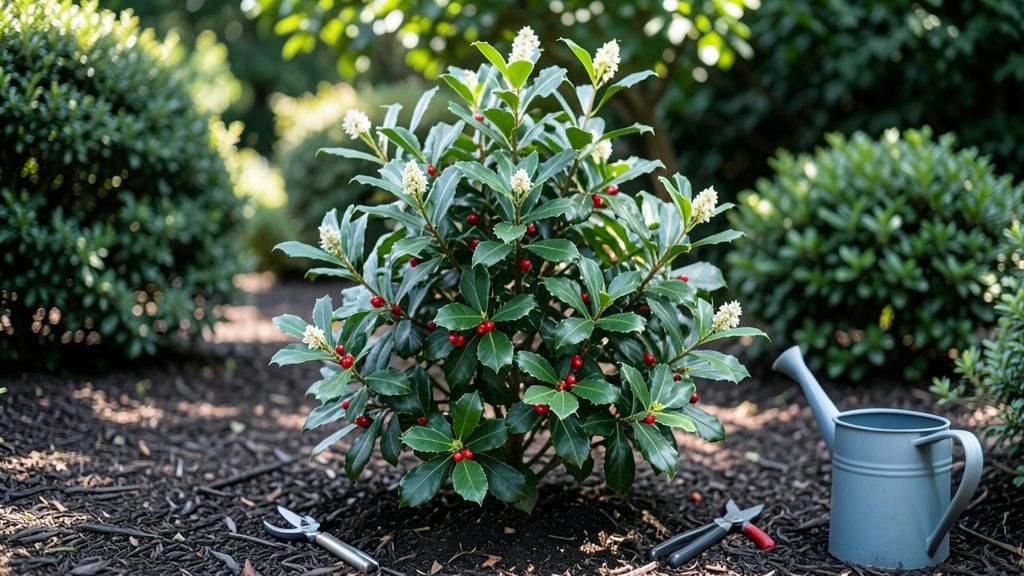
Creating a lush, evergreen privacy screen with Oakland holly trees transforms any yard into a vibrant, year-round retreat. Their glossy, dark green leaves and bright red berries add striking contrast, while their dense growth habit blocks unsightly views effortlessly.
I’ve used them in urban landscapes where space is limited, and they deliver both beauty and function without compromise.
The key to their success lies in strategic placement—position them where they’ll receive partial shade to full sun, and pair them with complementary plants like boxwoods or azaleas for layered texture.
Their slow, steady growth means they’ll establish a solid barrier over time, while their low-maintenance care makes them ideal for busy homeowners. The berries also attract birds, adding another layer of ecological benefit to your design.
What you’ll achieve is a screen that stays vibrant through winter, with deep greens and pops of red that brighten even the coldest months. The dense foliage muffles noise, too, making your outdoor space feel more secluded and peaceful.
For urban gardens or tight spaces, this is a foolproof way to add privacy without sacrificing style.
Whether you’re lining a fence, framing a patio, or softening a property line, Oakland hollies adapt beautifully to different settings. Just ensure they have well-draining soil and occasional pruning to maintain their shape. The result? A landscape feature that grows more stunning—and useful—with each passing season.
📚 In This Guide
- What you need
- Instructions
- Tips and common mistakes
- Wrapping up and next steps
What you need
- ● Holly Trees: 3–5 Ilex opaca (American Holly) saplings or small trees (3–6 ft tall) for a cohesive look. Pro tip: 💡 Choose local Oakland nurseries for climate-adapted varieties!
- ● Soil: 2–3 cubic yards of well-draining, slightly acidic soil (pH 5.0–6.0). Mix in 1 part compost for nutrients.
- ● Mulch: 2–3 bags of pine bark or wood chips (3–4 inches deep) to retain moisture and suppress weeds.
- ● Fertilizer: 1 bag of slow-release, acidic fertilizer (e.g., 10-10-10 or holly-specific blend).
- ● Stakes & Twine: 5–10 wooden stakes (4–6 ft long) and 1 roll of twine to support young trees.
- ● Watering Supplies: Garden hose with a sprinkler head or drip irrigation kit for consistent moisture.
- ● Shovel or spade (for digging holes)
- ● Wheelbarrow (for moving soil/mulch)
- ● Garden gloves (to protect your hands!)
- ● Pruning shears (for shaping and trimming)
- ● Measuring tape (to space plants evenly, ~6–8 ft apart for hedges)
- ○ Level (optional, for ensuring straight rows)
- ● Epsom salt (1 tbsp per hole) for magnesium boost in clay-heavy Oakland soil.
- ● Tree guards (to protect trunks from pests or pets).
- ● Soil pH test kit (to confirm acidity levels).
- ● Decorative rocks or edging (for a polished finish).
Step-by-Step guide to planting Oakland holly trees for a privacy screen
Here's how to create a lush, evergreen barrier that stays vibrant all year long.
Choose the Right Planting Location
Oakland holly thrives in full sun to partial shade, with at least 6 hours of sunlight daily for best growth. Avoid low-lying areas where cold air settles, as these trees can suffer winter damage. Test your site by observing how much sunlight it receives throughout the day—morning sun with afternoon shade works well in hotter climates.
Mark your planting line with stakes and string to ensure a straight row. Space the stakes 6 feet apart to account for mature tree width. This spacing allows for proper air circulation, reducing disease risk and making maintenance easier. If your property has limited space, you can plant slightly closer, but expect slower growth initially.
Prepare the Soil and Planting Holes
Dig planting holes twice as wide as the root ball and 12 inches deep for each Oakland holly. This loose soil encourages root expansion without crowding. Remove any rocks or debris from the holes, as they can restrict root growth. If your soil is heavy clay or sandy, mix in 2 inches of compost from the ingredients list into the bottom of each hole to improve drainage and fertility.
Set each tree in its hole so the top of the root ball sits 1 inch above ground level. This prevents water from pooling around the trunk, which can cause rot. Gently firm the soil around the roots as you backfill the hole, pressing down firmly but not compacting too tightly. Water each tree deeply to settle the soil and eliminate air pockets.
Plant and Stake for Stability
Use the 4 stakes from your materials to secure each tree temporarily. Drive one stake 3 inches from the trunk on each side, angling them slightly outward to create a support system. Attach the stakes to the tree trunk with soft tree ties, leaving room for the tree to sway slightly in the wind—this helps strengthen the trunk over time. Avoid tying too tightly, as this can girdle the bark as the tree grows.
Fill the remaining space around the base with mulch, spreading it 3 inches deep and keeping it 6 inches away from the trunk to prevent moisture buildup. Water the tree again to help the mulch settle and retain moisture. This layer protects the roots from temperature fluctuations and reduces weed competition, which is especially important in the early years when the tree is establishing itself.
Water and Maintain for Healthy Growth
Water each Oakland holly deeply once a week for the first 2 months, ensuring the soil is moist 6 inches down. After that, water every 10-14 days, adjusting based on rainfall. You’ll know it’s time to water when the top 2 inches of soil feel dry to the touch. Overwatering is a common mistake—holly trees prefer slightly drier conditions once established.
Fertilize in early spring with a balanced, slow-release fertilizer to encourage new growth. Apply ½ cup per tree and water thoroughly to help the granules spread into the soil. Avoid fertilizing in fall or winter, as this can stimulate tender new growth that won’t survive cold temperatures. Prune lightly in late winter to shape the tree and remove any dead or crossing branches, using clean, sharp pruners to make clean cuts.
Tips & tricks for perfect Oakland holly privacy screen
A few key strategies will help your Oakland holly privacy screen thrive from the very first planting.
Location is Everything: When marking your planting line in Step 1, take note of any nearby structures or mature trees that might cast shade later in the day. Oakland hollies need that 6 hours of sunlight consistently, so avoid planting where future shade from buildings or taller plants could develop. I've seen too many privacy screens fail because the homeowner didn't account for this gradual shade change over time.
Soil Preparation Secret: In Step 2, if your soil is particularly heavy clay, don't just add compost to the bottom of the hole—mix it thoroughly with the native soil you removed. This creates a more uniform growing medium that encourages root expansion. For sandy soils, you might want to add an extra inch of compost to help retain moisture during those first critical months.
Staking Strategy: When using the 4 stakes in Step 3, position them at a slight angle rather than straight up and down. This creates a more natural support system that allows the tree to sway gently in the wind, which actually helps strengthen the trunk. I learned this the hard way after seeing several trees develop weak trunks from being too rigidly staked.
Watering Wisdom: During the first two months, when you're watering deeply once a week, consider using a soaker hose rather than a sprinkler. This delivers water directly to the root zone without wetting the foliage, which helps prevent fungal diseases. After that initial period, you'll notice the trees become more drought-tolerant as their root systems establish.
Pro Tips for Oakland Holly Trees
- A few key strategies will help your Oakland holly privacy screen thrive from the very first planting.
- Location is Everything: When marking your planting line in Step 1, take note of any nearby structures or mature trees that might cast shade later in the day.
- Soil Preparation Secret: In Step 2, if your soil is particularly heavy clay, don't just add compost to the bottom of the hole—mix it thoroughly with the native soil you removed.
Frequently asked questions
Got questions about growing oakland holly trees for your privacy screen? You’re not alone! Here are answers to the most common queries to help you plant with confidence.
When is the best time to plant oakland holly trees in Oakland?
The ideal time to plant is in early fall (September–October) or late winter (February–March). Oakland’s mild, wet winters give roots time to establish before summer heat. Avoid planting in extreme heat or drought—water deeply after planting to reduce transplant shock!
How close can I plant oakland holly trees for a dense privacy screen?
Space them 4–6 feet apart for a tight, lush hedge by year 5. For faster coverage, plant 3–4 feet apart but expect occasional pruning. Remember: Hollies grow 10–15 feet tall and wide, so plan for mature size to avoid overcrowding.
Why aren’t my oakland holly trees producing berries?
Holly berries need both male and female trees to pollinate! If you planted only females (common in pre-packaged sets), add a male oakland holly (like ‘Jersey Knight’) nearby. Berries also thrive with full sun (6+ hours/day) and acidic soil (pH 5.0–6.0)—test your soil if needed.
How do I prune oakland holly trees for shape and health?
Prune in late winter or early spring before new growth starts. Use clean, sharp shears to trim 1/3 of the plant’s height if needed, focusing on inner branches to improve airflow. Avoid heavy pruning in fall—it stresses the tree before winter.
Are there drought-tolerant alternatives to oakland holly?
If water conservation is a priority, consider:
- Arbutus ‘Marina’ (Strawberry Tree) – Drought-tolerant, evergreen, and thrives in Oakland’s climate.
- Ceanothus ‘Concha’ (California Lilac) – Drought-resistant, fast-growing, and attracts pollinators.
- Ilex ‘Green Lustre’ (Chinese Holly) – More drought-tolerant than oakland holly but still glossy and berry-producing.
All three offer privacy but with lower water needs once established.
Wrapping up and next steps
Transforming your Oakland backyard with Holly trees is a rewarding project that blends beauty, functionality, and sustainability. These evergreen giants offer year-round privacy, vibrant color, and a touch of old-world charm—perfect for creating a serene, lush space.
Whether you're a seasoned gardener or a first-time planter, their resilience and versatility make them a fantastic choice for any landscape.
Ready to get started? Sketch your design, gather your tools, and plant with confidence! Your future shaded retreat awaits—happy planting! 🌿✨