Watering
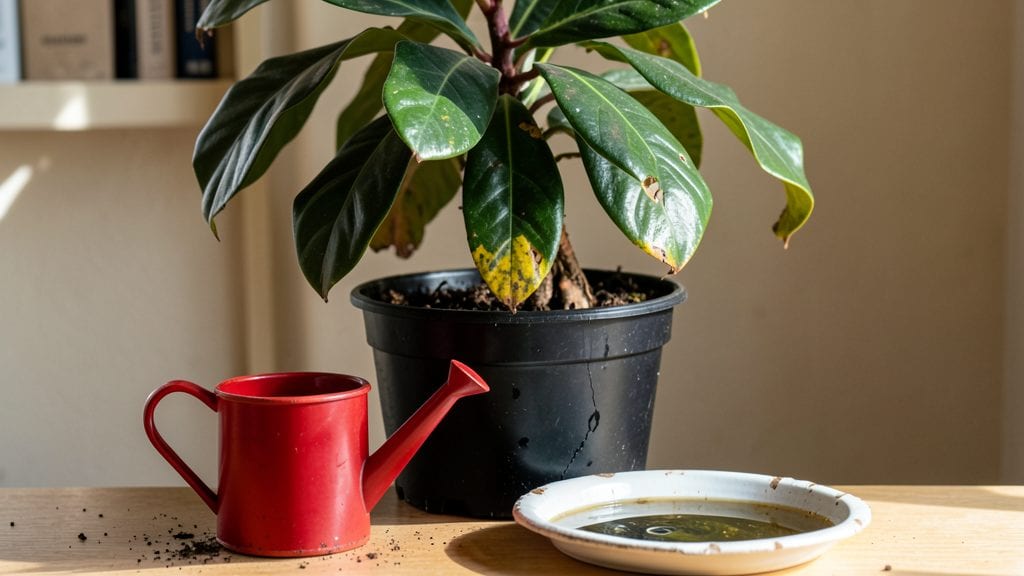
An overwatered tree reveals itself through yellowing leaves, excessive leaf drop, root rot, and slow growth. To revive it, halt watering right away, enhance soil drainage, and prune damaged foliage—recovery can span weeks to months based on how severe the damage is.
Overwatering creates a suffocating environment for roots, cutting off oxygen and inviting fungal infections. 🌱 The leaves react first, turning yellow or brown as the tree struggles to transport nutrients. I've seen even healthy trees collapse in weeks if the soil stays soggy—drainage fixes are non-negotiable.
For container plants, check the bottom for water pooling; for in-ground trees, consider raised beds or sand amendments to break up compacted soil.
Think of it like a drowning plant—no matter how much you "water" it, the roots can't breathe. The key is balancing moisture without smothering the roots, which is why I always recommend the "finger test": stick your finger 2 inches deep into the soil.
If it's damp, wait before watering again.
💡 In This Article
- How Overwatering Damages Tree Roots and Leaves
- Step-by-Step Recovery Plan for Overwatered Trees
How overwatering damages tree roots and leaves
When roots sit in soggy soil for too long, they lose access to oxygen—a process called anoxia. Tree roots need oxygen to respire (break down sugars for energy), and without it, they suffocate.
This triggers the release of ethylene gas, a plant stress hormone that signals leaves to drop prematurely. 🌿 The damage starts at the root tips, where specialized cells called root hairs (responsible for 90% of water/nutrient uptake) die off first, leaving the tree starving even if the soil looks wet.
Waterlogged conditions also create the perfect breeding ground for phytopathogenic fungi like Phytophthora and Pythium, which attack root cells. These pathogens thrive in soils with >30% moisture saturation and can spread through root grafts, infecting neighboring plants.
The fungal hyphae block water transport vessels, causing wilting even when soil is wet—a classic sign of root rot. In severe cases, the tree's vascular system becomes clogged with fungal growth, similar to how a plumbing system fails with sludge buildup.
The soil's composition makes all the difference. Clay-heavy soils hold water like a sponge, while sandy soils drain quickly. A loam mix (40% sand, 40% silt, 20% clay) strikes the best balance, but even ideal soil can become waterlogged after heavy rain.
The key is macroporosity—the air pockets between soil particles. When these fill with water, roots can't access oxygen, and beneficial microbes that decompose organic matter (like mycorrhizal fungi) suffocate. This disrupts the nutrient cycle, leaving the tree deficient in essential elements like nitrogen and phosphorus.
Leaves react visibly because they're the tree's transpiration engines. When roots can't absorb water efficiently, leaves lose turgor pressure (the hydraulic skeleton that keeps them upright), causing wilting. The yellowing (chlorosis) starts in older leaves first because the tree prioritizes sending nutrients to new growth.
In extreme cases, leaves develop brown necrotic patches from oxidative stress—like a plant version of frostbite. The tree's survival instinct kicks in, shedding leaves to conserve energy, but this weakens its ability to photosynthesize and recover.
Here's what's happening under the surface: Root cells swell and burst when submerged, a process called cytolysis. This releases enzymes that break down cell walls, accelerating decay. Meanwhile, beneficial soil bacteria that fix nitrogen (Rhizobium) and decompose organic matter die off, reducing the soil's fertility.
The tree's immune system weakens too—it can't produce enough phenolic compounds (natural antioxidants) to fight off pathogens in waterlogged conditions. 🌱
Think of it like a car engine running on water instead of oil. The roots can't "breathe," the leaves can't "eat," and the whole system grinds to a halt. The good news?
Trees are resilient—if you catch the problem early and improve drainage, roots can regenerate in 4-8 weeks, though full recovery may take a full growing season. The worst damage happens when soil stays waterlogged for more than 2 weeks, so acting fast is critical.