Watering
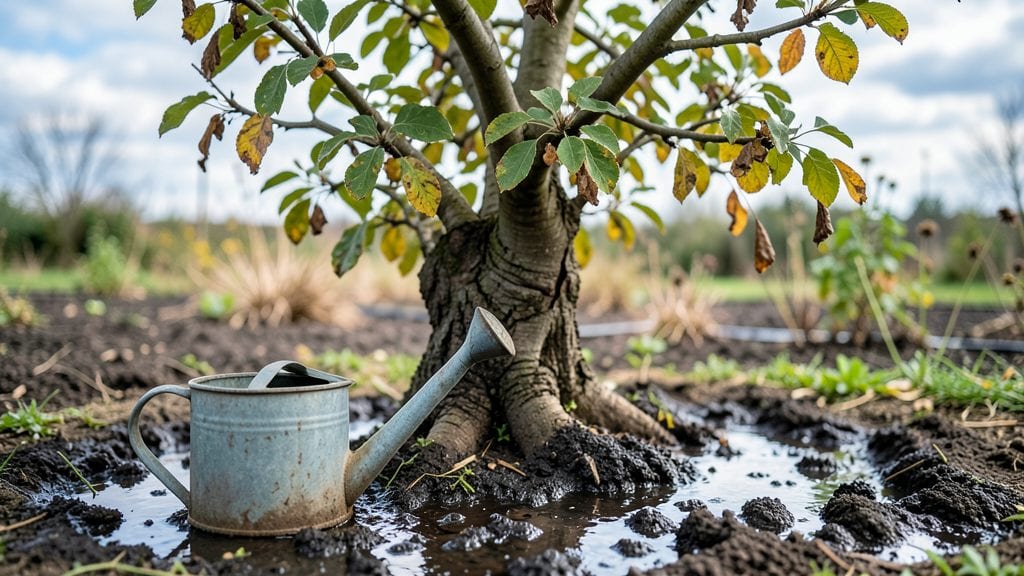
An apple tree drowning in its own soil is harder to fix than you think. 🌱 I’ve watched overwatered trees turn from vibrant producers to sad, yellow-leafed shadows—until I learned the three key moves that bring them back. The first mistake most gardeners make? Waiting too long to act.
Here’s the hard truth: soggy roots can’t breathe, and that’s when fungus moves in. You’ll spot the signs fast—mushy soil, leaves that stay yellow even when dry, and that musty smell. The fix starts with cutting back watering by half and improving drainage, but it doesn’t stop there.
We’re talking soil aeration, strategic pruning, and a few pro tips to keep your tree from repeating the same mistakes.
Within weeks, you’ll see new green leaves pushing through, and by next season, your tree could be back to producing those crisp, juicy apples. The secret isn’t just fixing the damage—it’s setting up a system so it never happens again. Trust me, your tree will thank you.
This works for backyard orchards, container-grown trees, and even those stubborn old varieties that seem impossible to revive. Let’s get your apple tree breathing easy again—starting with these three no-nonsense steps.
Root Causes Of Excess Moisture
An overwatered apple tree isn’t just a case of "too much of a good thing"—it’s a complex interplay of environmental, soil, and human factors that can suffocate your tree’s roots and leave it gasping for air.
Understanding the why behind the problem is the first step to fixing it. Let’s dig into the most common culprits:
Apple trees thrive in well-draining soil, but when water can’t escape, it pools around the roots, cutting off oxygen and inviting fungal infections. Here’s why this happens:
- Compacted soil: Heavy foot traffic, machinery, or natural clay content can squeeze soil particles together, creating a dense barrier that repels water. Think of it like a soggy sponge—water sits instead of draining.
- High clay content: Clay soils hold water like a sponge but release it extremely slowly, leaving roots waterlogged for days. A simple jar test (fill a jar with soil and water, then shake—if water separates slowly, drainage is poor) can confirm this.
- Improper planting depth: Burying the root flare (the bulge where roots meet the trunk) too deep traps water against the trunk, while planting too shallow exposes roots to rapid drying and overwatering when you compensate.
💡 Pro Tip: Amend heavy clay soil with organic matter (compost, peat moss, or coconut coir) to improve aeration. Aim for a mix that resembles "damp, crumbly loam"—like a well-used potting soil.
Even the best-intentioned gardeners can drown their apple trees by misunderstanding their needs. Here’s how watering gone wrong happens:
- Ignoring soil moisture: Watering on a schedule (e.g., "every Tuesday") instead of checking soil moisture leads to guesswork. Apple trees need 1–1.5 inches of water per week, but this varies by climate, soil, and tree size.
- Light, frequent watering: Shallow watering (e.g., sprinkling daily) encourages roots to stay near the surface, where they dry out quickly—then you overcompensate with more water. Deep watering less often trains roots to seek moisture deeper.
- Automatic systems on autopilot: Drip irrigation or sprinklers left running during rain or high humidity can deliver excess water without you realizing it. Always check soil before watering!
🌡️ Key Insight: Stick your finger 2–3 inches into the soil. If it’s damp, wait. If it’s dry, water slowly until moisture reaches 6–12 inches deep (for mature trees).
Not all water stress comes from human error—sometimes, nature or poor planning plays a role:
- Low-lying planting spots: Apple trees planted in depressions or valleys naturally collect runoff, turning the area into a temporary pond after rain. Solution: Plant on a slight slope or create a swale (a shallow ditch) to redirect water.
- Impermeable surfaces nearby: Pavement, patios, or dense mulch layers can block water absorption, forcing it to pool around the tree’s base. Think of it like a bathtub with the drain covered.
- Heavy rainfall or poor weather timing: If a storm drenches the soil right after you watered, roots can’t recover. Monitor forecasts and adjust watering accordingly.
✨ Actionable Fix: If your tree is in a low spot, raise the planting area by mounding soil (or use a tree ring to elevate the root zone). For mulch, keep it 3–4 inches deep and 3–6 inches away from the trunk to prevent suffocation.
Now that you know why your apple tree is drowning, the next step is diagnosing the damage and reviving it. Stay tuned for our 3-step recovery guide!
Fixing an Overwatered Apple Tree
Reviving an overwatered apple tree starts with understanding the root of the problem—literally. Too much water drowns roots, suffocates nutrients, and invites fungal diseases. But don’t panic! With the right steps, your tree can bounce back to health.
Below, we’ll tackle the most common causes of overwatering and provide practical, step-by-step fixes to save your apple tree—plus tips to keep it thriving long-term.
Cause: Excessive or frequent watering without drainage checks. Fix:
- Pause watering for at least 3–5 days to let the soil dry out. This prevents further root rot and allows oxygen to return to the roots.
- Check soil moisture before resuming. Stick your finger 2–3 inches deep into the soil—if it’s damp, wait another day. If it’s bone-dry, give a light drink (just enough to moisten, not soak).
- Avoid watering at night or during heavy rain. Wet foliage for too long encourages fungal diseases like apple scab or powdery mildew.
💡 Pro Tip: Use a moisture meter ($10–$20) for accuracy, especially in clay-heavy soils that retain water longer.
Cause: Compacted or waterlogged soil traps excess moisture. Fix:
- Test your soil’s drainage 🧪:
- Dig a 6-inch-deep hole near the tree’s drip line (the edge of its canopy).
- Fill it with water. If it drains in <1 hour, your soil is okay. If it takes >4 hours, drainage is poor.
- Amend the soil (choose one or mix):
- For clay soil: Mix in compost, sand, or perlite to loosen it. Work it into the top 6–12 inches of soil.
- For heavy mulch: Rake back mulch 6–12 inches away from the trunk to prevent water pooling.
- For container-grown trees: Ensure pots have drainage holes and use a well-draining potting mix (like 60% soil, 30% perlite, 10% compost).
- Aerate the roots (if severely compacted):
- Use a garden fork to gently loosen soil around the root zone (avoid damaging roots).
- For large trees, core aeration (rent a tool or hire a pro) can help.
⚠️ Warning: Never pile mulch against the trunk—this creates a rot trap. Keep mulch 3–4 inches away from the bark.
Cause: Inconsistent or overly frequent watering. Fix:
- Water deeply but infrequently:
- Young trees (1–3 years): Water 1–2 times per week (10–15 gallons per session).
- Mature trees (4+ years): Water every 10–14 days (20–30 gallons per session).
- Signs you’re overwatering: Yellowing leaves, mushy stems, or mushrooms sprouting at the base.
- Use the “soak and dry” method:
- Water slowly (over 30–60 minutes) to let it penetrate deep.
- Wait until the top 2–3 inches of soil are dry before watering again.
- Water at the base, not the leaves:
- Aim the hose at the root zone (drip line) to avoid wetting foliage.
🌡️ Climate Check:
- Hot/dry summers? Water more frequently but deeply.
- Cool/wet springs? Reduce watering and focus on improving drainage.
Once your apple tree recovers, follow these golden rules to avoid future overwatering:
| Do This | Avoid This |
|---|---|
| Plant in well-draining soil (test before buying!). | Planting in low spots where water pools. |
| Use drip irrigation (slow, targeted watering). | Sprinklers that wet leaves/fruit. |
| Mulch correctly (2–4 inches deep, away from trunk). | Piling mulch against the trunk. |
| Water in the morning (allows foliage to dry). | Watering at night or after dark. |
| Monitor weather (adjust watering for rain). | Ignoring natural rainfall. |
✨ Bonus Tip: If your tree is in a container, upgrade to a larger pot with drainage holes—root-bound trees overwater faster!
By following these steps, your apple tree should show signs of recovery in 2–4 weeks (new growth, firmer leaves). If yellowing persists or the trunk feels soft, root rot may be severe—consider consulting a local arborist for fungal treatment.
With patience and the right care, your tree will be back to bearing sweet, crisp apples in no time! 🍏🌿
Frequently asked questions
How do I know if my apple tree is overwatered vs. underwatered?
Check the soil and leaves: overwatered trees have yellowing leaves that stay soft, mushy stems, and soil that smells musty or feels soggy. Underwatered trees have crispy brown edges on leaves and dry, pulling soil. Stick your finger 2-3 inches deep—if it's damp, you're overwatering.
Can I save an apple tree with root rot from overwatering?
Yes, but act fast! First, stop watering immediately and improve drainage by amending soil with compost or perlite. Prune any mushroom growth at the base and affected branches. For severe cases, consult an arborist about hydrogen peroxide treatments (3% solution) to kill fungus. Recovery takes 4-8 weeks with proper care.
What's the best way to test my soil's drainage before planting an apple tree?
Do the jar test: Fill a clean jar halfway with your soil, add water to the top, then shake. If water separates and drains in 1 hour, drainage is good. If it stays murky after 4 hours, amend with sand or compost. For clay-heavy areas, consider raised beds or mounded planting.
Will my apple tree recover if I've been overwatering for months?
Partial recovery is possible, but chronic overwatering causes permanent root damage. Start by halving your watering schedule and improving drainage. Focus on new growth—healthy leaves will appear in 2-3 weeks if roots aren't completely dead. For trees showing cracked bark or large dead branches, professional assessment is recommended.
Can I use coffee grounds to help with overwatered soil?
Coffee grounds can help long-term by improving soil structure, but they won't fix immediate overwatering. Mix dried grounds (1 part) with compost (3 parts) and work into the top 6 inches of soil. They lower pH slightly, which apple trees prefer, but prioritize drainage fixes first. Avoid fresh grounds—they can mat down and worsen compaction.