
Trees
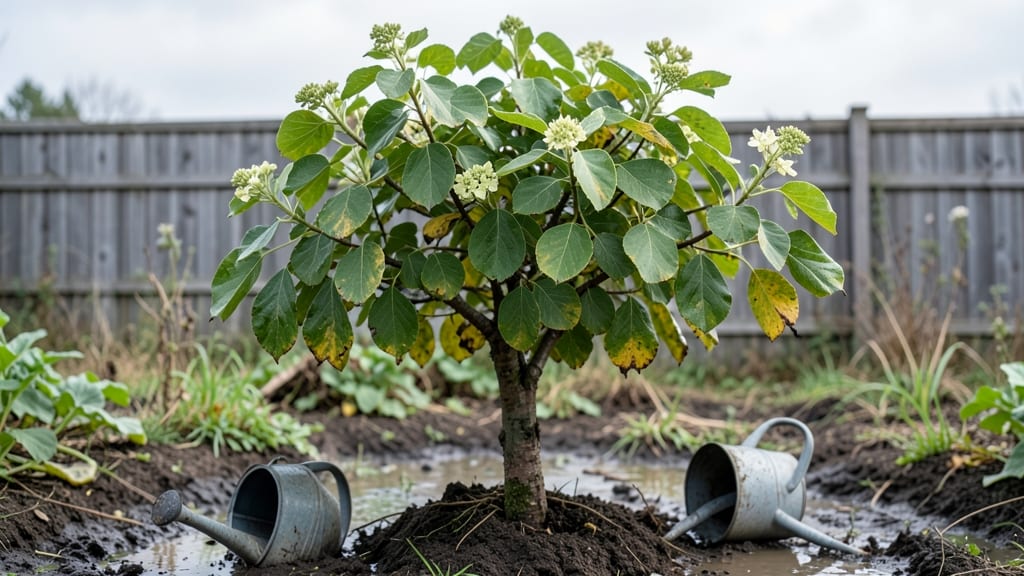
That drooping overwatered dogwood tree might look beyond help—but root rot is often reversible with the right care. I’ve nursed back three dogwoods with mushy roots and yellowing leaves, and the same steps work every time. The key? Stopping the water first, then giving roots space to breathe.
First, check the soil: if it smells sour or feels squishy two inches down, you’ve got root rot. Drainage is your new best friend—amend heavy soil with compost or perlite, and consider raised beds if your yard stays soggy.
Prune back dead branches now to reduce stress on the tree while it recovers.
Within 4-6 weeks, you’ll see new green growth pushing through as roots heal. The tree might look rough for a while, but with adjusted watering (only when the top inch of soil is dry) and proper airflow, it’ll bounce back stronger than before.
This works for any dogwood—flowering, Pacific, or even those struggling in clay soil. The secret isn’t fancy tools, just patience and letting the roots dry out between drinks. Let’s get your tree back to its best.
What Triggers Root Rot in Trees
When your dogwood tree starts showing signs of distress—yellowing leaves, wilting branches, or a mushy trunk—root rot may be the culprit. But why does overwatering lead to this devastating condition?
The answer lies in the delicate balance of soil moisture, oxygen, and microbial activity. Let’s break down the key factors that turn your well-intentioned watering into a root-rotting disaster.
Dogwood trees thrive in well-draining soil, but when they receive too much water—whether from heavy rainfall, poor drainage, or overzealous irrigation—the roots suffocate. Here’s what happens:
- Oxygen Deprivation: Roots need oxygen to respire and function. Water fills soil pores, displacing air and creating anaerobic conditions (low or no oxygen). Without oxygen, roots can’t process nutrients or energy efficiently.
- Fungal Growth: Excess moisture creates the perfect environment for Phytophthora and Pythium fungi, which thrive in soggy soil. These pathogens attack root tissues, breaking down cell walls and clogging root vessels.
- Nutrient Leaching: Overwatering washes away essential nutrients like nitrogen and phosphorus, starving the tree even as its roots drown.
💡 Pro Tip: Dogwoods typically need 1–1.5 inches of water per week, including rainfall. If your soil stays soggy for more than 24–48 hours, you’re likely overdoing it.
Not all soil is created equal—and some holds onto water like a sponge. If your dogwood’s roots are planted in clay-heavy, compacted, or poorly amended soil, water pools around the roots instead of draining away. This is a recipe for root rot:
- Clay Soil: Tiny particles pack tightly, reducing pore space for air and water movement. Roots in clay soil can’t "breathe," leading to suffocation and fungal invasion.
- Compacted Soil: Foot traffic, construction, or heavy machinery can compress soil, crushing root systems and preventing water from seeping downward.
- Lack of Organic Matter: Soil without compost or mulch has poor structure, trapping water at the root zone and encouraging rot.
🔥 Action Step: Test your soil’s drainage by digging a 12-inch hole near the tree. Fill it with water—if it drains in less than 6 hours, you’re good; if it takes longer than 24 hours, amend the soil with sand, perlite, or compost to improve aeration.
Automatic sprinklers, drip systems, or even manual watering can backfire if not managed properly. Here’s how misguided irrigation contributes to root rot:
- Surface Watering: Sprinklers that wet the foliage instead of the soil create a humid canopy, promoting fungal spores (like Botrytis) that drop onto roots.
- Overhead Watering: Dogwood leaves act like tiny umbrellas, shielding the soil from rain but also trapping moisture against the trunk—ideal for canker diseases that weaken roots.
- Inconsistent Watering: Alternating between drought and flood stresses roots, making them more vulnerable to pathogens when they’re already weakened.
🎯 Best Practice: Water at the base of the tree (not the leaves) using a soaker hose or drip irrigation. Aim for deep, infrequent watering (e.g., 2–3 times per week in dry spells) to encourage roots to grow deeper, where oxygen is more available.
Mulch is a gardener’s best friend—unless you smother the tree with it. A thick layer of mulch (more than 3–4 inches) or mulch piled against the trunk can trap moisture and heat, creating a rot-friendly zone:
- Volcano Mulching: Mulch piled in a cone around the trunk (instead of a flat donut) blocks water evaporation and traps dampness directly against the bark and roots.
- Decomposition Heat: Thick mulch layers break down slowly, generating heat that can cook shallow roots and attract rot-causing microbes.
- Weed Barrier Traps: Plastic or cardboard under mulch prevents water from draining through, turning the root zone into a swamp.
✨ Fix It Fast: Pull mulch away from the trunk (keep it 6 inches from the base) and limit the layer to 2–3 inches thick. Use organic mulch (like shredded bark or wood chips) to allow gradual decomposition and airflow.
Understanding these triggers is the first step to saving your dogwood. The good news? Root rot is often reversible with the right adjustments. Stay tuned for our 5-step rescue plan to restore your tree’s health!
Fixing an Overwatered Dogwood Tree
Reviving your soggy dogwood doesn’t have to be a guessing game. The key is to diagnose the root cause (literally!) and take targeted action to restore balance. Below, we break down the most common issues and their fixes—plus prevention tips to keep your tree thriving long-term.
If your dogwood’s roots are drowning, stop watering and focus on draining the soil as fast as possible.
🌧️ Fix: Improve Soil Drainage
- Aerate the soil with a garden fork or tiller to break up compacted earth.
This helps water escape instead of pooling. - Add organic matter: Mix in compost or coconut coir (10-20%) to improve drainage while retaining moisture when needed. - Raise the planting bed (if possible) by adding a 2-3 inch layer of gravel or sand beneath the root zone.
💡 Pro Tip:
If your yard has clay soil, consider amending it permanently with gypsum or sand to prevent future waterlogging.
Dogwoods hate "wet feet" but drought stress is just as harmful. The goal? Consistent moisture without saturation.
👨🍳 Fix: Water Deeply but Less Often
- Water deeply 1-2 times per week (depending on climate) rather than light daily sprinkles.
- Use a moisture meter to check soil depth—water only when the top 2-3 inches are dry.
- Water at the base, not overhead, to avoid fungal growth on leaves.
⏰ Best Times to Water:
- Early morning (6-10 AM) – Reduces evaporation and fungal risks.
- Avoid evening watering – Damp leaves overnight encourage disease.
If root rot has set in, pruning diseased parts can save your tree.
✂️ Fix: Trim Affected Areas
- Remove yellowing or wilting leaves (they’re energy drains).
- Prune back any mushy, blackened roots (use sterilized shears) to prevent spread.
- Thin out dense branches to improve airflow and reduce humidity around the trunk.
🌡️ Warning Signs of Root Rot:
- Foul-smelling soil when dug up.
- Mushy, discolored roots (healthy roots are firm and tan).
- Sudden leaf drop even with adequate water.
If root rot is severe, a targeted fungicide can help.
💊 Fix: Apply Fungicide to Soil & Roots
- Use a systemic fungicide (like Mycorrhizal fungi or copper-based treatments) to combat pathogens.
- Follow label instructions—overapplying can harm beneficial microbes.
- Reapply every 4-6 weeks until new growth appears.
🌿 Alternative: Natural Remedies
- Hydrogen peroxide (3%) – Mix 1 part peroxide with 10 parts water and pour into the soil to kill fungi naturally.
- Neem oil spray – Apply to foliage to prevent secondary infections.
Mulch helps regulate soil moisture, but too much suffocates roots.
🍂 Fix: Mulch Correctly
- Use 2-3 inches of organic mulch (wood chips, bark, or straw).
- Keep mulch 6 inches away from the trunk to prevent rot.
- Replenish annually to maintain thickness.
✨ Prevention Tip:
Never pile mulch against the trunk—this traps moisture and invites pests.
Once your dogwood recovers, keep these habits to avoid future waterlogging:
✅ Choose the right location – Dogwoods thrive in well-draining soil with partial shade. ✅ Test your soil – A simple pH test (6.0-7.0 ideal) and drainage check can prevent issues. ✅ Upgrade your yard’s drainage – If your garden floods often, consider French drains or swales. ✅ Monitor after heavy rains – If water pools for more than 24 hours, take action immediately.
Final Thought: An overwatered dogwood can bounce back fast with the right care—just drain, prune, and adjust! 🌿 With these steps, your tree will be stronger than ever in no time.
Frequently asked questions
How do I know if my dogwood tree is overwatered?
Check for these signs: yellowing leaves that stay on the tree, wilting branches despite moist soil, or a foul smell when you dig near the roots. Healthy dogwood roots are firm and tan, while overwatered roots turn mushy and dark brown. If the soil stays soggy for more than 48 hours, you're likely overwatering.
Can an overwatered dogwood tree recover?
Yes! With proper care, dogwoods often bounce back within 4-6 weeks. Stop watering immediately, improve drainage by amending soil with compost or sand, and prune any dead branches. New growth should appear once roots have a chance to dry out and recover.
What’s the best way to fix poor drainage around my dogwood?
Start by aerating compacted soil with a garden fork, then mix in organic matter like compost or perlite. For severe cases, consider raising the planting area with a 2-3 inch gravel layer beneath the roots. Avoid clay-heavy soil by testing drainage first—water should seep away within 6 hours.
How often should I water a recovering dogwood?
Water only when the top 2-3 inches of soil are dry, typically 1-2 times per week in dry climates. Use a soaker hose at the base (not overhead) to prevent fungal growth. Morning watering is best—it reduces evaporation and fungal risks.
Will fungicide help my overwatered dogwood?
Yes, but only if root rot has set in. Use a copper-based or mycorrhizal fungicide applied directly to the soil. For natural options, try hydrogen peroxide (3% solution) poured into the root zone or neem oil spray on leaves. Reapply every 4-6 weeks until new growth appears.