Watering
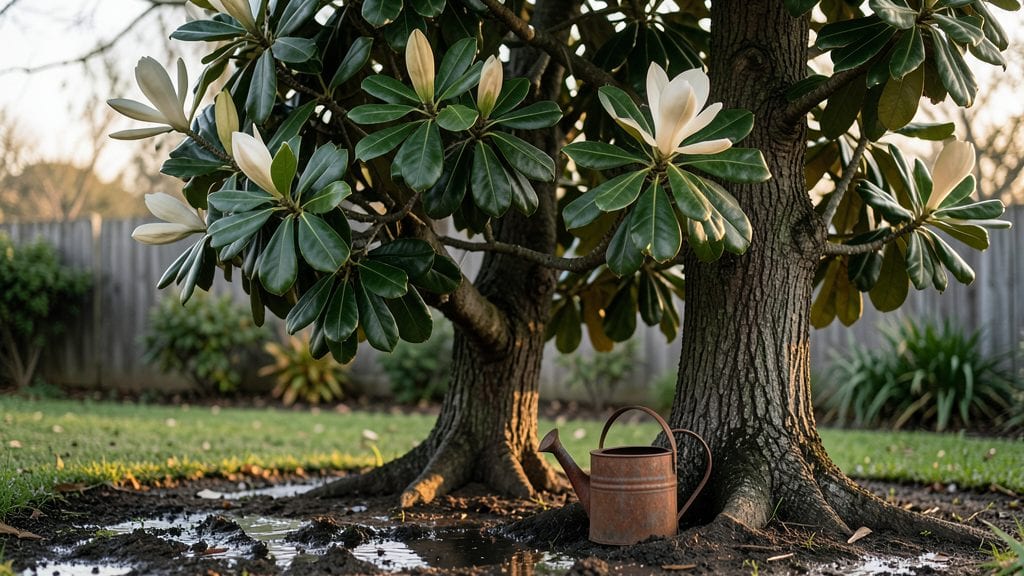
An overwatered magnolia tree can look like it’s drowning—drooping leaves, yellowing foliage, and roots that smell like wet socks. 🌿 I’ve seen this happen more than once, and the good news is you can bring it back with the right adjustments.
The key is stopping the waterlogging first, then giving the roots space to breathe again.
Most people assume magnolias need constant moisture, but they actually prefer their soil to dry out slightly between waterings. That’s why you’ll want to check the soil 6 inches deep—if it’s damp, hold off on watering.
Improving drainage is the next step, whether that means amending the soil with compost or creating a small trench around the base to redirect excess water.
Once you’ve stopped the water stress, prune any mushy or discolored leaves to help the tree focus its energy on recovery. Within 4-6 weeks, you’ll start seeing fresh, vibrant growth as the roots regain their health.
The best part? A properly watered magnolia can live for decades with just a little attention.
This works for both young trees and mature specimens, though larger magnolias may need deeper soil checks. Keep a garden journal to track watering days—it’s the easiest way to avoid repeating the mistake next season. Your magnolia will thank you with glossy, fragrant blooms come spring.
Root Causes Of Overwatering
Overwatering your magnolia tree isn’t just about giving it too much love—it’s often a mix of well-meaning mistakes, environmental factors, and soil science gone wrong. Understanding why this happens is the first step to fixing it. Let’s break down the key culprits behind soggy roots and wilting leaves.
---
Magnolias thrive in well-drained soil, but their roots are sensitive to moisture extremes. If you water them too frequently—or in short, shallow bursts—you’re tricking the tree into thinking it’s always thirsty. Here’s why this backfires:
- Surface-Level Saturation: Light, frequent watering (like daily sprinkles) keeps the topsoil wet but leaves deeper roots starved for oxygen. Magnolias need deep, infrequent watering (1–2 inches per week) to encourage roots to grow downward. - Poor Evaporation Control: Unlike desert plants, magnolias can’t handle soggy conditions.
Their roots rot quickly in compacted, waterlogged soil because fungi and bacteria thrive in anaerobic (oxygen-poor) environments. - Seasonal Misjudgment: Watering the same amount year-round ignores the tree’s natural rhythm. Spring and fall need more moisture, but summer heat can dry soil faster than you think—leading to overcompensation.
Pro Tip: 💡 Use the "finger test"—stick your finger 2–3 inches into the soil. If it’s damp, wait. If it’s bone-dry, water deeply until moisture reaches 6–8 inches down.
---
Not all soil is created equal, and magnolias despise clay-heavy or compacted soil that traps water like a sponge. Common drainage pitfalls include:
| Issue | Why It’s Problematic | Fix It With | |--------------------------|-------------------------------------------------------------------------------------------|------------------------------------------| | Clay Soil | Expands when wet, suffocates roots, and blocks oxygen flow. | Amend with compost or gypsum (10% mix). | | No Slope in Garden Bed | Water pools around the trunk instead of draining away. | Create a 1–2% slope away from the tree. | | Over-Mulching | Mulch >3 inches thick traps moisture against the trunk, inviting rot. | Keep mulch 2–3 inches deep, 6 inches from the trunk. | | Container Without Drainage | Pots without holes act like bathtubs, drowning roots. | Use self-watering pots with drainage or drill holes. |
Warning: ⚠️ Never let water pool at the base of the tree—this is a fast track to root rot. A French drain or gravel layer at the bottom of plantings can help.
---
Mulch is a gardener’s best friend—unless you’re smothering your magnolia. Here’s how too much mulch backfires:
- Volcano Mulching: Piling mulch against the trunk (like a volcano) creates a moisture trap that rots bark and roots.
Magnolias need aerial roots to breathe, and suffocation strangles them. - Wrong Mulch Type: Organic mulches (like wood chips) break down over time, adding extra moisture to the soil.
Inorganic mulches (gravel, rubber) are better for drainage but can overheat roots in summer. - No "Mulch Ring": A 3–4 inch gap between mulch and the trunk prevents moisture buildup. Without it, fungi like Phytophthora (a root rot villain) move in.
Pro Tip: ✨ Refresh mulch annually—top-dress with 1–2 inches of fresh mulch instead of piling it high. This keeps moisture levels stable without suffocating the tree.
--- Mother Nature plays a role too. If your magnolia is in the wrong spot, even "normal" watering becomes a disaster.
- Shady, Low-Lying Spots: Magnolias hate standing water from poor airflow or rain runoff. If your tree sits in a depression, water will pool after storms. - Urban Heat Islands: Pavement and buildings trap heat, causing soil to dry out faster—leading to overwatering panic.
In reality, the tree might need less water, not more. - Rainfall Overload: If you’re in a humid climate (like the Southeast U.S.), magnolias may not need extra watering at all. Check soil moisture before watering—don’t assume!
Quick Fix: 🌡️ Adjust watering based on rain. Use a rain gauge or weather app to track precipitation. If it’s rained 1+ inch in a week, skip watering entirely.
--- Young magnolias (under 3 years old) have shallow, delicate roots that can’t handle deep watering yet. Common mistakes: - Overwatering New Transplants: Freshly planted trees need less water at first—their roots are still adjusting.
Drenching them can drown the roots before they spread. - No Root Zone Establishment: If the tree isn’t given time to develop a strong root ball, it’s more prone to stress from overwatering.
Solution: 👨🍳 Water deeply but less often for the first year. Aim for 1–2 gallons per week (adjust for size), and avoid wetting the leaves to prevent fungal diseases.
--- Overwatering is rarely just about "too much water"—it’s about poor timing, soil science, and location. By fixing drainage, adjusting habits, and reading your tree’s signals (drooping leaves, yellowing foliage), you’ll give your magnolia the just-right moisture it craves.
Next up: How to Revive an Overwatered Magnolia—without repeating the same mistakes!
Reviving Your Overwatered Magnolia
If your magnolia tree’s leaves are drooping, yellowing, or wilting, it’s likely suffering from too much water—but don’t panic! With the right steps, you can nurse it back to health and prevent future issues.
Below are practical solutions tailored to the root cause of overwatering, along with easy-to-follow fixes and prevention tips to keep your magnolia thriving.
---
🚨 Signs: Yellowing leaves, mushy stems, or roots, foul-smelling soil, or leaves that feel soggy to the touch.
How to Fix It: - Pause watering for at least 3–5 days to let the soil dry out. Magnolias hate "wet feet" and can develop root rot if left in soggy conditions. - Check soil moisture before watering again: Stick your finger 2–3 inches deep into the soil. If it’s damp, wait another day. - Avoid watering in the evening—wet foliage at night encourages fungal diseases like anthracnose, which weakens already stressed trees.
💡 Pro Tip: If your magnolia is in a container, ensure the pot has drainage holes and empty any saucers underneath to prevent waterlogging.
---
🚨 Signs: Soil stays clumpy, water pools on the surface, or roots are visibly rotting.
How to Fix It: - Aerate compacted soil with a garden fork or tiller to break up dense areas. This helps water drain faster. - Amend the soil with organic matter like: - Compost (20–30% of the top 6–12 inches of soil) - Perlite or coarse sand (10–15%) to improve drainage - Pine bark fines (great for acidic-loving magnolias) - For container-grown magnolias, repot into a larger container with fresh, well-draining magnolia-specific potting mix.
🌡️ Prevention Tip: Magnolias prefer slightly acidic to neutral soil (pH 5.0–7.0). Test your soil with a DIY pH kit and adjust with sulfur (to lower pH) or lime (to raise pH) if needed.
---
🚨 Signs: Brown, mushy leaves, blackened stems, or roots that look slimy or discolored.
How to Fix It: - Prune dead/dying leaves with sterilized pruners (wipe with rubbing alcohol between cuts) to redirect energy to healthy growth. - Inspect roots (gently loosen soil around the base): - Healthy roots are firm, white, or tan. - Rotten roots are dark, mushy, and smell foul—trim these off with clean shears. - Apply a fungicide (like copper fungicide or neem oil) to prevent root rot or fungal spread if roots are compromised.
✨ Prevention Tip: Never prune in wet conditions—wait until soil is dry to avoid spreading disease.
---
🚨 Signs: You water every few days, soil stays soggy, or leaves curl up despite frequent watering.
How to Fix It: - Water deeply but infrequently: - Young magnolias (1–3 years): Water 1–2 times per week (1–2 inches per session). - Mature magnolias (4+ years): Water every 10–14 days unless in extreme heat/drought. - Water at the base (not overhead) to reduce evaporation and fungal risk. - Use a moisture meter or stick your finger in the soil before watering—wait until the top 2–3 inches are dry.
🎯 Pro Tip: Mulch properly—apply 2–4 inches of organic mulch (like pine straw or wood chips) 3–6 inches away from the trunk to retain moisture without suffocating roots.
---
🚨 Signs: Water pools around the base, container has no drainage, or your yard has poor slope.
How to Fix It: - For containers: - Drill drainage holes if missing. - Repot if roots are circling (a sign of overwatering). - For in-ground magnolias: - Create a slight slope away from the trunk to direct water flow. - Install a French drain if your yard has standing water issues.
🔥 Emergency Fix: If your magnolia is severely waterlogged, dig a shallow trench around the base to redirect excess water away from the roots.
--- Once your magnolia recovers, prevent overwatering with these habits: ✅ Water in the morning (allows foliage to dry before night). ✅ Avoid heavy clay soil—amend with sand or compost if needed. ✅ Monitor weather—adjust watering during heavy rain or drought. ✅ Fertilize lightly in spring (March–April) with acid-loving plant food (like a 10-10-10 or iron supplement).
--- 🌟 Final Thought: Overwatering is reversible—but speed matters! Act fast to stop rot, improve drainage, and adjust care, and your magnolia will bounce back with stronger, greener leaves in no time. 🌿💧
Frequently asked questions about overwatered magnolias
How do I know if my magnolia tree is overwatered?
Check for these key signs: yellowing leaves that stay attached, mushy stems, or roots that smell foul or look slimy. The soil may feel soggy even days after watering, and leaves might droop despite frequent watering. If you see these symptoms, stop watering immediately and let the soil dry out.
Can an overwatered magnolia tree recover?
Yes! With quick action, most magnolias bounce back within 4-6 weeks. Start by pausing watering, improving drainage, and pruning affected leaves. Healthy roots will regenerate if you prevent further waterlogging. For severe cases, you may need to trim rotten roots and repot if in a container.
What's the best way to fix compacted soil around my magnolia?
Use a garden fork to aerate the soil first, then mix in 20-30% compost or 10% perlite to improve drainage. For heavy clay, add coarse sand (15%) to help water flow through. Reapply mulch 2-3 inches deep, keeping it 6 inches from the trunk to prevent future moisture traps.
Should I water my magnolia more or less after recovery?
Less! Mature magnolias need water every 10-14 days (1-2 inches per session), while young trees require 1-2 waterings per week. Always check soil moisture 2-3 inches deep—water only when dry. Morning watering prevents fungal diseases, and mulch helps retain moisture without suffocating roots.
Will fertilizer help my overwatered magnolia?
Not immediately—focus first on drainage and root health. Once recovered, use a balanced fertilizer (10-10-10) in spring only, as magnolias are light feeders. Avoid heavy fertilizers, which can stress already compromised roots. Too much fertilizer in wet conditions worsens root rot.