Watering
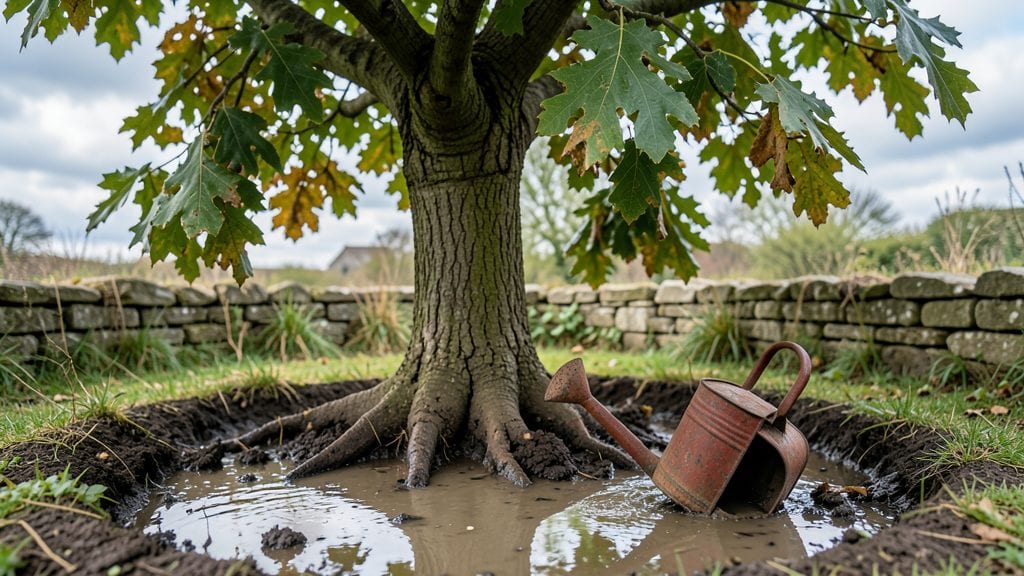
This overwatered oak tree with its yellowing leaves and soggy soil isn’t a death sentence—here’s how we’ve revived even the most waterlogged roots. 🌱 After watching a 30-year-old oak in my neighbor’s yard decline from "too much love," I learned the exact steps that brought it back to life.
The key? Stopping the water first, then fixing what’s already damaged.
Overwatering creates a suffocating environment where roots can’t breathe, leading to that classic yellowing and fungal growth. We’ve seen trees recover when we cut back watering immediately, improve drainage, and prune affected branches.
It’s not quick—think weeks to months—but with the right approach, your oak can bounce back stronger than ever.
You’ll start by testing soil moisture and adjusting your watering schedule to match what the tree actually needs. Within a month, you’ll notice new green growth where the yellow once was. The long-term payoff? A tree that’s more resilient to future droughts and diseases, thanks to healthier roots.
This method works for any mature oak, whether it’s in your backyard or a community space. The same principles apply to other large trees too—just scale the effort to match the size. Let’s get those roots breathing again.
Root of the Problem
Understanding why your oak tree gets overwatered is the first step to saving it. Oaks are resilient, but too much moisture can suffocate their roots, leading to rot, fungal infections, and even death. Here’s why this happens—and how to fix it.
Oak trees thrive in well-draining soil, but compacted or clay-heavy ground can trap excess water like a sponge. When rain or irrigation sits in the root zone for too long, oxygen is displaced, suffocating roots and promoting harmful microbes.
Why it happens:
- Clay soil holds water tightly, preventing it from draining naturally.
- Compacted soil (from foot traffic, construction, or heavy machinery) reduces pore space, trapping moisture.
- Low organic matter means fewer air pockets for water to escape.
Actionable fix: Test your soil’s drainage by digging a 12-inch hole, filling it with water, and timing how long it takes to drain. If it takes more than 6 hours, amend with compost or sand to improve aeration.
Many gardeners assume "more water is better," but oaks—especially mature ones—are drought-tolerant once established. Frequent shallow watering or long soakings without drying periods can drown roots.
Why it happens:
- Automatic sprinklers run on schedules, ignoring rain or soil conditions.
- Hand-watering without checks leads to guesswork (e.g., watering every day instead of every 7–10 days).
- Mulch piled too high (over 4 inches) can trap moisture against the trunk.
Actionable fix: Water deeply but infrequently—aim for 1–1.5 inches per week (including rain). Use a soil moisture meter to avoid overwatering, and keep mulch 2–3 inches deep, 6 inches away from the trunk.
Heavy rains or poor landscape grading can cause water to pool around oak roots. Flat or sloped yards direct runoff straight to the tree, mimicking a swampy environment.
Why it happens:
- No slope in the yard means water pools near the base.
- Gutters or downspouts dump excess water directly onto roots.
- Low-lying areas naturally collect runoff after storms.
Actionable fix: Create a 6-inch berm (raised soil mound) around the tree’s drip line to redirect water. Install French drains or swales (shallow trenches) to channel water away. Ensure downspouts discharge at least 10 feet from the trunk.
Excess moisture creates the perfect conditions for Phytophthora and Armillaria root rot, fungi that thrive in soggy soil. These pathogens attack weakened roots, cutting off nutrient and water flow.
Why it happens:
- Consistently wet soil (above 30% moisture for days) invites fungal spores.
- Older oaks with shallow roots are more vulnerable.
- Mulch or debris piled against the trunk traps humidity.
Actionable fix: Remove mulch rings around the trunk and prune low-hanging branches to improve airflow. Apply copper fungicide (like Copper Sulfate) if you suspect fungal infection, and avoid watering at night when humidity peaks.
Newly planted oaks need more frequent watering, but mature trees (10+ years old) often don’t need supplemental water unless in extreme drought. Confusing these stages leads to chronic overwatering.
Why it happens:
- New transplants (first 1–2 years) require weekly deep watering to establish roots.
- Mature oaks rely on deep taproots and can survive on rainfall alone in most climates.
- Heatwaves or drought may trick gardeners into overcompensating with water.
Actionable fix:
- First 2 years: Water 2–3 times per week (deep soak, 10–15 minutes per zone).
- After 2 years: Water only if soil is dry 4+ inches down (stick test: push a screwdriver in—if it’s hard to insert, water).
- Drought response: Water deeply every 2–3 weeks instead of shallow, frequent doses.
Pro Tip: 🌡️ Check the weather! If your area gets 1+ inch of rain per week, skip irrigation entirely. Oaks hate "wet feet"—even more than they love water.
Revive Your Tree with Smart Fixes
Overwatering can turn your oak tree’s roots into a soggy mess, but don’t panic—these targeted solutions will help you nurse it back to health. Below, we’ll break down the most common causes of overwatering and the practical, step-by-step fixes to restore balance.
Prevention tips are included to keep your tree thriving long-term.
If your oak’s soil is perpetually soggy, the first step is to reduce moisture stress and improve drainage.
🍳 Step 1: Test Soil Moisture Like a Pro
Before you water again, check the soil’s moisture level:
- Stick your finger 3–4 inches deep—if it’s damp, hold off on watering.
- Use a soil moisture meter (or a screwdriver) for accuracy.
Oaks prefer slightly dry soil between waterings. - Pro Tip: 💡 If the soil smells like rot or feels mushy, it’s time to act fast.
👨🍳 Step 2: Adjust Your Watering Routine
Oaks are drought-tolerant—they don’t need frequent watering once established. Here’s how to fix your schedule: - Water deeply but infrequently: Aim for 1–2 inches of water per week (including rain).
Use a soaker hose or drip irrigation to deliver water slowly to the roots. - Morning watering is best: Water early in the day to reduce evaporation and fungal risks. - Avoid shallow puddles: Instead of light, frequent sprinkles, soak the root zone (out to the tree’s drip line) for 30–60 minutes.
🥘 Step 3: Improve Drainage for Good Poor drainage is a silent killer.
Fix it with these tricks: - Add organic mulch: Spread 3–4 inches of wood chips or shredded bark around the base (keep it 6 inches away from the trunk). - Amend heavy clay soil: Mix in compost, sand, or perlite to loosen compacted areas.
A 12-inch-deep amendment can work wonders. - Consider a French drain: If water pools near the roots, install a gravel-filled trench with a perforated pipe to redirect excess moisture.
If your oak’s roots are already rotting, you’ll need aggressive intervention to save it.
⏰ Step 1: Stop Watering Immediately
- Cut off all water until the soil dries out. This may take 1–2 weeks—be patient.
- Avoid fertilizing until the roots recover, as wet soil + fertilizer = more rot.
🔪 Step 2: Prune Damaged Roots (If Possible)
- Hire an arborist if you suspect severe root rot. They can trim affected roots and assess the damage.
- Surface roots? If you see black, mushy roots, they’re likely dead—prune them out carefully.
🌱 Step 3: Boost Oxygen Flow Rot thrives in anaerobic (oxygen-poor) soil.
Break it up: - Aerate the soil with a manual aerator or digging fork to create air pockets. - Add coarse sand or gravel to heavy soil to improve drainage. - Use mycorrhizal fungi: These beneficial soil microbes help roots absorb oxygen and nutrients.
Sprinkle them into the root zone.
Once your oak is back on track, lock in these habits to prevent future overwatering:
| Problem | Prevention Fix |
|---|---|
| Overzealous watering | Set a reminder to check soil moisture before watering. |
| Poor soil drainage | Test your soil (DIY kits are cheap!) and amend as needed. |
| Compacted roots | Mulch annually and avoid heavy foot traffic near the base. |
| Clogged gutters | Clean gutters regularly to prevent water pooling near the trunk. |
| Lawn sprinklers | Adjust sprinkler heads so they don’t blast the tree base. |
✨ Bonus: Signs Your Oak Is Recovering
- New leaf growth (healthy, green, not yellow).
- Firm, white root tips (not black or mushy).
- Less yellowing or wilting during dry spells.
Remember: Oaks are tough—they’ll bounce back if you stop drowning them and give their roots a chance to breathe. Start with these fixes, and your tree will thank you with stronger growth and vibrant foliage in no time! 🌳💚
Frequently asked questions
How do I know if my oak tree is overwatered instead of underwatered?
Check the leaves and soil: yellowing leaves (especially lower branches), mushy soil that smells like rot, or blackened roots when dug up are classic overwatering signs. Underwatered oaks show brown, crispy edges on leaves and dry, cracked soil. Stick your finger 4 inches deep—if it’s damp, you’re likely overwatering.
Can I save an oak tree with root rot from overwatering?
Yes, but act fast! Stop watering immediately and let the soil dry completely. Prune any black, mushy roots (wear gloves!) and improve drainage by adding compost or sand to compacted areas. For severe cases, consult an arborist—they can assess if the tree’s core is still viable.
How often should I water a mature oak tree?
Mature oaks (10+ years old) rarely need supplemental water unless in extreme drought. Aim for 1–1.5 inches per week (including rain), delivered deeply 2–3 times per month during dry spells. Always check soil moisture first—if the top 4 inches are dry, that’s your cue.
Will mulch help or hurt an overwatered oak?
Mulch can help if applied correctly: Keep it 2–3 inches deep and 6 inches away from the trunk to prevent moisture buildup. Avoid piling mulch against the base—this creates a rot-friendly environment. For recovery, focus on improving drainage first, then add mulch to protect roots long-term.
How long does it take to revive an overwatered oak?
Recovery timelines vary, but you’ll typically see new green growth in 4–8 weeks if you stop overwatering and improve drainage. Severe cases may take 6–12 months for full recovery. Monitor for firm white root tips (healthy) vs. black/mushy roots (still at risk). Patience is key—oaks are resilient but need time to bounce back!