
Trees
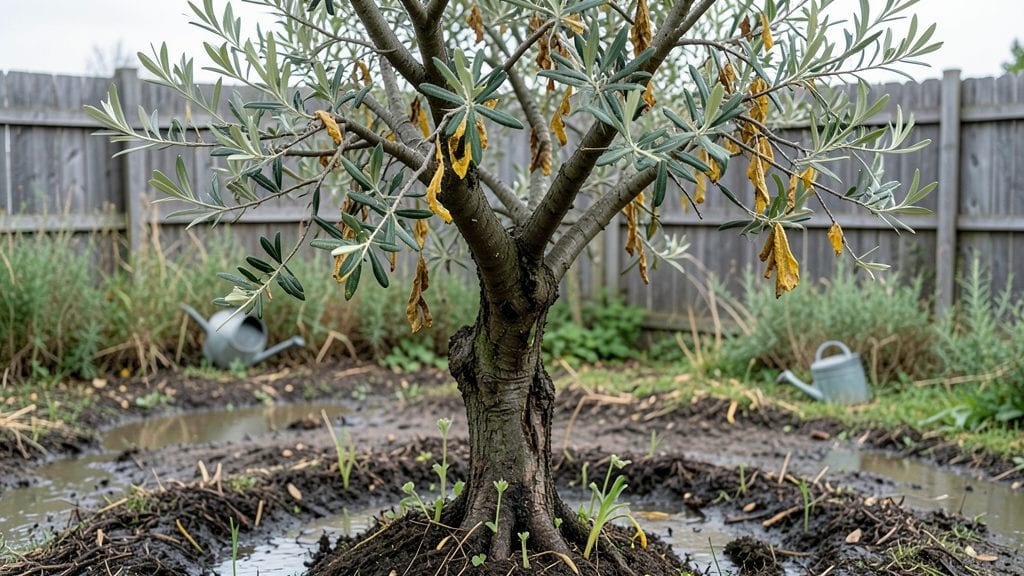
Your olive tree’s drooping leaves and yellowing branches aren’t a death sentence—overwatered olive trees can recover with the right approach. I’ve nursed back three olive trees from root rot using a simple drain-and-save method that focuses on stopping water stress immediately.
The key lies in adjusting soil moisture, improving drainage, and giving the roots space to breathe again.
Olive trees thrive on neglect, not coddling—too much water suffocates their roots, leading to yellowing leaves, stunted growth, and that dreaded mushy soil smell.
Most gardeners overcompensate by watering even more, but the solution is counterintuitive: cut back drastically, let the soil dry completely between waterings, and amend the root zone with gritty material like perlite or coarse sand. Within weeks, you’ll see new green shoots signaling recovery.
By the time you’ve adjusted watering habits and improved drainage, your tree will be on the path to full revival. Expect to see fresh growth within 6-8 weeks if the root damage wasn’t severe, and the tree’s natural drought resistance will kick in stronger than ever.
The secret? Patience and consistency—olive trees reward both with decades of productivity.
This technique works for both container-grown and in-ground olive trees, making it adaptable to any yard. The same principles apply to other drought-tolerant plants like lavender or rosemary—once you master the drain-and-save method, you’ll never overwater again.
Rooting Causes of Overwatered Trees
When your olive tree starts wilting despite a soggy soil bed, the issue likely stems from poor water management—but the reasons behind it are more nuanced than just "too much H₂O." Understanding the why helps you fix the problem before roots rot or fungal infections take hold.
Here’s a breakdown of the most common culprits, backed by science and actionable insights.
Olive trees thrive in well-draining Mediterranean soils, but modern gardening often disrupts this balance. Here’s how soil plays a villain:
- Clay or Compacted Soil: Clay particles bind tightly, trapping water like a sponge. Olive trees, native to rocky, porous terrain, hate sitting in anaerobic (oxygen-poor) conditions. Roots suffocate, leading to root rot (Phytophthora spp.) within days.
- Actionable fix: Amend soil with perlite, coarse sand, or pumice (20–30% mix) to improve aeration. Test drainage by digging a hole, filling it with water, and timing how long it takes to drain—more than 6 hours = problem.
- Organic Matter Overload: While compost adds nutrients, too much (especially fresh, undecomposed material) breaks down into a water-holding gel. Olive trees prefer minimal organic matter (5–10% max).
- Pro tip: Use aged compost or leaf mold (decomposed for 1+ years) instead of fresh manure or green waste.
- Lack of Mulch Management: Mulch conserves moisture—but too much (4+ inches) or against the trunk creates a moisture trap. Olive trees need airflow at the base to prevent fungal growth.
- Fix: Use 1–2 inches of gravel or straw mulch, keeping it 3 inches away from the trunk.
Olive trees evolved in drought-prone regions, so their roots are adapted to short, deep watering cycles. Modern irrigation often does the opposite:
- Automatic Sprinklers or Drip Systems on Overdrive:
- Sprinklers wet foliage and soil surface, encouraging fungal diseases like verticillium wilt. Drip systems, if left running too long, can water continuously for hours, turning soil into a swamp.
- Solution: Switch to drip irrigation with a timer (10–15 mins, 2–3x/week max). Avoid watering after sunset*—fungi thrive in damp, cool nights.
- Ignoring the "Soak and Dry" Cycle**: Olive trees need alternating wet and dry periods to develop deep roots. Constant moisture keeps roots shallow and weak.
- Key metric: Stick your finger 3–4 inches deep—if it’s damp, wait to water. If dry, water until it runs out the drainage holes (then let excess drain).
- Poor Drainage Systems:
- Containers without drainage holes or in-ground plantings in depressed areas act as bathtubs. Olive trees cannot tolerate "wet feet"—roots die within 2–3 days of saturation.
- Fix: Elevate pots on feet or saucers with holes. For in-ground trees, create a slight slope (1–2°) away from the trunk.
Even the most experienced growers fall prey to Mother Nature’s overwatering traps:
- Heavy or Frequent Rainfall: Olive trees in monsoon-prone areas (e.g., coastal California) can drown if rain exceeds 1 inch per week. Their roots lack the aerenchyma tissue (air channels) found in swamp plants like mangroves.
- Workaround: Install a swale or berm to divert excess water. For potted trees, move them to a covered area during storms.
- High Humidity + Warmth = Fungal Party: Fungi like Pythium and Rhizoctonia spread rapidly in humid (70%+ RH) and warm (75–85°F) conditions. Overwatering + humidity = root rot in 7–10 days.
- Prevention: Space trees 6–10 feet apart for airflow. Use fungicides (copper-based or phosphite) as a preventative spray before rainy seasons.
- Cold Weather Waterlogging: Cold, soggy soil slows microbial activity that breaks down organic matter, leading to anaerobic conditions. Olive roots freeze more easily when waterlogged.
- Winter fix: Reduce watering by 50% in fall/winter. Apply gravel mulch to insulate roots.
Not all olive trees react the same—some varieties are genetically more sensitive to moisture stress:
- Young or Transplanted Trees:
- Newly planted olive trees have minimal root systems (often only 1–2 years of growth post-transplant). Their roots are highly susceptible to rot because they lack the deep taproot of mature trees.
- Critical tip: Water deeply but infrequently (every 10–14 days) for the first 6 months. Use a rooting hormone if transplanting to boost resilience.
- Variegated or Dwarf Varieties:
- Types like 'Arbequina' or 'Little Ollie' have shallower root systems due to genetic dwarfing. They drown faster than standard olive trees.
- Adjustment: Use larger pots (12+ inches for dwarfs) with extra drainage holes. Water 20% less than standard varieties.
Bottom line: Overwatering isn’t just about "too much water"—it’s about misaligned soil, irrigation, weather, and tree biology. The good news? Once you identify the root cause (pun intended), fixes like drainage adjustments, mulch tweaks, or smarter watering can revive your tree in weeks. Next up: The Drain-and-Save Technique to rescue your olive tree’s roots.
Revive Your Drowning Olive Tree
An olive tree struggling from too much water isn’t a lost cause—with the right steps, you can nurse it back to health. The key is draining excess moisture, improving soil aeration, and adjusting your watering habits to prevent future stress.
Below, we break down the fixes by cause, so you can tackle the problem head-on.
If your olive tree’s roots are sitting in soggy soil, the first step is removing excess water while giving the roots space to breathe.
✅ How to Fix It:
- 🔥 Stop Watering Immediately
- Overwatering often starts with well-meaning but overzealous care. Pause all watering until the soil dries out.
- 🍳 Dig a Drainage Trench (If Needed)
- If the soil is compacted or poorly draining, dig a shallow trench (6–12 inches deep) around the tree’s drip line. This helps redirect water away from the roots.
- 👨🍳 Use Sand or Gravel for Better Drainage
- Mix coarse sand or small gravel into the top 6–12 inches of soil around the base. This improves aeration and prevents waterlogging.
- ⏰ Wait Before Watering Again
- Only resume watering when the top 2–3 inches of soil feel dry to the touch (stick your finger in—it should feel crumbly, not damp).
💡 Pro Tip: If your tree is in a pot, move it to a saucer with drainage holes and let it sit in a sunny spot to dry out naturally.
Olive trees hate soggy feet. If your soil holds water like a sponge, it’s time for an upgrade.
✅ How to Fix It:
- 🔪 Amend the Soil with Organic Matter
- Dig in compost, perlite, or coconut coir to improve drainage. Avoid heavy clay soils—olive trees thrive in well-draining, slightly alkaline soil (pH 6.0–8.0).
- 🌡️ Raise the Tree’s Base (If in a Garden)
- If planting in the ground, create a mound of amended soil so the tree sits slightly elevated. This prevents water pooling around the trunk.
- 🎯 Choose the Right Pot (For Container Trees)
- If potted, switch to a terracotta or fabric pot with drainage holes. Avoid plastic, which traps moisture.
💡 Pro Tip: Test your soil’s drainage by filling a hole with water—if it doesn’t drain within 30 minutes, you’ve got a problem.
If your olive tree shows yellowing leaves, wilting, or blackened roots, root rot may have set in. This is serious but treatable.
✅ How to Fix It:
- 🔥 Prune Damaged Roots (If Severe)
- Carefully dig around the roots and trim any black, mushy, or foul-smelling sections with sterilized pruners.
- 🍳 Apply Fungicide (For Root Rot)
- Spray copper-based or hydrogen peroxide fungicide on the roots before replanting. This helps fight fungal infections.
- 👨🍳 Repot in Fresh, Dry Soil
- If root rot is bad, repot the tree in a mix of cactus/succulent soil with perlite to prevent future waterlogging.
- ⏰ Monitor Closely for Recovery
- Keep the soil slightly moist (not wet) and watch for new growth. If the tree doesn’t improve in 2–3 weeks, consult a local arborist.
💡 Pro Tip: Never let water sit in the saucer under a potted olive tree—empty it after 10 minutes of watering.
Once your olive tree is back on track, keep these habits to avoid repeating the mistake.
✅ Prevention Checklist:
- 📊 Water Deeply but Infrequently – Olive trees prefer drought-like conditions. Water only when the top 2–3 inches of soil are bone-dry.
- 💪 Use a Moisture Meter – These handy tools tell you exactly when to water (no guesswork!).
- 🥗 Mulch Correctly – Apply 2–3 inches of gravel or wood chips (not organic mulch, which retains moisture) around the base.
- 🍎 Adjust for Season – Reduce watering in winter (olive trees are dormant) and increase slightly in summer heat.
💡 Pro Tip: Morning watering is best—it gives excess moisture time to evaporate before nightfall.
By following these steps, your olive tree should bounce back stronger than ever. Patience is key—root recovery takes time, but with the right care, you’ll see fresh green leaves in no time! 🌿💚
Frequently asked questions about olive tree watering
How do I know if my olive tree is overwatered vs. underwatered?
Check the soil first—overwatered olive trees have soggy, compacted soil that smells musty, while underwatered trees have bone-dry soil 2+ inches deep. Look for yellowing leaves with brown edges (overwatered) vs. crispy, curling leaves (underwatered). Tap the pot—if it sounds hollow, it’s dry; if it feels heavy, it’s too wet.
Can I save an olive tree with root rot from overwatering?
Yes, but act fast! Trim any black, mushy roots with clean pruners, repot in cactus/succulent mix with perlite, and apply copper fungicide. Keep soil barely moist (not wet) and avoid watering until new growth appears in 4-6 weeks. Severe cases may need professional help.
Why does my olive tree need so little water compared to other plants?
Olive trees evolved in Mediterranean drought conditions, so they store water in their thick trunks and develop deep, drought-resistant roots. Frequent shallow watering keeps roots shallow and weak—water deeply every 10-14 days instead to encourage strong root growth and mimic natural rainfall patterns.
What’s the fastest way to dry out overwatered potted olive tree soil?
Move the pot to full sun and place it on a wire rack or saucer with drainage holes. Avoid covering with plastic—let air circulate. For stubborn cases, mix coarse sand into the top 2 inches of soil to absorb excess moisture. Expect 3-5 days for full drying if humidity is low.
Can I use coffee grounds to improve drainage for my overwatered olive tree?
No—coffee grounds retain moisture and can compact soil, worsening drainage. Instead, use perlite, pumice, or coarse sand (20-30% mix) to create air pockets. Olive trees thrive in mineral-rich, fast-draining soil—avoid organic amendments that hold water like peat moss or fresh compost.