Watering
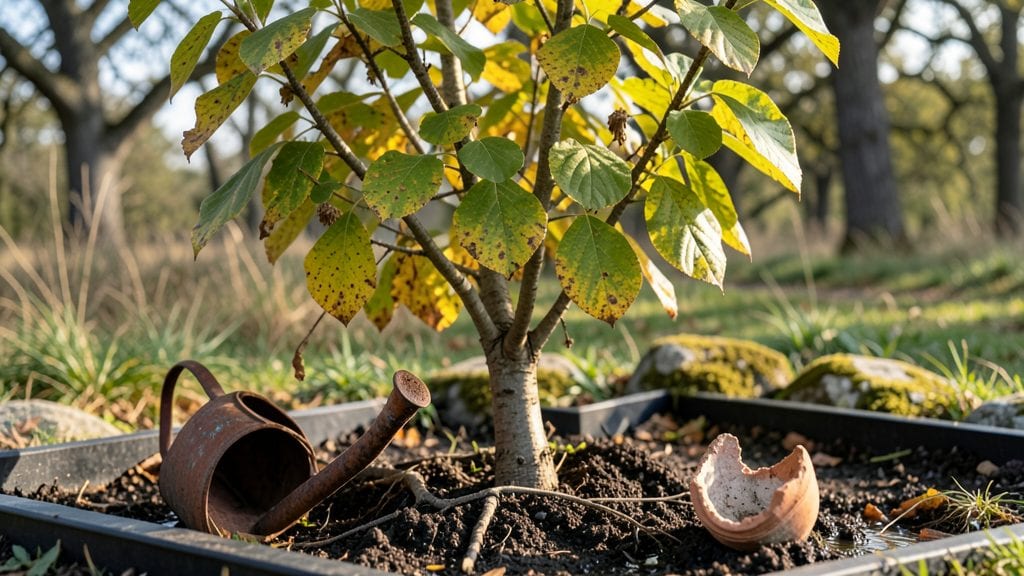
When your dogwood tree's leaves turn yellow and droop despite your best efforts, you're likely dealing with overwatering. 🌿 I've nursed back more soggy roots than I care to admit, and the difference between a soggy mess and a thriving tree comes down to drainage, timing, and knowing when to step back.
Most people water dogwoods like they're thirsty houseplants—daily drenchings leave roots drowning in their own soggy soil. The fix starts with checking the soil: stick your finger in 2-3 inches deep—if it's damp, wait.
Dogwoods prefer consistently moist soil, not swampy conditions, and they hate sitting in water for more than a few hours.
Within 2-3 weeks of adjusting your watering, you'll see new growth pushing through as roots recover. The key is less frequent, deeper watering—think of it like giving your tree a long drink instead of a quick sip every day. Mulch helps too, keeping moisture steady without suffocating roots.
This works for both young saplings and mature trees—just scale the water volume. The first step is always stopping the damage, but with the right care, your dogwood will bounce back stronger than ever. Let's get those roots breathing again.
The Hidden Triggers Behind Soggy Roots
Dogwood trees (Cornus florida) are stunning spring bloomers, but their delicate root systems make them extra vulnerable to overwatering. Unlike drought-tolerant species, dogwoods thrive in well-draining soil—when water pools around their roots, a cascade of problems begins.
Understanding the root causes (literally!) helps you adjust care before it’s too late.
Dogwood trees despise compacted or clay-heavy soil, which acts like a sponge, trapping excess moisture. Here’s why this happens:
- Clay soil: Particles pack tightly, blocking oxygen flow to roots. Water sits instead of draining, suffocating fine root hairs that absorb nutrients. 🔬 Test your soil: Dig a 6-inch hole—if water pools in 10 minutes, drainage is poor.
- Organic buildup: Over time, decomposed leaves or mulch (especially thick layers) create a waterproof barrier. Mulch should be 2–3 inches deep, not piled against the trunk.
- Improper planting depth: Burying the root flare (where roots meet the trunk) too deep traps water against the base. Dogwood roots need airflow—plant so the flare is level with or slightly above ground.
💡 Pro Tip: Amend heavy soil with compost or coarse sand (50/50 mix) to improve drainage. For clay, consider gypsum (calcium sulfate) to break up particles over time.
Dogwoods need consistent moisture but hate soggy feet. Common watering mistakes include:
- Ignoring soil moisture: Watering on a schedule (e.g., every Tuesday) instead of checking soil. Use your finger—top 1–2 inches should dry out between waterings.
- Slow-draining irrigation: Sprinklers or drip systems that run too long or lack proper spacing can create waterlogged "pockets" around the base.
- Watering at the wrong time: Early morning is ideal (allows foliage to dry), but evening watering keeps leaves damp overnight, promoting fungal diseases like anthracnose.
🌡️ Warning Signs: Yellowing leaves, wilting despite wet soil, or a sour, rotten smell at the base signal overwatering. Act fast—root rot spreads in as little as 3–5 days.
Dogwoods planted in small or containerized holes have limited room to spread roots, leading to water pooling. Key issues:
- Tight planting holes: A hole twice as wide as the root ball is standard, but backfilling with clay or unamended soil restricts drainage.
- Urban environments: Sidewalks, patios, or hard surfaces prevent roots from expanding outward, forcing them to grow shallow and dense—where water collects.
- Root-bound trees: Balled-and-burlapped dogwoods with circular roots (from nursery pots) struggle to adapt. Score the root ball before planting to encourage outward growth.
✨ Solution: Loosen soil 12–18 inches deep around the planting area and mix in perlite or orchard sand to improve aeration.
Dogwoods planted in low-lying areas or near downspouts become chronic waterlogging zones. Other overlooked factors:
- No slope: Water naturally pools in depressions. Grade soil so it slopes away from the trunk (1 inch per foot).
- Blocked drainage paths: Gutters, French drains, or buried pipes can redirect water directly onto roots.
- No aeration: Compacted soil from foot traffic or heavy machinery crushes roots, reducing their ability to process oxygen and water.
🔥 Quick Fix: Use a soil aerator (manual or rented) to create 1-inch-deep holes in compacted areas. For slopes, install a swale (shallow trench) to divert water.
Fixing Overwatered Dogwood Trees
Now that you understand why overwatering harms your dogwood, let’s roll up our sleeves and get your tree back on track! The good news? With the right steps, you can reverse root rot and help your dogwood thrive again.
Below, we’ll break down solutions by cause—so you can target the exact issue plaguing your tree.
Cause: Excessive moisture suffocates roots, leading to rot. Fix:
- Pause watering for at least 3–5 days to let the soil dry out. This is critical—don’t skip it!
- If the ground is soggy, test moisture by sticking your finger 2–3 inches deep. If it’s damp, wait longer.
- Avoid rainwater pooling around the base. Use a shovel to create shallow trenches (1–2 inches deep) around the tree to redirect water away from the trunk.
Pro Tip: 💡 If your dogwood is in a pot, lift it and check the roots. Healthy roots are firm and white; mushy or black roots need trimming (see Step 3).
Cause: Compacted or clay-heavy soil traps water, worsening rot. Fix:
- Aerate the soil with a garden fork or tiller (gently!) to break up compacted areas around the roots.
- Amend the soil with organic matter:
- Mix in compost, peat moss, or perlite (1 part amendment to 3 parts soil).
- For heavy clay, add sand or coconut coir to improve drainage.
- Raise the tree’s base slightly (if in the ground) by mounding amended soil around the trunk, but never cover the root flare (the swollen area at the base).
Pro Tip: 🌡️ Ideal soil for dogwoods should drain within 1–2 hours after watering. If it pools, you’re not there yet!
Cause: Rotten roots can’t recover without intervention. Fix:
- Inspect roots carefully. Healthy roots are white or tan; black, mushy, or hollow roots are rotten.
- Trim affected roots with sterilized pruners (wipe with rubbing alcohol between cuts). Cut at a 45-degree angle, ¼ inch above the rot.
- Do not over-prune—remove only what’s clearly dead. The goal is to save as much root structure as possible.
- Dust cuts with cinnamon or sulfur (natural fungicides) to prevent further infection.
Warning: ⚠️ Only prune roots if you’re comfortable digging. If the rot is severe, consider calling an arborist.
Cause: Inconsistent watering leads to cycles of drought and over-saturation. Fix:
- Water deeply but infrequently:
- 1–1.5 inches per week (including rain) is ideal for dogwoods.
- Use a soaker hose or drip irrigation to deliver water slowly to the root zone (6–12 inches from the trunk).
- Water in the morning to allow foliage to dry, reducing fungal risks.
- Avoid wetting the leaves—aim for the soil only.
Pro Tip: 🎯 Install a rain gauge or use a tuna can buried near the tree to track watering accurately.
Cause: Stressed trees need extra nutrients and protection. Fix:
- Fertilize lightly (if needed) with a balanced, slow-release fertilizer (10-10-10 or similar) in early spring. Avoid high-nitrogen fertilizers—they encourage leafy growth but weaken roots.
- Mulch correctly:
- Apply 2–3 inches of organic mulch (wood chips, shredded bark) in a 3-foot-wide ring around the tree.
- Keep mulch 6 inches away from the trunk to prevent rot.
- Monitor for pests (like borers or scale) that may exploit a weakened tree. Treat with neem oil if needed.
Pro Tip: ✨ Dogwoods love well-draining, slightly acidic soil (pH 5.0–6.5). Test your soil with a DIY kit and adjust with sulfur (to lower pH) or lime (to raise it) if necessary.
Once your dogwood is on the mend, prevent future overwatering with these habits:
- Check soil moisture before watering—stick your finger in or use a moisture meter.
- Upgrade your irrigation—if you’re using sprinklers, switch to drip systems for targeted watering.
- Plant in the right spot—dogwoods thrive in partial shade (they hate soggy, low-lying areas).
- Group plants with similar needs—avoid planting dogwoods near thirsty shrubs that demand constant watering.
- Inspect annually—look for yellowing leaves, wilting, or mushrooms at the base (a red flag for rot).
Final Thought: 🌟 Recovery takes time, but with patience, your dogwood can bounce back—especially if you catch the problem early. Stay consistent with these steps, and your tree will reward you with stunning blooms for years to come!
Frequently asked questions about reviving an overwatered dogwood
Why do my dogwood leaves turn yellow even when the soil seems wet?
Yellow leaves on wet soil signal root rot from overwatering. Dogwoods need moist but well-aerated soil—when roots suffocate, they can't absorb nutrients, causing yellowing. Check for a sour smell at the base or mushrooms growing nearby, which confirm rot. The fix starts with stopping water immediately and improving drainage.
How long does it take for a dogwood to recover from overwatering?
With proper care, you’ll see improvement in 2-4 weeks, but full recovery can take 3-6 months. Stop watering for 3-5 days first, then adjust to deep watering every 7-10 days. New growth appears once roots start healing—look for fresh leaves at branch tips. Patience is key!
Can I save a dogwood with black, mushy roots?
Yes, but act fast! Trim all black/mushy roots with sterilized pruners, then dust cuts with cinnamon or sulfur to prevent further rot. Repot or replant in well-draining soil (mix compost with perlite). Avoid watering for 5 days to let roots recover. If over 50% of roots are rotten, consult an arborist.
Is mulch causing my dogwood’s waterlogging issues?
Only if it’s piled too thick (more than 3 inches) or touching the trunk. Mulch should form a 2-3 inch layer 6 inches away from the base. Too much mulch blocks airflow and traps moisture. For recovery, remove excess mulch and create a 1-inch gap between mulch and trunk.
What’s the best soil mix to prevent future overwatering?
Use a blend of 50% native soil, 30% compost, and 20% perlite or coarse sand. Dogwoods thrive in slightly acidic, well-draining soil (pH 5.0–6.5). Test your soil—if it’s heavy clay, add gypsum to improve drainage. Avoid compacted soil by aerating annually with a garden fork.