Watering
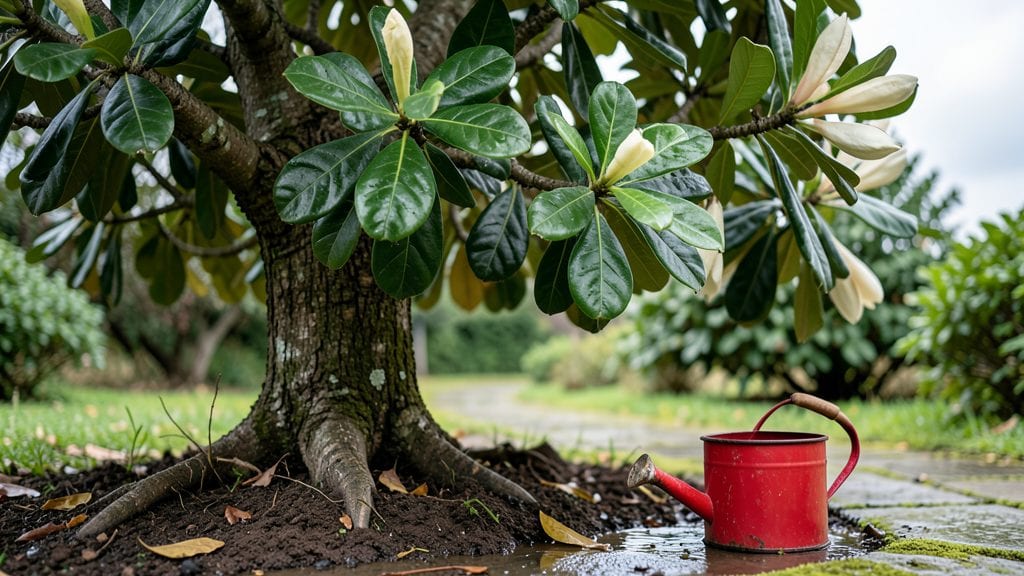
Your magnolia tree’s yellow leaves and soggy soil aren’t a death sentence—just a cry for help. 🌿 Overwatering turns lush magnolias into sad, droopy shadows by starving roots of oxygen and inviting rot.
I’ve nursed back three of these beauties from the brink, and the fix starts with cutting back on water and giving roots room to breathe.
The damage often begins with overzealous watering—especially in clay soil or containers without drainage. Roots smothered in wetness can’t absorb nutrients, leading to yellowing leaves, wilting, or even blackened stems.
The good news? Magnolias bounce back fast once you adjust: water only when the top 6 inches of soil feel dry, and always check for drainage holes in pots.
Within 2-3 weeks, you’ll see fresh green leaves pushing out as roots recover. Mulch helps retain just enough moisture while preventing compaction, and a soil test reveals if your mix is too dense.
Prune any mushy roots or dead branches to redirect energy to healthy growth—your tree will thank you with bold new blooms next spring.
This works for both southern magnolias and saucer magnolias, though saucer types need slightly drier soil. The key is patience: roots heal faster than you’d expect, but rushing back to heavy watering undoes all progress. Let’s turn that sad specimen into a showstopper again.
Root Causes Of Excess Moisture
When your magnolia tree starts showing signs of distress—like yellowing leaves, wilting branches, or a mushy trunk—it’s often a cry for help from too much water. But why does this happen in the first place?
Overwatering isn’t just about pouring too much H₂O at once; it’s a mix of environmental, soil, and human factors that create the perfect storm for root suffocation. Let’s break down the science behind the soggy soil.
Magnolias thrive in well-draining soil, but if your garden bed or container mix holds water like a sponge, roots can’t breathe. Here’s why this happens:
- Clay-heavy soil: Clay particles pack tightly, leaving tiny air pockets for roots. Water seeps in slowly but drains out just as sluggishly, creating a waterlogged zone. Test it: Grab a handful of damp soil—if it forms a tight ball that doesn’t crumble, you’ve got clay.
- Compacted soil: Foot traffic, heavy machinery, or even natural settling can compress soil, reducing porosity. Roots suffocate because water and oxygen can’t circulate. Fix it: Aerate the soil with a garden fork or add organic matter (like compost) to loosen it up.
- Container gardening pitfalls: Cheap pots with drainage holes that clog or soil-less mixes (like pure peat) can trap moisture. Even "self-watering" containers can overdo it if not monitored.
💡 Pro Tip: Amend heavy soil with coarse sand, perlite, or pine bark fines to improve drainage. For containers, use a mix of 60% potting soil, 20% perlite, and 20% compost—this mimics the airy, well-draining conditions magnolias love.
Mother Nature (or your hose) can deliver more water than your magnolia’s roots can handle. Here’s how excess moisture piles up:
- Frequent or heavy rainfall: Magnolias in humid climates (like the Southeast U.S.) may not need extra watering if rain is consistent. But if downpours follow droughts, soil can become waterlogged overnight, drowning roots.
- Automatic sprinklers on a schedule: Timers don’t account for weather. A 1-inch weekly watering rule (including rain) is a guideline—but if it’s been raining, your system might be overdoing it.
- Surface water pooling: Sloped yards or low-lying areas cause water to pool around the base, preventing evaporation. Roots in standing water can’t access oxygen, leading to anaerobic conditions (a fancy term for "rot city").
✨ Actionable Fix: Install a soil moisture sensor ($20–$50) to avoid guesswork. For sloped areas, create a 6-inch-high berm of soil around the tree’s drip line to redirect water away.
Magnolia roots are sensitive to consistent moisture, not just volume. Here’s how their biology backfires when overwatered:
- Shallow root systems: Young magnolias develop roots in the top 12–18 inches of soil. If this zone stays soggy, roots can’t explore deeper for oxygen and nutrients, leading to stunted growth.
- Fungal infections thrive: Waterlogged soil creates the ideal environment for Phytophthora (a root-rot fungus) and Pythium. These pathogens clog root cells, blocking water and nutrient uptake.
- Oxygen deprivation: Roots need oxygen to respire (yes, they "breathe"!). In waterlogged soil, oxygen levels drop to 5% or lower (healthy soil has 10–20%). Without it, roots literally suffocate.
🔥 Warning Sign: If you dig near the roots and smell rotten eggs (hydrogen sulfide), your tree is in anaerobic distress—act fast with soil aeration and fungicide.
Even well-meaning gardeners can drown their magnolias. Common blunders include:
- Watering on a schedule, not by need: Magnolias in partial shade need 30–50% less water than sun-loving plants. A stick-in-the-soil test (push a dowel 6 inches deep—if it’s dry, water; if damp, wait) beats calendar-based watering.
- Using the wrong watering method: A gentle soaker hose (0.5–1 GPM) is better than a high-pressure sprinkler, which can compact soil and waste water.
- Ignoring mulch depth: Mulch should be 2–4 inches deep—any thicker, and it traps moisture against the trunk, causing rot.
🎯 Golden Rule: Water deeply but infrequently. Aim for 1–1.5 inches per week (including rain) and let the top 2–3 inches of soil dry out between waterings.
Fixing Overwatered Magnolia Trees
If your magnolia tree is suffering from overwatering, the good news is that with the right steps, you can nurse it back to health—and even prevent future issues. Below are targeted solutions based on the root cause of your tree’s distress, along with practical tips to get it thriving again.
Before making any other changes, halt all watering. Overwatering is often a habit, and giving the roots time to dry out is the first critical fix. Let the soil’s moisture levels stabilize naturally for at least 3–5 days.
This pause helps prevent further root rot and allows excess water to evaporate or drain away.
Poor drainage is the #1 culprit behind overwatered magnolias. Here’s how to address it:
🔧 Fix Compacted or Clay Soil
If your magnolia’s soil feels dense or stays soggy after rain, it’s likely compacted or high in clay. To fix this:
- Amend the soil with organic matter like compost, peat moss, or aged bark. Mix in 2–3 inches of amendments into the top 12 inches of soil around the tree’s drip line.
- Consider raised beds if your yard has heavy clay. Planting the magnolia in a slightly elevated area (or a raised bed) encourages better water runoff.
- Install drainage tiles if water pools near the base. Bury perforated pipes around the root zone and slope them away from the tree to redirect excess water.
🌡️ Check for Waterlogging
If your magnolia sits in a low spot where water collects, create a gentle slope (1–2 inches per foot) away from the tree using soil or mulch. This redirects water and prevents future soggy roots.
Overwatering weakens roots and causes yellowing leaves. Prune strategically to help the tree recover:
✂️ Trim Affected Leaves
Remove only the yellow or brown leaves—never prune healthy green foliage. Use clean, sharp pruners to avoid spreading disease. Focus on leaves with signs of rot or fungal spots (like black or mushy patches).
🔪 Root Pruning (For Severe Cases)
If the tree’s roots are visibly rotting (dark, mushy, or smelling foul), carefully prune away the damaged sections with sterilized tools. Do this only if the tree is in immediate danger—otherwise, let the roots recover naturally. Avoid over-pruning, as healthy roots are essential for recovery.
Once the soil has dried out, restart watering with a consistent but conservative approach. Magnolias prefer:
- Deep, infrequent watering (1–1.5 inches per week, including rain). Water slowly at the base until the soil is moist 6 inches down.
- Avoid wetting the foliage to prevent fungal diseases like powdery mildew.
- Use a moisture meter or the "finger test" (stick your finger 2–3 inches into the soil; if it’s damp, wait before watering again).
💡 Pro Tip: Water in the early morning to reduce evaporation and fungal risks. If you must water in the evening, do so at least 3 hours before sunset.
Mulch helps regulate soil moisture and temperature, but too much mulch can suffocate roots. Follow these guidelines:
- Apply a 2–3 inch layer of organic mulch (like pine straw or shredded bark) around the tree’s base, keeping it 6 inches away from the trunk.
- Avoid volcanic mulching (piling mulch up against the trunk), as this traps moisture and promotes rot.
- Replenish mulch annually to maintain its protective layer.
If your magnolia shows signs of root rot or fungal diseases (like black spots on leaves or a foul odor), take action:
- Apply a fungicide labeled for root rot or fungal leaf spots (e.g., copper fungicide or neem oil). Follow the instructions carefully.
- Improve air circulation by pruning dense branches and spacing plants appropriately.
- Disinfect tools with rubbing alcohol after pruning to prevent spreading spores.
Once your magnolia is on the mend, keep these habits to avoid overwatering again:
- Test your soil annually to monitor drainage and pH. Magnolias prefer slightly acidic soil (pH 5.0–6.0).
- Choose the right location: Plant magnolias in areas with well-draining soil and partial shade (especially in hot climates).
- Monitor weather patterns: Adjust watering during heavy rains or prolonged humidity. A rain gauge helps track natural water input.
- Mulch correctly: Use mulch as a soil conditioner, not a water-retention tool.
- Inspect regularly: Check for yellowing leaves, mushy stems, or wilting branches early—catching issues before they worsen is key!
✨ Bonus Tip: If your magnolia is in a container, ensure the pot has drainage holes and use a fast-draining potting mix (like a 60/40 blend of pine bark and peat moss). Empty saucers after watering to prevent root suffocation.
With these steps, your magnolia should show signs of recovery within a few weeks—think new green leaves and firmer stems. Patience is key, but consistent care will help your tree bounce back stronger than ever!
Frequently asked questions
Why do my magnolia leaves turn yellow when overwatered?
Yellowing leaves signal oxygen-starved roots. Overwatering forces roots to suffocate in soggy soil, preventing nutrient uptake. Check for mushy brown roots—if present, reduce watering immediately and improve drainage.
How often should I water a magnolia tree?
Water deeply but infrequently—about 1–1.5 inches per week (including rain). Let the top 2–3 inches of soil dry out between waterings. Use the "finger test": stick your finger in the soil; if damp, wait.
Can I save a magnolia with root rot from overwatering?
Yes, but act fast! Prune mushy roots, improve drainage, and apply fungicide (like copper-based treatments). Stop watering for 3–5 days to let soil dry, then resume with a moisture meter to avoid future issues.
What’s the best mulch for preventing overwatering?
Use 2–3 inches of organic mulch (pine straw or shredded bark) but keep it 6 inches away from the trunk. Avoid "volcanic mulching" (piling mulch against the trunk)—this traps moisture and worsens rot.
Will my magnolia recover if I stop overwatering?
With proper care, magnolias bounce back within 2–4 weeks. Focus on drainage, prune dead leaves, and monitor soil moisture. New green leaves will appear as roots recover and regain oxygen access.