
Watering
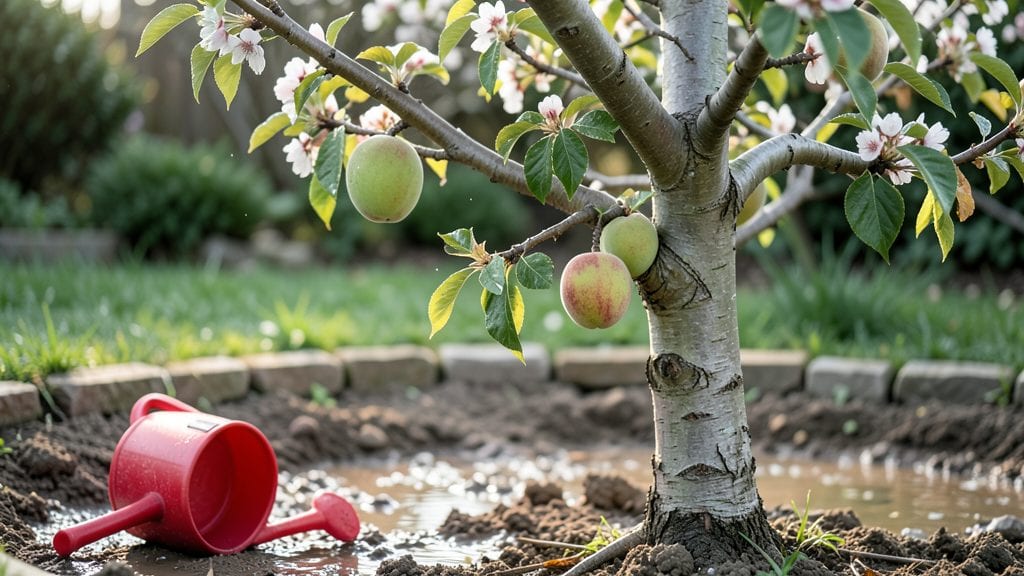
My peach tree’s yellow leaves and mushy roots taught me the hard way that peach trees hate soggy feet. 🌱 Overwatering turns peach trees into sad, droopy shadows instead of the productive trees we dream of—root rot sets in, leaves yellow, and fruit production tanks.
I’ve nursed back three trees from this exact mess, and the fixes aren’t complicated once you know what to watch for.
The problem starts when soil stays waterlogged for days, cutting off oxygen to roots. Peach trees need well-draining soil that dries out between waterings—think sandy loam, not clay.
I switched to a 50/50 mix of native soil and composted pine bark, added a 4-inch layer of wood chips for mulch, and now my tree’s roots breathe properly. The key? Water deeply but only when the top 2 inches of soil feel dry—stick your finger in to check.
Once you catch it early, recovery is about drainage first, pruning second. Trim back any blackened or soft roots with clean shears, then let the soil dry out completely before watering again.
Within 4-6 weeks, new green leaves should appear as the tree focuses energy on healthy growth. The fruit won’t be as heavy that first season, but the tree’s foundation is now solid.
Prevention is easier than rescue: test your soil’s drainage, avoid overhead watering, and prune roots if your yard has compacted clay. My tree’s now thriving, and I’ve got a foolproof schedule for summer watering—no more guessing. Here’s exactly how to spot the signs and fix it before it’s too late.
Root of the Problem
Understanding why your peach tree is drowning in excess water starts with the science of soil, roots, and plant physiology. Overwatering isn’t just about giving your tree too much water—it’s about disrupting the delicate balance of oxygen, nutrients, and microbial life in the root zone.
Let’s break down the key culprits behind this common (but preventable) issue.
Peach trees thrive in well-draining soil with a mix of sand, silt, and organic matter. When soil is too dense—whether from clay, compacted earth, or improper amendments—water pools around roots instead of draining away.
This creates anaerobic conditions (low oxygen), which suffocates roots and triggers: - Root rot fungi (Phytophthora spp., Pythium spp.), which thrive in waterlogged soil. - Bacterial infections like Erwinia, which exploit stressed roots. - Nutrient lockout: Excess water leaches away essential minerals (nitrogen, phosphorus, potassium) before roots can absorb them.
💡 Pro Tip: Test your soil’s drainage by digging a 12-inch hole, filling it with water, and timing how long it takes to drain. If it takes more than 6 hours, your soil is too compacted. Amend with compost, perlite, or coarse sand to improve aeration.
Peach trees are drought-tolerant once established (after 2–3 years), but many gardeners overcompensate by watering on a rigid schedule—even when rain or soil moisture levels suggest otherwise. Key triggers include: - Ignoring soil moisture: Sticking your finger 1–2 inches deep into the soil is more accurate than guessing.
If it’s damp, hold off! - Automatic irrigation: Sprinklers or drip systems left on timers can deliver 2–3x more water than needed, especially in humid climates. - Post-rain watering: Many gardeners water immediately after rainfall, doubling the moisture load.
⚠️ Warning Sign: Yellowing leaves with wilting despite wet soil? That’s a red flag for overwatering. Healthy peach trees should have slightly crispy leaf edges (a sign of thirst) before wilting.
Potted peach trees (or those in raised beds) are far more vulnerable to overwatering because:
- Limited root space: Roots fill the container quickly, leaving no room for excess water to escape.
- Slow evaporation: Containers retain moisture longer than in-ground soil, especially in plastic or glazed pots.
- Poor pot material: Terracotta breathes better than plastic, but even it can’t compensate for no drainage holes.
🔥 Fix It: Use fast-draining potting mix (50% inorganic like perlite + 50% organic) and elevate pots to improve airflow. Water only when the top 1–2 inches of soil are bone-dry.
Healthy soil is a bustling ecosystem of aerobic bacteria, fungi, and mycorrhizal networks that help roots absorb water and nutrients.
Overwatering disrupts this balance by: - Promoting anaerobic microbes that produce toxic byproducts (e.g., methane, hydrogen sulfide), which damage roots. - Washing away beneficial microbes like Pseudomonas spp., which suppress pathogens. - Encouraging slime-producing bacteria that clog soil pores, further reducing drainage.
🌡️ Science Check: Soil oxygen levels drop below 10% in waterlogged conditions—roots need at least 15% oxygen to survive. Without it, they starve and rot.
Not all overwatering is your fault—sometimes, Mother Nature teams up against your peach tree: - Heavy rainfall + high humidity: If your area gets >1 inch of rain per week, cut back on supplemental watering. - Low-lying or swampy areas: Peach trees hate "wet feet."
If your yard pools water after rain, raise the planting mound or install a French drain. - Mulch gone wild: Too much mulch (especially thick layers) can smother roots and trap moisture. Keep mulch 2–3 inches deep and 3 inches away from the trunk.
✨ Quick Fix: After heavy rain, aerate compacted soil with a garden fork to help it dry faster.
Revive Your Peach Tree Now
Overwatering can turn your peach tree from a thriving fruit-bearing beauty into a sad, droopy mess—but don’t worry! With the right steps, you can nurse it back to health and prevent future waterlogging woes.
Below, we’ll tackle the most common signs of overwatering and match them with practical fixes, plus pro tips to keep your tree happy long-term.
Cause: Too much water suffocates roots, cutting off oxygen and nutrients, leading to yellowing leaves (chlorosis) and weak stems.
How to Fix It:
- 🔥 Stop Watering Immediately Let the soil dry out completely before watering again. Stick your finger 2–3 inches deep—if it’s damp, wait another day.
- 👨🍳 Improve Drainage Fast
- For potted peach trees: Move to a pot with drainage holes (if not already) and repot in well-draining soil mix (50% potting soil, 30% perlite, 20% compost).
- For in-ground trees: Amend the soil with coarse sand, perlite, or grit around the root zone to loosen compacted earth.
- 🌡️ Adjust Your Watering Schedule Peach trees need deep, infrequent watering—about 1–1.5 inches per week (including rain). Water early in the morning to reduce evaporation and fungal risks.
💡 Prevention Tip: Install a soil moisture meter to avoid guesswork. Most peach trees prefer slightly dry soil over soggy conditions.
Cause: Waterlogged soil creates the perfect breeding ground for root rot (Phytophthora) and fungal diseases like brown rot, causing black, mushy roots and leaf drop.
How to Fix It:
- ⏰ Prune Damaged Roots & Foliage
- Carefully dig around the root ball (if possible) and trim any black, soft, or smelly roots with sterilized pruners.
- Remove yellow or brown leaves to redirect the tree’s energy to healthy growth.
- 🔪 Apply Fungicide (If Needed) Spray the tree and soil with a copper-based fungicide or hydrogen peroxide (3%) to kill fungi. Reapply every 7–10 days for severe cases.
- 🥗 Boost Soil Health
- Mix 1 part compost with 2 parts native soil around the root zone to improve aeration.
- Add mycorrhizal fungi (available as a powder) to help roots recover faster.
🎯 Prevention Tip: Mulch 2–3 inches thick with wood chips or straw, keeping it 6 inches away from the trunk to prevent moisture buildup.
Cause: Heavy clay or poorly draining soil traps excess moisture, even after you adjust watering habits.
How to Fix It:
- 🔥 Dig a Drainage Trench (For In-Ground Trees)
- Dig a 6-inch-deep trench 1–2 feet away from the tree’s drip line.
- Fill it with gravel or crushed stone to redirect water away from roots.
- 🍳 Raise the Tree’s Base (For Potted Trees)
- Place the pot on elevated feet or a saucer filled with gravel to prevent water pooling.
- If the tree is in-ground, consider mounding soil around the base to create a slight slope for runoff.
- 🌱 Choose the Right Soil Mix Peach trees thrive in sandy loam with a pH of 6.0–7.0. If your soil is heavy clay:
- Test it with a soil kit (available at garden centers).
- Amend it with gypsum (for clay) or peat moss (for sandy soil).
✨ Pro Tip: Plant peach trees on a slight slope (if possible) to encourage natural drainage. Avoid low-lying areas where water pools.
Once your peach tree is on the mend, keep it thriving with these monthly habits:
- 📊 Water deeply but less often (check soil moisture weekly).
- 🌿 Prune in late winter to improve airflow and sunlight penetration.
- 🍎 Fertilize in early spring with a balanced 10-10-10 fertilizer (avoid high-nitrogen in summer).
- 🐛 Monitor for pests (aphids, borers) that thrive in stressed trees.
Remember: Recovery takes time—be patient! With the right adjustments, your peach tree will bounce back stronger, and you’ll enjoy juicy peaches for years to come. 🍑💚
Frequently asked questions
How do I know if my peach tree is overwatered vs. underwatered?
Check the soil moisture first—stick your finger 2 inches deep. Overwatered trees have yellow leaves with wilting despite wet soil, while underwatered trees show crispy brown edges and dry soil. Root rot (black, mushy roots) confirms overwatering. For peach trees, slightly dry soil is normal between waterings.
Can I save a peach tree with root rot from overwatering?
Yes, but act fast! Prune all black/mushy roots with sterilized shears, improve drainage (add coarse sand or gravel), and let soil dry completely. Apply a copper fungicide to prevent spread. Recovery takes 4-6 weeks—be patient and avoid watering until new growth appears.
What’s the best soil mix to prevent overwatering in peach trees?
Use a 50/50 blend of native soil and organic matter (compost or pine bark) with 20% perlite or coarse sand for aeration. For containers, add extra perlite (30%) to prevent waterlogging. Test drainage by filling a hole—water should drain in less than 6 hours.
How often should I water a peach tree in summer?
Water deeply 1-2 times per week (1–1.5 inches total), but check soil first. Mature trees need less frequent watering than young ones. Early morning watering reduces evaporation and fungal risks. Avoid overhead sprinklers—they promote leaf diseases.
Will mulch help or hurt my overwatered peach tree?
Mulch helps only if used correctly: keep it 2–3 inches thick and 3+ inches from the trunk. Too much mulch traps moisture. Use wood chips or straw—never plastic or dense materials. This improves soil structure while preventing water pooling.