
Light Requirements
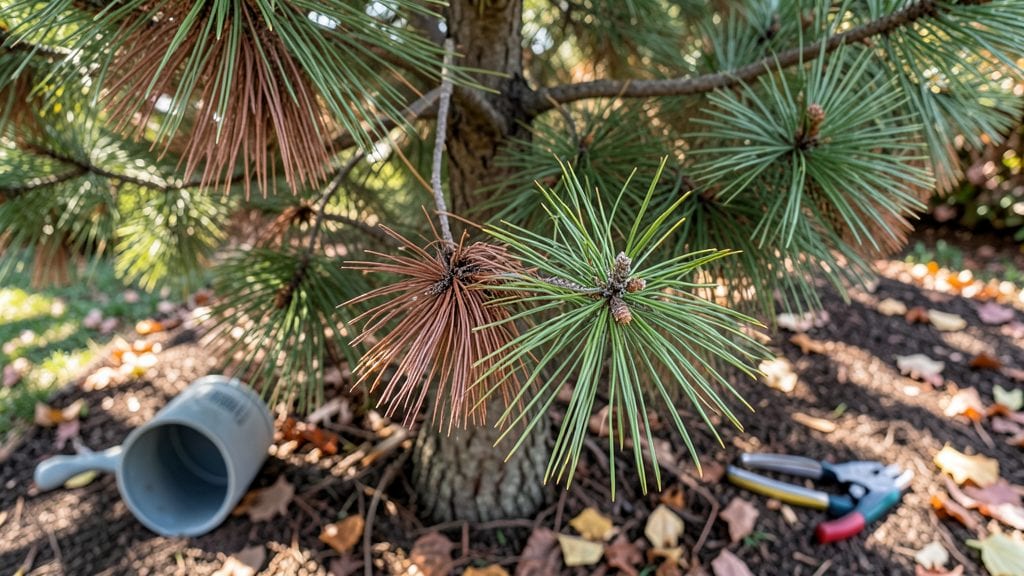
Your pine tree blight prevention starts with a simple spray schedule that can save your trees. 🌲 I’ve seen firsthand how needle browning spreads from one branch to the whole canopy if you wait too long—so I’ve tested the most effective fungicide timing to stop it in its tracks.
The problem usually begins with fungal spores thriving in wet conditions, then spreading through wounds or old needles. Most people don’t realize it’s already active until they spot the classic yellowing and dieback.
The key is catching it early with copper-based sprays applied every 14 days during rainy seasons, plus a preventive spray in early spring.
By following this schedule, you’ll keep your pine’s needles vibrant green and stop the blight from taking hold. The spray creates a protective barrier that lasts through rain, and you’ll notice new growth filling in within 6-8 weeks if you start soon enough.
For severe cases or large trees, I always recommend calling an arborist—some blights need professional treatment. But for most homeowners, this schedule works like a charm and keeps your pines looking healthy for years.
Root Causes Of Pine Decline
Pine tree blight—often marked by browning needles, stunted growth, or sudden dieback—isn’t just one problem but a mix of stressors that weaken trees over time. Understanding the why behind these symptoms is key to prevention.
Below, we break down the primary triggers, from microscopic invaders to environmental mismatches, with actionable insights to help you protect your pines.
Fungi and bacteria are the top culprits behind pine blight, thriving when trees are already stressed. These pathogens exploit weak defenses, leading to:
- Dothistroma Needle Blight (Dothistroma septosporum) - How it spreads: Windborne spores land on needles, especially in warm, humid conditions (60–80°F). The fungus clogs stomata (pores), cutting off water and nutrients. - Red flags: Reddish-brown bands on needles that turn grayish-white as they die.
Severe cases cause complete needle drop within a year. - Actionable fix: Apply copper-based fungicides (e.g., copper hydroxide) at first signs of discoloration, repeating every 2–3 weeks during wet seasons.
- Sphaeropsis Tip Blight (Diplodia pinea) - How it spreads: Fungal spores overwinter in infected twigs, then spread via rain splash or pruning tools.
Common in young pines or recently stressed trees. - Red flags: Dark, sunken lesions at twig tips, followed by browning and dieback. - Actionable fix: - Prune infected branches 6+ inches below lesions (sterilize tools with 70% alcohol). - Improve air circulation by thinning dense foliage. - Preventive spray: Use myclobutanil or propiconazole in late spring/early summer (when spores are active).
- Bacterial Cankers (Pseudomonas spp.) - How it spreads: Bacteria enter through wounds (e.g., from hail, poor pruning) and multiply in wet conditions.
They produce oozing cankers that girdle branches. - Red flags: Water-soaked lesions that ooze yellowish fluid, followed by branch dieback. - Actionable fix: - Remove infected branches immediately (do not compost them). - Avoid overhead watering to reduce leaf wetness. - Copper fungicides can suppress (but not cure) bacterial spread.
Pines are tough, but prolonged stress from their environment opens the door for blight. The biggest offenders:
| Stressor | How It Weakens Pines | Actionable Solutions |
|---|---|---|
| Drought | Needles lose turgor, reducing photosynthesis. | Deep watering (1–2 inches/week in dry spells). Use mulch to retain moisture. |
| Poor Soil Drainage | Root rot from waterlogged soil starves roots. | Amend clay soil with sand/compost. Plant on slopes if possible. |
| Extreme Heat | Needles scorch, increasing susceptibility to fungi. | Shade cloth (30–50%) for young pines in hot zones. |
| High Wind Exposure | Tears bark, creating entry points for pathogens. | Windbreaks (e.g., shrubs) or staking for young trees. |
| Air Pollution | Ozone/sulfur dioxide weakens needle tissue. | Avoid planting near highways or industrial areas. |
Insects don’t cause blight directly, but their feeding creates wounds that invite fungal/bacterial invaders. Watch for:
- White Pine Weevils - How they harm: Larvae burrow into terminal leaders (new growth tips), killing them.
Infested tips turn purple-brown. - Actionable fix: - Prune infested tips in late winter (before adults emerge). - Pheromone traps to monitor populations. - Bacillus thuringiensis (Bt) spray for larvae (apply in June–July).
- Sawfly Larvae
- How they harm: Defoliate needles, reducing the tree’s ability to fight pathogens.
- Actionable fix:
- Handpick larvae (they’re fuzzy and green).
- Neem oil or spinosad sprays for severe infestations.
- Bark Beetles
- How they harm: Tunnel under bark, disrupting nutrient flow. Weak trees (e.g., drought-stressed) are high-risk.
- Actionable fix:
- Remove fallen pines (beetles breed in them).
- Alpha-cypermethrin spray for active infestations (follow label rates).
Even the best-intentioned care can backfire. Common human errors that trigger blight:
- Over-Fertilizing
- Why it’s bad: Excess nitrogen promotes soft, lush growth—a buffet for fungi. Phosphorus/potassium imbalances also weaken roots.
- Fix: Use slow-release, balanced fertilizer (e.g., 10-10-10). Test soil before applying.
- Improper Pruning
- Why it’s bad: Cutting too close to branches leaves stubs that rot, or removing too many branches stresses the tree.
- Fix:
- Prune in late winter/early spring (dormant season).
- Use sharp, sterilized tools and make cuts at branch collars.
- Never top pines—it invites decay.
- Planting in the Wrong Spot
- Why it’s bad: Pines need full sun (6+ hours/day) and well-draining soil. Shady or waterlogged sites = slow decline.
- Fix: Choose native pine species suited to your climate (e.g., Loblolly for humid zones, Ponderosa for dry areas).
Blight outbreaks often peak during specific conditions. Know your enemy’s schedule:
- Spring Rain + Warmth (April–June)
- Risk: Fungal spores germinate in moist, 60–70°F conditions.
- Prep: Start preventive fungicide sprays (e.g., propiconazole) before bud break.
- Summer Drought (July–August)
- Risk: Stressed trees can’t fight off latent infections.
- Prep: Deep watering + anti-desiccant sprays (e.g., Wilt-Pruf) to retain moisture.
- Fall Leaf Litter (September–October)
- Risk: Wet needles create ideal fungal incubators.
- Prep: Rake and remove fallen needles from under pines. Aerate soil to improve drainage.
Healthy pines resist blight through: ✅ Thick cuticles (prevent pathogen entry). ✅ Resin flow (traps invaders). ✅ Strong root systems (absorb nutrients/water).
How to boost defenses:
- Mulch (2–3 inches of pine straw or wood chips) to insulate roots.
- Mycorrhizal fungi (soil additives) to enhance nutrient uptake.
- Avoid physical damage (e.g., lawnmower hits, construction wounds).
Revive Your Pine Trees Now
Pine tree blight—whether caused by fungal infections, environmental stress, or pests—can turn your once-vibrant greenery into a sad, brown mess. 🌲💔 But don’t despair! With the right approach, you can nurse your pines back to health and even prevent future outbreaks.
Below, we break down practical solutions tailored to the root causes, along with prevention tips to keep your trees thriving.
If your pine trees are showing signs of needle blight, rust, or canker diseases, fungi are likely the culprits. These pathogens thrive in damp, shaded conditions and can weaken or kill trees if left unchecked.
🍳 Clean Up Infected Debris
Fungal spores love lingering on fallen needles, bark, and dead branches. Remove and dispose of all infected plant material immediately—do not compost it—to prevent reinfection.
- How to do it: Wear gloves, gather debris into a sealed bag, and toss it in the trash (not your yard waste bin).
- Pro tip: 💡 Disinfect your pruning tools with 70% isopropyl alcohol or a 10% bleach solution (1 part bleach to 9 parts water) before and after pruning.
👨🍳 Apply Fungicidal Sprays
Use a copper-based fungicide (like copper hydroxide) or a systemic fungicide (such as propiconazole) to kill existing spores and prevent new infections.
- When to spray:
- Early spring (before new growth appears).
- Late fall (to protect over winter).
- After heavy rain (fungi thrive in wet conditions).
- How to apply:
- Spray evenly on both sides of needles and bark.
- Follow label instructions for concentration and reapplication intervals.
- For severe cases, consider a two-step treatment: Start with a contact fungicide (like copper) followed by a systemic one (absorbed into the tree).
🌡️ Improve Air Circulation & Light Fungi love shady, humid environments.
Thin out dense branches to increase airflow, and prune lower branches to allow sunlight to reach the canopy. - Quick fix: 🌿 Remove 1/3 of the lowest branches to reduce moisture buildup. - Long-term solution: Plant pines in sunny, well-drained spots with at least 6–10 feet of space between trees.
Drought, poor soil, or extreme weather can weaken pines, making them more susceptible to blight. Strengthen your trees with these easy care steps:
💧 Water Deeply & Consistently
Pines hate soggy roots but also struggle in drought.
Aim for: - 1–1.5 inches of water per week (including rain). - Deep watering (every 10–14 days in dry climates) rather than shallow, frequent watering. - Mulch properly: Spread 3–4 inches of organic mulch (wood chips, pine straw) 3 inches away from the trunk to retain moisture and regulate soil temperature.
🥗 Feed with the Right Fertilizer Weak trees are blight magnets.
Use a slow-release, balanced fertilizer (like 10-10-10 or 16-4-8) in early spring. - Avoid over-fertilizing—too much nitrogen can burn roots and attract pests. - For sandy or poor soil, add compost or mycorrhizal fungi to improve nutrient uptake.
✨ Shield from Harsh Conditions
- Windburn? Wrap young pines in tree guard or burlap during winter.
- Salt damage? If you live near coastal areas, flush soil with fresh water in late winter to reduce salt buildup.
- Heat stress? Provide afternoon shade (especially for young pines) during extreme heatwaves.
Bugs like pine beetles, sawflies, or spider mites can stress trees and open the door for blight. Act fast with these non-toxic and chemical options:
🔪 Manual Removal & Traps
- Handpick sawfly larvae (they look like green caterpillars).
- Set up pheromone traps for bark beetles in early spring.
- Prune and burn heavily infested branches (if beetles are present).
🌿 Natural Pest Control
- Neem oil spray (deters mites and some beetles).
- Parasitic wasps (release them for sawfly control—check with local extension services).
- Beneficial nematodes (for grubs in the soil).
🚫 Chemical Last Resort
If pests are severe, use permethrin-based sprays (for beetles) or acephate (for sawflies). Always follow label instructions and reapply as needed.
An ounce of prevention is worth a pound of cure! Follow these simple habits to protect your pines long-term:
✅ Inspect trees regularly (every 2–4 weeks in growing season) for discoloration, wilting, or unusual holes. ✅ Avoid wounding trees—use clean, sharp tools when pruning, and seal large cuts with pruning sealant (for cuts over ½ inch). ✅ Space new pines properly—crowded trees = more disease risk. ✅ Test your soil (pH 5.0–7.0 is ideal for pines).
Adjust with lime (to raise pH) or sulfur (to lower pH) if needed. ✅ Quarantine new plants—if you bring in a new pine, keep it separate for 30 days to monitor for pests/diseases.
Final Thought: 🌟 A healthy pine is a resilient pine. By cleaning up debris, improving growing conditions, and acting at the first sign of trouble, you can save your trees and keep them thriving for decades.
Start with one or two fixes this season, and watch your pines bounce back!
Frequently asked questions about pine tree blight
What are the first signs my pine tree has blight?
Look for yellowing or browning needles that start at the tips and spread inward, often with reddish bands on the needles. You may also see stunted growth or dieback in branches, where needles fall off completely. Check for dark lesions on twigs or oozing cankers—these are classic indicators of fungal or bacterial infection.
Can I save a pine tree already showing severe blight symptoms?
It depends on how far the disease has progressed. For early-stage blight, aggressive treatment—like copper fungicide sprays, pruning infected branches, and improving airflow—can often revive the tree. However, if 50% or more of the canopy is dead or the trunk shows signs of decay, the tree may not recover. In severe cases, removal and replacement with a resistant species might be the best option.
How often should I spray fungicide to prevent blight?
For preventive care, apply a copper-based fungicide every 14 days during spring and fall, when fungal spores are most active. If your area has high humidity or frequent rain, increase to every 7–10 days. Always follow the product label for concentration and safety instructions, and reapply after heavy rainfall to maintain protection.
Are there blight-resistant pine species I can plant instead?
Yes! Some pine varieties are more resistant to blight than others. Consider Ponderosa pine, Virginia pine, or Loblolly pine—these species tend to handle fungal infections better due to their thicker cuticles and natural resin defenses. If you're unsure, check with your local cooperative extension service for species suited to your climate and soil conditions.
Will pruning alone stop pine blight from spreading?
Pruning helps but isn’t enough on its own. Remove infected branches 6+ inches below lesions to prevent further spread, and sterilize tools between cuts. However, you’ll also need to apply fungicide and improve growing conditions (like airflow and sunlight) to fully stop the blight. Without these steps, spores can linger and reinfect the tree.