
Trees
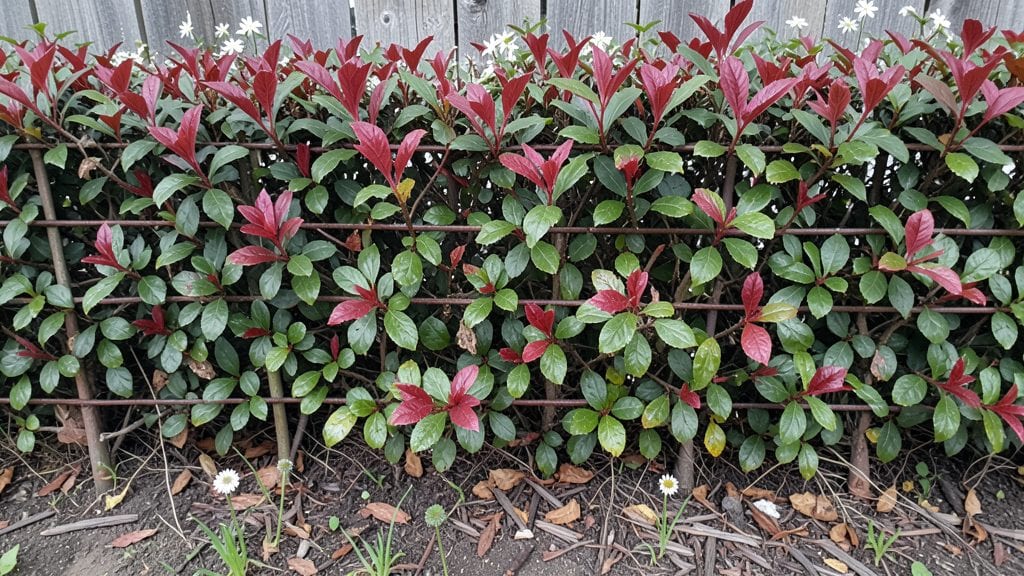
The Photinia 'Red Robin' trees I planted last spring now form a lush, burgundy-green wall that makes my backyard feel like a private sanctuary. 🌿 Their vibrant foliage stays striking year-round, and the pleached design creates that classic, formal look without needing a hedge row.
What makes these trees special is how they combine bold color with practical privacy—something many shrubs can’t do.
These trees thrive in full sun to partial shade and handle most soil types, though they prefer well-draining earth. The pleaching technique—training branches horizontally to form a flat, living fence—takes patience, but the results are worth it.
You’ll need strong branches, proper spacing (6-8 feet apart), and regular pruning to keep the shape tight and the foliage dense. Once established, they grow about 2 feet per year, so you’ll see that privacy screen take shape faster than you’d expect.
By summer, your pleached Photinia will be a glossy, jewel-toned barrier that catches the light beautifully. The deep red new growth contrasts sharply with the older leaves, creating a dynamic display that turns heads.
Plus, they’re tough enough to handle urban pollution and occasional drought once rooted in. The only trade-off? They can get heavy—so plan for sturdy support if you’re pleaching them high.
Perfect for formal gardens, property lines, or anywhere you want structure and color. Just remember: the key to keeping them vibrant is consistent watering and annual pruning to remove dead wood. With these trees, you get both beauty and function—without the fuss of traditional hedges.
📚 In This Guide
- What you need
- Instructions
- Tips and common mistakes
- Wrapping up and next steps
What you need
- ● Photinia Red Robin Trees: 10–20 young trees (3–5 ft tall), depending on desired screen height and length. Choose healthy, straight-stemmed saplings with vibrant red foliage.
- ● Stakes (4–6 ft long): 10–20 wooden or metal stakes (1-inch diameter) for support.
- ● Twine or Tree Ties: 50–100 ft of biodegradable twine or soft tree ties (1–2 inches wide) for pleaching.
- ○ Soil Amendments (optional but recommended): Compost (5–10 bags, 40 lbs each) for nutrient-rich planting soil.
- ● Slow-release fertilizer (e.g., 10-10-10, 5 lbs) to boost early growth.
- ● Shovel or Spade: 1 medium-sized digging tool for planting.
- ● Pruning Shears: Sharp, clean shears for trimming and shaping.
- ● Measuring Tape: 25 ft for spacing and layout.
- ● Gloves (gardening): 1 pair for protection.
- ● Watering Can or Hose: For immediate post-planting hydration.
- ● Mulch (2–3 cubic yards): Pine bark or shredded wood to retain moisture and suppress weeds.
- ● Drip Irrigation Kit: For consistent watering during establishment.
- ● Post-Hole Digger: If stakes need deeper anchoring.
- ● Plant Food Spikes: For gradual nutrient release.
Step-by-step instructions for planting pleached Photinia red robin trees
Here’s how to create a lush, year-round privacy screen with these striking evergreens.
🌱 Step 1: Choose the Perfect Planting Location
Photinia Red Robin thrives in full sun to partial shade, but for the boldest red foliage, aim for at least 6 hours of direct sunlight daily. Avoid low-lying areas where cold air settles—these trees need good air circulation to prevent fungal issues. I like to mark the planting spots with stakes before digging, especially if I’m working with a team.
Check the pH of your soil—Photinia prefers slightly acidic to neutral (6.0-7.0). If your soil tests higher, mix in 2-3 inches of peat moss into the planting hole to adjust the pH gently. The trees will reward you with glossy, deep red leaves that pop against any landscape.
🪴 Step 2: Dig Holes and Prepare the Soil
Dig holes twice as wide as the root ball and as deep to accommodate the entire root system without bending the roots. I always loosen the sides of the hole with a shovel to encourage root spread into the surrounding soil. If your soil is heavy clay, amend the hole with a 50/50 mix of native soil and compost to improve drainage.
Place each tree in the hole and adjust the depth so the top of the root ball sits level with the ground—never bury the trunk. Tap the soil lightly around the roots to remove air pockets, then water deeply to settle everything. You’ll know it’s right when the soil looks evenly moist but not soggy.
☀️ Step 3: Space and Stake for Long-Term Stability
Space the trees 6-8 feet apart for a dense, natural-looking screen. For pleached (lattice-style) training, plant them closer (4-6 feet) and weave the branches together as they grow. Use 2-3 stakes per tree, positioned 6-12 inches from the trunk and tied loosely with soft tree ties—tighten only enough to support the tree without restricting growth.
Mulch around the base with 2-3 inches of shredded bark or wood chips, keeping it 6 inches away from the trunk to prevent rot. Water deeply again to help the roots establish. The first few weeks are critical—keep the soil consistently moist but not waterlogged.
✂️ Step 4: Prune and Train for a Pleached Look
Prune in late winter or early spring before new growth starts. Remove any dead, crossing, or weak branches first. For pleaching, select 4-6 strong branches per tree and weave them through adjacent trees to create a lattice effect. Secure the branches with soft ties and trim the ends to encourage bushier growth.
Watch for suckers at the base—remove them promptly to keep energy focused on the main structure. Thin out crowded branches inside the screen to improve airflow and reduce disease risk. You’ll see the pleached design take shape within 2-3 years with consistent training.
💧 Step 5: Maintain Through the Seasons
Water deeply once a week during the first growing season, then taper to every 2 weeks once established. Photinia Red Robin is drought-tolerant once mature, but young trees need consistent moisture. You’ll know they’re happy when new growth is vibrant and leaves stay deep red year-round.
Fertilize in early spring with a balanced, slow-release fertilizer (10-10-10) to support new growth. Avoid heavy nitrogen—it can reduce the striking red foliage color. Monitor for aphids or spider mites, which love the tender new growth, and treat with neem oil if needed.
Tips & tricks for perfect pleached Photinia red robin trees
Creating that stunning pleached design takes patience and a few key tricks to ensure your Photinia Red Robin trees thrive and develop beautifully.
Sunlight Secret: While Photinia Red Robin tolerates partial shade, the boldest red foliage comes from at least 6 hours of direct sunlight daily. I've noticed the deepest red hues appear on trees planted in full sun locations—worth the extra effort for that showstopping color! Position your trees where they'll get morning sun and afternoon shade if needed, especially in hotter climates.
Soil Prep Strategy: Before planting, test your soil pH—Photinia prefers 6.0-7.0. If your soil tests higher, mix 2-3 inches of peat moss into the planting hole to adjust it gently. For heavy clay soil, create a 50/50 mix of native soil and compost in the hole—this improves drainage and gives roots a better start. I've seen trees planted in unamended clay struggle with root rot, so this step is worth the extra time.
Pleaching Technique: When training for the lattice effect, select 4-6 strong branches per tree and weave them through adjacent trees. Use soft ties to secure branches without restricting growth—tighten just enough to hold them in place. Trim the ends to encourage bushier growth, and you'll see the pleached design take shape within 2-3 years with consistent training. The key is patience and gentle handling of the branches.
Watering Wisdom: During the first growing season, water deeply once a week to establish strong root systems. After that, you can taper to every 2 weeks once established. I've learned the hard way that overwatering can lead to root rot—always ensure the soil is moist but not waterlogged. The vibrant red leaves are your best indicator of happy, healthy trees!
Pro Tips for Pleached Photinia Red Robin Trees
- Creating that stunning pleached design takes patience and a few key tricks to ensure your Photinia Red Robin trees thrive and develop beautifully.
- Sunlight Secret: While Photinia Red Robin tolerates partial shade, the boldest red foliage comes from at least 6 hours of direct sunlight daily.
- Soil Prep Strategy: Before planting, test your soil pH—Photinia prefers 6.0-7.0.
Frequently asked questions
Got questions about pleached Photinia 'Red Robin' trees? You’re not alone! Here are some of the most common inquiries—and their answers—to help you make the best decisions for your privacy screen.
How fast do pleached Photinia 'Red Robin' trees grow?
These trees grow at a moderate pace, typically adding 12–24 inches per year under ideal conditions. With proper care, they can reach 6–10 feet tall in 3–5 years, making them a great choice for quick privacy. Patience is key—full maturity (12+ feet) may take 5–7 years.
Are pleached Photinia 'Red Robin' trees cold-hardy?
Yes! They thrive in USDA Zones 7–10, handling temperatures down to 0°F (-18°C). In colder zones, plant them in sheltered spots and mulch heavily in winter. Young trees may need winter protection (burlap wraps) until established.
What’s the best time to prune pleached Photinia 'Red Robin'?
Prune late winter or early spring (before new growth starts) to shape the pleached design. Avoid heavy pruning in fall, as it can stimulate tender new growth vulnerable to frost. Light trimming to remove dead branches can happen anytime.
Do these trees attract pests or diseases?
While generally low-maintenance, they can attract aphids, scale, or spider mites if stressed. Yellowing leaves may signal entomosporium fungus—prune infected branches immediately and avoid overhead watering. Healthy trees with good airflow stay resilient!
Can I use alternatives if 'Red Robin' isn’t available?
Consider:
- Photinia 'Fraternity' – Similar pleaching, slightly larger.
- Ligustrum 'Wurtz' – Faster-growing, but less vibrant foliage.
- Ilex 'Green Lustre' – Evergreen, but needs male/female pairs for berries.
Wrapping up and next steps
Transforming your outdoor space with Pleached Photinia Red Robin trees is a smart, stylish choice that delivers year-round privacy and stunning visual appeal. Their glossy, deep red foliage (and even brighter new growth!) ensures your garden stays vibrant, while their low-maintenance nature makes them a breeze to care for.
Whether you’re lining a fence, framing a patio, or adding height to a hedge, these trees are your go-to for effortless elegance.
Ready to elevate your landscape? Start by selecting your plants—whether from a local nursery or online—and sketch a simple plan for placement. With the right spacing and care, you’ll enjoy lush, living privacy in no time! 🌿✨