
Trees
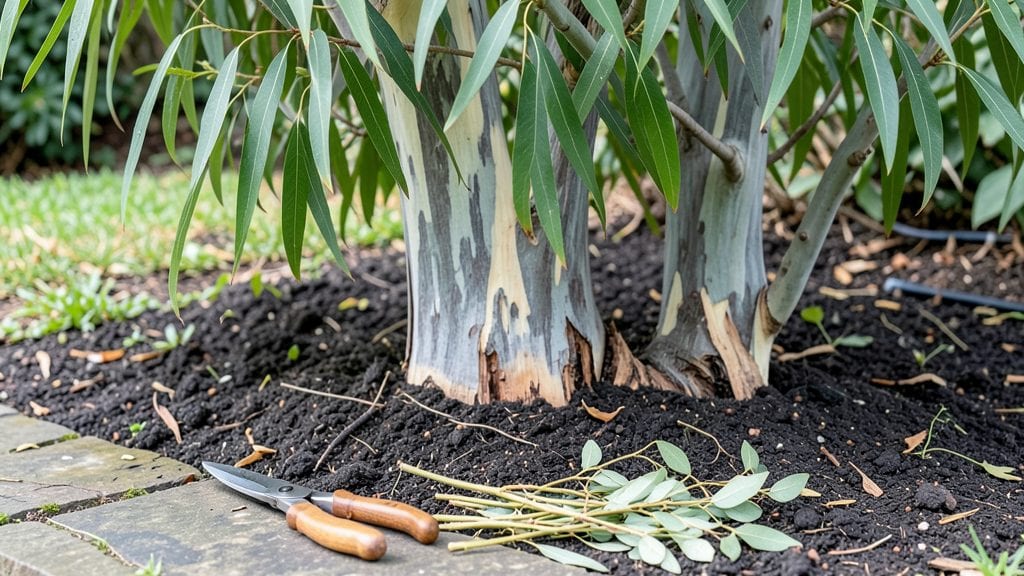
Pollarding eucalyptus trees transforms them into dramatically bushier, more manageable specimens—something I learned the hard way after watching a 20-foot tree crowd out my patio. The key isn’t just cutting branches; it’s mastering the timing, technique, and aftercare to trigger that thick, velvety regrowth eucalyptus is famous for.
Most gardeners shy away because of the sap mess, but once you see the results—dense foliage year-round and a tree that stays in bounds—you’ll never prune the old way again.
You’ll need sharp pruning shears or a chainsaw for larger branches, thick gloves to handle the sticky sap, and a ladder if your tree’s over 15 feet tall. The best time to pollard is late winter or early spring, right before new growth starts.
That’s when the tree’s energy shifts from storage to fresh shoots, making regrowth faster and stronger. And here’s the secret weapon: wrap cuts with tree wound dressing to slow sap flow and protect the tree from pests sneaking in through fresh wounds.
After pollarding, your tree will look like it’s been hit by a storm—but within 6-8 weeks, you’ll see fat, vibrant new shoots emerging from the cut stumps. These shoots should be 6-12 inches long before you trim them back again to encourage branching.
The first year might look sparse, but by year two, you’ll have a tree that’s thicker at the base and fuller at the top, with minimal height gain. That’s the pollarding magic: controlling size while boosting density.
Where most guides stop, I’ll share the tricks I’ve learned from three failed attempts: how to angle cuts properly to avoid water pooling, when to avoid pollarding if your tree’s under stress, and how to spot root suckers that steal energy from your main tree.
This isn’t just pruning—it’s a long-term relationship with your eucalyptus that pays off in shade, privacy, and that signature eucalyptus fragrance without the wild, unruly growth.
📚 In This Guide
- What you need
- Instructions
- Tips and common mistakes
- Wrapping up and next steps
What you need
- ● Pruning saw or handsaw: Heavy-duty, 20-24" blade (for thick branches). Opt for a bow saw for precision cuts.
- ● Loppers: Bypass pruners with 8-10" cutting capacity (for smaller branches). Choose ratchet-style loppers for extra leverage.
- ● Pruning shears: Sharp, bypass-style (for fine-tuning cuts on twigs). Bypass blades prevent crushing.
- ● Safety gear: Work gloves (cut-resistant, heavy-duty)
- ● Safety goggles (ANSI-rated)
- ● Ear protection (if using a chainsaw)
- ● Ladder or lift: Sturdy, extendable (16-20' height). Ensure it’s weight-rated for you + tools.
- ● Rope or harness: For securing the ladder or climbing (if needed). Use a tree-climbing harness for tall trees.
- ● Disinfectant: 70% isopropyl alcohol or pruning sealant (to sterilize tools between cuts).
- ● Heavy-duty trash bags: 30+ gallon capacity (for debris disposal).
- ● Chainsaw: Gas-powered, 16-20" bar (for very thick branches—2"+ diameter).
- ● Pole saw: Extendable, 4-6' reach (for high branches without a ladder).
- ● Pruning paint: Tree wound dressing (to seal cuts and reduce disease risk).
- ○ Wheelbarrow: For hauling heavy debris (optional but game-changing for large jobs!).
- ● Marking spray: Biodegradable (to outline cuts before sawing).
- ● Weather check: Pollard on a dry, calm day. Avoid windy or rainy conditions.
- ● Safety briefing: Review tree hazard zones (power lines, structures, etc.).
- ● Tool sharpening: Hone blades before starting—dull tools tear wood and increase injury risk.
- ● Clear workspace: Remove tripping hazards (rocks, toys, pets) from the area.
- ● Tree health assessment: Inspect the eucalyptus for disease, pests, or dead branches before pollarding.
Instructions for pollarding eucalyptus trees
The key to pollarding lies in timing and precision—cut at the right moment to spur vigorous regrowth.
Identify the Correct Pollarding Season
Pollard eucalyptus trees between late winter and early spring, just as new buds begin to swell but before active growth resumes. This timing—typically February to March in most climates—ensures the tree has stored enough energy to regenerate. Avoid pollarding after summer growth, as the tree won’t have enough reserves to support new shoots.
Look for bud swell along the main stems as your cue. The bark will appear slightly puffy where new growth is about to emerge. If you miss this window, wait until the following year—pollarding outside this period stresses the tree and reduces regrowth quality.
Gather Tools and Prepare the Work Area
Use a sharp pruning saw for larger branches and bypass pruners for smaller stems. Sanitize your tools with rubbing alcohol before and after use to prevent disease transmission between cuts. Clear the area of debris and lay down a tarp to catch fallen branches—eucalyptus leaves and bark can be slippery when wet.
Wear gloves and safety glasses—eucalyptus branches are brittle and can snap back unpredictably. If the tree is tall, use a pruning pole with a saw attachment to avoid climbing. Never pollard from a ladder unless absolutely necessary, as eucalyptus limbs are prone to sudden breakage.
Locate and Mark the Pollarding Points
Pollard eucalyptus at a height of 6 to 8 feet above the ground, or at the top of the trunk if the tree is naturally shorter. This height encourages a dense, manageable canopy while allowing sunlight to reach the lower branches. Use a measuring tape to mark the exact spot with flagging tape or a temporary marker.
Look for lateral buds just below the marked point—these will sprout into new shoots after pruning. Avoid cutting directly above a bud, as this can lead to uneven regrowth. If no buds are visible, make your cut slightly higher to ensure at least one bud remains intact.
Make the Clean, Precise Cuts
Start by removing all branches and stems back to the pollarding point, cutting just above a lateral bud or at a 45-degree angle if no buds are present. Use the saw for thicker branches and pruners for smaller stems. Cut cleanly—ragged edges invite disease and slow healing. Discard all removed branches immediately to prevent pests from infesting the area.
Step back and assess the tree’s silhouette. The goal is to leave a rounded, open structure with multiple buds exposed to sunlight. If the tree looks top-heavy after pruning, consider thinning additional branches to distribute weight evenly. Never remove more than one-third of the canopy in a single session.
Monitor Regrowth and Maintain the Shape
Within 4 to 6 weeks, you’ll see new shoots emerge from the lateral buds. Thin these to 3 to 5 strong stems per branch, removing weaker growth to encourage thicker, healthier regrowth. Water the base of the tree deeply after pruning to reduce stress, but avoid overwatering—eucalyptus roots need excellent drainage.
Repeat the pollarding process every 2 to 3 years to maintain the tree’s shape and promote year-round growth. Over time, the tree will develop a distinctive, multi-stemmed silhouette with dense foliage at the top. If regrowth is sparse, adjust your timing or consider fertilizing with a balanced, slow-release fertilizer in early spring.
Tips & tricks for perfect pollarding eucalyptus trees
Timing and precision are everything when pollarding eucalyptus—these insights will help you achieve vigorous regrowth and maintain your tree's health for years.
Seasonal Precision: The late winter to early spring window (February to March) is non-negotiable for optimal results. I've seen trees stressed from pollarding outside this period show stunted growth for up to two years. If you miss this window, wait until the following year—rushing the process can deplete the tree's energy reserves. Look for that telltale bud swell along the main stems, where the bark appears slightly puffy—this is your definitive cue that the tree is ready.
Tool Sanitation and Safety: Never underestimate the importance of clean tools. I've learned this the hard way after seeing fungal infections spread between cuts. Always sanitize your pruning saw and bypass pruners with rubbing alcohol before and after use, especially when working with multiple trees. Safety is equally critical—eucalyptus branches are notorious for their brittleness. I recommend using a pruning pole with a saw attachment for taller trees rather than risking a ladder, which can lead to dangerous situations when branches snap unexpectedly.
Strategic Cutting Angles: When making your cuts in Step 4, precision matters more than you might think. Always cut just above a lateral bud or at a 45-degree angle if no buds are visible. This technique ensures new shoots will emerge from the exact location you want. I've found that making clean cuts with sharp tools prevents ragged edges that can invite disease—this small detail makes a big difference in long-term tree health.
Post-Pruning Care: After pollarding, the tree's recovery phase begins immediately. Within 4 to 6 weeks, you'll see new shoots emerge, but don't let them grow unchecked. Thin these to 3 to 5 strong stems per branch to encourage thicker, healthier regrowth. I've noticed that trees with too many competing shoots often produce weaker, less vigorous growth. Deep watering after pruning helps reduce stress, but remember—eucalyptus roots need excellent drainage, so avoid overwatering.
Pro Tips for Pollarding Eucalyptus Trees
- Timing and precision are everything when pollarding eucalyptus—these insights will help you achieve vigorous regrowth and maintain your tree's health for years.
- Seasonal Precision: The late winter to early spring window (February to March) is non-negotiable for optimal results.
- Tool Sanitation and Safety: Never underestimate the importance of clean tools.
Frequently asked questions
Got questions about pollarding eucalyptus trees?
Here are answers to the most common ones to help you get started confidently!
What’s the best time of year to pollard a eucalyptus tree?
Pollard eucalyptus trees in late winter or early spring (just before new growth starts). This timing ensures the tree has energy to regrow while avoiding harsh winter stress. Avoid pollarding in summer or fall, as the tree may struggle to recover before dormancy.
How often should I pollard my eucalyptus tree?
Pollard eucalyptus trees every 1–3 years, depending on growth rate and desired shape. Young trees may need more frequent pruning (every 1–2 years), while mature trees can handle longer intervals. Always remove no more than 25% of the canopy per year to avoid stress.
Can I pollard a eucalyptus tree without professional help?
Yes! With the right tools (pruners, loppers, chainsaw) and safety gear (gloves, goggles), you can DIY pollarding. However, for large or high branches, hiring a certified arborist ensures safety and precision. Never attempt it alone if the tree is over 30 feet tall!
What if my eucalyptus tree isn’t growing back after pollarding?
If regrowth is slow or nonexistent, check for over-pruning, disease, or pest damage. Ensure you left 2–4 strong buds above the cut and avoided sealing wounds with paint/sealant (let them heal naturally). If issues persist, consult an arborist to rule out root or soil problems.
Are there alternatives to pollarding for managing eucalyptus size?
Yes! For less aggressive control, try crown thinning (removing inner branches) or selective pruning (trimming only problematic limbs). However, pollarding is best for long-term shape control and stimulating dense foliage. Avoid topping (cutting flat across), as it weakens the tree.
Wrapping up and next steps
Pollarding eucalyptus trees isn’t just about shaping—it’s about revitalizing your landscape with sustainable, year-round beauty. 🌿 By mastering the right techniques, timing, and tools, you can encourage healthier growth, reduce fire risks, and even harvest valuable wood.
Whether you're a seasoned gardener or a curious beginner, the key is patience and precision!
Ready to transform your eucalyptus into a thriving, pollarded masterpiece? Start small: pick one tree, gather your tools, and dive in! With each cut, you’re not just pruning—you’re investing in a greener, more resilient future.