
Trees
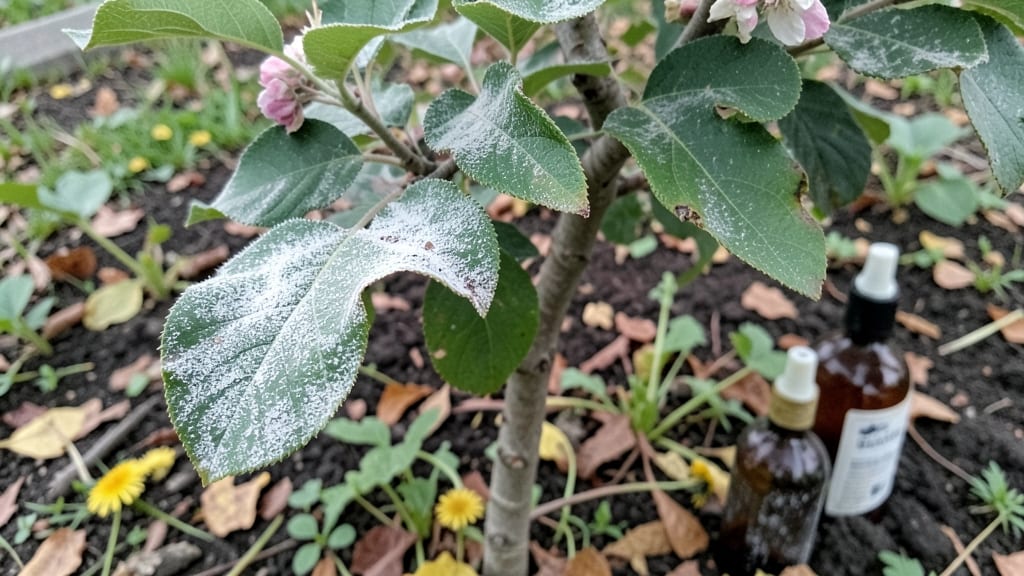
That white powder on your tree leaves isn’t dust—it’s powdery mildew, and the right powdery mildew treatment for trees could save your apple trees before it’s too late. 🌿 I’ve battled this fungal nightmare on mine, and I learned the hard way that waiting too long means stripping branches bare. by summer.
The good news? A fast-acting organic spray can turn things around in just 7-10 days if you catch it early.
Most people reach for chemical fungicides, but I found the best results with a baking soda and horticultural oil mix—it's cheap, non-toxic, and works on everything from maples to roses.
The key is timing: spray when leaves are dry but humidity is high (early morning or evening), and repeat every 7-10 days until new growth appears. My trees went from looking like they'd been dusted with flour to vibrant green in under two weeks.
You'll see the mildew recede within days, but don't stop there—the real secret is prevention. Prune for airflow, water at the base (never overhead), and apply a preventive spray every 2-3 weeks during humid seasons.
The first spray is your fastest defense, but consistency keeps it from coming back year after year.
For stubborn cases or large trees, professional help might be worth it—especially if you're dealing with valuable specimens like fruit trees. But for most backyard trees, this organic method works just as fast as chemicals without the risks. Let's get those leaves clean and thriving again.
The Hidden Triggers Behind Tree Mildew
Powdery mildew isn’t just a random nuisance—it’s a fungal party that thrives on specific conditions. Understanding why it happens is the first step to stopping it in its tracks.
Below, we break down the science behind the chaos, so you can outsmart this sneaky fungus before it takes over your trees.
Powdery mildew loves wet environments, but it doesn’t need standing water—just prolonged humidity. Here’s how it works:
- High humidity (70%+): The fungus’s spores germinate best when the air is thick with moisture. Think of it like a sauna for mildew—ideal for growth but terrible for trees.
- Poor air circulation: Dense foliage or tight tree spacing traps humid air, creating the perfect breeding ground. Even a single night of heavy dew can kickstart an outbreak.
- Morning dew: While dew itself isn’t the enemy, if it lingers for hours (especially on leaves), it keeps surfaces damp long enough for spores to colonize.
Actionable insight: If your trees are in a shaded, enclosed area (like a courtyard or between buildings), mildew will hit harder. Prune strategically to improve airflow—even just thinning out branches can make a difference.
Healthy trees resist mildew better, but when they’re stressed, they become easy targets. Common stressors include:
| Stressor | How It Helps Mildew |
|---|---|
| Nutrient deficiencies | Weak leaves can’t produce enough protective waxes, making them vulnerable to fungal attachment. |
| Competition for water | Drought-stressed trees produce thinner, more delicate leaves—perfect landing pads for spores. |
| Root damage (e.g., construction, compacted soil) | Poor root health = weakened immune response. The tree can’t fight off invaders as effectively. |
| Pests (e.g., aphids, spider mites) | Pest damage creates open wounds where mildew spores can latch on and spread unchecked. |
Pro tip: 🌡️ Test your soil to check for nutrient imbalances (like low nitrogen or phosphorus). A simple at-home kit or lab test can reveal what your tree needs to bounce back.
Not all trees are created equal when it comes to mildew resistance. Some are naturally more vulnerable due to:
- Thin leaf cuticles: Species like apple, rose, and lilac have delicate leaves that mildew spores can penetrate easily.
- Fast growth: Rapidly growing trees (e.g., peach, grape, or honeylocust) produce tender new leaves that mildew loves to infect.
- Genetic predisposition: Some cultivars are bred for beauty over resilience—think weeping willows or ornamental cherries.
Key takeaway: If you’re planting new trees, opt for mildew-resistant varieties (e.g., serviceberry, oak, or hackberry). For existing trees, focus on preventative care to reduce their susceptibility.
Powdery mildew isn’t a winter fungus—it thrives in temperature swings. Here’s the science:
- Daytime warmth (60–85°F): Encourages fungal spores to germinate and grow rapidly.
- Nighttime cooling (below 60°F): Slows the tree’s natural defenses, making it easier for mildew to take hold.
- Early spring/late summer: These transitions are peak mildew seasons because the temperature seesaws create ideal conditions.
Why it matters: If your area has hot, humid summers followed by cool, damp evenings, you’re in the danger zone. Keep an eye on weather forecasts—if the pattern repeats, treat proactively.
Now that you know why mildew strikes, the next step is how to fight back—without harsh chemicals. Stay tuned!
Effective Treatments for Fungal Foes
Powdery mildew may seem like a stubborn foe, but with the right strategies, you can restore your trees to their lush, healthy glory. Below are targeted solutions for common causes—each paired with a straightforward fix to stop the fungus in its tracks.
Plus, we’ll share prevention tips to keep mildew from creeping back.
Cause: Dense foliage traps moisture, creating the perfect mildew buffet. Fix: Open up the canopy and improve airflow.
Step 1: Prune Strategically 🔪
Remove 10–20% of the thickest branches to allow sunlight and air to circulate. Focus on:
- Dead or crossing branches (they block airflow)
- Inner branches that cast too much shade
- Overgrown suckers at the base
Pro Tip: Prune in early morning when humidity is lower to reduce stress on the tree. 🌞
Step 2: Thin Out Mulch 🌱
Mulch should form a 2–4 inch layer—no thicker! Excess mulch holds moisture against the trunk, inviting mildew. Use:
- Wood chips or straw (avoid fresh bark mulch, which can mat)
- Keep mulch 6 inches away from the trunk
Prevention: Space trees 8–10 feet apart (depending on the species) to prevent future overcrowding. 📏
Cause: Wet leaves for prolonged periods = mildew party time. Fix: Adjust your watering habits and protect foliage.
Step 1: Water at the Right Time ⏰
Water deeply but infrequently—aim for:
- Early morning (before 10 AM) to let leaves dry by nightfall
- Drip irrigation (avoids wetting foliage)
- Soaker hoses for slow, targeted hydration
Pro Tip: If rain is forecast, skip watering 24–48 hours beforehand to prevent soggy leaves. 🌧️
Step 2: Improve Drainage 🏗️
If your soil stays waterlogged:
- Amend with compost or sand to improve aeration
- Consider raising the tree’s root zone with a small mound of soil
- Install French drains if water pools around the base
Prevention: Use fungicide sprays (like neem oil or potassium bicarbonate) before heavy rain seasons. 🛡️
Cause: Stressed trees with low nitrogen or potassium are mildew magnets. Fix: Feed your trees the right nutrients to build resilience.
Step 1: Soil Test First 📊
Test your soil’s pH and nutrient levels—most trees thrive in slightly acidic to neutral soil (pH 6.0–7.0). Adjust with:
- Lime (to raise pH)
- Sulfur or peat moss (to lower pH)
Step 2: Fertilize Smartly 🌿
Use a balanced, slow-release fertilizer (like 10-10-10) in early spring. For extra defense:
- Potassium-rich fertilizers (e.g., greensand or wood ash) boost fungal resistance
- Avoid high-nitrogen fertilizers in late summer—they encourage soft, mildew-prone growth
Prevention: Apply compost tea every 4–6 weeks to strengthen natural defenses. 💪
Cause: Old leaves and clippings harbor spores year-round. Fix: Clean up like a pro.
Step 1: Rake Religiously 🍃
Remove all fallen leaves and debris from the base of the tree and surrounding area. Use a:
- Leaf blower (for large areas)
- Garden rake (for precision)
Pro Tip: Bag and compost leaves separately—they can still spread spores if not heated to 140°F+. 🔥
Step 2: Disinfect Tools 🧼
Clean pruners and rakes with a 10% bleach solution (1 part bleach to 9 parts water) to kill lingering spores.
Prevention: Install a thick layer of straw mulch (not wood chips) under the tree—it decomposes faster and reduces debris buildup. 🌾
Once mildew appears, act quickly with these DIY fungicides:
| Spray | How to Use | Frequency |
|---|---|---|
| Neem Oil | Mix 1 tsp neem oil + 1 tsp mild soap + 1 quart water. Spray both sides of leaves. | Every 7–10 days until cured. |
| Baking Soda Solution | 1 tbsp baking soda + 1 tsp oil + 1 gallon water. Add a few drops of soap as a sticker. | Every 10–14 days. |
| Potassium Bicarbonate | 1 tbsp potassium bicarbonate + 1 tsp soap + 1 gallon water. Spray early morning. | Every 7–10 days. |
| Milk Spray | 1 part milk to 9 parts water. Spray directly on mildew spots. | Every 3–5 days (works best in early stages). |
Pro Tip: Spray in the evening to reduce leaf burn from UV exposure. 🌅
To keep mildew from staging a comeback: ✅ Monitor humidity—aim for below 70% around trees (use a hygrometer). ✅ Choose resistant varieties—some trees (like serviceberry or hackberry) are mildew-resistant. ✅ Encourage beneficial insects—ladybugs and lacewings eat mildew spores.
Plant dill or fennel nearby to attract them. 🐞 ✅ Avoid overhead watering—switch to drip systems or soaker hoses.
Remember: Consistency is key! Mildew won’t vanish overnight, but with pruning, proper watering, and organic sprays, your trees will bounce back stronger. 🌳💚
Frequently asked questions about tree mildew control
How quickly can I expect to see results from organic mildew treatments?
With consistent application, you’ll typically notice visible improvement in 7-10 days. The baking soda solution and neem oil work fastest when sprayed on dry leaves during early morning or evening. For severe cases, combine treatments—like alternating neem oil with potassium bicarbonate—for better coverage. Remember, mildew thrives in humidity, so reducing leaf moisture speeds up recovery.
Can I use the same mildew spray on both trees and shrubs?
Most organic sprays like neem oil, baking soda, or potassium bicarbonate are safe for both trees and shrubs, but always test a small area first. Some shrubs (like hydrangeas) are more sensitive to baking soda—opt for neem oil instead. Avoid milk sprays on acid-loving plants (e.g., azaleas or blueberries) as the calcium can alter soil pH. When in doubt, stick to neem oil—it’s universally safe.
What’s the best time of year to treat powdery mildew?
Start treatments early spring (before new growth appears) and again in late summer when humidity peaks. Early spring applications prevent spores from taking hold, while late summer catches mildew before it spreads to next year’s buds. Avoid treating in freezing temperatures—spores become dormant below 50°F, making sprays less effective.
Will pruning alone eliminate mildew without sprays?
Pruning improves airflow and removes infected leaves, but it won’t fully eliminate mildew on its own. Think of it as a 50% solution—critical for long-term prevention but not a cure. Combine pruning with weekly sprays (like neem oil) during humid seasons. Focus on removing 10-20% of dense branches to maximize airflow. For existing infections, sprays are essential.
Are there any trees that are naturally resistant to powdery mildew?
Yes! Trees like serviceberry, oak, hackberry, and ginkgo have natural resistance due to thicker leaf cuticles. Even susceptible species (like apple or rose) can be protected by choosing resistant cultivars (e.g., Liberty apple or Knock Out roses). If planting new trees, prioritize these varieties to reduce future mildew battles.