Trees
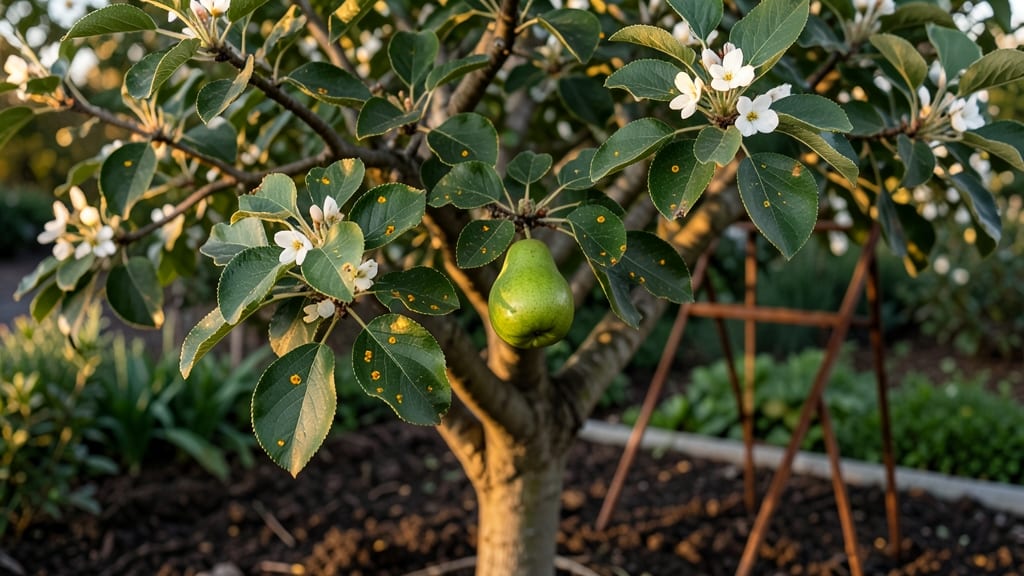
Seeing bright orange pustules on your pear tree leaves isn’t just unsightly—it’s a fungal infection called rust that weakens your tree if left unchecked. 🌿 I’ve battled this stubborn disease in my own orchard, and while it’s frustrating, organic methods can turn the tide when you act fast.
The key is catching it early, because once those spores spread, they’re nearly impossible to erase completely.
The culprit is Gymnosporangium, a fungus that thrives in damp spring conditions and jumps between pear trees and nearby juniper bushes. Those telltale orange spots? They’re spore-filled pustules that erupt on leaves, stems, and even fruit—usually appearing in late spring or early summer.
The good news? You don’t need harsh chemicals to fight it; pruning infected branches, applying copper fungicide at the right time, and removing juniper hosts nearby can drastically reduce its grip.
With the right approach, you’ll see fewer pustules next season and healthier foliage by summer’s end. The trees stay productive, the fruit develops properly, and you avoid the heartbreak of watching a once-vibrant tree decline.
Let’s get your pears back to their full, rust-free glory—and keep them that way for years to come.
This works whether you’ve got a single backyard tree or a small orchard, and the methods adapt to both organic and conventional preferences. The secret? Consistency. Rust doesn’t disappear overnight, but with steady care, you’ll reclaim those lush green leaves and juicy pears in no time.
Root Causes of Fungal Spots
Pear trees are prized for their sweet fruit and lush foliage, but rust fungus can turn their leaves into a patchwork of unsightly orange pustules. Understanding why this happens is the first step to stopping it.
Below, we break down the key factors—from environmental triggers to tree vulnerabilities—that create the perfect storm for fungal spread.
Rust fungi (Gymnosporangium species) thrive in moist, humid environments, especially during spring and early summer when spores are most active. Here’s why water is their secret weapon:
- Spores need water to germinate. Rain or overhead irrigation splashes spores onto leaves, where they latch onto the tree’s surface and begin infecting cells.
- Prolonged leaf wetness accelerates growth. Fungi like G. globosum (a common pear tree rust) spread faster when leaves stay damp for more than 6 hours at a time.
- Poor drainage worsens the problem. Trees planted in heavy clay soil or low-lying areas retain moisture longer, creating ideal rust hotspots.
Actionable fix: Space trees to improve airflow, avoid watering leaves (aim for the soil instead), and plant in well-draining locations.
A healthy pear tree’s natural resistance is its best defense against rust. When stress factors compromise this shield, fungi exploit the opportunity:
- Nutrient deficiencies. Low nitrogen (N) or zinc (Zn) weakens cell walls, making leaves more susceptible to fungal invasion.
- Physical damage. Pruning wounds, hail, or pest bites create entry points for spores.
- Drought or overwatering. Both extremes disrupt the tree’s ability to produce protective compounds like phytoalexins.
- Crowded or competing plants. Poor air circulation (from nearby shrubs or dense foliage) traps moisture and spores.
Actionable fix: Test soil for deficiencies, prune strategically (✂️ see our guide), and mulch to stabilize moisture levels.
Many rust fungi require two hosts to complete their life cycle—a phenomenon called heteroecious. For pear tree rust, the other host is often juniper shrubs (Juniperus species). Here’s how it works:
- Spring spores on junipers. In spring, junipers release teliospores that infect pear trees, causing rust pustules.
- Summer spores on pears. Infected pear leaves produce aeciospores, which then reinfect junipers the following year.
- Proximity matters. If junipers grow within 1–2 miles of your pear tree, the cycle continues annually.
Actionable fix: Remove or treat junipers in your vicinity (or consult a local extension office for resistant varieties).
Rust fungi are temperature-sensitive, with a sweet spot for growth:
| Stage | Optimal Temp | Risk Level |
|---|---|---|
| Spores germinate | 50–60°F (10–15°C) | ⚠️ Moderate (early spring) |
| Fungus spreads rapidly | 65–75°F (18–24°C) | 🔥 High (late spring/summer) |
| Dormancy begins | Above 85°F (29°C) | ❄️ Low (heat slows growth) |
Actionable fix: Monitor local weather forecasts and apply preventive treatments (like neem oil) during peak risk windows.
Next up: How to safely remove rust without harming your tree’s health.
Quick Fixes for Fungal Spots
Rust on pear trees isn’t just unsightly—it can weaken your fruit and even kill branches if left unchecked. The good news? With the right approach, you can reverse the damage and protect future harvests.
Below, we break down targeted fixes based on the root cause, plus preventive steps to keep your trees healthy long-term.
Cause: Fungal spores thrive in fallen leaves, mulch, and plant waste. Fix:
- Rake up and dispose of all infected leaves, fruit, and debris immediately (don’t compost them—this spreads spores).
- Prune affected branches (cut 6–12 inches below the last visible rust spot) using sterilized pruners (wipe with rubbing alcohol between cuts).
- Bag and trash infected material—do not leave it near the tree.
💡 Pro Tip: If rust appears on multiple trees, space out cleanup days to avoid overwhelming your schedule.
Cause: The Gymnosporangium fungus spreads via airborne spores, especially in wet, humid conditions. Fix:
- Preventative spray: Use copper fungicide (like Copper Soap or Bordeaux Mixture) before rust appears (spring and early summer).
- Treatment spray: If rust is already present, mix neem oil + baking soda spray (1 tbsp neem oil + 1 tbsp baking soda + 1 tsp dish soap per gallon of water). Spray both sides of leaves every 7–10 days until new growth appears.
- Alternative: Potassium bicarbonate (follow label rates) is another effective organic option.
⏰ Timing Matters: Apply fungicides in the evening to reduce leaf burn from UV exposure.
Cause: Overcrowded trees or poor drainage create humid microclimates, perfect for rust spores. Fix:
- Thin out branches to allow sunlight and airflow (aim for 12–18 inches between branches).
- Raise garden beds if planting new pears—ensure well-draining soil (rust loves soggy roots).
- Water at the base (not overhead) and avoid late-day watering to let foliage dry quickly.
🌡️ Prevention Hack: Install a drip irrigation system to keep leaves dry—rust spores need moisture to germinate.
Cause: Some rust fungi (like cedar-apple rust) jump between pear trees and juniper/cedar trees. Fix:
- Remove nearby junipers or cedars (if possible) or spray them with copper fungicide too.
- Monitor for telia (rust pustules) on alternate hosts—prune and destroy them immediately.
✨ Bonus: Plant resistant pear varieties like Moonglow or Seckel if rust is a recurring issue.
To keep rust away for good, follow this seasonal routine:
| Season | Task |
|---|---|
| Early Spring | Prune dead branches, apply copper fungicide, and remove old mulch. |
| Summer | Spray neem oil/baking soda mix every 2 weeks during wet spells. |
| Fall | Deep-clean the area—remove ALL debris and sterilize tools. |
| Winter | Mulch properly (3–4 inches of wood chips, keeping it 6 inches from the trunk). |
- Don’t use chemical fungicides (like chlorothalonil) near edible fruit—they leave residues.
- Don’t ignore small spots—rust spreads fast, and early action saves the tree.
- Don’t compost infected material—this recycles the fungus back into your garden.
By tackling rust proactively—cleaning up, spraying smartly, and adjusting your tree’s environment—you’ll restore your pear tree’s health and enjoy rust-free fruit for years. 🍐🌿
Frequently asked questions about pear tree rust
What do rust spots on pear trees look like?
Rust appears as bright orange-yellow pustules on the undersides of leaves, stems, and sometimes fruit. These spots eventually turn brown and crack open, releasing spores that spread the disease. Early signs include yellowing or curling leaves before the pustules form.
Can rust on pear trees harm the fruit?
While rust primarily targets leaves, severe infections can weaken the tree and reduce fruit quality. Infected leaves may drop prematurely, limiting photosynthesis and shrinking harvests. In rare cases, rust pustules can appear on fruit, making it less appealing for eating or selling.
How do I tell if my pear tree has rust or just a nutrient deficiency?
Rust produces distinct orange pustules, while deficiencies cause uniform yellowing or browning without spotting. Check leaf undersides—rust pustules are a dead giveaway. Nutrient issues often start on older leaves first, while rust spreads randomly across the tree.
Will removing nearby juniper bushes stop pear tree rust?
Yes! Many rust fungi need juniper hosts to complete their life cycle. Removing junipers within 1–2 miles of your pear tree can break the infection cycle. If removal isn’t possible, treat junipers with copper fungicide in spring to prevent spore release.
Can I still harvest fruit from a rust-infected pear tree?
Yes, but monitor fruit closely. If rust pustules appear on the fruit itself, remove those pears immediately. Most rust damage occurs on leaves, so unaffected fruit can still be harvested and enjoyed. Just wash thoroughly before eating to remove any potential spores.