
Planting
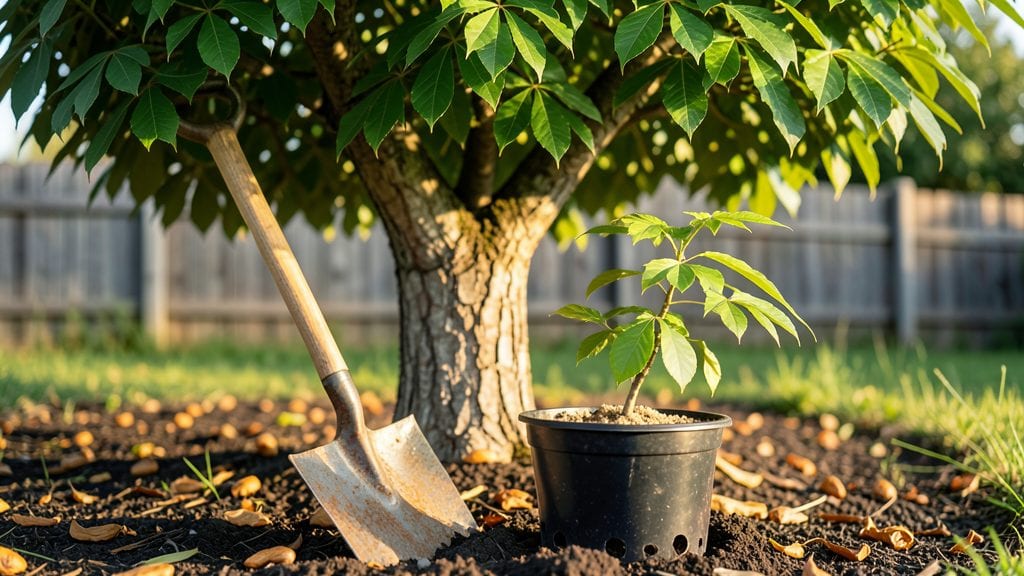
Spacing pecan trees properly is the foundation of a thriving orchard—too close, and you’ll battle stunted growth, poor yields, and disease for years.
Picture this: a 60-foot-tall 🌰 towering over your yard, its roots spreading wider than its canopy, only to find its neighbor crowding it from every side. That’s not just a space issue—it’s a productivity killer.
The right spacing ensures sunlight reaches every branch, airflow keeps pests at bay, and your harvest stays plump and abundant.
Most gardeners assume standard recommendations work for every pecan tree, but soil type, climate, and even your orchard goals change the game. In Zone 6a, where late frosts and summer heat clash, spacing becomes even more critical to survival and success.
Below, I’ll break down the exact spacing you need—whether you’re planting a single tree or designing a full orchard—plus how to adjust for dwarf varieties, rocky soil, or mechanical harvesters. Let’s get those trees the room they deserve.
Optimal pecan tree spacing by variety and soil type
Pecan trees are long-lived investments, and their spacing needs vary dramatically based on variety and soil conditions. A standard pecan tree can spread its roots 30–50 feet wide over decades, while dwarf varieties (though rare) stay compact.
Ignoring these guidelines leads to competition for nutrients, reduced air circulation, and fungal diseases like pecan scab.
Your soil type plays a critical role too. Clay soils slow root expansion, requiring wider spacing, while sandy loams allow roots to spread faster. In USDA Zones 7–9 (ideal for pecans), adjust spacing based on rainfall patterns—drier climates need deeper root zones, so space trees farther apart.
Here’s how to match spacing to your pecan variety and soil conditions for maximum yield and tree health:
For standard pecan trees, the 40–60 ft spacing rule ensures roots don’t compete. Think of it like giving each tree its own personal canopy—this prevents nut production decline after 10–15 years.
In clay-heavy soils, roots struggle to penetrate, so increase spacing by 10–15 feet to avoid root-bound stress.
If you’re planting in sandy loam, roots spread faster, so you can tighten spacing slightly—30–40 ft for standard trees. Test your soil’s drainage first: dig a hole, fill it with water, and time how long it takes to drain.
If it’s slower than 6 hours, your soil is too dense for tight spacing.
In drought-prone zones (like West Texas), wider spacing preserves moisture in the root zone. Pair this with deep mulching (4–6 inches of wood chips) to retain soil moisture. Avoid planting near water sources—pecans hate wet feet and will develop root rot if oversaturated.
For urban homesteaders, consider columnar varieties like 'Wichita', which fit into 15–20 ft spacing. These are perfect for alley cropping—planting rows with companion plants like grapes or herbs between trees. Just ensure the south-facing side gets full sun; pecans are light-hungry.
Pro tip: Stake young trees at planting to prevent wind rock, but remove stakes after 2 years to encourage natural root anchorage. Over-staking can weaken the root collar and reduce long-term stability. Always plant 2–3 inches deeper than the nursery pot to protect the graft union.
Remember, pecan trees live 100+ years. Rushing spacing now means pruning headaches (and lost yield) later. Sketch your orchard layout on graph paper, accounting for future tree size and access for harvesters.
If you’re unsure, err on the side of more space—you can always add trees later, but you can’t fix overcrowding.
🌰
Common mistakes to avoid when spacing pecan trees
Spacing pecan trees correctly is critical for their long-term health and productivity. Too little space leads to competition for nutrients, while too much space can waste valuable orchard area.
Many gardeners make costly mistakes when planning their pecan groves, often overlooking how root systems expand or how wind exposure affects growth.
One of the biggest errors is ignoring the mature size of pecan trees, which can reach 50–100 feet tall and spread 30–50 feet wide.
Planting them too close—like 20 feet apart—will result in stunted growth, poor air circulation, and increased susceptibility to fungal diseases like pecan scab or powdery mildew.
⚠️
Planting pecan trees closer than 40 feet creates a recipe for failure. Crowded trees develop weak branches, reduced nut production, and early decline. Even worse, poor airflow traps moisture, fostering fungal infections that can kill your orchard within years.
Another common mistake is planting pecan trees in windbreaks without gaps. While windbreaks protect young trees, solid barriers can block sunlight and disrupt pollination. Instead, use open windbreaks with 10–15 foot gaps between trees to allow airflow while still providing shelter.
If you’ve already planted pecan trees too close together, don’t panic. You can thin out the orchard by removing smaller or weaker trees. Start by pruning competing branches to reduce stress, then gradually remove entire trees over 2–3 years to give the remaining ones room to thrive.
For urban or small-scale growers, consider dwarf or semi-dwarf varieties (if available) and space them 20–30 feet apart. These varieties mature faster and produce nuts sooner, making them ideal for limited spaces. Always research the specific variety’s growth habits before planting.
Finally, avoid planting pecan trees too close to other large trees or structures. Their extensive root systems will compete for water and nutrients, leading to poor growth and lower yields. Give them space to spread their roots freely—your future harvest will thank you! 🌰