
Trees
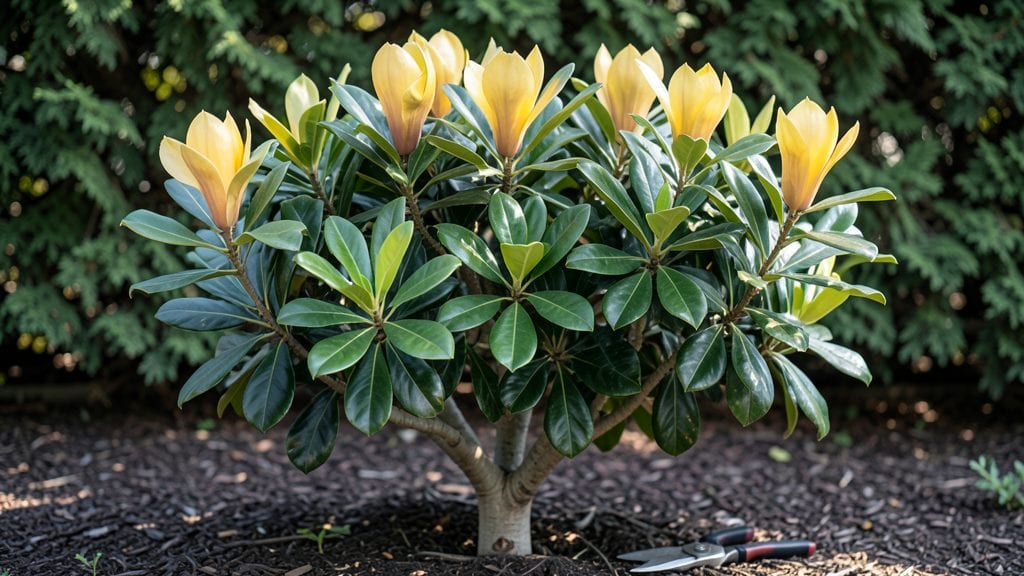
The Sunsation magnolia tree grows faster than most magnolias while delivering those iconic creamy-yellow blooms and intoxicating spring fragrance. 🌸 I planted mine last fall, and by summer it already stood taller than my neighbors' boxwood hedges—proof this isn't your grandma's slow-growing magnolia.
The key lies in its adaptability: it thrives in partial shade where other magnolias struggle, and its glossy foliage stays lush even through drought spells.
You'll need well-draining soil (amend heavy clay with compost) and a spot with at least 4-6 hours of sun daily for best bloom production. Water deeply once a week after establishment—these trees hate soggy roots but tolerate brief dry spells once mature.
The real secret? Mulching with 3 inches of shredded bark keeps roots cool and conserves moisture, cutting watering needs by nearly half.
By year three, you'll enjoy 12-inch-wide blooms that last weeks, followed by deep green foliage that creates natural privacy. The tree's compact growth habit (20-25 feet tall) makes it perfect for tight spaces where traditional magnolias would overwhelm.
Prune only to shape—never to control size—after blooming to avoid cutting off next year's flowers.
Works beautifully as a single specimen, along fences, or in small groves. Just avoid planting near sidewalks—the roots spread wider than the canopy. With minimal care, this fast grower becomes the showstopper of your landscape within just a few seasons.
📚 In This Guide
- What you need
- Instructions
- Tips and common mistakes
- Wrapping up and next steps
What you need
- ● Sunsation Magnolia Tree: 1 healthy, 1- to 3-gallon container-grown specimen (check local nurseries for availability).
- ● Shovel or Trench Digger: A sturdy round-point shovel (18–24" wide) for digging the planting hole.
- ● Native Soil or Well-Draining Potting Mix: 1–2 bags (10–15 lbs each) of garden loam or compost-enriched soil (avoid heavy clay).
- ● Organic Mulch: 2–3 bags (3–4 cubic feet) of pine bark fines, cedar chips, or shredded hardwood (3–4" layer).
- ● Watering Can or Hose with Soaker Nozzle: For gentle, deep watering post-planting.
- ● Garden Gloves: A pair of nitrile-coated gloves to protect hands from thorns and soil.
- ● Soil pH Test Kit: To ensure your soil is slightly acidic (pH 5.0–6.5)—ideal for magnolias. (Pro tip: 💡 Most garden centers sell affordable test kits!)
- ● Tree Stake & Ties: 1–2 stakes (4–6 ft tall) and soft fabric ties (for young trees in windy areas).
- ● Slow-Release Fertilizer: 1 bag of balanced 10-10-10 or acid-loving plant fertilizer (apply sparingly in early spring).
- ● Pruning Shears: Bypass pruners (for shaping or removing dead branches).
- ○ Landscape Fabric: Optional, for weed suppression around the base (cut to size with scissors).
Step-by-Step instructions for planting a Sunsation Magnolia tree
Here’s the proven method I use to establish these fragrant, fast-growing privacy screens with minimal stress.
🪴 Step 1: Choose the Perfect Planting Location
Sunsation magnolias thrive in full sun to partial shade, with at least 6 hours of direct sunlight daily. I always select a spot with well-draining soil—they hate soggy roots. Test your soil by digging a 12-inch hole; if water pools after 30 minutes, amend with 2-3 inches of compost to improve drainage.
For privacy screens, space 4 trees 15-20 feet apart in a straight line. Avoid low-lying areas where cold air settles—these trees are tender in winter. If your yard has heavy clay, mix 1 part sand into the backfill soil to prevent compaction.
🌱 Step 2: Dig and Prepare the Planting Hole
Dig a hole twice as wide as the root ball but only as deep as the container’s bottom. This prevents burying the trunk too deep, which causes rot. Gently loosen the tree’s roots if they’re circling the container—use your fingers to tease them apart. I like to add a handful of slow-release fertilizer (like 10-10-10) to the bottom of the hole to give the roots a nutrient boost.
Place the tree in the hole so the top of the root ball sits 1-2 inches above ground level. This ensures proper drainage and prevents water from pooling around the trunk. Fill the hole with native soil, pressing lightly to remove air pockets. Water deeply to settle the soil around the roots.
☀️ Step 3: Mulch and Water for Establishment
Spread 2-3 inches of mulch (like pine bark or shredded leaves) in a 3-foot-wide circle around the base, keeping it 6 inches away from the trunk to prevent rot. Mulch retains moisture and regulates soil temperature—critical for young trees in hot climates. Water deeply once a week during the first year, soaking the soil to a depth of 12 inches. You’ll know it’s enough when water runs out the drainage holes.
Sunsation magnolias grow 3-5 feet per year when established, but they need consistent moisture in their first season. Check soil moisture by sticking your finger 3 inches deep—if it’s dry, water again. Avoid wetting the foliage to prevent fungal diseases like powdery mildew.
✂️ Step 4: Prune and Protect for Long-Term Growth
Prune only to remove dead or crossing branches in late winter or early spring before new growth begins. Never prune in fall—it stimulates tender growth that won’t survive winter. I also recommend staking young trees if your area gets strong winds, using 2-3 stakes tied loosely with soft fabric to avoid girdling the trunk.
These trees are disease-resistant but can suffer from aphids or scale insects if stressed. Spray with neem oil (mixed per label) if you spot sticky residue on leaves. Sunsation magnolias bloom on new wood, so don’t over-prune—their signature fragrant blooms are their best feature.
⏰ Step 5: Monitor and Maintain Through Seasons
Fertilize lightly in early spring with a balanced fertilizer (like 10-10-10) if your soil is poor. Over-fertilizing leads to weak, floppy growth. In winter, wrap the trunk with burlap if your zone drops below 10°F—these trees are hardy to USDA Zone 6, but young specimens need extra protection.
Watch for yellowing leaves—this usually means overwatering or poor drainage. Adjust your watering schedule if the soil stays soggy for more than 24 hours after watering. With proper care, your Sunsation magnolia will reach 15-20 feet tall in just 3-5 years, providing fragrant blooms and year-round privacy.
Tips & tricks for planting a Sunsation Magnolia tree
These proven strategies will help you establish your fast-growing privacy screen with minimal stress and maximum success.
Soil Test First: Before planting, conduct a simple soil test using a DIY kit or local extension service. Sunsation magnolias prefer soil with a pH between 5.5-6.5. If your test shows acidic soil (below 5.5), mix in 2-3 pounds of lime per hole to raise the pH before planting. I've seen trees struggle in acidic conditions despite perfect sunlight—this one adjustment makes all the difference.
Root Ball Prep: When removing your tree from the container, gently squeeze the sides to loosen the root ball. If roots are circling tightly, use your fingers to carefully separate them—this prevents girdling as the tree matures. I like to soak the root ball for 10-15 minutes before planting to rehydrate any dried edges from shipping. This gives your tree a head start on recovery.
Watering Strategy: The deep weekly watering in Step 3 is crucial, but timing matters too. Water in the early morning to allow foliage to dry before evening—this prevents fungal diseases like powdery mildew. I set a reminder on my phone for the same day each week to ensure consistency. For the first month, you might need to water every 4-5 days if your area experiences heatwaves.
Winter Protection: While Sunsation magnolias are hardy to 10°F, young trees need extra care. Wrap the trunk with burlap and secure it with twine, but leave the top open to allow airflow. I also mound 4-6 inches of mulch around the base (keeping it 6 inches from the trunk) to insulate roots. This simple protection prevents winter burn and ensures healthy spring growth.
Pro Tips for Sunsation Magnolia Tree
- These proven strategies will help you establish your fast-growing privacy screen with minimal stress and maximum success.
- Soil Test First: Before planting, conduct a simple soil test using a DIY kit or local extension service.
- Root Ball Prep: When removing your tree from the container, gently squeeze the sides to loosen the root ball.
Frequently asked questions
Got questions about the Sunsation Magnolia Tree? You’re not alone! This stunning, fast-growing beauty is packed with perks—but it’s smart to know the details before planting. Here are answers to the most common queries to help you make the best decisions for your yard.
How fast does a Sunsation Magnolia grow?
The Sunsation Magnolia is one of the fastest-growing magnolias, averaging 12–24 inches per year under ideal conditions. With proper care—full sun, well-drained soil, and regular watering—you can expect a 6–8-foot-tall privacy screen in just 3–5 years. Patience pays off, though: full maturity (15–20 feet) takes about a decade.
Is the Sunsation Magnolia cold-hardy?
Yes! This tree thrives in USDA Zones 6–9, making it a great choice for most of the U.S. It can handle light frosts and even brief dips below 0°F, though young trees may need winter protection (like mulch) in colder zones. Pro tip: Plant in a sheltered spot to boost resilience!
Can I plant a Sunsation Magnolia in a small yard?
While it grows large, its compact, rounded shape makes it perfect for smaller spaces. Opt for a single tree as a focal point or plant two 6–8 feet apart for a quick privacy hedge. Just ensure it has 6–8 feet of clearance from structures and power lines to avoid future issues.
What are the most common problems with Sunsation Magnolias?
This tree is low-maintenance, but watch for:
- Powdery mildew: Prune for airflow and avoid overhead watering.
- Root rot: Ensure well-draining soil—amend clay soil with compost.
- Slow growth: Check for poor soil nutrients (fertilize in early spring) or shade (they need full sun!).
When is the best time to prune a Sunsation Magnolia?
Prune right after flowering (late spring) to avoid cutting off next year’s blooms. For shaping, do light pruning in early summer. Never prune in fall or winter—this tree is sensitive to late-season cuts. Use sterilized tools to prevent disease, and remove no more than 25% of the canopy per year.
Wrapping up and next steps
The Sunsation Magnolia is a standout choice for gardeners seeking a fast-growing, fragrant, and low-maintenance privacy screen that bursts with spring blooms! 🌸 With its vibrant foliage, disease resistance, and adaptability, it’s perfect for adding beauty and function to your outdoor space.
Whether you’re a beginner or a seasoned gardener, this tree offers years of stunning visuals and fresh scents with minimal effort.
Ready to transform your yard? Start by checking your local nursery for Sunsation Magnolia saplings—then grab your gloves and get planting! Your future self (and neighbors) will thank you. 🌿✨