
Size
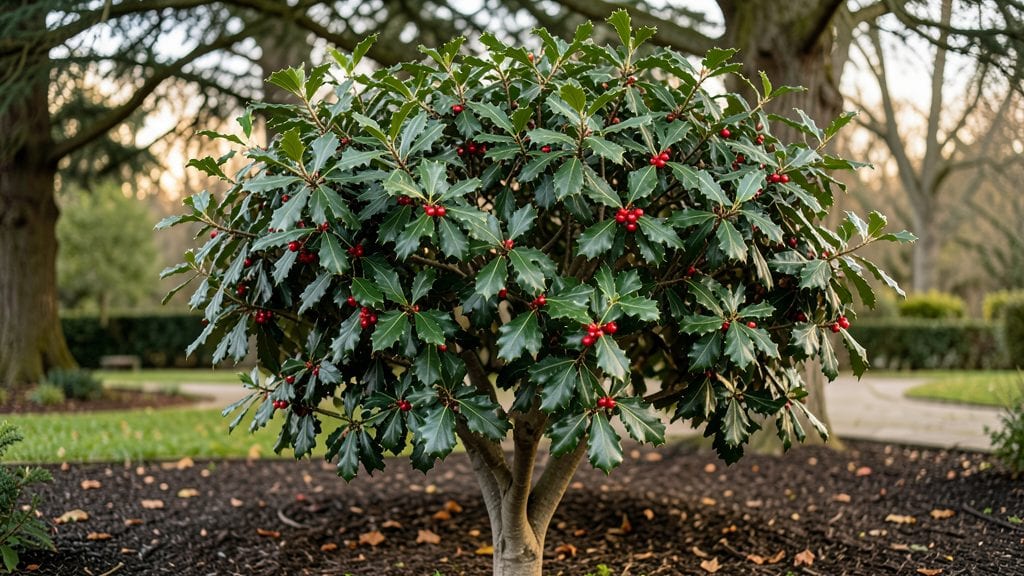
Creating a year-round privacy screen with tall holly trees transforms your yard from ordinary to extraordinary. 🌿 Their glossy evergreen leaves and striking red berries add color and texture, while their towering presence blocks nosy neighbors and wind—no fence required.
I planted mine along my property line last fall, and now I’ve got a living wall that stays lush in winter and bursts with berries in spring.
The right holly variety makes all the difference. English holly (Ilex aquifolium) grows 20-40 feet tall, while American holly (Ilex opaca) reaches 30-50 feet—perfect for dramatic borders or standalone focal points.
They thrive in full sun to partial shade and tolerate most soil types, though well-draining ground keeps them healthier. Plant them 10-15 feet apart for a dense, unbroken screen within a few years.
Imagine stepping outside to a fragrant, vibrant backdrop that never loses its charm. The glossy leaves reflect light beautifully, while the berries attract birds year-round. In winter, when most plants fade, your holly stays rich green, adding structure and elegance.
With minimal pruning (just shape occasionally), they’re low-maintenance yet high-impact—ideal for busy gardeners who still want a polished look.
Pair them with evergreen shrubs like boxwood or pieris for layered texture, or add spring bulbs at their base for seasonal pops of color. For a softer edge, mix in ornamental grasses. The possibilities are endless—your holly screen will be the envy of the neighborhood, no matter the season.
📚 In This Guide
- What you need
- Instructions
- Tips and common mistakes
- Wrapping up and next steps
What you need
- ● Tall Holly Tree (Ilex spp.) – Choose a mature specimen (10-20 ft tall) or a younger tree (5-10 ft) for gradual growth. Popular varieties include Ilex opaca (American Holly) or Ilex × ‘Nellie R. Stevens’ (fast-growing hybrid).
- ● Shovel or Spade – A round-point shovel (18-24 inches wide) for digging the planting hole.
- ● Garden Gloves – Heavy-duty, waterproof gloves (size medium/large) to protect your hands from thorns and soil.
- ● Compost or Well-Rotting Manure – 5-10 gallons to enrich the soil and promote root growth.
- ● Mulch – 2-3 inches of pine straw, wood chips, or shredded bark (avoid fresh wood chips to prevent rot).
- ● Slow-Release Fertilizer – 10-20 lbs of balanced, acid-loving plant fertilizer (e.g., 10-10-10 or 8-3-9 with micronutrients).
- ● Watering Can or Hose with Spray Nozzle – For gentle, deep watering (aim for 1-2 gallons per week in the first year).
- ○ Staking Kit (Optional but Recommended for Young Trees) – 2-3 stakes (5-6 ft tall) + tree ties to support the tree in windy areas.
- ● Soil pH Test Kit – Holly trees thrive in acidic soil (pH 5.0-6.0). Adjust with sulfur or peat moss if needed.
- ● Root Stimulator – A mycorrhizal fungus powder or rooting hormone to boost early growth.
- ● Pruning Shears – Bypass pruners (for shaping) and loppers (for thicker branches).
- ● Tree Guard or Protective Barrier – Plastic tree wrap or wire mesh to deter rabbits/deer from nibbling young bark.
- ● Post-Hole Digger – If staking, a manual or powered auger for deeper, stable stakes.
Step-by-Step guide to planting a tall holly tree for privacy
Here’s how to establish a fragrant, evergreen hedge that thrives year-round and delivers that coveted privacy.
🌱 Step 1: Select and Prepare the Planting Site
Choose a location with full sun to partial shade—holly thrives in 6+ hours of sunlight daily but tolerates light shade if soil stays moist. Test your spot by observing how much light it gets over a week; holly’s glossy leaves will yellow if deprived. Dig a hole twice as wide and just as deep as the root ball to encourage root spread.
Amend the native soil with 2-3 inches of compost mixed into the bottom and sides of the hole. Holly prefers slightly acidic soil (pH 5.0-6.0), so test your soil before planting. If your yard is alkaline, add sulfur or peat moss to adjust the pH. Avoid planting in low-lying areas where water pools—holly roots rot in soggy soil.
🪴 Step 2: Plant the Holly Tree with Proper Spacing
Remove the tree from its container and loosen any circling roots gently with your fingers. Position the root ball so the top sits 1-2 inches above ground level—this prevents waterlogging and stem rot. For a privacy screen, space trees 6-8 feet apart in rows 8-10 feet apart to allow mature growth without overcrowding.
Backfill the hole with native soil mixed with compost, tamping down lightly every 4-6 inches to eliminate air pockets. Water deeply to settle the soil, then create a 2-inch-deep basin around the base to direct water toward the roots. Mulch with 2-3 inches of organic mulch (like pine straw or shredded bark), keeping it 6 inches away from the trunk to prevent rot.
☀️ Step 3: Water and Fertilize for Establishment
Water the newly planted holly deeply every 2-3 days for the first 2 weeks, then taper to once a week if rainfall doesn’t provide 1 inch of moisture weekly. Check soil moisture by sticking your finger 2 inches deep—if it feels dry, water again. Overwatering is the biggest mistake; holly roots suffocate in soggy conditions.
Apply a balanced, slow-release fertilizer (10-10-10) at planting time, then again in early spring. For established trees, fertilize once a year in late winter or early spring—holly grows slowly but steadily, and too much nitrogen promotes leafy growth at the expense of berries. Avoid fertilizing in fall, as new growth won’t harden off before winter.
✂️ Step 4: Prune for Shape and Health
Prune holly immediately after flowering (late spring to early summer) to shape the tree and encourage dense growth. Remove any dead, diseased, or crossing branches first—holly responds well to light pruning but doesn’t tolerate heavy cuts. Use clean, sharp pruners to make cuts just above a leaf node or bud, angled slightly downward.
For a privacy screen, prune the outer branches to maintain a uniform height and width. Avoid cutting into old wood—holly struggles to regrow from severe pruning. Thin out crowded branches to improve airflow, which reduces fungal diseases like leaf spot. Never prune in fall; new growth won’t have time to harden before winter.
🌿 Step 5: Maintain Year-Round for Long-Term Privacy
Monitor holly for pests like spider mites or scale insects—holly is generally pest-resistant, but stressed trees attract problems. Spray with neem oil if you spot webbing or sticky residue on leaves. In winter, check for deer browsing; holly is deer-resistant, but young trees may need protection with tree guards or repellent sprays.
Every 3-4 years, top-dress the soil with 1-2 inches of compost to replenish nutrients. Holly trees mature slowly, reaching 20-30 feet tall over 10-15 years, so patience is key. If you planted a male and female variety, you’ll see vibrant red berries in fall—just be sure to plant both sexes for fruit production.
Tips & tricks for perfect tall holly tree planting
Creating a lush, fragrant holly hedge that delivers year-round privacy takes more than just digging a hole. Here are the key insights that'll help you avoid common pitfalls and set your holly up for long-term success.
Soil Preparation Secret: That 2-3 inches of compost in Step 1 isn't just filler—it's the foundation for healthy root development. I recommend mixing in one part compost to three parts native soil to prevent compaction while still maintaining proper drainage. For alkaline soils, add one pound of sulfur per 100 square feet and retest pH after 2-3 months. The goal is pH 5.0-6.0, and this adjustment takes time, so don't rush it.
Root Ball Placement: The 1-2 inch elevation above ground level in Step 2 is critical—it prevents water from pooling around the trunk where it can cause rot. I've seen too many holly trees fail because this detail was overlooked. After planting, create that 2-inch basin around the base to direct water exactly where the roots need it most. This simple step can mean the difference between a thriving hedge and one that struggles.
Watering Wisdom: Those first two weeks of deep watering every 2-3 days are non-negotiable. Holly roots are shallow and need consistent moisture to establish. I use a rain gauge to track weekly moisture—if we don't get that 1 inch of rain, I water manually. The key is deep watering, not frequent light watering. Think of it like giving your holly a long drink rather than many sips throughout the day.
Pruning Precision: When shaping your holly in Step 4, focus on outward-facing branches to create density. I make my cuts just above a leaf node at a 45-degree angle, which helps water run off rather than pool at the cut. For privacy screens, I recommend pruning in three stages: first to establish shape, then annually to maintain height, and finally to clean up any winter damage. This staggered approach prevents stressing the tree all at once.
Pro Tips for Tall Holly Tree
- Creating a lush, fragrant holly hedge that delivers year-round privacy takes more than just digging a hole.
- Soil Preparation Secret: That 2-3 inches of compost in Step 1 isn't just filler—it's the foundation for healthy root development.
- Root Ball Placement: The 1-2 inch elevation above ground level in Step 2 is critical—it prevents water from pooling around the trunk where it can cause rot.
Frequently asked questions
How tall do holly trees typically grow, and how fast?
A mature tall holly tree (like Ilex opaca) can reach 40–60 feet with proper care, though dwarf varieties stay under 15 feet. Growth is slow—about 1–2 feet per year—so patience is key! Choose your species based on space: Holly ‘Nellie R. Stevens’ grows faster (3–4 ft/year) but stays compact (20–30 ft).
When is the best time to plant a tall holly tree?
Plant in early spring or fall when temperatures are mild (50–70°F) and soil is workable. Avoid extreme heat or frost, which stress roots. Pro tip: Water deeply after planting and mulch (2–3 inches) to retain moisture while roots establish—critical for young trees!
Do holly trees need full sun, or can they tolerate shade?
Most holly trees thrive in full sun (6+ hours/day), but varieties like ‘Dwarf Burford’ tolerate partial shade (3–6 hours). Too little light? Expect sparse foliage and fewer berries. Troubleshooting: If leaves yellow, check for overwatering or poor drainage—holly hates soggy roots!
Why aren’t my holly tree’s berries red? Are they edible?
Red berries (actually drupes) appear only on female trees (pollinated by male varieties). Without a male nearby, you’ll see no berries—plant one of each for fruit! Safety note: Berries are toxic to humans and pets (causing nausea if ingested), but birds love them. Wear gloves when handling spiny leaves!
How do I prune a tall holly tree safely without harming it?
Prune in late winter/early spring before new growth. Use clean, sharp tools and remove dead, crossing, or overcrowded branches at the branch collar. Warning: Holly leaves are sharp—wear gloves! Avoid heavy pruning (never >30% of foliage) to maintain health. For large trees, hire a pro to avoid damaging the canopy.
What pests or diseases should I watch for in my holly tree?
Common issues include:
- Scale insects: Sticky residue on leaves (use horticultural oil).
- Spider mites: Yellowing leaves (spray with water or neem oil).
- Root rot: Brown leaves (improve drainage, avoid overwatering).
- Holly leaf miner: Serpentine trails in leaves (prune affected areas).
Wrapping up and next steps
A tall holly tree isn’t just a stunning addition to your landscape—it’s a year-round privacy shield with fragrant evergreen foliage that brings beauty and serenity to any space.
From selecting the right variety to planting and maintaining it, this guide has equipped you with everything you need to grow a thriving, majestic specimen. 🌿
Ready to transform your outdoor space? Start by choosing the perfect location and variety for your climate, then roll up your sleeves and get planting! With patience and care, your holly will reward you with lush greenery, vibrant berries, and a sense of privacy you’ll love for years to come.
What’s your next step? Research local nurseries or sketch out a planting plan today!