
Planting
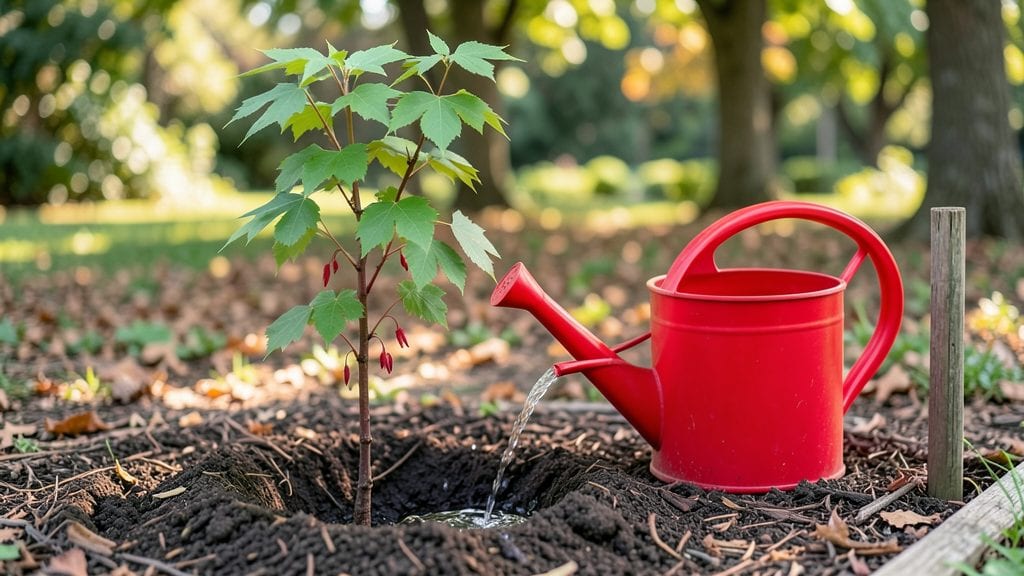
Understanding tree transplant shock recovery time is key to survival, as it ranges from 6 weeks to 2 years depending on species, root ball size, and aftercare. The most vulnerable phase—marked by wilting, leaf drop, and stunted growth—lasts 4–8 weeks, where consistent moisture and stress reduction make all the difference.
Transplant shock happens when roots get damaged during uprooting, disrupting the tree's ability to absorb water and nutrients. 🌱 Smaller trees bounce back faster because their root systems are less extensive, while larger specimens may take years to fully stabilize.
I've seen oak trees struggle for over a year after transplanting, while dogwoods often recover within a few months with proper care.
What most people miss is that recovery isn't just about time—it's about creating the right conditions. The first 8 weeks are especially critical because that's when the tree's hormonal balance shifts dramatically, often leading to ethylene production that triggers leaf drop.
Mulching with organic matter and watering deeply (but not excessively) helps compensate for the root system's temporary limitation.
💡 In This Article
- Stages of Tree Transplant Shock and Root System Healing
- Speeding Up Tree Recovery After Transplanting
Stages of tree transplant shock and root system healing
When you move a tree, its roots take a brutal beating—up to 70% of fine root tips can be severed during extraction, leaving the tree struggling to absorb water and nutrients.
This damage triggers a three-phase recovery process, starting with the acute phase (0-4 weeks), where the tree's hormonal system goes into overdrive.
The root tips release stress hormones like ethylene, which causes leaves to yellow and drop as the tree prioritizes survival over growth. 🌿 During this time, the tree's vascular system (xylem) may also develop air bubbles, further blocking water transport.
The intermediate phase (4-12 weeks) is where the real healing begins, as new root hairs start to grow from the remaining root tips. Smaller trees recover faster here because their root systems are less extensive—think of it like a sprint versus a marathon.
For example, a 3-foot-tall Japanese maple might regrow enough roots in 8 weeks to stabilize, while a 20-foot oak could take 6-12 months to match that progress. Soil type plays a huge role: sandy soils drain too quickly, while clay holds moisture but suffocates roots, both slowing recovery.
In the long-term phase (6 months to 2+ years), the tree's root system gradually rebuilds its network, often exceeding its original density in a process called compensatory growth.
This is why you might see new shoots or thicker branches emerge after the first year—it's the tree's way of compensating for lost roots.
The key factor here is soil health: mycorrhizal fungi in the soil form symbiotic relationships with roots, boosting nutrient absorption by up to 80% in some cases. 💫 Without these beneficial microbes, recovery can stall.
What most gardeners overlook is how transplant timing affects these stages. Moving trees in early spring or fall (when temperatures are mild) gives roots 4-6 weeks of growing season before dormancy, while summer transplants force the tree to heal under heat stress.
Even the wrong mulch thickness—too little exposes roots to temperature swings, while too much (over 4 inches) can suffocate them. The goal is to mimic the tree's natural soil conditions as closely as possible.
Here's what's actually happening at the cellular level: when roots are damaged, the tree's abscisic acid levels spike, triggering stomata (leaf pores) to close and reduce water loss. This is why wilting is a survival mechanism, not a sign of failure.
Meanwhile, the remaining roots prioritize root tip regeneration, which grows at about 0.5-1 inch per week under ideal conditions. The faster these tips regrow, the sooner the tree can resume normal nutrient uptake.
One surprising detail is how root pruning before transplanting can paradoxically speed recovery. Trimming roots by 10-20% 2-3 months before moving encourages new root growth, creating a denser network that's less likely to suffer shock.
It's like giving the tree a pre-transplant workout—just don't overdo it, as excessive pruning can weaken the tree further. The sweet spot is 1/3 of the root ball for small trees and 1/5 for large specimens.