
Pruning
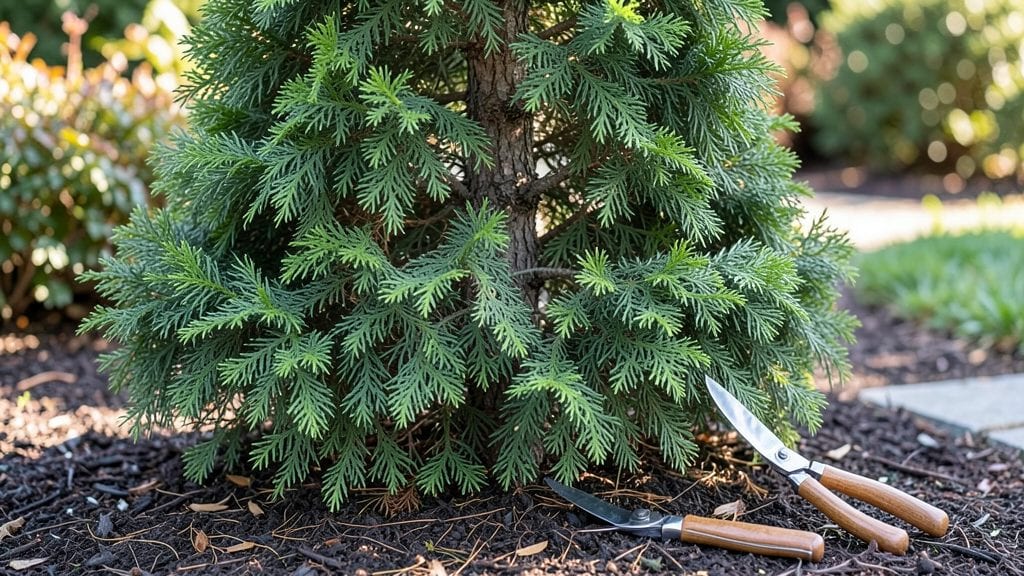
Trimming arborvitae trees requires careful timing and technique to maintain health and shape: prune in late winter or early spring before new growth begins, avoiding over-thinning or cutting into old wood, and never removing more than 25% of the foliage at once.
Arborvitae thrive when you time your cuts right—late winter or early spring lets the tree focus its energy on fresh growth instead of healing wounds. 🌿 This dormant-season approach also minimizes stress, which is especially important for younger trees still establishing their root systems.
I’ve seen firsthand how skipping this window can lead to stunted growth or even dieback, especially in hotter climates where summer pruning causes dehydration.
Beyond timing, the way you cut matters just as much. Shearing for shape might look neat, but it removes too many growth points at once, leaving the tree vulnerable to pests and disease. Instead, focus on selective pruning—targeting only the overgrown branches or dead wood while preserving the natural form.
A sharp, sterilized tool is a must to prevent bacterial infections that can turn foliage brown overnight.
💡 In This Article
- Best Arborvitae Pruning Seasons and Growth Cycle Impact
- Common Arborvitae Pruning Mistakes and How to Fix Them
Best arborvitae pruning seasons and growth cycle impact
Arborvitae trees follow a precise growth cycle tied to seasonal dormancy. During late winter or early spring, these evergreens enter a state of bud dormancy, where their metabolic activity slows to conserve energy.
This period—typically between February and March in most climates—is ideal for pruning because the tree hasn't yet directed resources to new foliage. Pruning during dormancy allows the tree to allocate its energy to healing cuts and producing fresh, vibrant growth in the coming months.
The science behind this timing lies in the tree's photosynthetic efficiency. When you prune in late winter, you're not removing leaves that are actively contributing to the tree's energy reserves. Instead, you're shaping the tree before it begins its annual growth spurt.
Studies show that arborvitae can produce up to 12 inches of new growth per year under optimal conditions, but improper pruning timing can reduce this by 30-50% due to stress. 🌱 The tree's cambium layer—its growth-producing tissue—is also less active during dormancy, meaning cuts heal more cleanly.
What happens if you prune at the wrong time? Summer pruning, for example, forces the tree to divert energy from root development to wound repair while simultaneously dealing with higher evaporation rates.
This can lead to desiccation, where the tree loses more moisture than it can replace, causing browning at branch tips. I've observed this firsthand in Zone 7 climates, where summer pruning often results in trees that look stressed by early fall.
Even fall pruning can be risky, as new growth stimulated by warm temperatures may not harden off before winter, leaving tender shoots vulnerable to frost damage.
Another critical factor is the tree's foliage-to-branch ratio. Arborvitae rely on their dense evergreen needles to perform photosynthesis year-round. Removing more than 25% of the foliage in a single pruning session disrupts this balance, as the remaining needles can't compensate for the lost surface area.
This threshold is especially important for mature trees, which have developed extensive root systems but may still struggle to support sudden defoliation. Younger trees, with their developing root networks, are even more sensitive to over-pruning.
Consider how pruning affects the tree's hormonal balance. When you make a clean cut just outside a branch collar, you trigger the production of auxin, a plant hormone that promotes healing and new growth.
However, if you cut into old wood or leave stubs, you create entry points for pathogens like Phytophthora root rot, which thrives in moist conditions. The tree's natural defense mechanisms are most effective during dormancy, when its immune system is primed for repair rather than growth.
This is why professional arborists emphasize making cuts at a 45-degree angle, about 1/4 inch above a bud.
The growth cycle also explains why arborvitae respond so well to selective pruning over shearing. When you remove only the necessary branches, you preserve the tree's natural hormonal pathways, allowing it to maintain its growth rhythm.
Shearing, on the other hand, creates a uniform surface that can't support new growth properly, leading to a "bald" appearance over time.
Think of it like haircuts: a layered cut encourages healthy regrowth, while a buzz cut removes too much at once, leaving the scalp (or in this case, the branch) vulnerable. 🌿
Here's what most people don't realize: arborvitae growth isn't just about new branches—it's about foliage density. The tiny scale-like leaves that give these trees their name are packed with chlorophyll, which means every needle contributes to the tree's energy production.
When you prune correctly, you're not just shaping the tree; you're preserving its ability to photosynthesize efficiently. This is why even a small over-pruning mistake can have cascading effects over multiple seasons, sometimes taking years to recover.