
Neem Oil
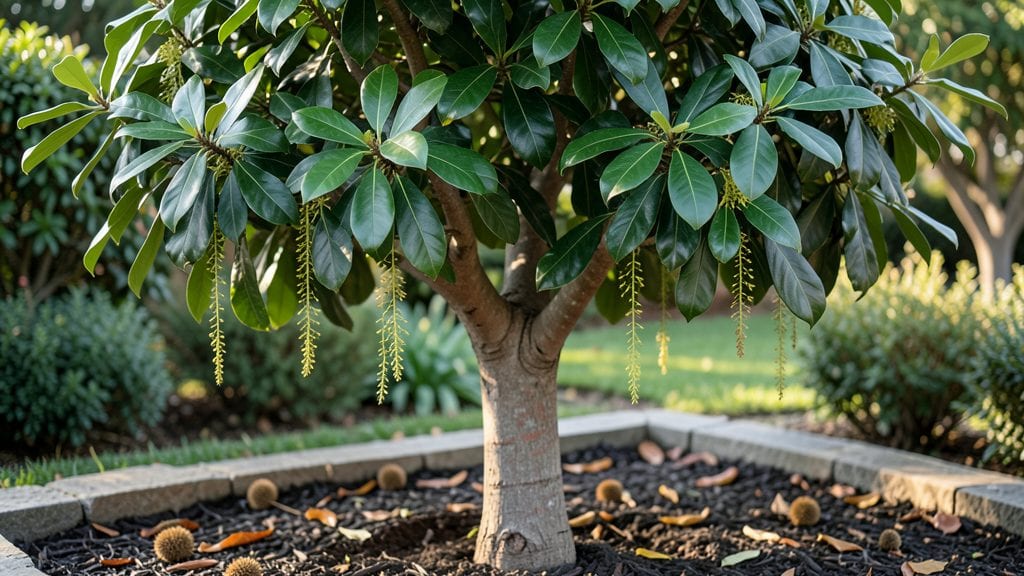
Growing tung oil trees from seed can mean a thriving canopy in under three months—once you crack the germination secrets. I’ve watched these fast-growing trees shoot up from tiny seeds into towering specimens with just a few key adjustments to water, warmth, and soil.
The payoff? Rich, durable oil perfect for wood finishing or traditional uses, all from your own backyard.
These subtropical trees love full sun and well-draining soil, but they’re surprisingly adaptable once established. Start seeds indoors 8-10 weeks before last frost in warm soil (70°F+), or plant saplings directly in spring after soil warms.
Spacing matters—give them 15-20 feet apart to avoid overcrowding as they mature into 50-foot giants in ideal conditions.
Pruning keeps them manageable while maximizing oil-rich seed production. Harvest seeds when pods turn brown and brittle, then cold-press for the golden oil used in furniture finishes or traditional remedies. With proper care, you’ll see first harvests in just 3-5 years—far faster than most hardwoods.
Best suited for USDA Zones 8-11, these trees thrive in warm climates but can handle brief cold snaps once established. For cooler areas, grow them in containers or greenhouses.
The secret to fast germination? Patience with moisture and heat—your reward is a tree that grows, heals, and pays back in kind.
📚 In This Guide
- What you need
- Instructions
- Tips and common mistakes
- Wrapping up and next steps
What you need
- ● Tung oil tree seeds – Purchase high-quality, fresh seeds (aim for Vernicia fordii or Vernicia montana varieties). Quantity: 10–20 seeds (for multiple plants or backup growth).
- ● Well-draining potting soil – A mix of 60% peat moss, 30% perlite, and 10% compost (or a pre-mixed seed-starting blend). Quantity: 1–2 gallons per seedling.
- ● Containers or seed trays – Use biodegradable peat pots (3–4 inches deep) or small plastic trays with drainage holes. Quantity: 1 per seedling.
- ● Drainage materials – Small stones (e.g., gravel or hydroponic clay pebbles) for the bottom of pots to prevent root rot.
- ● Watering can or spray bottle – A fine-mist sprayer for gentle hydration (especially for seeds).
- ● Grow lights or sunny window – Tung oil trees thrive in full sun (6+ hours/day). Use a LED grow light if natural light is limited.
- ● Garden trowel or small shovel – For transplanting seedlings into larger pots or outdoor beds.
- ● Pruning shears – To trim dead leaves or shape young trees as they grow.
- ● pH testing kit – Tung oil trees prefer slightly acidic soil (pH 5.5–6.5). Adjust with lime (to raise pH) or sulfur (to lower pH) if needed.
- ○ Fertilizer (optional but recommended) – A balanced 10-10-10 NPK fertilizer or orgainc compost tea for young plants. Apply every 4–6 weeks once seedlings are established.
- ● Mulch (for outdoor planting) – Wood chips or straw to retain moisture and regulate soil temperature.
- ● Climate zone – Tung oil trees love USDA Zones 7–10. If you’re in a cooler zone, grow them in containers and overwinter indoors.
- ● Warmth – Seeds germinate best in 70–85°F (21–29°C). Use a seedling heat mat if your home is cooler.
- ● Patience – Germination can take 2–4 weeks (or longer in cooler conditions). Stay consistent with moisture!
Step-by-step instructions for growing tung oil trees from seed
Here’s how to unlock rapid germination and robust growth for your tung oil trees—proven techniques that skip the slow, hit-or-miss methods.
Stratify Seeds for Faster Germination
Tung oil tree seeds require stratification to break dormancy, but you can speed this process by mimicking winter conditions. Place the seeds in a resealable plastic bag with a damp paper towel, then refrigerate for 4-6 weeks. Check weekly to ensure the towel stays moist—wrinkled or dry towels delay germination.
This cold treatment tricks the seed into thinking winter has passed, prompting faster sprouting. Once 4 weeks have elapsed, remove the seeds and soak them in lukewarm water for 12 hours. You’ll see the seed coats soften slightly, signaling they’re ready for planting.
Prepare Containers and Fast-Draining Soil Mix
Use 4-inch deep containers with drainage holes to prevent root rot—a common killer of young tung oil trees. Fill each with a mix of 60% potting soil, 30% perlite, and 10% coarse sand to ensure aeration. Tung oil trees hate soggy roots, so this blend mimics their native, well-drained forest floors.
Pre-moisten the mix until it’s damp but not saturated—squeeze a handful to check. If water drips out, let it dry slightly. Plant one seed per container, pressing it ½ inch deep into the soil. Label each pot with the planting date, as tung oil trees grow slowly at first.
Provide Warmth and Humidity for Germination
Place the containers in a warm, humid environment—ideally 75-80°F—to encourage germination. A seedling heat mat set to 80°F works wonders, but even a sunny windowsill near a humidifier will do. Cover the pots loosely with plastic wrap to retain moisture, but prop it up slightly to avoid drowning the seeds.
Germination typically takes 3-6 weeks, depending on seed freshness. Watch for the first true leaves (not the initial seed leaves) to appear—this confirms the seedling is established. Once you see these, remove the plastic wrap immediately to prevent fungal growth.
Transition to Bright, Indirect Light
After germination, move seedlings to a location with bright, indirect light for 2-3 weeks to harden their stems. Direct sunlight at this stage can scorch tender leaves. If using grow lights, position them 6-8 inches above the seedlings and provide 12-14 hours of light daily. You’ll notice sturdy, dark green leaves developing—this means the seedlings are photosynthesizing effectively.
Once seedlings reach 4-6 inches tall with 3-4 sets of true leaves, they’re ready for their first transplant. Choose larger pots (6-8 inches deep) and use the same fast-draining mix. Handle seedlings by their leaves, not the stems, to avoid damage.
Acclimate Before Outdoor Planting
Tung oil trees thrive in USDA Zones 8-11 and need full sun once established. Before moving them outdoors, harden off the seedlings by placing them in a sheltered spot for 1 hour daily, gradually increasing exposure over 10-14 days. Start with morning shade and slowly introduce afternoon sun to prevent leaf burn.
Plant outdoors after the last frost when soil temperatures reach 60°F. Space seedlings 10-12 feet apart to allow for their eventual 40-60 foot canopy. Water deeply at planting to settle the soil, then mulch with 2-3 inches of organic mulch to retain moisture and regulate temperature.
Tips & tricks for fast-germination secrets for thriving tung oil trees
These proven strategies will help you bypass the slow, unreliable germination process and get your tung oil trees off to a flying start—just like the pros do.
Stratification Precision: The 4-6 week refrigeration period is non-negotiable for tung oil seeds, but you can optimize it by using a second refrigerator set to 35-40°F for more consistent cold exposure. Place the sealed bag on a shelf rather than the door where temperatures fluctuate. After exactly 4 weeks (not a day more or less), the seeds will have completed their dormancy cycle and be primed for the 12-hour lukewarm water soak that signals readiness to plant.
Soil Mix Science: The 60-30-10 potting soil-perlite-sand ratio creates the perfect balance of moisture retention and aeration that tung oil seedlings crave. For even faster drainage, add 10% horticultural charcoal to the mix—this prevents compaction while absorbing excess moisture. When pressing seeds ½ inch deep, use a pencil to create a small hole first; this ensures consistent planting depth without crushing the seed.
Germination Environment: Maintaining that 75-80°F range is crucial, but don't rely solely on your thermostat reading. Use an inexpensive seedling heat mat with a built-in thermometer to monitor the actual soil temperature where roots will develop. The 80°F heat mat setting should be maintained continuously during the 3-6 week germination window. Once you spot those first true leaves (not the initial seed leaves), immediately remove the plastic wrap—this prevents fungal growth while still maintaining humidity.
Light Transition Strategy: The 2-3 week bright indirect light phase is your seedlings' training period for outdoor conditions. Position your grow lights 6-8 inches above the seedlings and use a timer for those critical 12-14 hours of light daily. Tung oil seedlings develop thicker stems when exposed to this gradual light increase, making them more resilient for transplanting. Watch for the leaves to develop a slight waxy coating—this indicates they're ready for their first transplant to 6-8 inch pots.
Pro Tips for Tung Oil Trees
- These proven strategies will help you bypass the slow, unreliable germination process and get your tung oil trees off to a flying start—just like the pros do.
- Stratification Precision: The 4-6 week refrigeration period is non-negotiable for tung oil seeds, but you can optimize it by using a second refrigerator set to 35-40°F for more consistent cold exposure.
- Soil Mix Science: The 60-30-10 potting soil-perlite-sand ratio creates the perfect balance of moisture retention and aeration that tung oil seedlings crave.
Frequently asked questions
Got questions about growing tung oil trees? You’re not alone! Here are answers to the most common queries to help you cultivate a thriving canopy with confidence.
How long does it take for tung oil tree seeds to germinate?
Tung oil tree seeds typically germinate within 7–21 days under ideal conditions—warmth (70–80°F), consistent moisture, and indirect light. For faster results, soak seeds overnight before planting and use a heat mat if your climate is cool. Patience is key, but don’t worry if sprouts take longer!
What’s the best climate for growing tung oil trees?
Tung oil trees thrive in warm, humid climates (USDA Zones 8–11) with full sun exposure. They tolerate heat well but struggle in frost or below 30°F. If you live in a cooler zone, grow them in containers and overwinter indoors or in a greenhouse. Coastal or subtropical regions are ideal!
Can I grow tung oil trees from cuttings instead of seeds?
Yes! While seeds are common, semi-hardwood cuttings (4–6 inches long) taken in late spring or early summer can also root successfully. Dip cuttings in rooting hormone, plant in moist perlite/sand mix, and keep humidity high. Success rates vary, but this method speeds up propagation for established trees.
Why aren’t my tung oil tree seedlings growing? Troubleshooting tips.
Slow growth often stems from overwatering (root rot risk), poor drainage, or nutrient deficiencies. Check soil moisture (keep it damp but not soggy), ensure pots have drainage holes, and fertilize lightly with a balanced 10-10-10 mix every 4–6 weeks. Yellow leaves? Boost nitrogen or adjust light exposure.
Are tung oil trees invasive? Should I avoid them?
Tung oil trees (Vernicia fordii) are not considered invasive in the U.S., but they can spread aggressively in warm climates if not pruned. They’re prized for their oil-rich nuts and fast growth (up to 3 feet/year!). If containment is a concern, grow them in large pots or controlled spaces.
Wrapping up and next steps
Tung oil trees offer a rewarding blend of practicality and beauty—whether you're after their fast germination or their prized oil-rich seeds. With the right soil, sunlight, and care, you can nurture a thriving canopy that yields both eco-friendly oil and stunning foliage. 🌱
Now that you’re armed with the secrets to success, why not take the next step? Start small with a single seedling, experiment with propagation, or even share your progress with fellow gardening enthusiasts.
Your green thumb could inspire others to grow their own tung oil treasure trove—one seed at a time! 🌟