
Watering
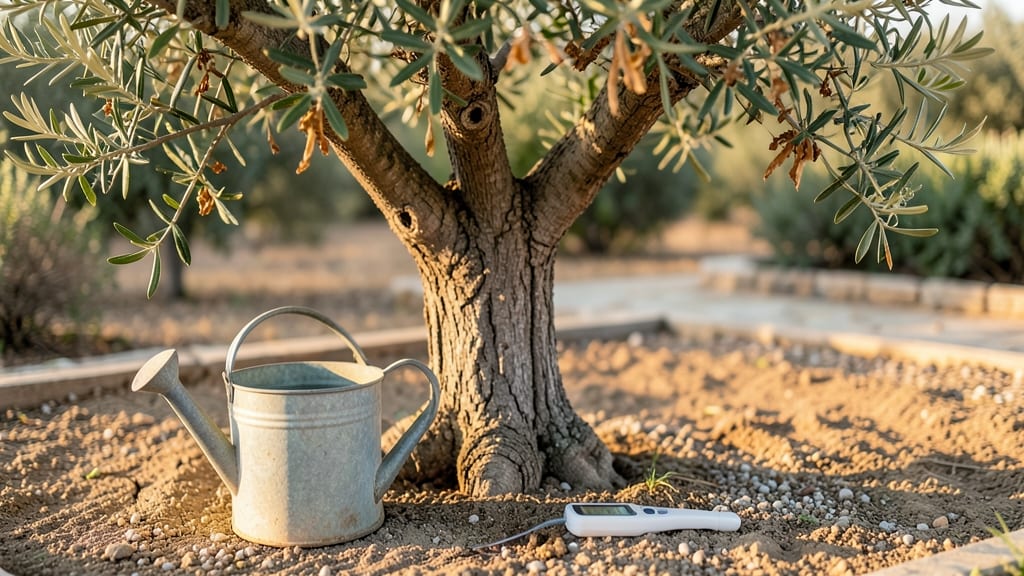
My olive tree's branches were curling like parchment paper—classic underwatering. 🌿 The telltale signs—dry soil that crumbles like dust, leaves that droop by midday—meant it was time to act before the roots gave up entirely.
I've nursed back olive trees from this exact state, and the fix isn't as dramatic as you'd think.
The first step is checking how bad it is: stick your finger 2-3 inches deep—if it's bone dry, you're not watering enough. Olives are tough, but they're not cacti; they need consistent moisture, especially in pots where soil dries out fast.
I water mine until it runs out the bottom, then wait until the top inch feels dry before repeating—usually every 5-7 days in summer, less in winter.
Within two weeks, you'll see the leaves perk up and new growth pushing out. The key is patience—olives bounce back slower than annuals, but they'll reward you with glossy, deep-green leaves and maybe even a few olives next season.
Just don't drown it afterward; soggy soil is just as deadly as drought.
For severe cases where branches stay brittle, prune them back to healthy wood and consider a professional arborist if the tree is large. The rest? Mulch, proper drainage, and regular checks keep olives thriving year after year.
Root Causes Of Olive Tree Stress
Olive trees are remarkably resilient, but even they can suffer when their water needs go unmet. Understanding why an olive tree becomes underwatered is the first step to reviving it. Below are the most common culprits—each with a clear scientific explanation and actionable insights to prevent future stress.
Olive trees thrive in Mediterranean climates where water is scarce but consistent. When growers (or nature) disrupt this balance, the tree’s deep root system struggles to access moisture efficiently.
- Shallow or infrequent watering: Olive trees have taproots that can extend 6–10 feet deep. Superficial watering (e.g., light sprinkles) only wets the topsoil, leaving deeper roots parched. Result: The tree signals drought stress by dropping leaves or wilting branches.
- Seasonal neglect: Young olive trees need 1–2 inches of water per week during dry spells, while mature trees may only require watering every 2–3 weeks (depending on soil type). Skipping these intervals—especially in summer heat—triggers underwatering.
- Over-reliance on rainfall: Even in rainy regions, 50% of precipitation can evaporate or runoff before reaching roots. Clay soils, in particular, repel water, leaving roots thirsty despite recent storms.
💡 Pro Tip: Use a moisture meter or the "dry sponge test"—dig 6 inches deep; if soil feels like a dry sponge, it’s time to water.
The health of an olive tree’s roots is directly tied to soil structure, drainage, and organic matter. Poor soil acts like a desert for roots, no matter how much water you add.
- Compacted or clay-heavy soil: Olive trees hate anaerobic conditions (lack of oxygen). Clay soil holds water but suffocates roots, preventing absorption. Signs: Yellowing leaves, stunted growth, or root rot despite watering.
- Low organic matter: Soil with <1% organic content struggles to retain moisture. Olive trees in sandy or rocky soils dry out 3x faster than loamy soil.
- Improper mulching: Too little mulch = rapid evaporation. Too much (especially wet mulch) = fungal growth. Ideal mulch: 2–4 inches of straw or wood chips, kept 3 inches away from the trunk.
🔥 Fix It: Amend soil with compost or coconut coir to improve water retention. For clay soil, mix in perlite or gypsum to break up compaction.
Even with perfect watering, heat, wind, and humidity can dehydrate an olive tree faster than you think. These factors increase transpiration (water loss through leaves), forcing the tree to drink more to survive.
- Extreme heat (above 90°F): Olive trees lose 50–70% more water in high temperatures. Leaves curl or scorch as they prioritize cooling over hydration.
- Drought winds: A 10 mph wind can dry soil 20% faster. Trees in exposed areas (e.g., hillsides) are at higher risk.
- Low humidity: Arid climates (like California’s Central Valley) create a vapor pressure deficit, making it harder for roots to pull up water.
🌡️ Adaptation Hack: Water deeply in early morning or late evening to reduce evaporation. For container-grown olive trees, use self-watering pots or hydrogel crystals in dry climates.
Sometimes, well-intentioned actions (or laziness) accelerate underwatering. These mistakes disrupt the tree’s natural hydration cycle.
- Over-pruning without adjustment: Removing 30%+ of foliage in one go reduces the tree’s ability to photosynthesize and regulate water loss. Result: The remaining branches dry out faster.
- Ignoring container size: Olive trees in small pots dry out in days because roots circle the soil, creating a drought feedback loop.
- Using the wrong hose/nozzle: A light mist from a sprinkler adds 0.1 inches of water—far less than the tree needs. Use a soaker hose or drip irrigation for deep penetration.
✨ Prevention Checklist:
- Prune olive trees in late winter (dormant season) to minimize stress.
- Upgrade containers to at least 18 inches in diameter for mature trees.
- Calculate water needs: 1 gallon per square foot of canopy for deep watering.
Reviving Your Olive Tree’s Health
Now that you know the signs and causes of an underwatered olive tree, it’s time to take action! Olive trees are resilient, but they need the right care to bounce back from drought stress.
Below are practical, step-by-step solutions tailored to the most common causes—plus tips to keep your tree thriving long-term.
If your olive tree is simply not getting enough water, deep, infrequent watering is the key. Olive trees prefer dry spells between waterings (mimicking their Mediterranean roots), but when stressed, they need a proper recovery plan.
🔥 Step 1: Deep Watering Technique
Olive trees have deep root systems—watering shallowly just encourages weak, surface roots.
Here’s how to do it right: - Water slowly (10–15 minutes per zone) to allow moisture to penetrate 12–18 inches deep. - Use a soaker hose or drip irrigation near the drip line (where the branches extend) to avoid wetting the leaves (which can cause fungal issues). - Check soil moisture with your finger: If the top 3–4 inches are dry, it’s time to water again.
🍳 Step 2: Create a Watering Schedule
Olive trees in containers need water every 5–7 days (more in hot weather), while in-ground trees may only need water every 2–3 weeks once established.
- Morning watering (before 10 AM) is best—it reduces evaporation and fungal risks.
- Adjust for seasons: Water less in winter (olive trees are dormant) but more in summer heatwaves.
👨🍳 Step 3: Mulch for Moisture Retention
A 2–3 inch layer of organic mulch (straw, wood chips, or pine bark) around the base helps: ✅ Keeps soil cool (reducing water loss). ✅ Slows evaporation (so water lasts longer). ✅ Encourages deeper root growth (as roots seek moisture below the surface). ⚠️ Avoid piling mulch against the trunk—keep it 3–4 inches away to prevent rot.
If your olive tree’s roots are soggy or suffocating, drainage issues could be the real problem. Olive trees hate "wet feet"—their roots need oxygen to thrive.
🔪 Step 1: Improve Drainage Immediately
- For potted olive trees: Check for drainage holes.
If none exist, drill 2–3 holes in the bottom. - For in-ground trees: Amend the soil with perlite, coarse sand, or pumice (mix 20% amendment into the top 12 inches of soil). - Raise the pot (if in a container) by placing it on feet or bricks to prevent water pooling.
⏰ Step 2: Test & Adjust Soil pH & Texture
Olive trees prefer slightly acidic to neutral soil (pH 6.0–8.0) and well-draining, gritty soil.
- Test your soil with a DIY pH kit (available at garden centers).
- If too clay-heavy, mix in sand or gravel to loosen it.
- If too sandy, add compost or coconut coir to retain some moisture without compacting.
Once your olive tree recovers, preventative care will keep it strong and drought-resistant.
💡 Pro Tip: Water Smart, Not Hard
- Let the soil dry out between waterings—olive trees prefer slight drought over constant moisture.
- Use a moisture meter (or the finger test) to avoid overwatering.
🎯 Choose the Right Container (If Potted)
If growing in a pot: ✔ Use a terracotta or fabric pot (better drainage than plastic). ✔ Size up—olive trees need at least 12–18 inches of depth for roots. ✔ Repot every 2–3 years with fresh, well-draining soil.
✨ Fertilize for Resilience
Olive trees need balanced nutrients but not too much nitrogen (which encourages leafy growth over fruit).
- Use a low-nitrogen, high-potassium fertilizer (like 5-10-10) in early spring.
- Avoid fertilizing in winter (dormant period).
- Organic options: Fish emulsion, bone meal, or compost tea work well.
Final Thought: Olive trees are tough survivors—with the right watering, soil, and a little patience, your tree will rebound stronger than ever. 🌳💪 Start with deep watering, fix drainage if needed, and stick to a consistent (but not excessive) schedule.
Before you know it, your olive tree will be back to producing lush leaves—and maybe even fruit!
Frequently asked questions
How often should I water an olive tree to prevent underwatering?
Young olive trees need 1–2 inches of water weekly during dry spells, while mature trees may only need watering every 2–3 weeks. For potted olives, check soil moisture daily—water when the top 1–2 inches feel dry. Morning watering reduces evaporation and fungal risks.
What are the first signs my olive tree is underwatered?
Watch for wilting leaves, dry, crispy leaf edges, or branches that droop by midday. The soil will feel bone-dry 2–3 inches deep, and leaves may curl or yellow. Act fast—olive trees recover faster when caught early.
Can I overwater an olive tree while fixing underwatering?
Yes! Olive trees prefer dry spells between waterings—overwatering causes root rot or fungal issues. After reviving a thirsty tree, let the soil dry out between waterings. Use well-draining soil and pots with drainage holes to prevent soggy roots.
How do I know if my olive tree’s roots are damaged from drought?
Gently scrape back 1–2 inches of soil near the base. Healthy roots are white or tan with fine hairs. Dark, mushy, or empty roots signal damage. If roots are brittle, prune dead branches and focus on deep, infrequent watering.