
Blooming
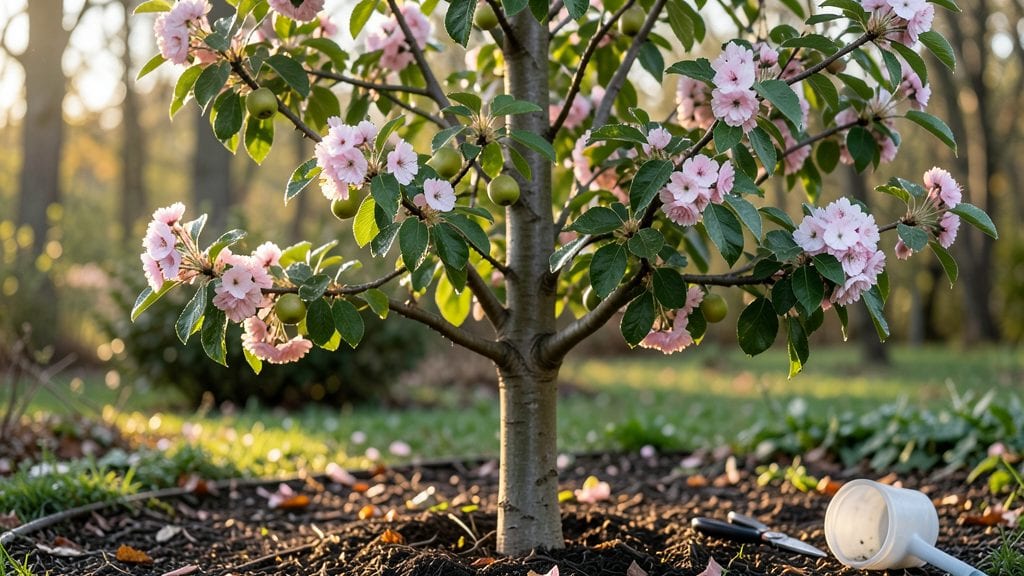
Crab apple trees blossom in early to mid-spring, with timing depending on your climate zone—USDA Zone 4-5 blooms arrive in late April to early May, while Zones 6-8 often flower 2-4 weeks earlier, typically in March or early April. Cold stratification and frost sensitivity play key roles in determining bloom windows.
Timing isn't just about the calendar—it's about your local growing conditions. Crab apple trees need 400-800 chilling hours below 45°F to break dormancy, which explains why southern zones bloom earlier than northern ones. 🌸 In my experience, trees in Zone 7 often start showing buds as early as February if winters are mild, while Zone 5 trees might wait until May.
Late frosts can also delay blooming, so choosing cold-hardy varieties like 'Adams' or 'Dolgo' helps ensure reliable spring displays.
What's interesting is how sunlight exposure affects bloom quality—trees planted in full sun tend to produce more abundant flowers than those in partial shade. I've noticed that well-established trees (5+ years old) consistently outperform younger specimens, thanks to their deeper root systems.
For gardeners in Zone 8+, late winter pruning can stimulate earlier blooming, but timing matters—prune after the last frost to avoid damaging new growth.
💡 In This Article
- Climate Zones and Crab Apple Bloom Timing
- Optimizing Crab Apple Tree Blooms for Gardeners
Climate Zones and crab apple bloom timing
The bloom windows for crab apple trees are primarily dictated by chilling hours—the cumulative hours below 45°F that trees need to break dormancy. Most varieties require between 400-800 hours, which explains why northern climates (Zones 4-5) see blooms 4-6 weeks later than southern regions (Zones 6-8).
For example, a tree in Zone 4 might need 700+ chilling hours before flowering, while a Zone 7 tree could bloom after just 500 hours. This chilling requirement is why late-winter frosts in northern areas often delay blooms until May.
Regional microclimates create even more variation. In the Pacific Northwest, mild winters mean blooms can start as early as February in Zone 8, while the Southeast (Zone 7-8) typically sees flowers by early March.
However, the Midwest (Zones 5-6) often experiences late April blooms due to colder winters. Heat spikes above 70°F before adequate chilling can also trigger premature budding, which frost-sensitive varieties like 'Centennial' often can't survive.
Frost risk is another critical factor. Early bloomers in Zone 6-7 face higher damage potential from late frosts, which can occur until mid-April in many areas. This is why cold-hardy varieties like 'Adams' (Zone 4-8) are popular—they've evolved to handle -30°F temperatures without losing buds.
In contrast, 'Dolgo' (Zone 5-9) blooms slightly later, giving it a better chance of avoiding frost damage in transitional zones.
Dormancy triggers also vary by species. Malus species (true crab apples) typically need consistent cold exposure, while hybrids like 'Evereste' can adapt to shorter chilling periods if given gradual temperature shifts.
This adaptability is why some gardeners in Zone 9-10 can grow crab apples year-round with minimal winter chill, though bloom quality often suffers without proper dormancy cycles.
What most gardeners don't realize is how soil temperature affects root activity before blooming. Roots need to warm to 50°F before sending nutrients to new buds. In Zone 5, this often happens by late April, aligning with bloom windows.
Meanwhile, Zone 8 trees may start root activity as early as February, explaining why their flowers appear weeks sooner.
For precise planning, track your local last frost date and adjust planting accordingly. In Zone 6, planting frost-sensitive varieties on south-facing slopes can advance blooms by 1-2 weeks by absorbing more sunlight. Conversely, Zone 4 gardeners should choose late-blooming cultivars like 'Siberian Crab' to avoid frost damage.