
Trees
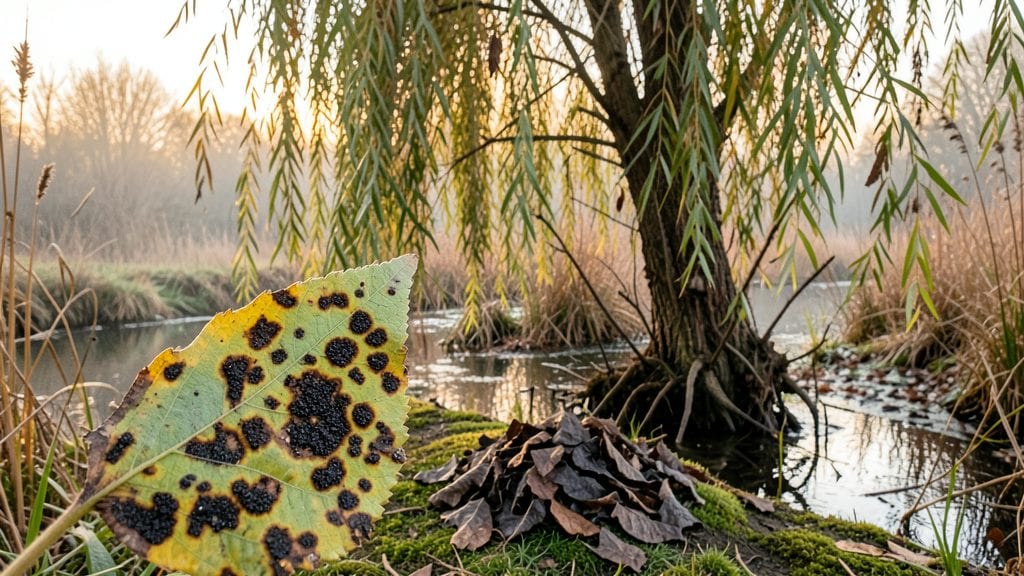
Willow trees fungus can turn your graceful riverside beauty into a sad, spotted mess—unless you catch it early. I’ve watched willow blight spread across my backyard tree in just two weeks, turning vibrant green leaves into brown, crinkled husks.
The key isn’t just spotting the fuzzy white patches or black spots; it’s knowing which fungus you’re dealing with and how to stop it before it spreads to your whole tree.
The worst part? Most willow fungus thrives in damp, shady spots—exactly where willows love to grow. Powdery mildew coats leaves like flour dust, while root rot turns the soil into a stinking, mushy nightmare.
But here’s the good news: organic treatments like neem oil or copper fungicide can work wonders if you catch it soon enough. I’ve saved multiple willows by pruning infected branches in late winter and applying a baking soda spray mix (yes, the kitchen kind!) to prevent regrowth.
By the time you’re done, your willow will look like it just got a fresh haircut—no more sad, drooping branches or weak new growth. The best part?
Healthy willows grow back faster than you’d expect, and with the right care, you’ll have a thriving tree that’s actually more resilient than before. Let’s get those leaves back to their glossy green selves.
Whether you’re dealing with a young sapling or a mature willow, the same principles apply—just adjust the treatment scale. And if the fungus keeps coming back, that’s your sign to call in an arborist before it’s too late. Trust me, your tree will thank you.
Understanding Fungal Growth Triggers
Fungal infections on willow trees don’t appear out of thin air—they thrive due to a mix of environmental conditions, tree stress, and even human activity.
Below, we break down the key reasons why fungi like Marssonina brunnea (willow leaf spot) or Venturia species (scab) take hold, along with the science behind each trigger.
Fungi love damp environments, and willow trees—especially those planted in soggy or poorly drained soil—create the perfect breeding ground. Here’s why moisture sparks outbreaks:
- Overwatering or Flooding: Willow trees in waterlogged soil develop root rot (often caused by Phytophthora or Fusarium), weakening their defenses. Fungal spores in the soil latch onto stressed roots, spreading upward. - Leaf Wetness: Fungal spores need free water to germinate.
Heavy dew, frequent rain, or overhead irrigation (like sprinklers) keep leaves damp for prolonged periods, allowing spores to colonize. - Humidity Traps: Dense foliage or shaded areas under willows trap moisture, creating microclimates where fungi like Septoria thrive.
Actionable Fix: Improve drainage by amending soil with compost or sand, and water at the base (not overhead) during early morning to allow leaves to dry quickly.
Willow trees are hardy, but extreme temperatures—both hot and cold—disrupt their natural resistance, leaving them vulnerable to fungi.
- Cool, Wet Springs: Ideal conditions for leaf spot fungi (Marssonina, Ramularia). Temperatures between 50–70°F (10–21°C) with high humidity encourage spore release and infection. - Late Summer Heat: Drought stress weakens trees, making them susceptible to scab fungi (Venturia).
Heat also cracks bark, providing entry points for pathogens like Nectria. - Freeze-Thaw Cycles: Winter damage (e.g., bark splitting) creates wounds where fungi like Cytospora (a canker-causing pathogen) can invade.
Actionable Fix: Mulch around the base to regulate soil temperature, and prune in late winter (before bud break) to remove dead wood where fungi may hide.
Fungi exploit trees that are either starving or overfed. Here’s how imbalances play a role:
- Nitrogen Deficiency: Leads to thin, yellowing leaves—a buffet for fungi like Septoria.
Weak tissue can’t fight off infections. - Phosphorus/Potassium Imbalance: Low potassium weakens cell walls, making them easier for fungal hyphae to penetrate. - Over-Fertilization: Excess nitrogen promotes soft, lush growth that’s prone to fungal diseases (e.g., powdery mildew).
It also attracts pests like aphids, which spread fungal spores.
Actionable Fix: Test soil annually and balance fertilizers with micronutrients (like zinc or manganese). Avoid high-nitrogen fertilizers in late summer.
Any break in the tree’s skin—whether from pruning, storms, or pests—is an open invitation for fungi.
- Improper Pruning: Cuts too close to branches (within 1/4 inch) or jagged wounds fail to heal, creating entry points for canker fungi (Leucostoma, Valsa).
- Storm or Hail Damage: Torn leaves or bark expose inner tissue to spores in the air or soil.
- Pest Activity: Borers (Sirex, Pissodes) or bark beetles create tunnels where fungi like Ophiostoma (a blue-stain fungus) move in.
Actionable Fix: Prune during dry weather, use sterilized tools, and seal wounds with pruning paint (for cuts > ½ inch wide).
Fungi spread like wildfire in tight, humid spaces. Willow trees planted too closely or shaded by other vegetation create the perfect storm.
- Low Light Conditions: Shady willows produce weak, sparse foliage, reducing their ability to photosynthesize and fight infections.
- High Humidity Zones: Dense plantings trap moisture, increasing spore survival rates. Fungi like Alternaria (a leaf blight) spread rapidly in these conditions.
Actionable Fix: Space willow trees 15–20 feet apart and thin surrounding vegetation to improve airflow. Avoid planting near ponds or other moisture sources.
Even if moisture or wounds aren’t the issue, other stressors can lower a willow’s resistance:
- Root Competition: Nearby trees or invasive roots (e.g., from grasses or weeds) steal nutrients, weakening the willow’s immune response.
- Soil pH Imbalances: Extremely acidic (pH < 5.5) or alkaline (pH > 8.0) soil disrupts beneficial microbes, making the tree more susceptible to pathogens.
- Disease Carryover: Fungal spores can overwinter in fallen leaves, bark, or mulch, reinfecting the tree the next season.
Actionable Fix: Conduct a soil test every 2–3 years and adjust pH with lime (to raise) or sulfur (to lower). Remove and dispose of infected debris (don’t compost it!).
Pollution, chemical runoff, or even nearby industrial activity can weaken willow trees, making them fungal magnets.
- Air Pollution: Ozone or sulfur dioxide damage leaf cuticles, creating entry points for fungi like Mycosphaerella.
- Herbicide Drift: Glyphosate or other herbicides can stress roots, reducing the tree’s ability to fight infections.
Actionable Fix: If pollution is a concern, mulch heavily to protect roots and avoid planting willows near high-traffic or industrial areas.
Fungal growth on willow trees is rarely a single culprit—it’s usually a combo of stress factors.
By addressing moisture, nutrition, wounds, and airflow, you can starve out fungi before they take hold. 💡 Pro Tip: Monitor your tree’s health year-round; early intervention (like fungicides or cultural fixes) is far easier than treating a full-blown infection!
Fixing Fungal Issues in Willow Trees
Fungal infections in willow trees can be frustrating, but with the right approach, you can restore your tree’s health and prevent future outbreaks. Below are targeted solutions for common fungal problems, paired with preventive strategies to keep your willow thriving.
🍄 1. Powdery Mildew or Leaf Spot
Cause: Fungal spores thrive in humid, shaded conditions, leading to white powdery patches or dark spots on leaves.
How to Fix It:
- Prune for airflow 🪓✂️ – Remove dense or overlapping branches to improve sunlight and air circulation.
- Apply fungicide 🧴 – Use a copper-based or sulfur fungicide (like Bonide Copper Fungicide) every 7–10 days until symptoms fade.
- Clean up debris 🧹 – Rake and dispose of fallen leaves to eliminate spore sources.
Prevention Tips: ✅ Water at the base (avoid wetting foliage) to reduce moisture buildup. ✅ Space trees properly to prevent overcrowding. ✅ Choose resistant varieties (e.g., Salix babylonica ‘Tortuosa’ is less prone to mildew).
🍂 2. Root Rot or Canker Fungus
Cause: Overwatering, poor drainage, or wounds create entry points for Phytophthora or Valsa fungi, leading to root decay or bark lesions.
How to Fix It:
- Improve drainage 💧🚫 – Amend soil with compost or sand if clay-heavy. Consider raising the root zone with mulch.
- Prune infected branches ⚠️✂️ – Cut 6 inches below cankers (sterilize tools with rubbing alcohol between cuts).
- Fungicidal soil drench 💊 – Use Mycorrhizal fungi treatments (like Trichoderma) or systemic fungicides (e.g., Propiconazole).
Prevention Tips: 🌱 Avoid overwatering – Willow trees need moisture but drainage is key. 🌱 Mulch properly – Keep mulch 3–4 inches away from the trunk to prevent rot. 🌱 Inspect wounds – Seal pruning cuts with pruning sealant to block fungal entry.
🍃 3. Rust Fungus (Orange Pustules)
Cause: Rust spores spread via wind or splashing water, causing orange-yellow pustules on leaves.
How to Fix It:
- Remove infected leaves 🗑️ – Bag and dispose of heavily rusted foliage (do not compost).
- Spray with neem oil 🌿 – A natural fungicide that disrupts spore germination (reapply every 2 weeks).
- Use fungicidal soap 🧼 – Mix 1 tsp. horticultural oil + 1 tsp. baking soda per gallon of water for a DIY spray.
Prevention Tips: 💡 Plant rust-resistant willows (e.g., Salix discolor or Salix fragilis). 💡 Rotate crops if growing near susceptible plants (e.g., barberries). 💡 Avoid overhead watering during rainy seasons.
Fungal issues often return if underlying conditions persist. Follow these proactive steps to keep your willow strong:
| Problem | Solution | Prevention |
|---|---|---|
| Weakened immune system | Fertilize with low-nitrogen, high-phosphorus (e.g., 5-10-10) | Aerate soil annually to boost root health |
| Compacted soil | Add organic matter (compost, leaf mold) | Test soil pH (ideal: 6.0–7.0) |
| Pests (e.g., aphids) | Spray with soapy water or predatory insects (ladybugs) | Encourage beneficial insects with companion plants |
If your willow shows:
- Large cankers (bark splitting or oozing sap)
- Wilted branches despite treatment
- Extensive root rot (mushrooms at the base)
A certified arborist can assess systemic issues (like Dutch elm disease in willows) and recommend safe removal if necessary.
Fungal treatments work best when applied early. Check your willow weekly during spring/fall (peak fungal seasons) and adjust care based on weather (e.g., reduce watering in humid months).
By combining quick fixes with preventive habits, your willow can bounce back—stronger and fungus-free! 🌳💪
Frequently asked questions
What does willow tree fungus look like?
Willow fungus appears in several forms: powdery mildew looks like white, flour-like dust on leaves; leaf spots show as dark brown or black patches with yellow halos; and rust fungus creates orange-yellow pustules. Root rot causes mushy, discolored roots and may produce mushrooms at the base.
Can willow tree fungus spread to other plants?
Yes, some fungal spores (like rust or powdery mildew) can spread to nearby plants via wind, water, or tools. Always sterilize pruners between trees and avoid overhead watering to prevent cross-contamination.
How do I know if my willow tree has a fungal infection?
Watch for leaf discoloration, stunted growth, or unusual spots on foliage. Check the bark for cankers (sunken, dead areas) or oozing sap. If roots smell rotten or appear mushy, it’s likely root rot. Compare symptoms to photos of common willow diseases.
Is it safe to prune infected branches myself?
Yes, but use sterilized tools (rubbing alcohol) and cut 6 inches below visible cankers or lesions. Dispose of infected branches in sealed bags—don’t compost them. Prune during dry weather to reduce spore spread. For severe cases, consult an arborist.
Will my willow tree recover from fungus?
With early treatment (fungicides, pruning, and improved care), most willows recover fully. Remove heavily infected foliage and apply copper-based sprays or neem oil as needed. Healthy willows regrow quickly, but chronic infections may require professional intervention.